Artwork
Allegory of Colonial Power
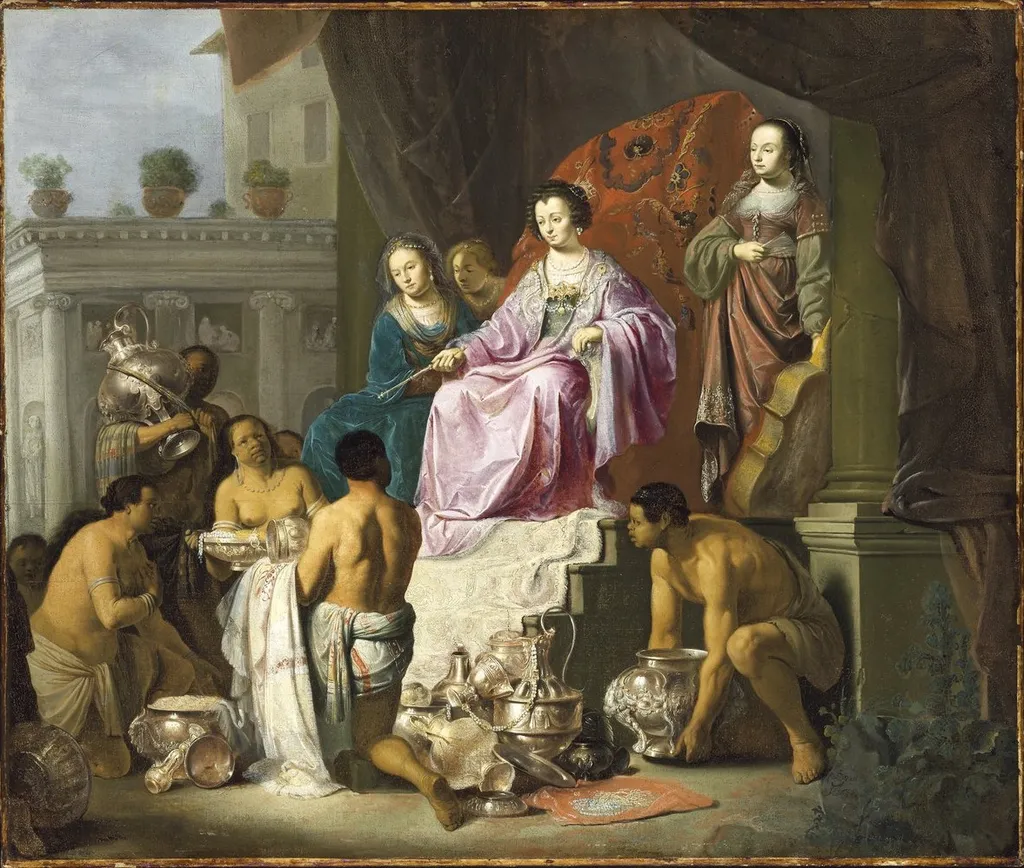
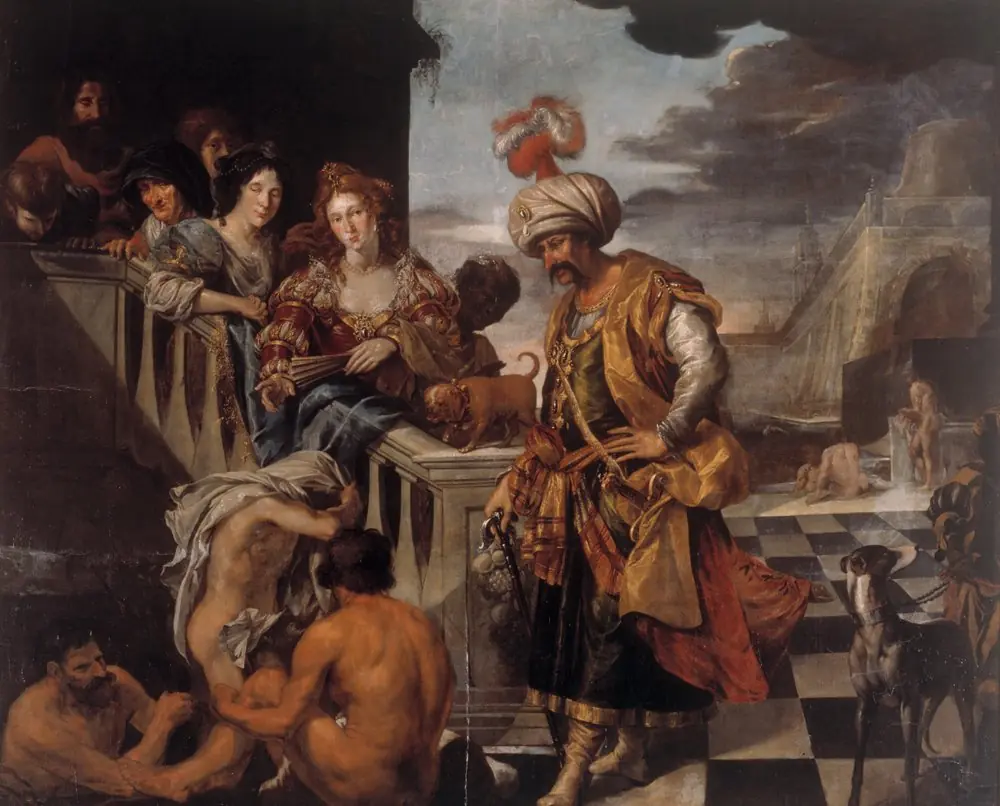
Allegory of Colonial Power is an oil painting by the Dutch Golden Age artist Willem de Poorter. It dates from 1638 and is held in the collection of the Museum of Fine Arts, Budapest.
About this work
Overview
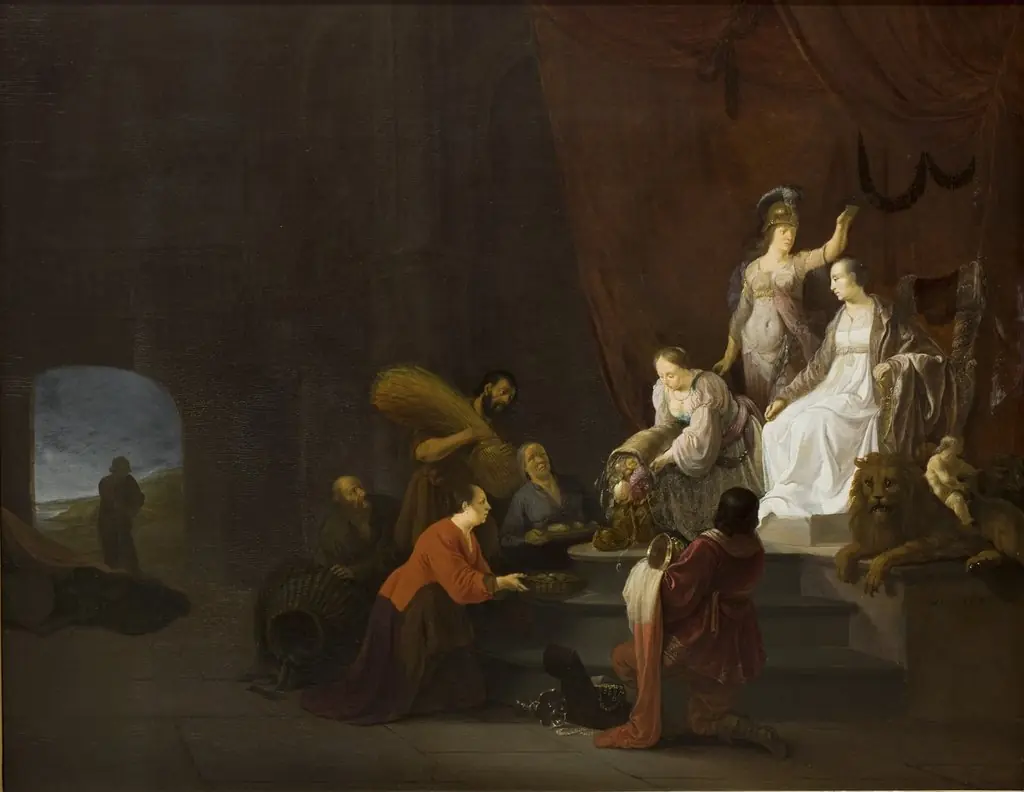
Willem de Poorter’s 1638 oil painting, titled Allegory of Colonial Power, is part of the collection of the Museum of Fine Arts in Budapest. The composition centers on a regal female figure seated upon a throne, surrounded by a group of attendants and a partially clothed crowd, set against a backdrop that includes an architectural structure and a balcony with foliage.
Subject & Meaning
The central woman, dressed in pink and bearing a scepter and jeweled necklace, embodies an allegorical representation of authority, likely alluding to the concept of colonial domination. The surrounding figures—some nude, some bearing domestic objects—appear to serve or present offerings, reinforcing the theme of a sovereign figure presiding over a subordinate populace.
Technique & Style
Executed in oil on canvas, de Poorter employs a balanced arrangement of figures and a clear, luminous palette characteristic of Dutch Baroque allegorical works.
Executed in oil on canvas, de Poorter employs a balanced arrangement of figures and a clear, luminous palette characteristic of Dutch Baroque allegorical works. The rendering of fabrics, the sheen of metalwork, and the detailed architectural elements demonstrate a meticulous attention to texture and spatial depth, while the composition follows a hierarchical layout that emphasizes the throne’s prominence.
History & Provenance
Created in 1638, the painting entered the Museum of Fine Arts in Budapest through acquisition in the early twentieth century, though earlier ownership records remain sparse. Its presence in a major European museum reflects the work’s recognized value within the oeuvre of Dutch Golden Age painters.
Context
De Poorter, active in Haarlem, often produced mythological and allegorical subjects that catered to the tastes of affluent patrons. This piece reflects contemporary European interest in exoticism and imperial ambition, visualizing power through a classical allegorical framework that resonated with the political climate of the seventeenth‑century Dutch Republic.
Artist & collection

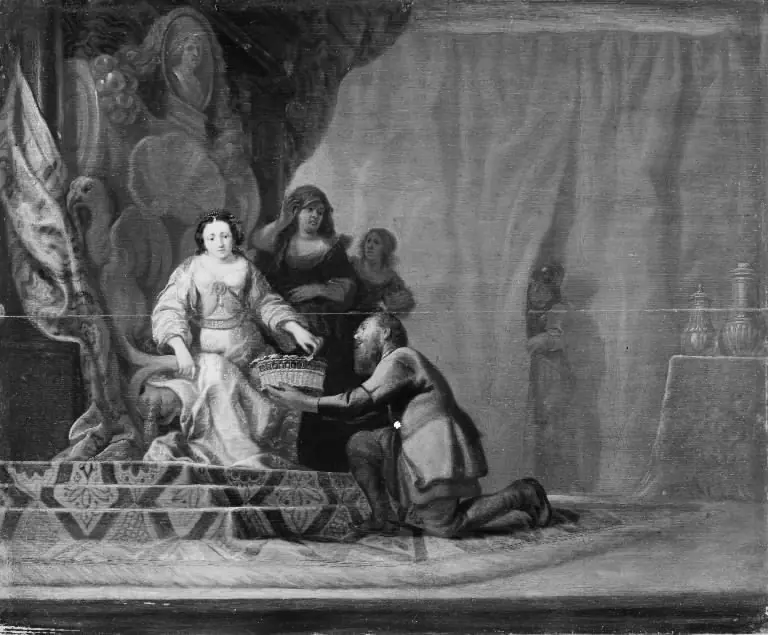
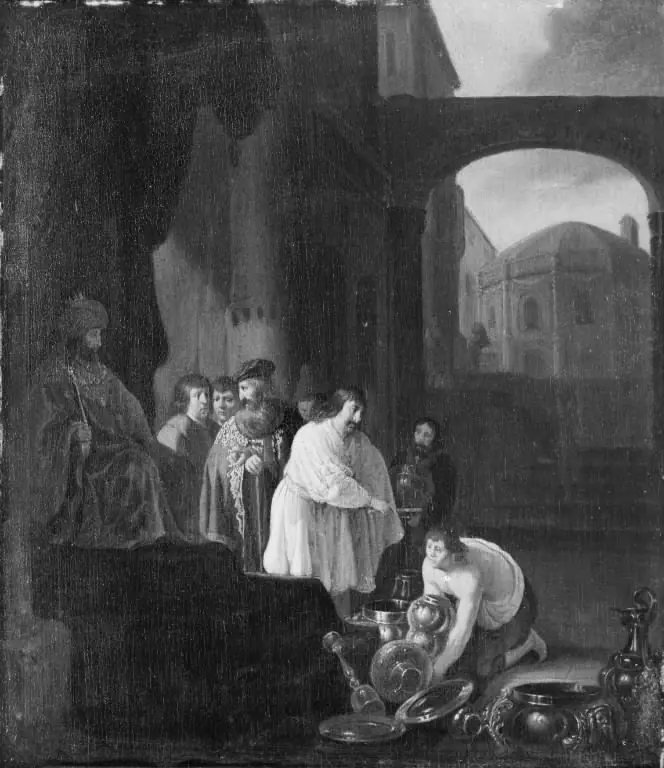
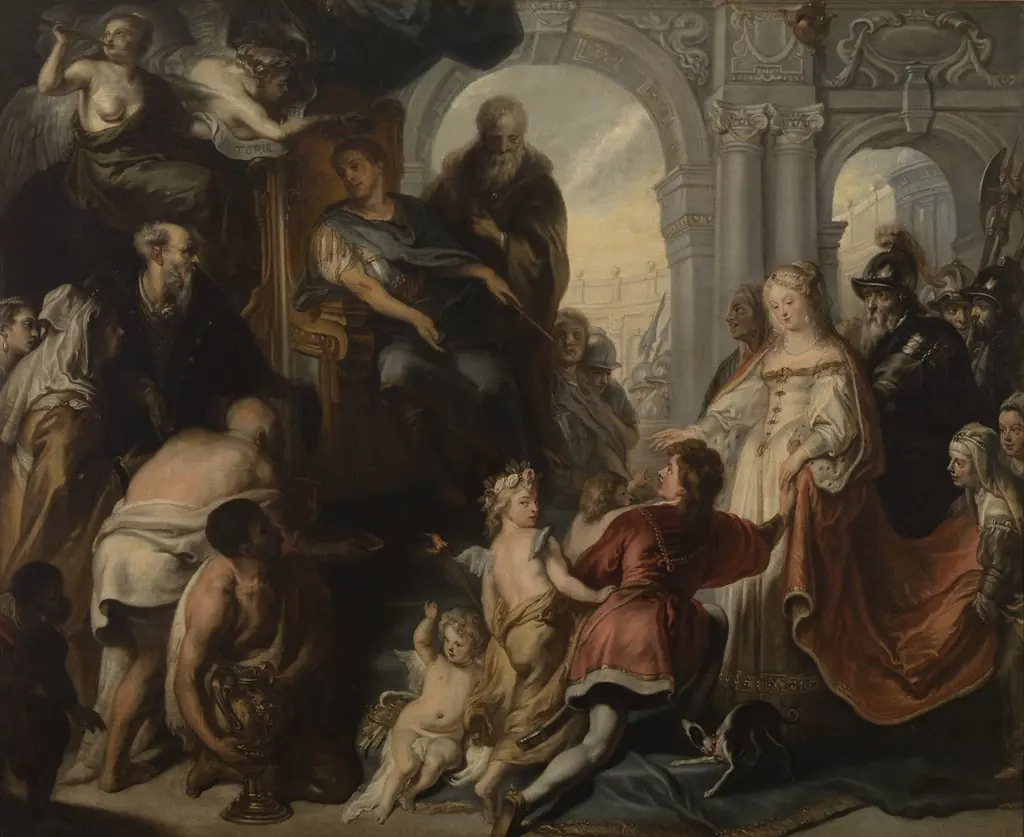 The Continence of Scipio Africanus
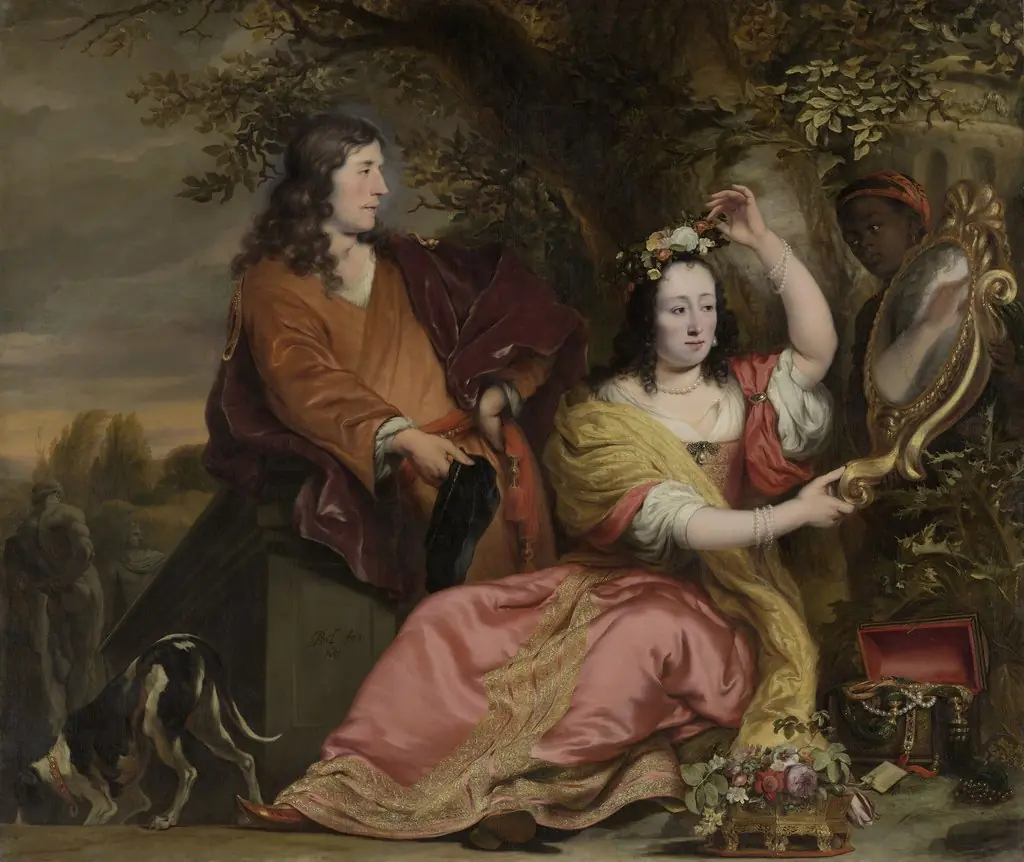 Double portrait of Jan van der Voort (1626-1678) and his sister Catharina van der Voort (1622-1674), with a servant
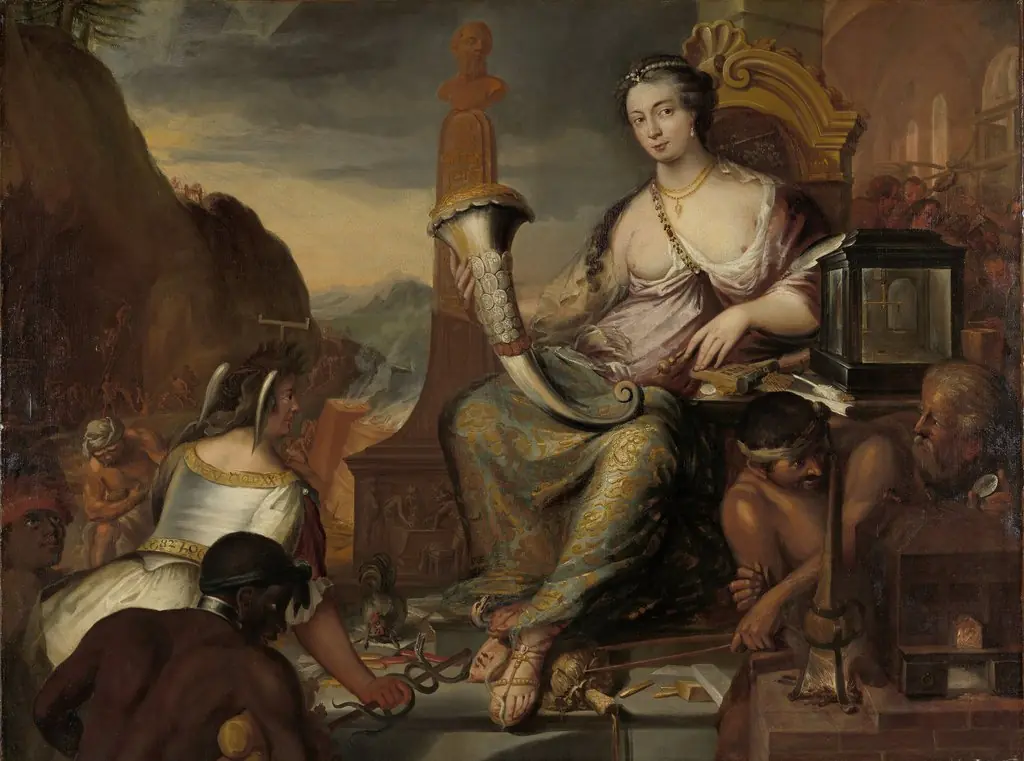 Allegory of coinage
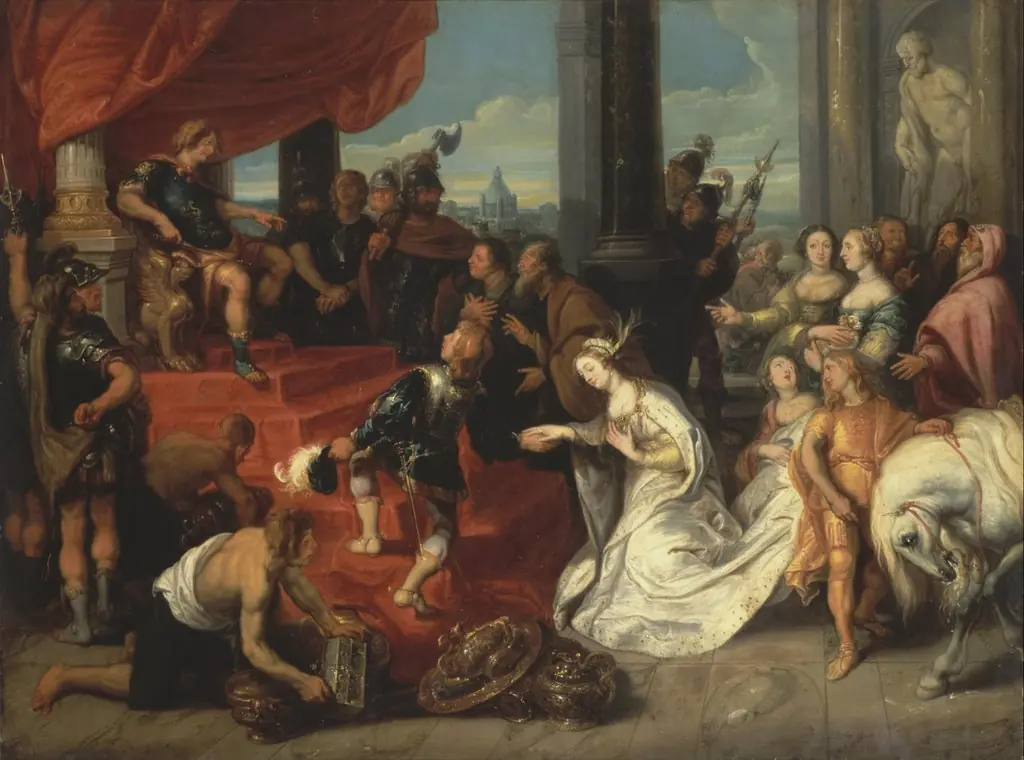 The Magnanimity of Scipio Africanus
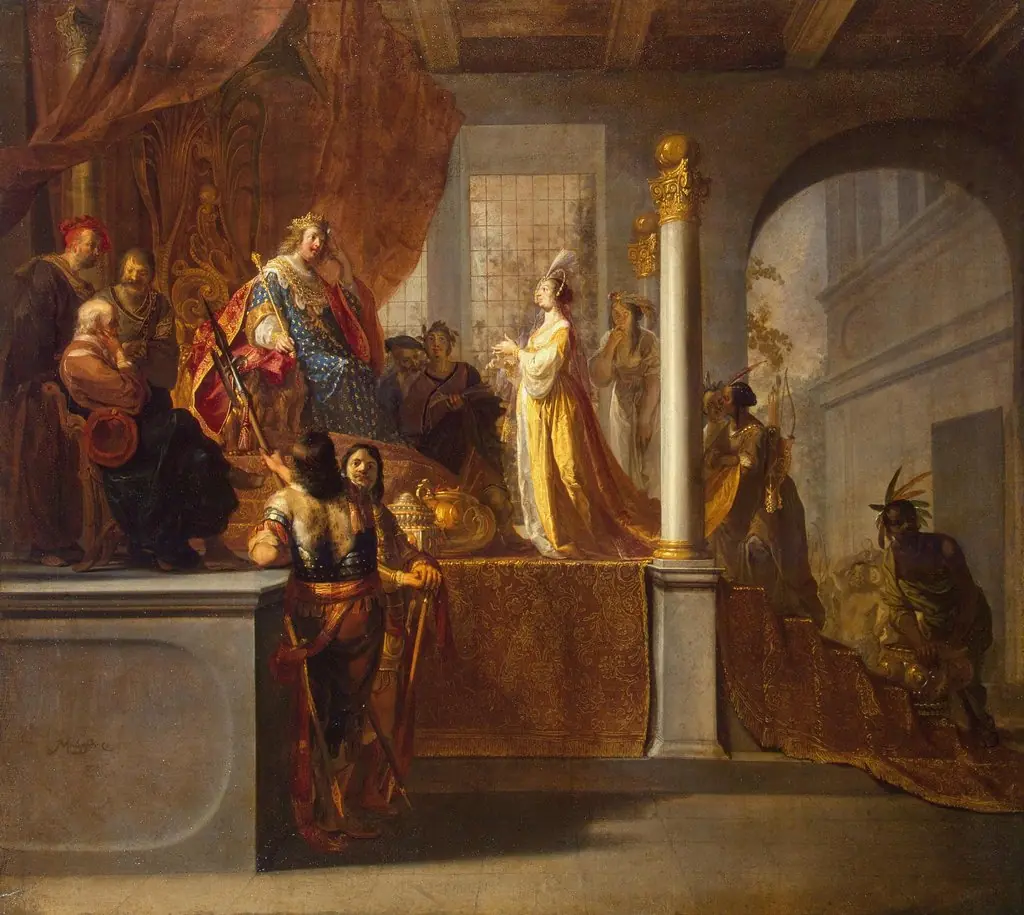 Queen of Sheba before Solomon
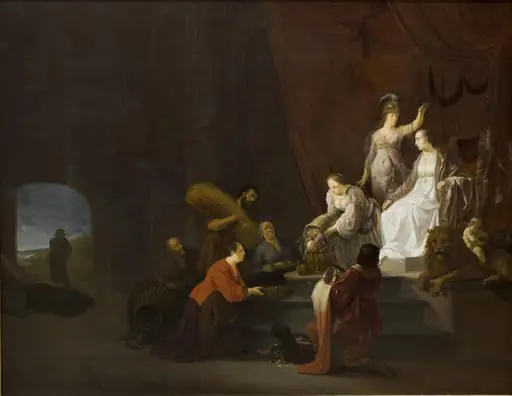 Allegory on Peace. Pax Being Crowned by Minerva
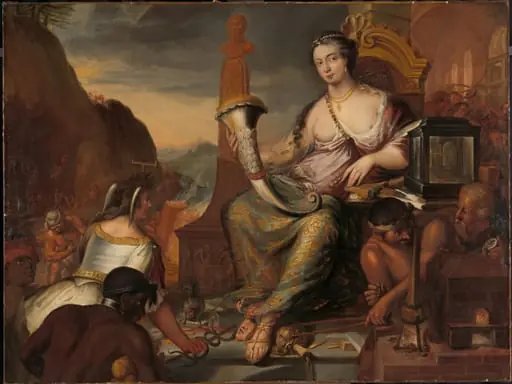 Allegory of Coinage
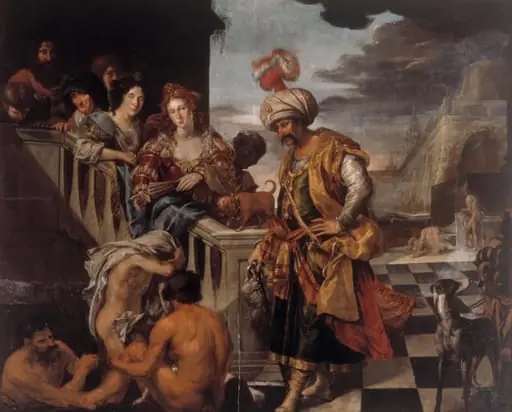 Bathing in an Oriental Harbour
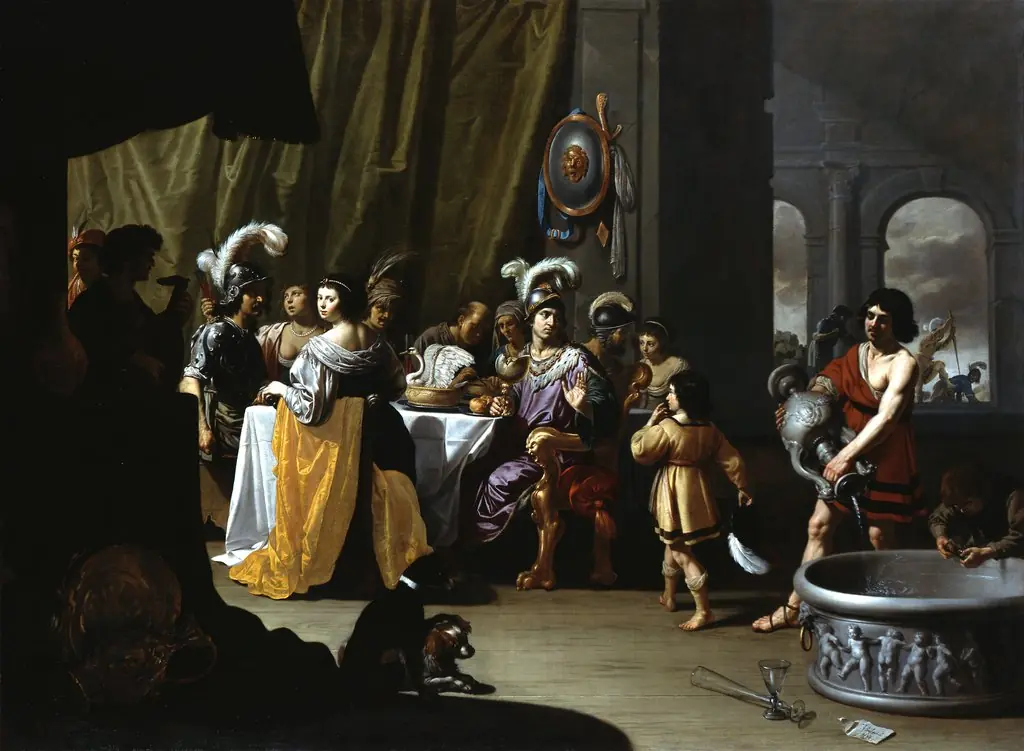 The Feast of Alexander and Kleitos
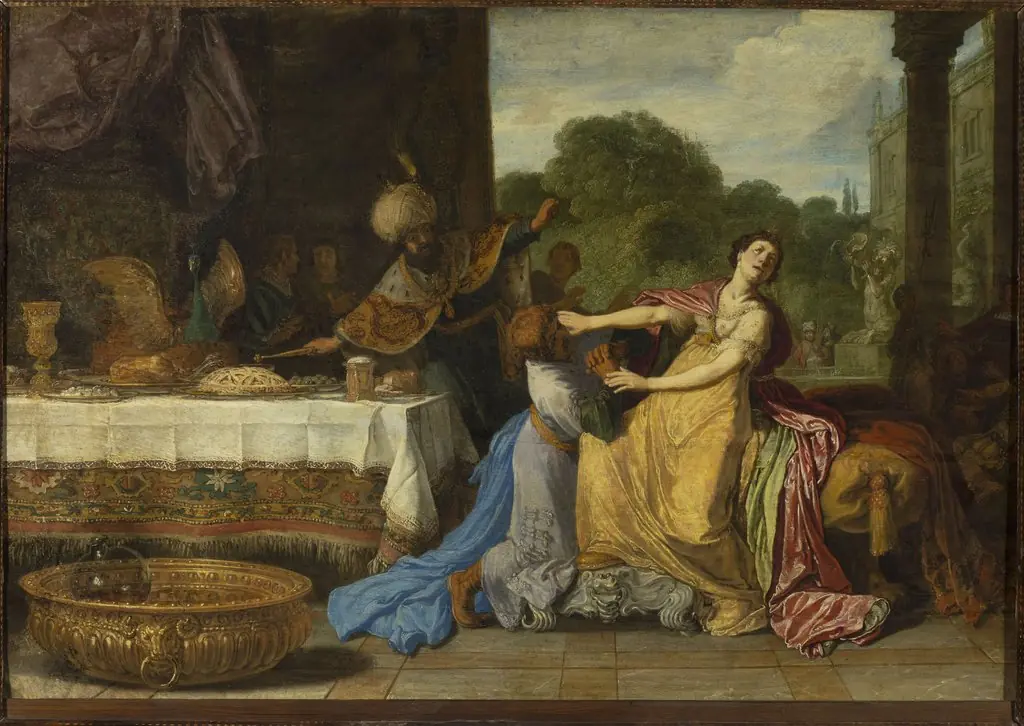 Haman begging the mercy of Esther (Esther 7:6-7)
 Bathing in an Oriental Harbour