Artwork
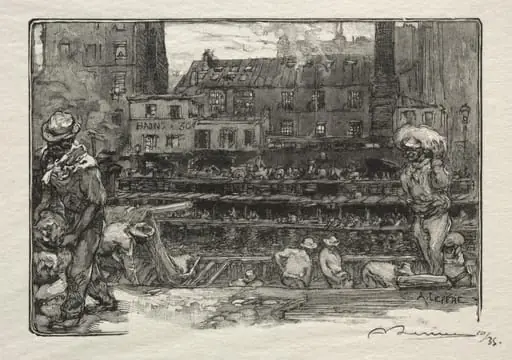
The Lock of the St. Martin Canal
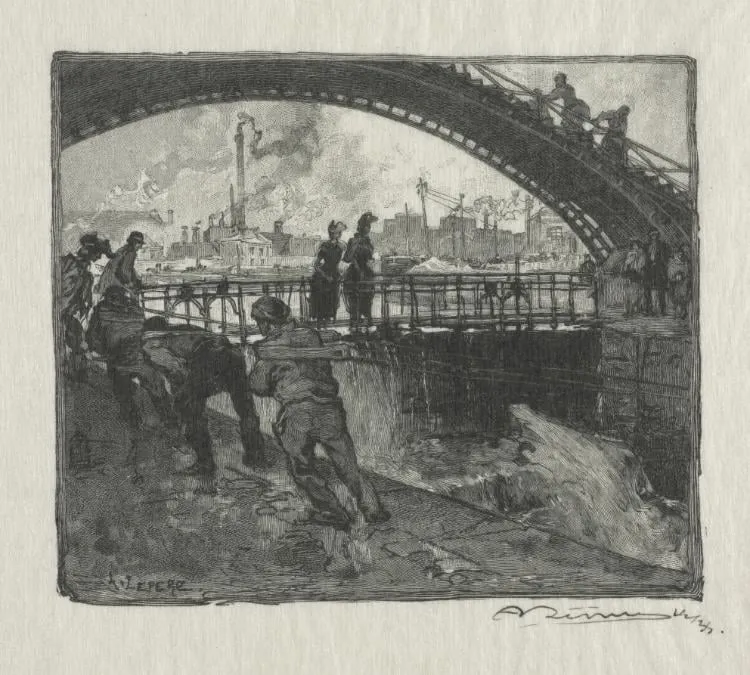
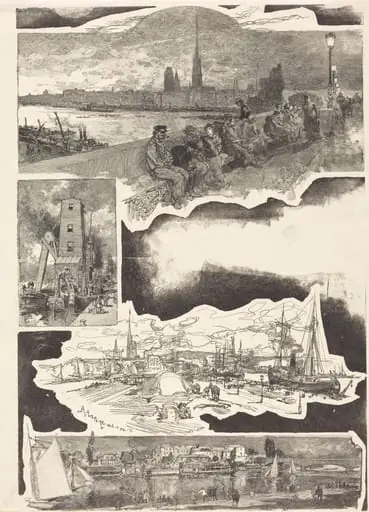
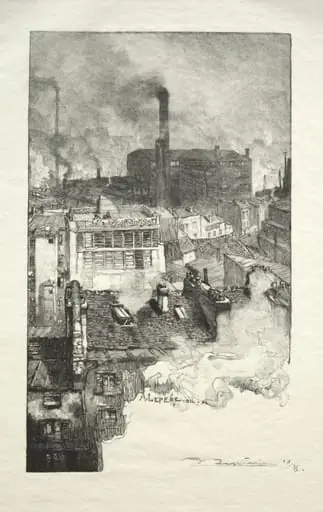
The Lock of the St. Martin Canal is a print by the Impressionist artist Auguste Lepère. It dates from 1890 and is held in the collection of the Cleveland Museum of Art. Created in 1890 by French artist Auguste Louis Lepère, *The Lock of the St.
About this work
Overview
Lepère, instrumental in revitalizing wood engraving as a fine art medium, used this technique to render intricate textures and atmospheric depth.
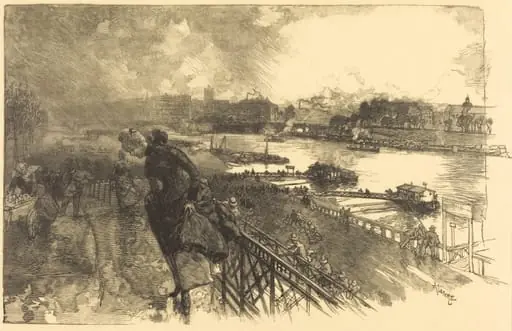
Created in 1890 by French artist Auguste Louis Lepère, *The Lock of the St. Martin Canal* is a wood engraving that captures a moment of labor along a Parisian waterway. Lepère, instrumental in revitalizing wood engraving as a fine art medium, used this technique to render intricate textures and atmospheric depth. The print is held in the collection of the Cleveland Museum of Art, where it exemplifies late 19th-century interest in everyday industrial life.
Subject & Meaning
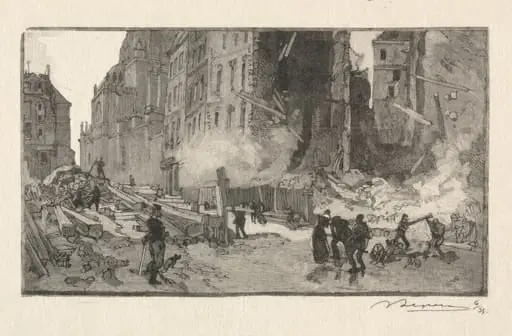
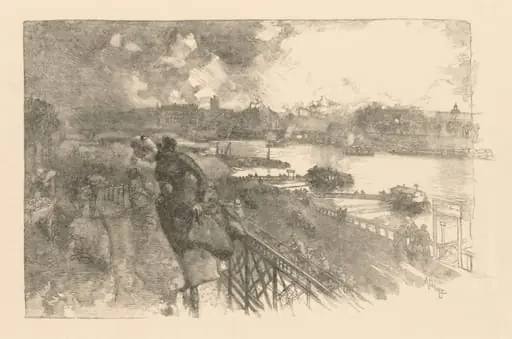
The scene depicts workers hauling a log through a canal lock, their physical exertion rendered with unidealized detail. Figures on the bridge above observe the activity, suggesting a quiet separation between labor and spectatorship. The presence of distant factories and smokestacks frames the moment within an industrializing urban landscape, emphasizing the quiet dignity of manual work amid rapid modernization.
Technique & Style
Lepère employed fine, dense lines in wood engraving to build contrast and texture, enhancing the sense of movement and weight. Shadows deepen the figures’ forms and the water’s surface, while the rough grain of the wood adds tactile realism. The composition directs attention downward to the laborers, using the bridge’s arch as a framing device that isolates the action from the industrial horizon beyond.
History & Provenance
The print was produced during a period when Lepère was actively promoting wood engraving as a legitimate artistic medium, distinct from mass reproduction. It entered the Cleveland Museum of Art’s collection in the 20th century, likely through acquisition from a European print dealer or collector. Its preservation reflects institutional interest in documenting the evolution of printmaking in the modern era.
Context
In late 19th-century Paris, urban infrastructure projects transformed waterways into commercial arteries. The St. Martin Canal, once a quiet route, now handled industrial goods like timber. Lepère’s focus on this specific labor reflects broader cultural attention to working-class life, aligning with realist movements in art and literature that sought to portray the unseen rhythms of the city.
Legacy
Lepère’s work helped reestablish wood engraving as a vehicle for artistic expression beyond illustration. *The Lock of the St. Martin Canal* remains a reference point for its technical precision and unromanticized portrayal of labor. It continues to inform discussions on the intersection of craft, industry, and representation in modern printmaking.
Artist & collection
Artist
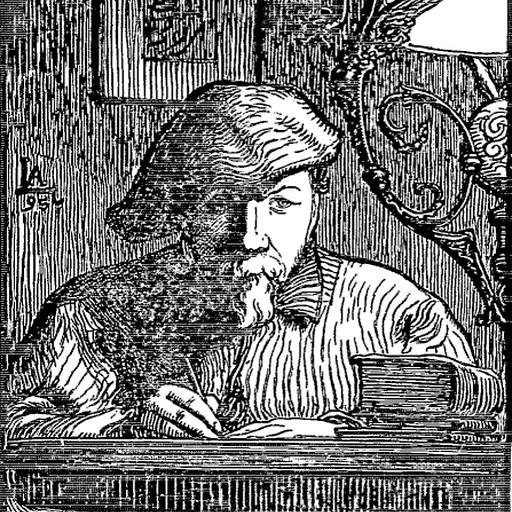
Louis-Auguste Lepère (30 November 1849 – 20 November 1918) was a French painter and etcher. Lepère is also considered a leader in the creative revival of wood engraving in Europe.