Artwork
The Watering Place at Marie Bridge
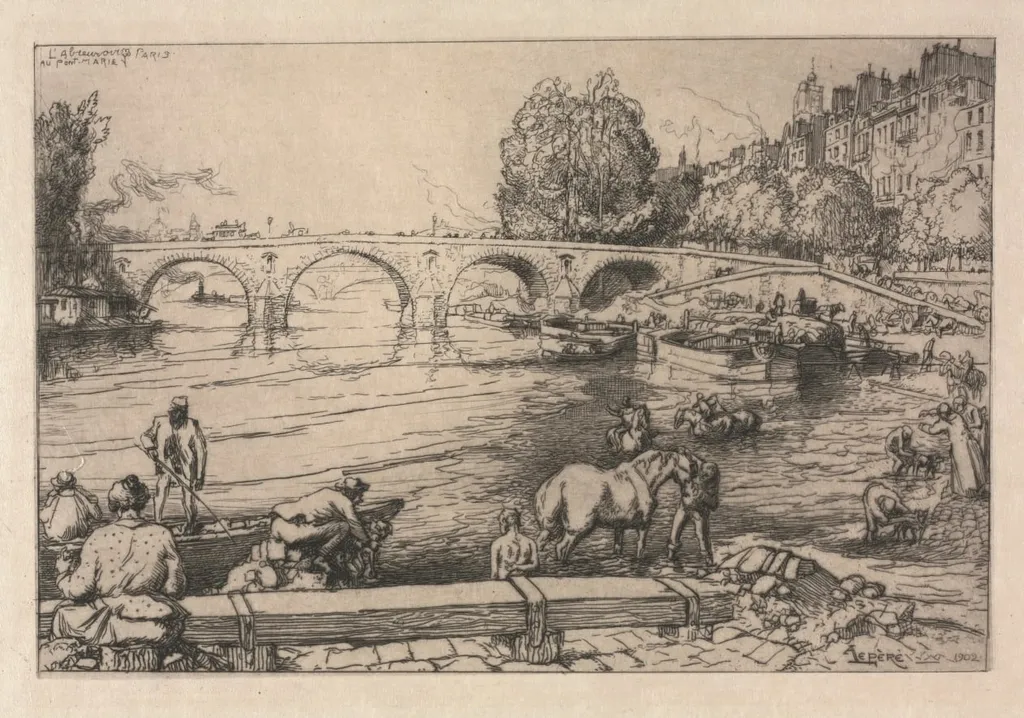
The Watering Place at Marie Bridge is a print by Auguste Lepère. It dates from 1902 and is held in the collection of the Cleveland Museum of Art. Created in 1902 by French artist Auguste Louis Lepère, this print captures a quiet riverside scene at Marie Bridge.
About this work
Overview
The work is part of the Cleveland Museum of Art’s collection, reflecting his interest in everyday rural life and the technical possibilities of printmaking.
Created in 1902 by French artist Auguste Louis Lepère, this print captures a quiet riverside scene at Marie Bridge. Lepère, recognized for revitalizing wood engraving in Europe, rendered the moment with precise line work and subtle tonal gradations. The work is part of the Cleveland Museum of Art’s collection, reflecting his interest in everyday rural life and the technical possibilities of printmaking.
Subject & Meaning
The scene depicts a modest rural gathering at a river crossing: people linger on the banks, some wading in the water, while a horse and its handler stand in the shallows. No dramatic event unfolds—instead, the image conveys the rhythm of daily life. The quiet interaction between humans, animals, and landscape suggests a harmony with nature, typical of late 19th-century interest in unidealized, authentic moments.
Technique & Style
Lepère employed wood engraving, a labor-intensive method involving incised lines on hardwood blocks, to achieve fine detail and nuanced shading. His use of varied line weight and controlled ink density creates depth without relying on color. The composition balances dark structural elements—like the bridge’s arches—with lighter, atmospheric areas of sky and water, demonstrating a refined command of tonal contrast.
History & Provenance
The print was produced during the final phase of Lepère’s career, when he was deeply engaged in promoting wood engraving as a fine art medium. It entered the Cleveland Museum of Art’s collection in the 20th century, likely through acquisitions focused on European prints. Its preservation reflects institutional recognition of Lepère’s contribution to the revival of traditional print techniques in modern art.
Context
In early 20th-century France, artists increasingly turned to scenes of ordinary life as industrialization reshaped the countryside. Lepère’s work aligns with this trend, echoing the realism of the Barbizon School and the printmaking revival led by figures like Félix Bracquemond. His choice of a rural watering place underscores a broader cultural nostalgia for pre-industrial rhythms and communal spaces.
Legacy
Lepère’s prints, including this one, helped reestablish wood engraving as a respected artistic medium in Europe. Though less widely known today, his technical precision and commitment to depicting unadorned landscapes influenced later generations of printmakers. The work remains a quiet testament to the value of observing the mundane with care and craftsmanship.
Artist & collection
Artist
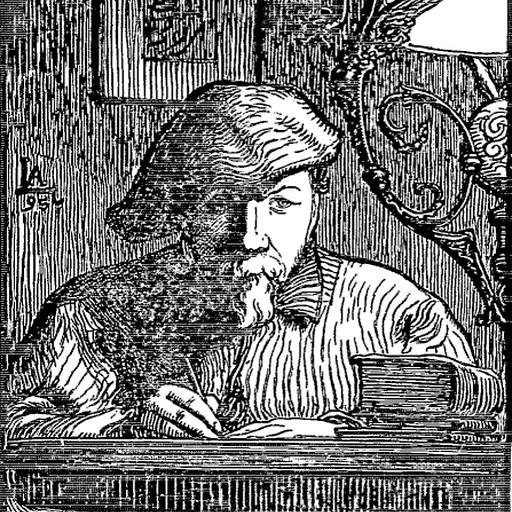
Louis-Auguste Lepère (30 November 1849 – 20 November 1918) was a French painter and etcher. Lepère is also considered a leader in the creative revival of wood engraving in Europe.

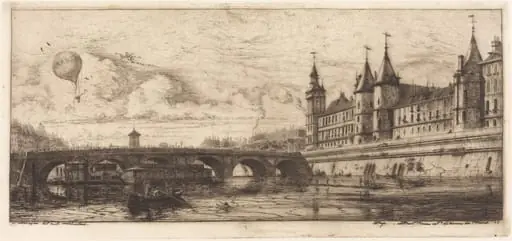 Le Pont-au-Change, Paris
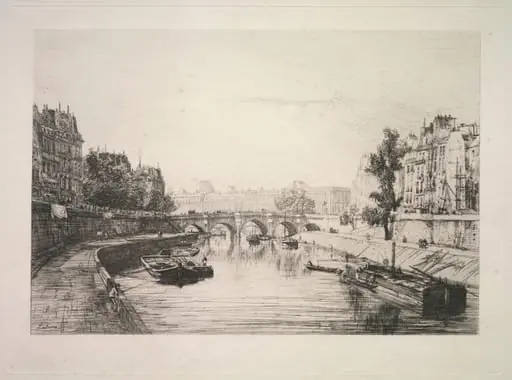 View from St. Michel Bridge
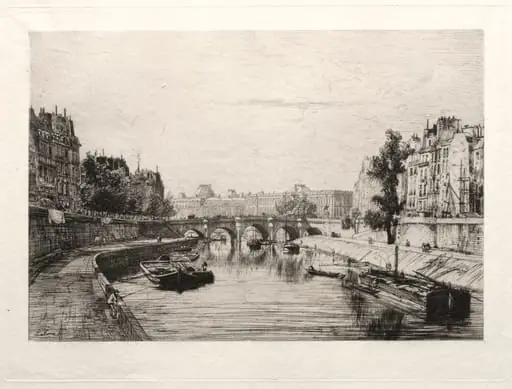 View from Pont St. Michel
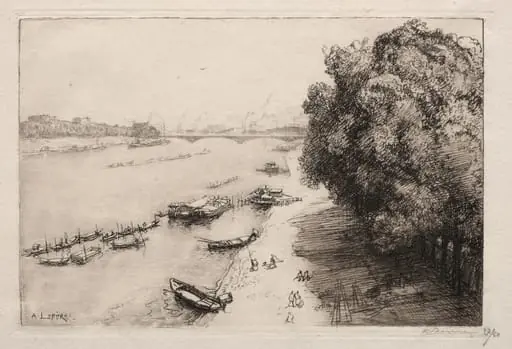 La Seine au Pont Nationale
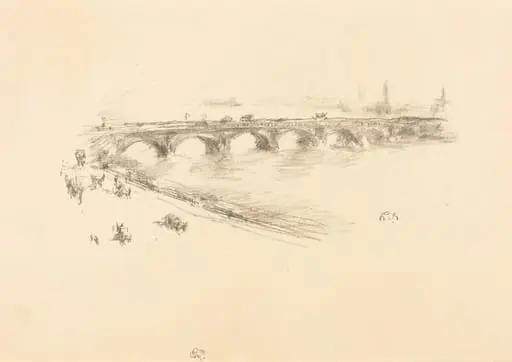 Evening, Little Waterloo Bridge
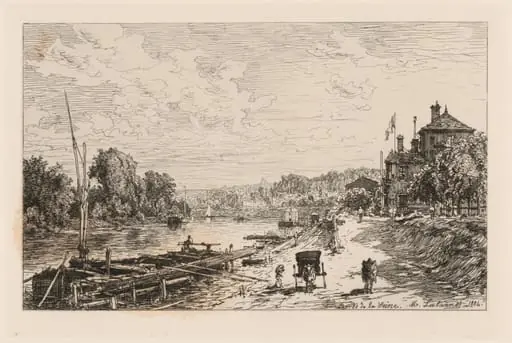 Vue du Bas Meudon, Bords de la Seine
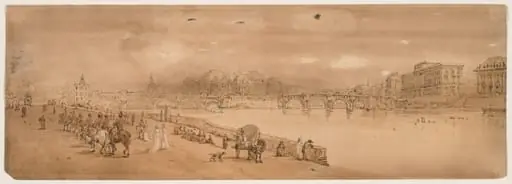 A Selection of Twenty of the Most Picturesque Views in Paris: View of Pont Neuf, and the Mint
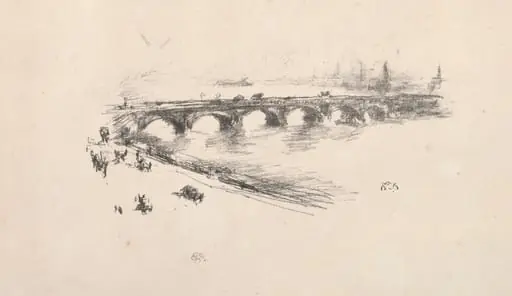 Evening, Little Waterloo Bridge
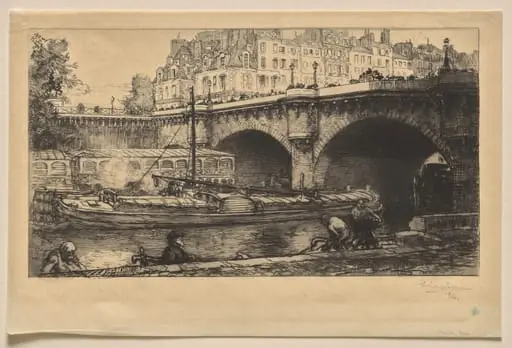 Le Pont Neuf
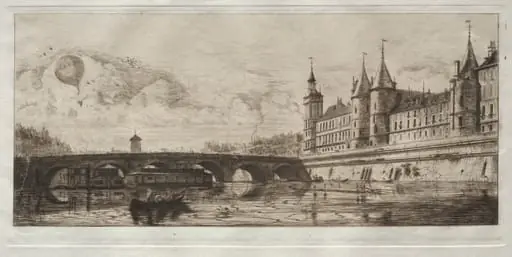 Le Pont-au-Change
 Etchings of Paris: The Exchange Bridge
 Sunset at Pont Marie