Artwork
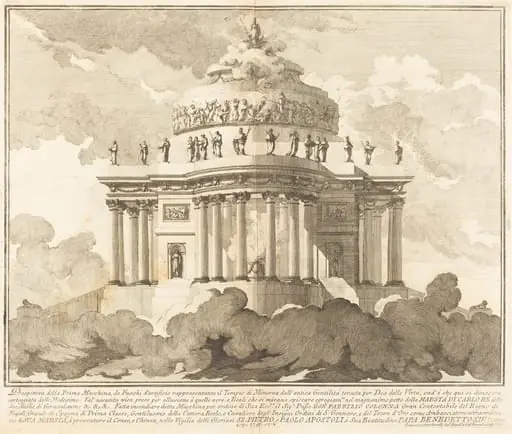
The Prima Macchina for the Chinea of 1773: The Temple of Peace
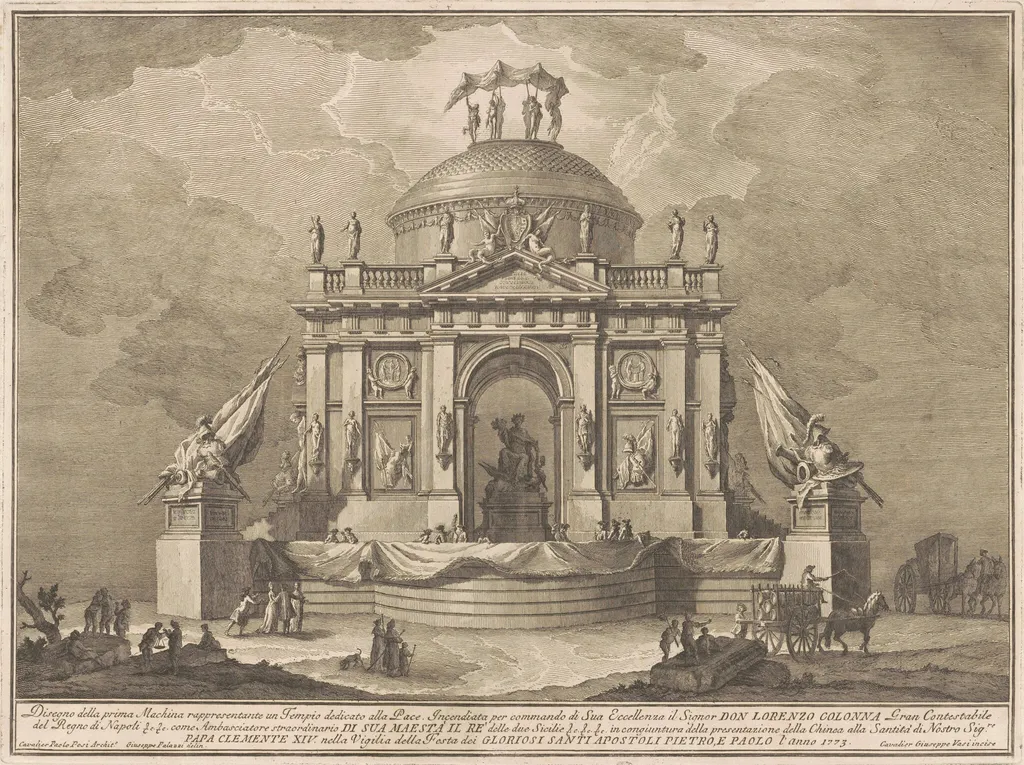
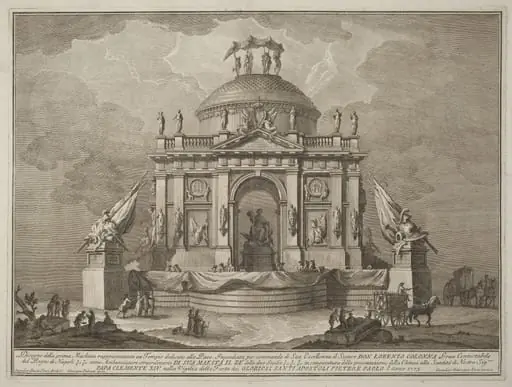
The Prima Macchina for the Chinea of 1773: The Temple of Peace is an ink print by the Romanticist artist Giuseppe Vasi. It dates from 1773 and is held in the collection of the National Gallery of Art.
About this work
Overview
Giuseppe Vasi’s 1773 etching, titled The Prima Macchina for the Chinea of 1773: The Temple of Peace, records a temporary architectural spectacle erected for a public celebration. The print captures a monumental, temple‑like structure adorned with statues, flags and a central arch, surrounded by a gathering of onlookers.
Subject & Meaning
The composition depicts a ceremonial stage modeled after a classical temple, its roof lined with sculptural figures and its sides draped with banners. An arch framed by columns houses a central statue, while crowds of men and women in period dress ascend steps or observe from below, suggesting a festive procession linked to the theme of peace.
Technique & Style
Executed in etching, Vasi employs fine line work to render architectural details and the texture of crowd clothing. The contrast between the crisp outlines of the temporary structure and the softer, densely packed figures creates depth, emphasizing both the grandeur of the set and the human activity surrounding it.
History & Provenance
Created for the 1773 Chinea—a diplomatic gift ceremony between the Papal States and the Kingdom of Naples—the print documents the temporary “Temple of Peace” erected for the occasion. The inscription at the bottom, referencing “Pace” and “Temple,” identifies the work as a visual record of that specific event.
Context
The Chinea tradition involved a ceremonial procession of a white horse and accompanying festivities in Rome, often accompanied by elaborate temporary architecture. Vasi’s depiction reflects the 18th‑century practice of commemorating such state occasions through detailed prints that circulated among the educated public.
Legacy
As a rare visual source, the etching offers insight into the theatrical staging of public celebrations in late‑Baroque Rome. It also illustrates Vasi’s role as a documentarian of urban spectacles, contributing to the visual historiography of papal ceremonial culture.
Artist & collection

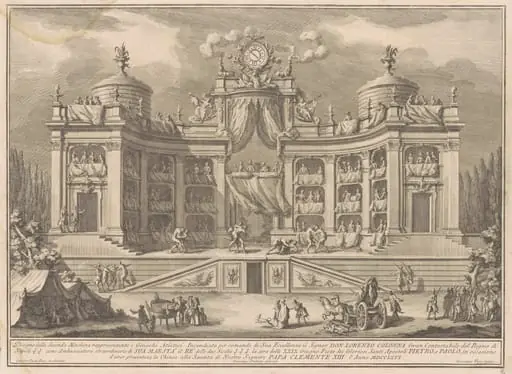 The Seconda Macchina for the Chinea of 1766: A Theater for Athletic Games
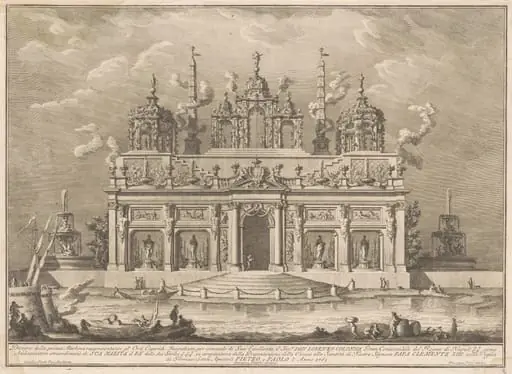 The Prima Macchina for the Chinea of 1765: The Garden of the Hesperides
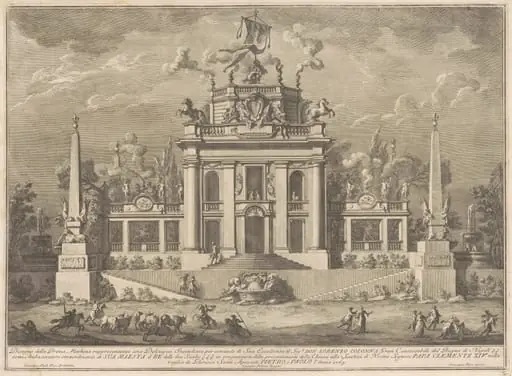 The Prima Macchina for the Chinea of 1769: A "Deliziosa"
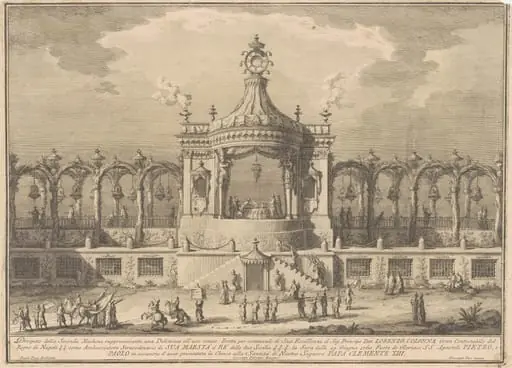 The Seconda Macchina for the Chinea of 1760: A Chinoiserie Pavilion
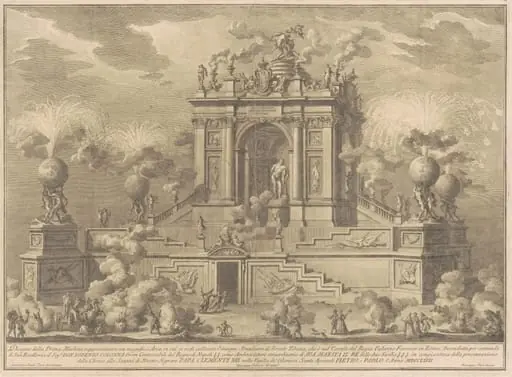 The Prima Macchina for the Chinea of 1767: A Triumphal Arch with the Farnese Hercules
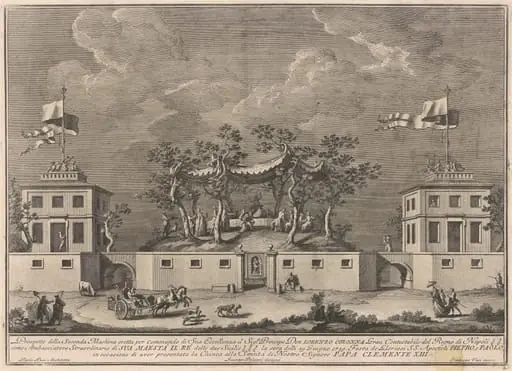 The Seconda Macchina for the Chinea of 1759: A "Deliziosa" with a Bacchanal
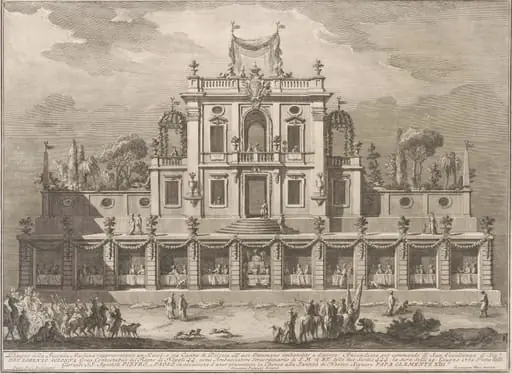 The Seconda Macchina for the Chinea of 1762: A Kiosk, or Pleasure-House in Ottoman Style
 The Seconda Macchina for the Chinea of 1763: The Grape Harvest
 The Prima Macchina for the Chinea of 1773: The Temple of Peace
 The Prima Macchina for the Chinea of 1771: The Temple of Asclepius
 The Prima Macchina for the Chinea of 1771: The Temple of Asclepius
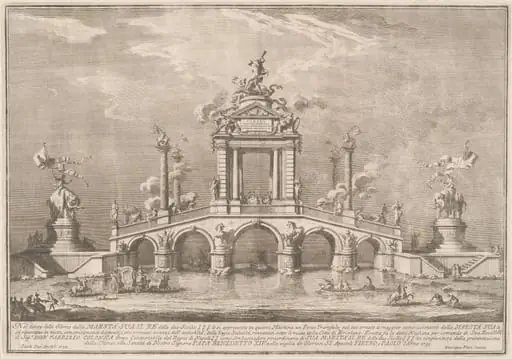 The Prima Macchina for the Chinea of 1755: A Triumphal Bridge with Antiquities from Herculaneum
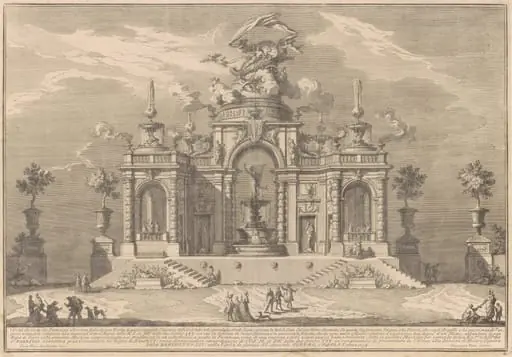 The Prima Macchina for the Chinea of 1754: The Palace of Venus in Cyprus
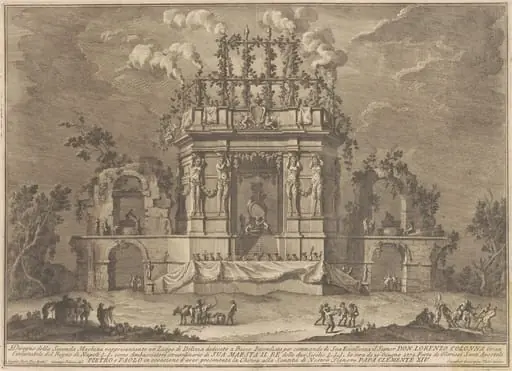 The Seconda Macchina for the Chinea of 1771: A Pleasure Palace Dedicated to Bacchus
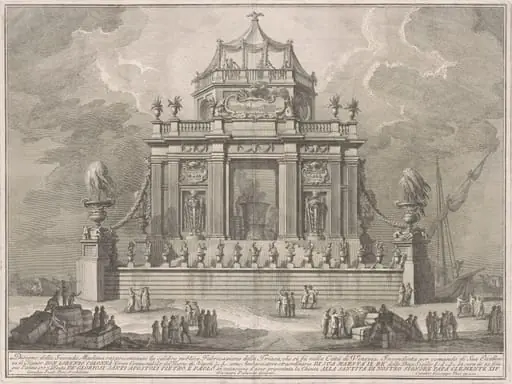 The Seconda Macchina for the Chinea of 1773: The Preparation of Theriac in Venice
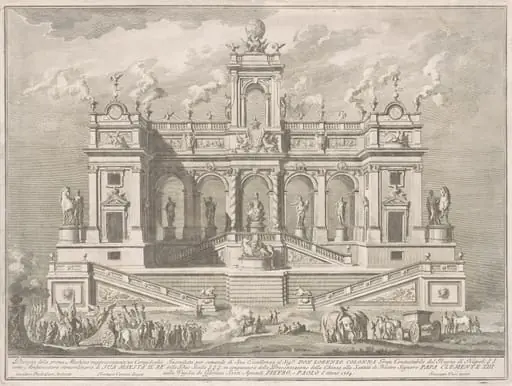 The Prima Macchina for the Chinea of 1764: A Capitol Building
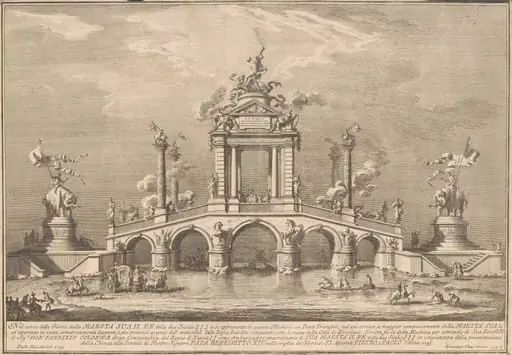 The Prima Macchina for the Chinea of 1755: A Triumphal Bridge with Antiquities from Herculaneum
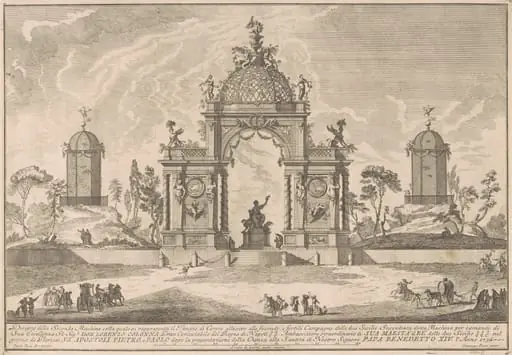 The Seconda Macchina for the Chinea of 1756: The Temple of Ceres
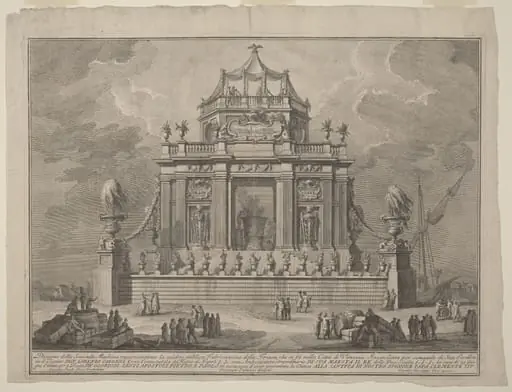 The Seconda Macchina for the Chinea of 1773: The Preparation of Theriac in Venice
 The Prima Macchina for the Chinea of 1746: The Temple of Minerva