Artwork
The Seconda Macchina for the Chinea of 1767: Mount Etna with the Forge of Vulcan
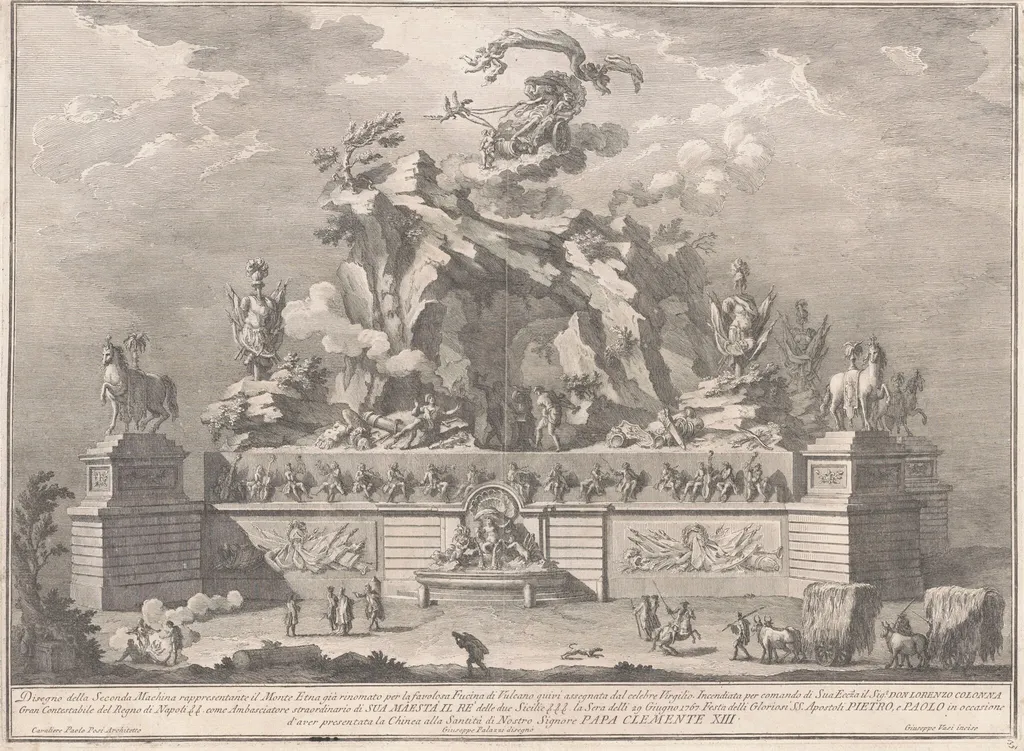
The Seconda Macchina for the Chinea of 1767: Mount Etna with the Forge of Vulcan is an ink print by the Romanticist artist Giuseppe Vasi. It dates from 1767 and is held in the collection of the National Gallery of Art.
About this work
It’s not a painting—it’s an etching, which means the artist scratched the design into metal.
This print shows a wild scene of a volcano erupting. Smoke and fire shoot high into the sky. Below, people and animals scramble around a stage set that looks like a mountain.
The tiny text at the bottom says this was made for a big event in 1767. It’s not a painting—it’s an etching, which means the artist scratched the design into metal.
Look up etching to see how this printmaking technique works.
Overview
Giuseppe Vasi’s 1767 etching titled *The Seconda Macchina for the Chinea of 1767: Mount Etna with the Forge of Vulcan* depicts a dramatic volcanic eruption. Rendered in black‑and‑white line work, the image combines natural disaster with theatrical staging, presenting a mountain spewing fire and smoke while figures and animals move about a constructed set.
Subject & Meaning
The composition centers on Mount Etna, personified as the forge of the god Vulcan. The eruptive plume dominates the sky, while a crowd of people and livestock navigate a fabricated stage that mimics the mountain’s slopes, suggesting a blend of mythic symbolism and contemporary spectacle.
Technique & Style
Executed as an etching, Vasi incised the design onto a copper plate, allowing fine linear detail and tonal variation through varying depths of bite. The print’s stark contrasts and intricate hatching convey both the turbulence of the eruption and the ordered arrangement of the staged figures.
History & Provenance
The work was produced for the Chinea, a ceremonial tribute to the Pope that featured elaborate pageants in 1767. The small inscription at the bottom confirms its purpose as a visual record of the second machine (macchina) used in that year’s festivities, linking the print to a specific historical event.
Artist & collection

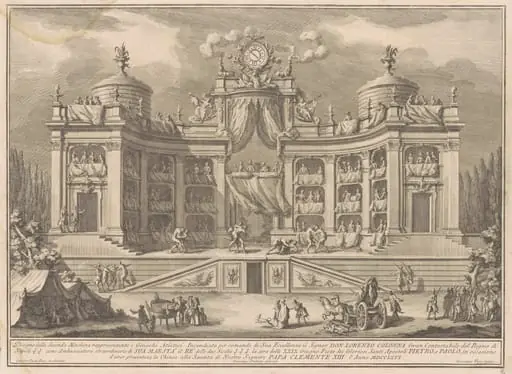 The Seconda Macchina for the Chinea of 1766: A Theater for Athletic Games
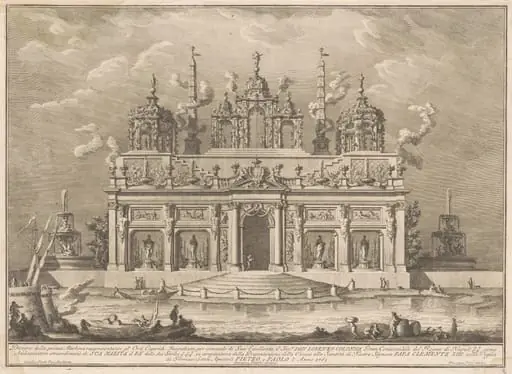 The Prima Macchina for the Chinea of 1765: The Garden of the Hesperides
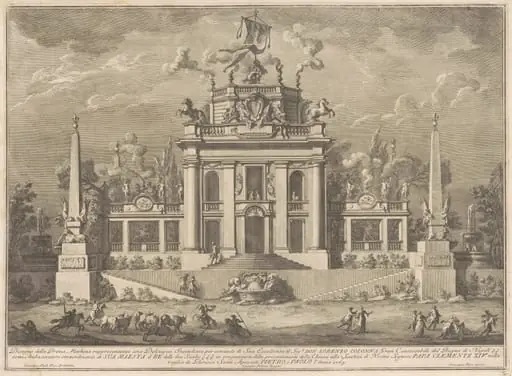 The Prima Macchina for the Chinea of 1769: A "Deliziosa"
 The Seconda Macchina for the Chinea of 1760: A Chinoiserie Pavilion
 The Prima Macchina for the Chinea of 1767: A Triumphal Arch with the Farnese Hercules
 The Seconda Macchina for the Chinea of 1759: A "Deliziosa" with a Bacchanal
 The Seconda Macchina for the Chinea of 1762: A Kiosk, or Pleasure-House in Ottoman Style
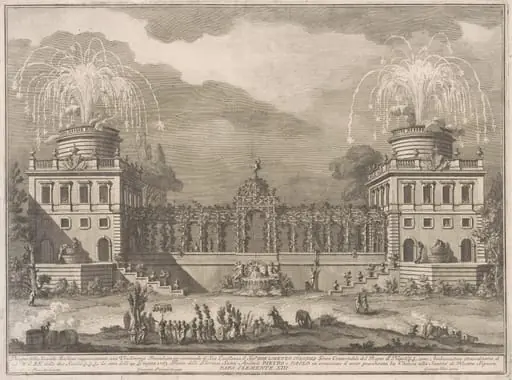 The Seconda Macchina for the Chinea of 1763: The Grape Harvest
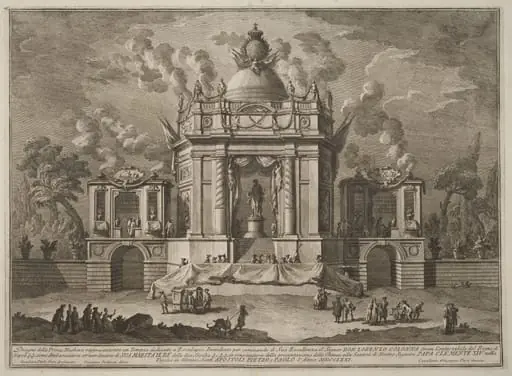 The Prima Macchina for the Chinea of 1771: The Temple of Asclepius
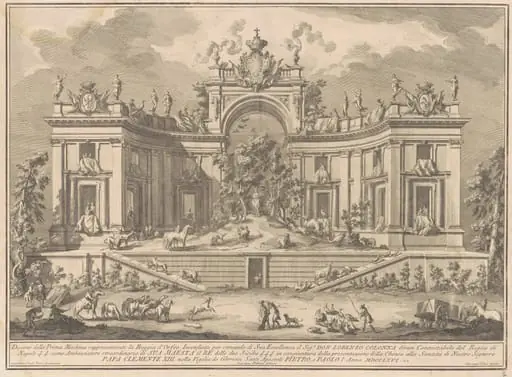 The Prima Macchina for the Chinea of 1766: The Palace of Orpheus
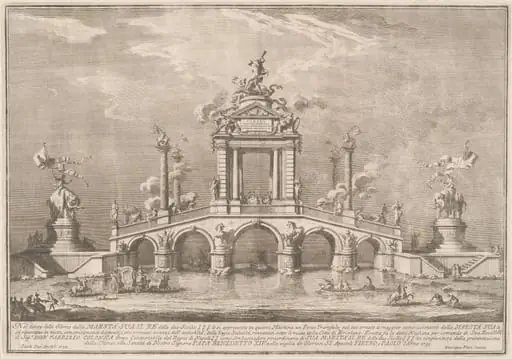 The Prima Macchina for the Chinea of 1755: A Triumphal Bridge with Antiquities from Herculaneum
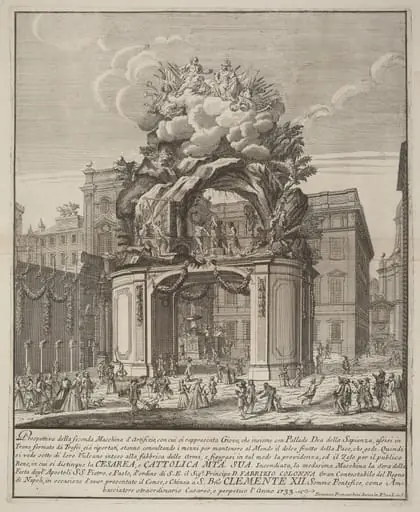 The Seconda Macchina for the Chinea of 1733: Jupiter and Minerva and the Forge of Vulcan
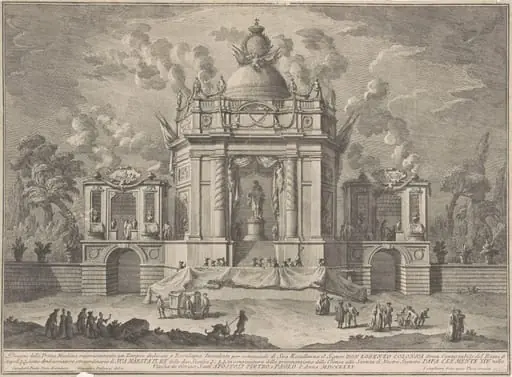 The Prima Macchina for the Chinea of 1771: The Temple of Asclepius
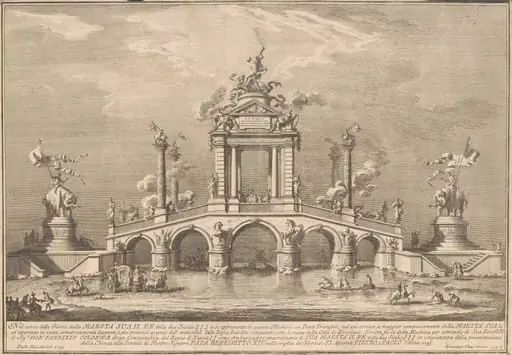 The Prima Macchina for the Chinea of 1755: A Triumphal Bridge with Antiquities from Herculaneum
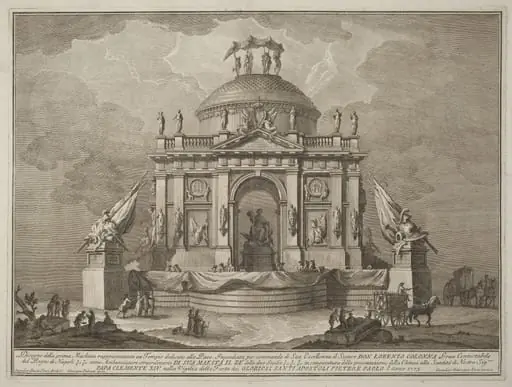 The Prima Macchina for the Chinea of 1773: The Temple of Peace
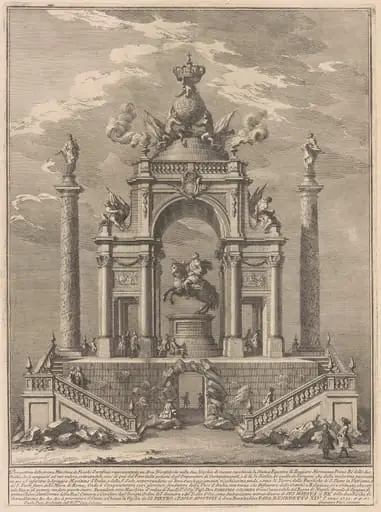 The Prima Macchina for the Chinea of 1751: Triumphal Arch for Roger I of Sicily
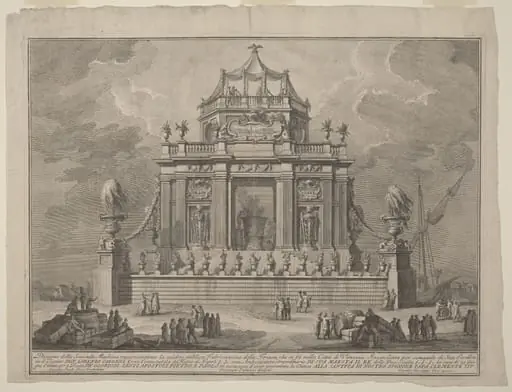 The Seconda Macchina for the Chinea of 1773: The Preparation of Theriac in Venice