Artwork
Allegory of Life
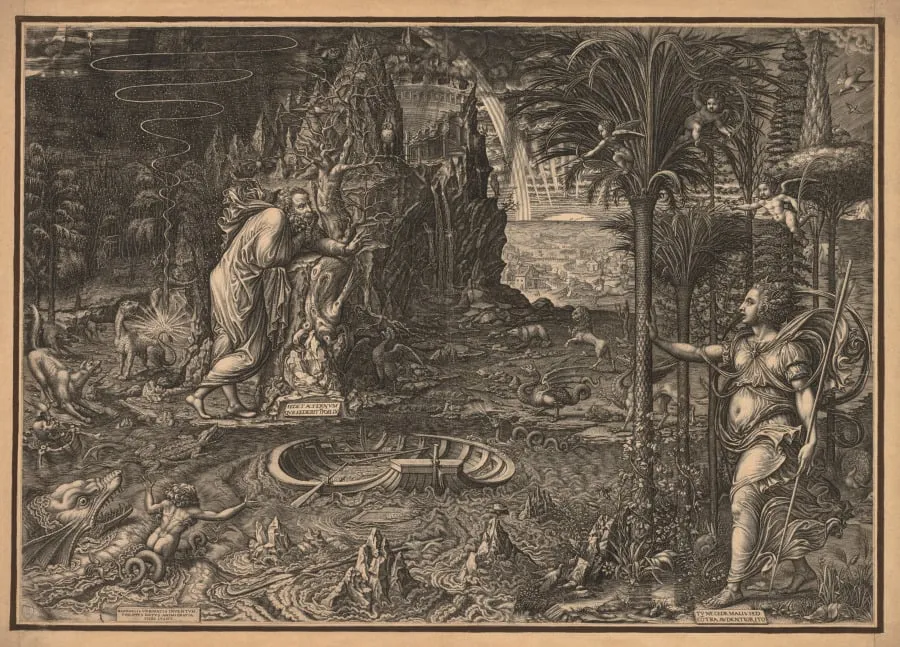
Allegory of Life is a print by the Renaissance artist Giorgio Ghisi. It dates from 1561 and is held in the collection of the Cleveland Museum of Art.
About this work
Overview
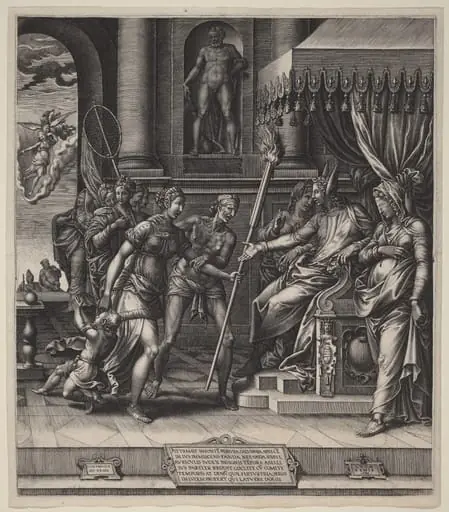
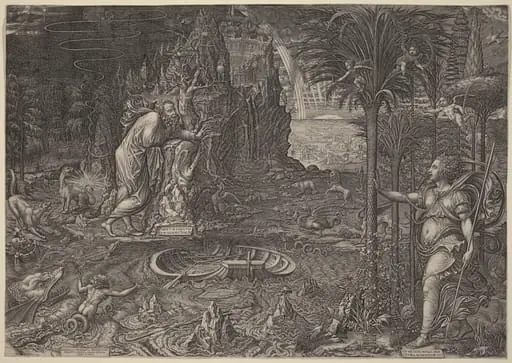
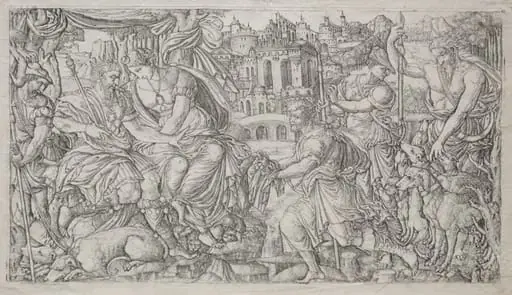
The work is an engraved print titled *Allegory of Life*. It depicts a man and a woman standing on a path amid a crowd of figures representing abstract forces such as time, death, and fortune. Small plaques at the couple’s feet bear Latin verses taken from Virgil’s *Aeneid* Book VI. The composition is dense, with intricate line work that creates a sense of movement and depth.
Subject & Meaning
The engraving assembles a symbolic narrative rather than illustrating a specific episode from the epic.
The engraving assembles a symbolic narrative rather than illustrating a specific episode from the epic. The two quotations—"He who sits unfortunate will sit forever" and "Do not yield to adversities, but go out to meet them bravely"—suggest a moral lesson about confronting fate. While scholars have not reached a consensus, the overall tone appears to encourage resilience in the face of life’s trials, using the classical source as a philosophical framework.
Technique & Style
Executed with fine, cross‑hatched lines, the print demonstrates the high level of control typical of early modern engraving. The artist employs chiaroscuro through dense stippling and varied line density, giving the surrounding figures a three‑dimensional presence. The crowded arrangement and the inclusion of textual elements within the image reflect a Renaissance interest in integrating literary allusion with visual allegory.
Context
The piece belongs to a tradition of allegorical prints that circulated in the 16th and 17th centuries, when artists frequently drew on classical literature to convey moral instruction. By referencing Virgil’s underworld journey—a metaphor for human existence—the work aligns itself with contemporary humanist thought that linked poetic narrative to ethical reflection.
Legacy
Although the exact interpretation remains debated, the engraving continues to be studied for its complex interplay of text and image. It exemplifies how print media could disseminate sophisticated philosophical ideas to a broader audience, and it remains a reference point for scholars examining the visual reception of classical epics in early modern art.
Artist & collection
Artist
Giorgio Ghisi (1520 — 15 December 1582) was an Italian engraver from Mantua who also worked in Antwerp and in France.

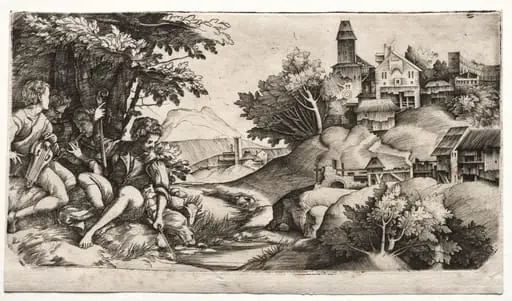 Shepherds in a Landscape
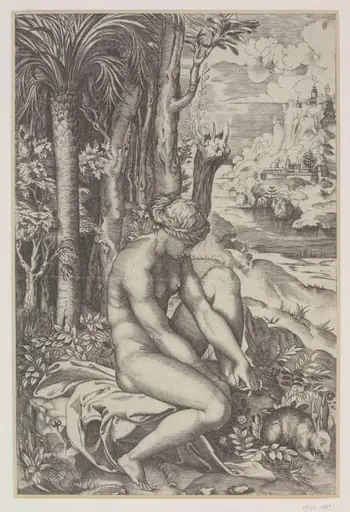 Untitled
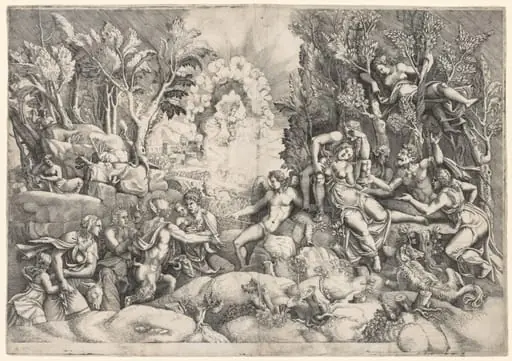 The Death of Procris
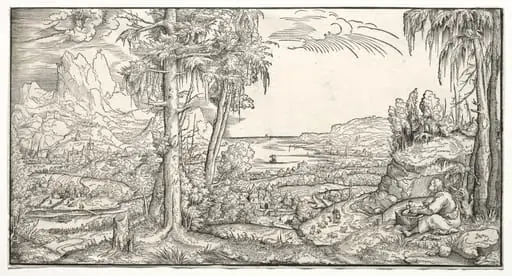 St. John on the Island of Patmos
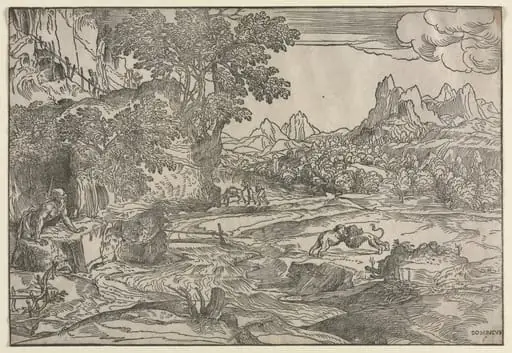 Landscape with Saint Jerome and Two Lions
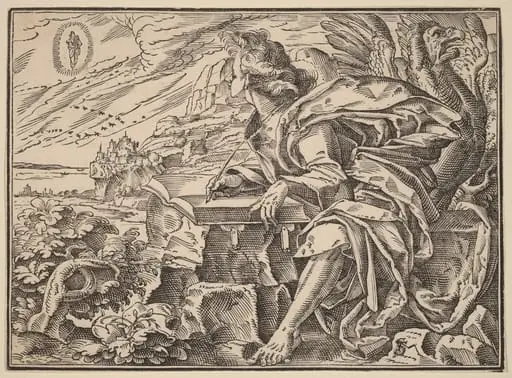 The Four Horsemen of the Apocalypse
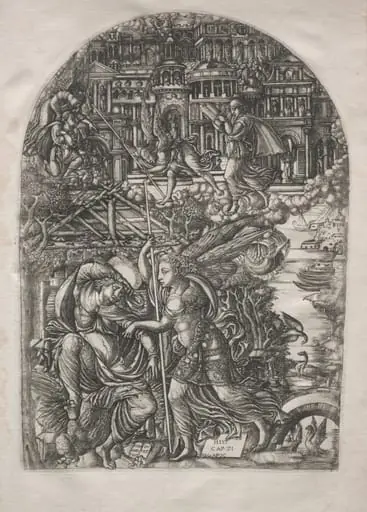 The Apocalypse: The Angel Shows St. John the New Jerusalem
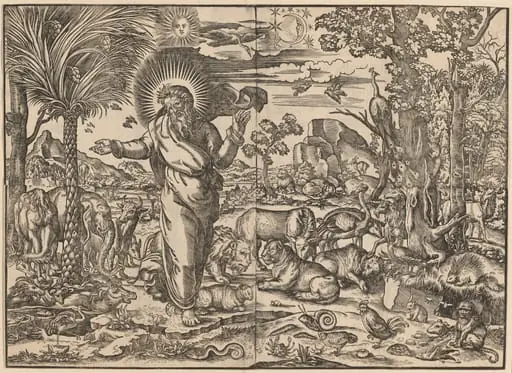 The Creation of the Animals
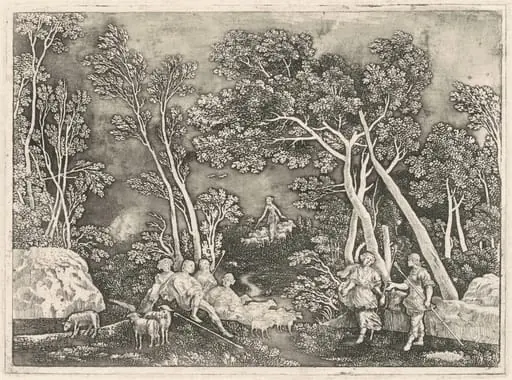 Nymphs in a Landscape
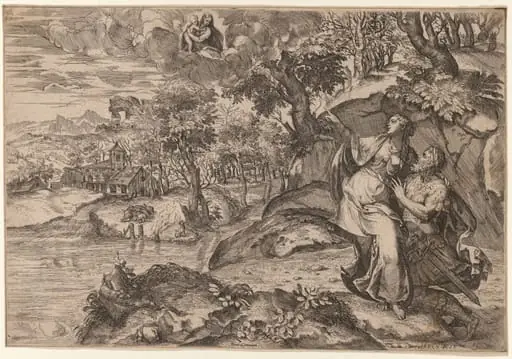 Augustus and the Tiburtine Sibyl
 Huntsman Presenting a Gift to a King