Artwork
Death of Cleopatra
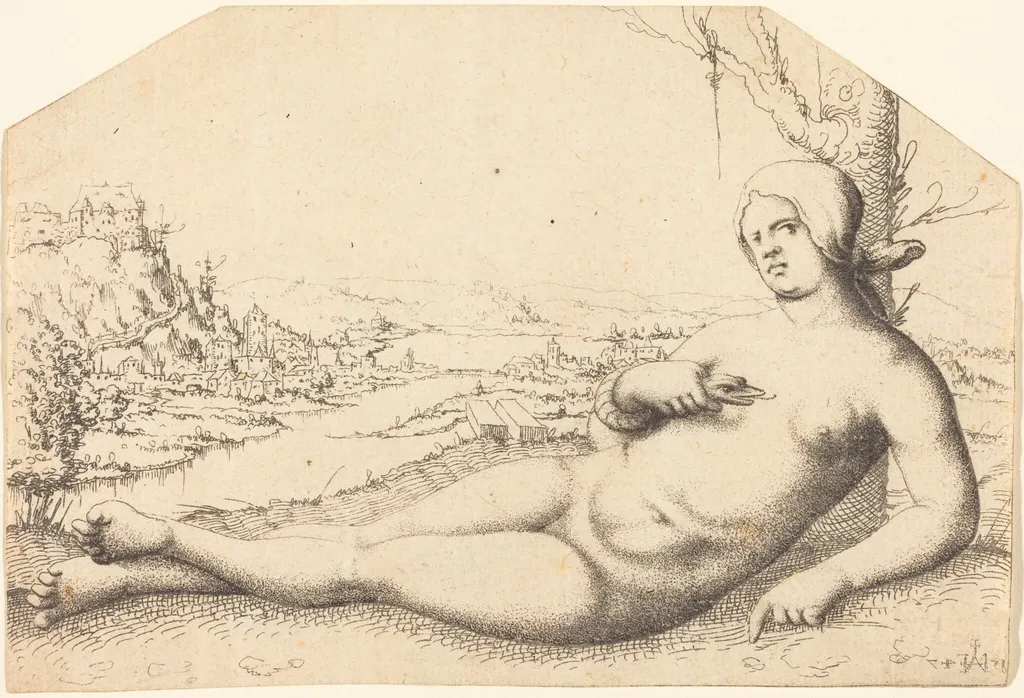
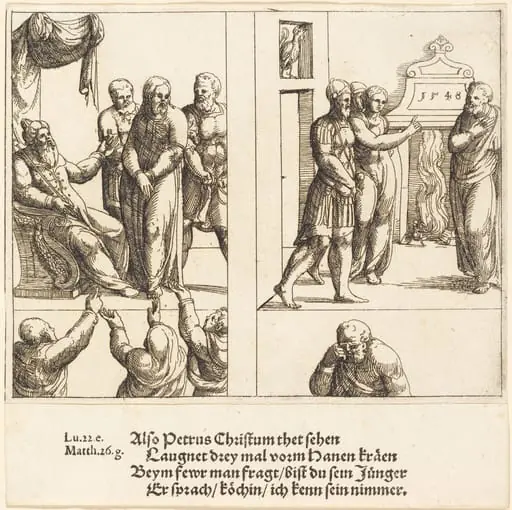
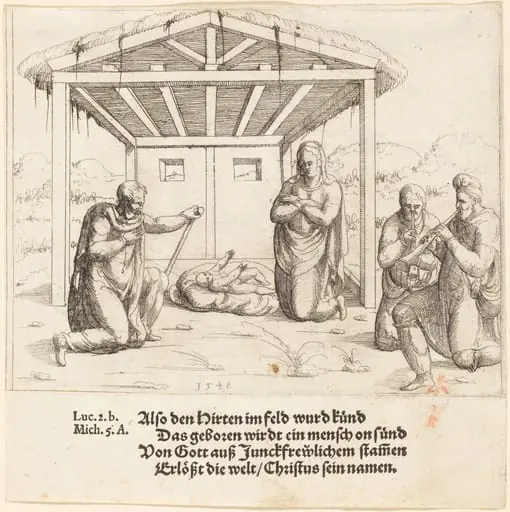
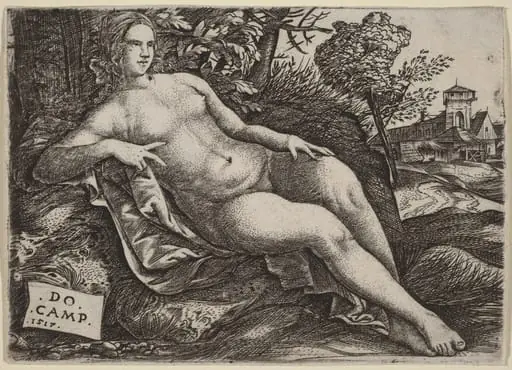
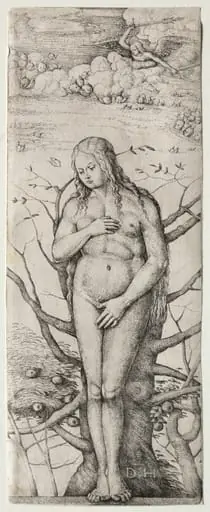
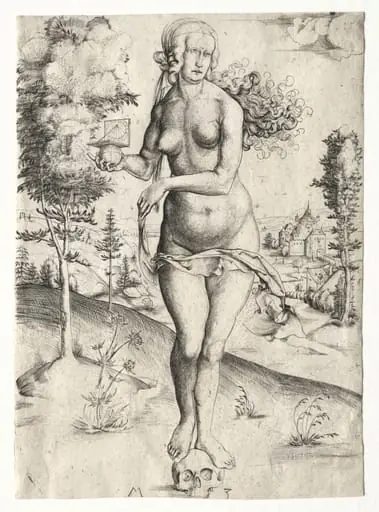
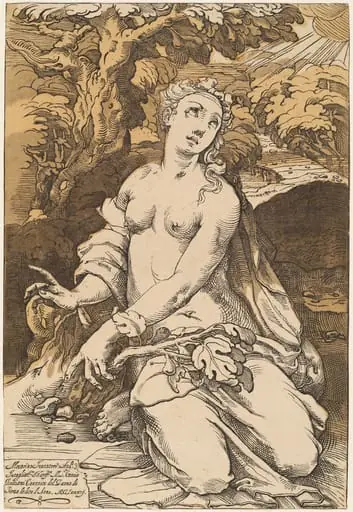
Death of Cleopatra is an ink print by the Renaissance artist Augustin Hirschvogel. It dates from 1547 and is held in the collection of the National Gallery of Art.
About this work
Overview
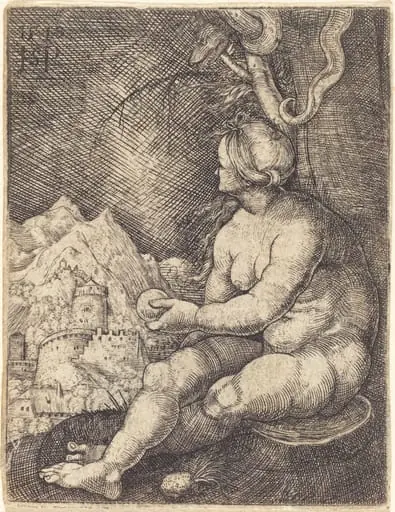
Created in 1547, this print by Augustin Hirschvogel presents the moment of Cleopatra’s death. Executed as an etching on laid paper with a counterproof, the image combines a tranquil figure with a threatening serpent, set against a detailed urban backdrop.
Subject & Meaning
The composition centers on a reclining woman, her expression composed, while a coiled snake—symbolic of the asp that ended her life—winds around her. The surrounding cityscape, rendered with fine lines, suggests a broader context of power and civilization framing the personal tragedy.
Technique & Style
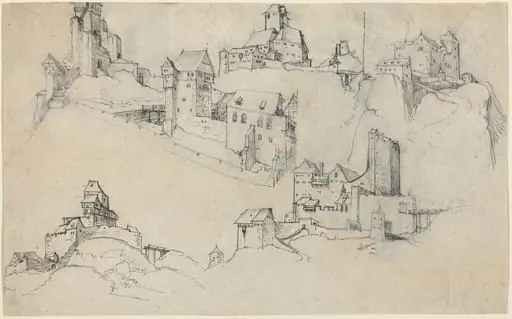
Hirschvogel employs delicate, linear etching marks to delineate architectural forms, evoking a map‑like precision. The serpent’s scales are rendered with swift, textured strokes that convey a tactile quality, exemplifying the artist’s refined handling of line and tonal variation in printmaking.
History & Provenance
The work belongs to Hirschvogel’s series of small landscape etchings produced between 1545 and 1549, a period during which he was linked to the Danube School, an artistic movement active in Bavaria and Austria. The print reflects his dual interests in cartography and graphic art.
Context
Within the Danube School, artists emphasized natural observation and detailed rendering of terrain. Hirschvogel’s inclusion of an urban panorama alongside a classical narrative aligns with the school’s blend of topographical accuracy and imaginative subject matter.
Artist & collection
Artist
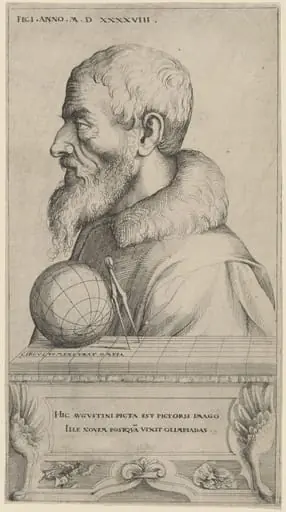
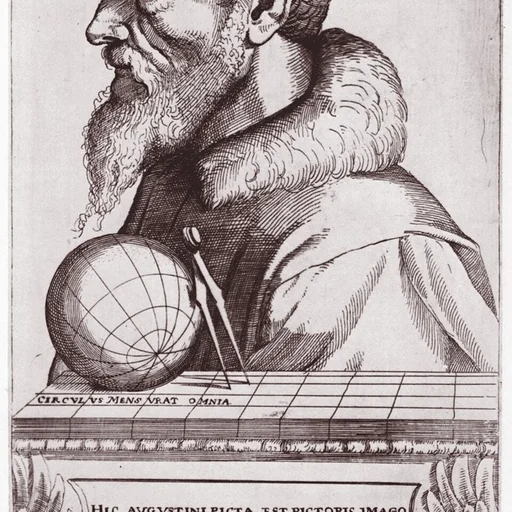
Augustin Hirschvogel (1503 – February 1553) was a German artist, mathematician, and cartographer known primarily for his etchings.