Artwork
Death of Cleopatra
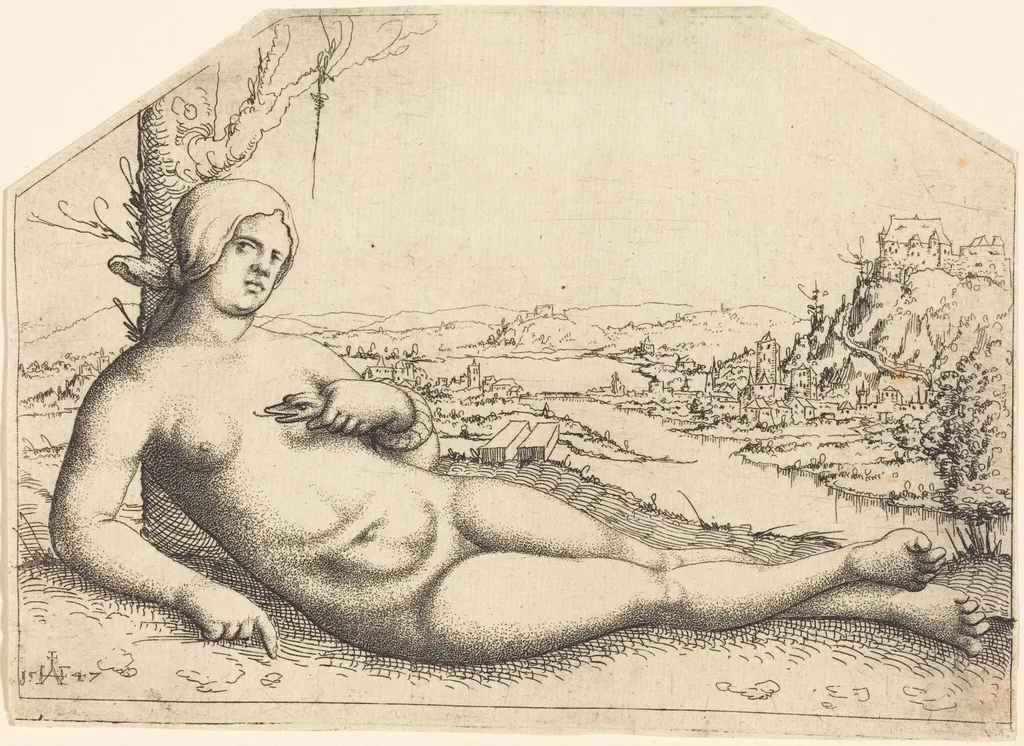
Death of Cleopatra is an ink print by the Renaissance artist Augustin Hirschvogel. It dates from 1547 and is held in the collection of the National Gallery of Art.
About this work
Overview
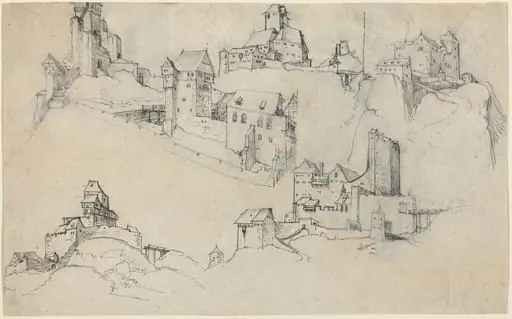
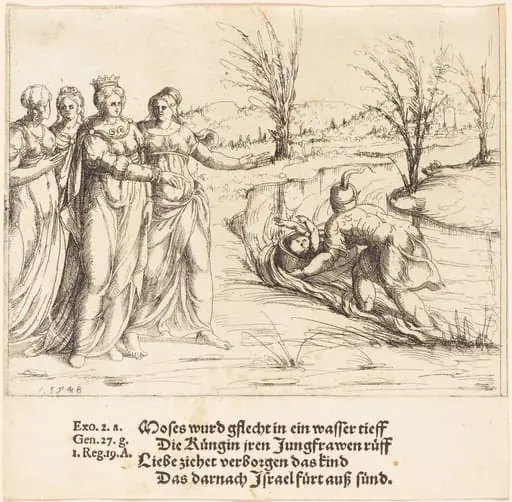
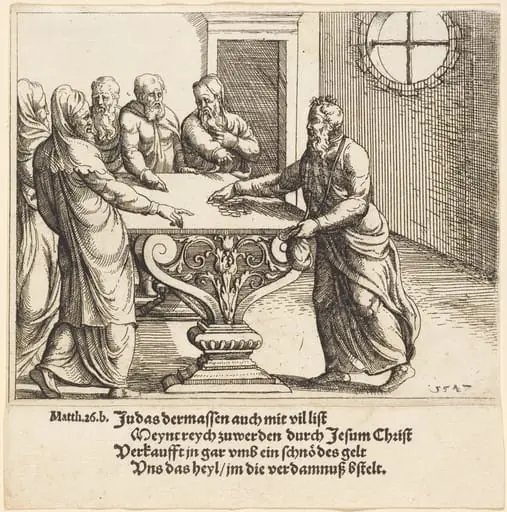
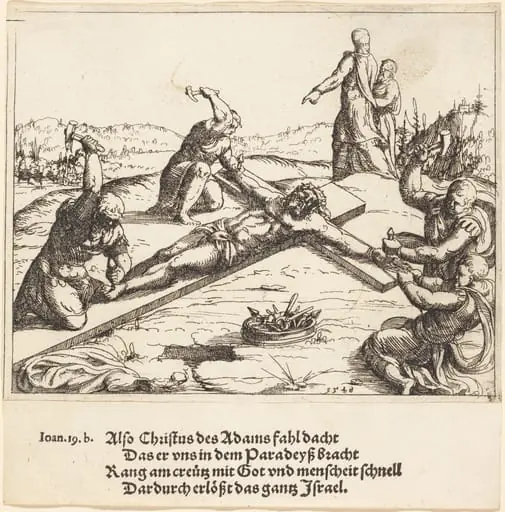
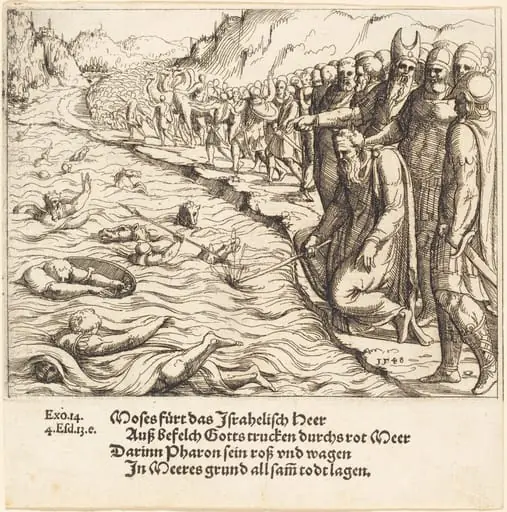
Created in 1547 by the German artist Augustin Hirschvogel, this etching captures the moment of Cleopatra’s death. As a printmaker active in the mid-16th century, Hirschvogel was known for his precise line work and interest in topographical detail. The image is one of several historical and mythological subjects he rendered in etching, blending narrative drama with architectural precision.
Subject & Meaning
Her posture—head tilted back, body limp—suggests surrender to death, aligning with classical accounts of her suicide.
The scene portrays Cleopatra in her final moments, reclining as a serpent coils around her arm and near her face. Her posture—head tilted back, body limp—suggests surrender to death, aligning with classical accounts of her suicide. The inclusion of a distant cityscape may symbolize the fall of Alexandria or the broader collapse of her reign, framing personal tragedy within a larger historical context.
Technique & Style
Executed in etching, the image relies on fine, incised lines to build form and texture. The strokes are uneven and urgent, conveying a sense of immediacy. Hirschvogel’s handling of the cityscape behind the figure is meticulous yet restless, with tiny structures and winding paths rendered in dense, scratchy lines that contrast with the smoother contours of the figure.
History & Provenance
The print was produced during Hirschvogel’s mature period, when he was active in Nuremberg and known for both artistic and cartographic work. While its early ownership is undocumented, it likely circulated among collectors of prints and humanist-themed imagery. Its survival reflects the 16th-century European interest in classical history as a subject for graphic art.
Context
Hirschvogel belonged to the Danube School, a regional circle emphasizing landscape and emotional atmosphere. Though often associated with natural scenery, he also engaged with mythological narratives. This etching reflects a broader Renaissance trend of revisiting ancient stories through new graphic techniques, merging classical themes with contemporary visual language.
Legacy
The print remains a rare example of Hirschvogel’s narrative work, distinguishing him from peers who focused solely on landscapes or maps. It contributes to the understanding of how classical subjects were interpreted in Northern European printmaking. Its technical approach influenced later artists exploring the interplay between figure and environment in etched compositions.
Artist & collection
Artist
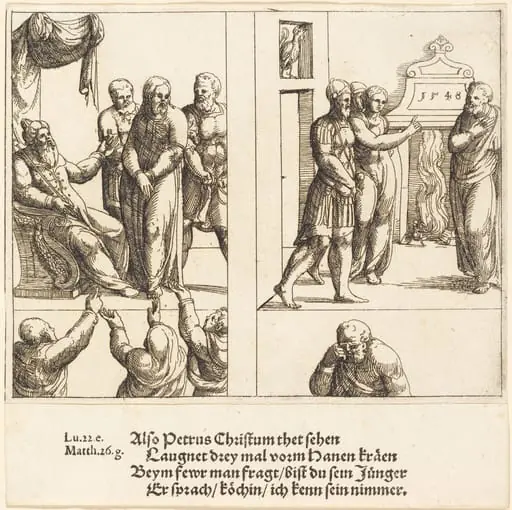
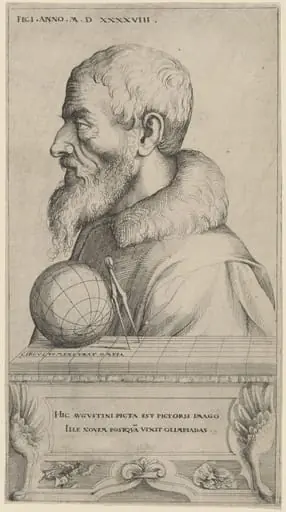
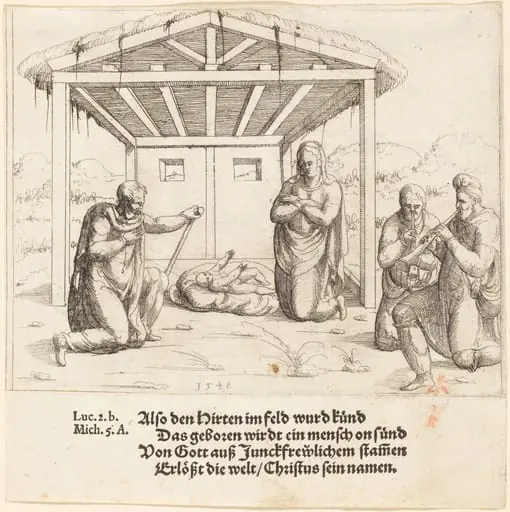
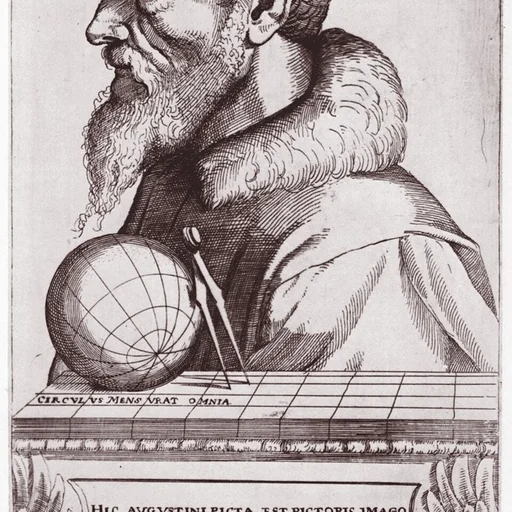
Augustin Hirschvogel (1503 – February 1553) was a German artist, mathematician, and cartographer known primarily for his etchings.