Artwork
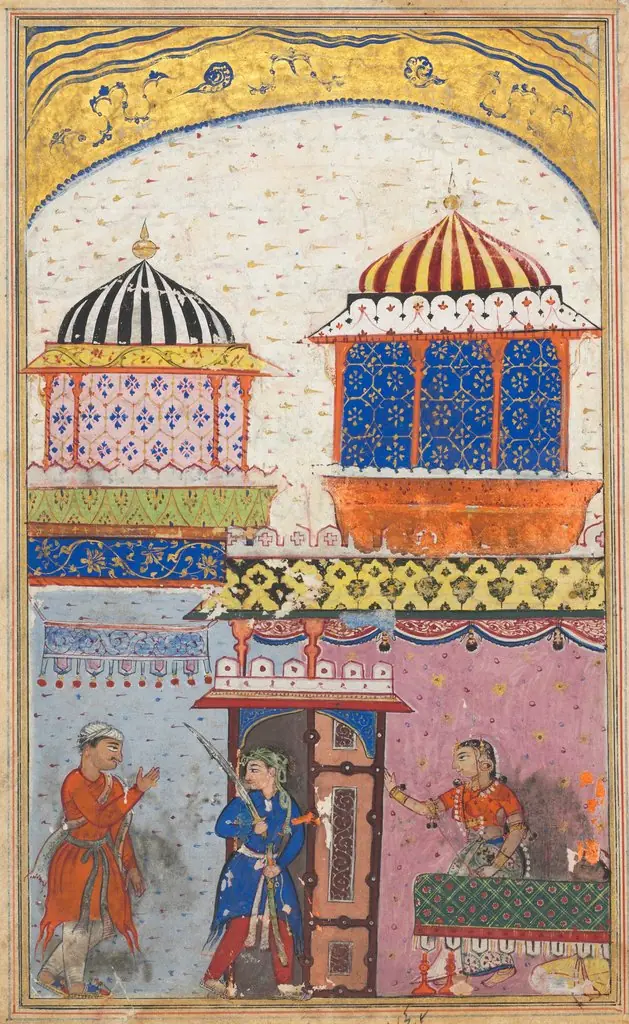
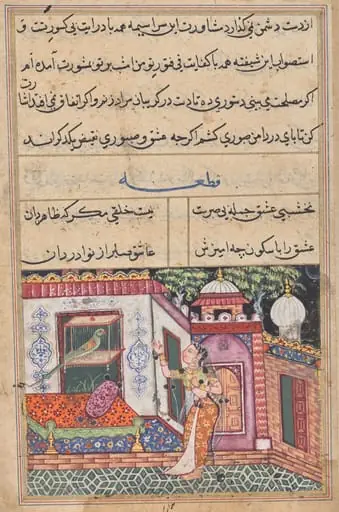
A woman asks her lover to leave her house, brandishing his sword and feigning rage in order to deceive her husband who has just arrived, from a Tuti-nama (Tales of a Parrot): Eighth Night
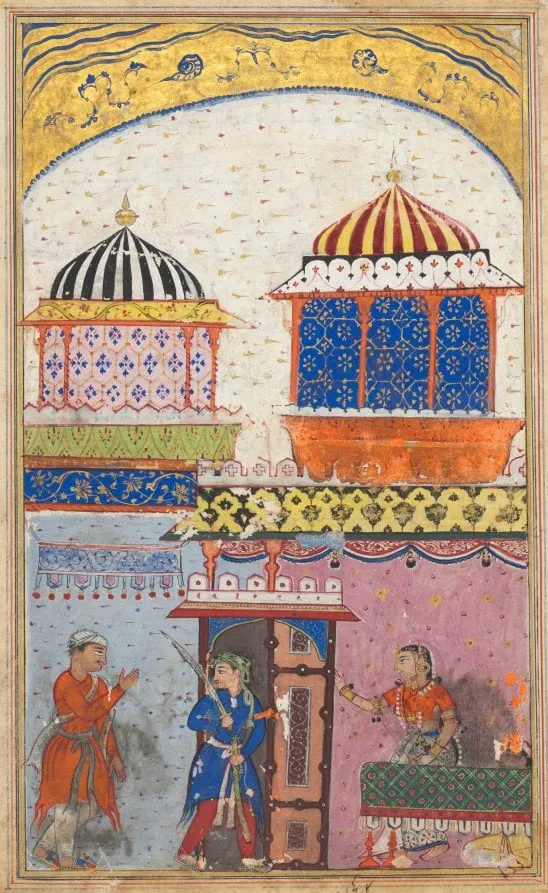
A woman asks her lover to leave her house, brandishing his sword and feigning rage in order to deceive her husband who has just arrived, from a Tuti-nama (Tales of a Parrot): Eighth Night is an unspecified painting by the Mughal Painting artist Gujarati. It dates from 1560 and is held in the collection of the Cleveland Museum of Art. This painting illustrates a scene from the Tuti-nama, a collection of tales told by a parrot.
About this work
This painting is from a book of stories told by a parrot to keep its owner from sneaking out at night.
A woman in a red dress waves a sword at a man while her husband peeks in from the doorway. The room is small, packed with patterned rugs and a low table. A young boy hides underneath, watching everything.
This painting is from a book of stories told by a parrot to keep its owner from sneaking out at night. The woman’s quick thinking turns a bad situation into a wild lie—one that might not hold up for long. The hidden apprentice adds another layer of drama no one expected.
To see more scenes like this, look up Mughal India, court of Akbar (reigned 1556–1605).
Overview
This painting illustrates a scene from the Tuti-nama, a collection of tales told by a parrot. It depicts a woman using deception to conceal her affair from her husband.
Subject & Meaning
The scene shows a woman in a red dress brandishing a sword at her lover, while her husband observes from the doorway. A hidden apprentice adds complexity to the narrative, having been seduced by the woman unbeknownst to the lover.
Technique & Style
The composition is dense, with a small room filled with patterned rugs and a low table. The artist's use of detail and color creates a dynamic scene, capturing the tension and deception.
Context
The painting is part of a manuscript associated with the court of Akbar in Mughal India, during his reign from 1556 to 1605.
Artist & collection

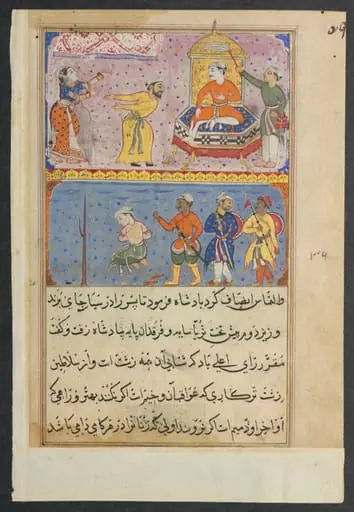 The prince, once reprieved, is returned to the palace of execution a second time on the plea of the king’s handmaiden, from a Tuti-nama (Tales of a Parrot): Eighth Night
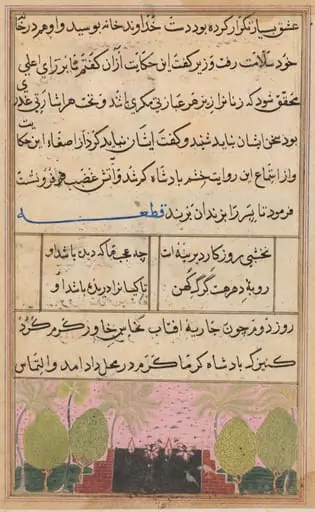 Landscape with a lotus pool, from a Tuti-nama (Tales of a Parrot), Eighth Night
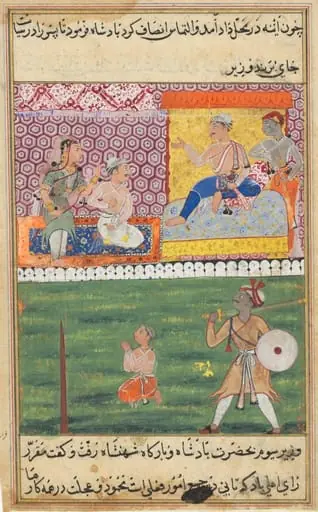 The handmaiden again appeals for justice and the prince is led to the place of execution for the third time, from a Tuti-nama (Tales of a Parrot): Eighth Night
 A woman asks her lover to leave her house, brandishing his sword and feigning rage in order to deceive her husband who has just arrived, from a Tuti-nama (Tales of a Parrot): Eighth Night
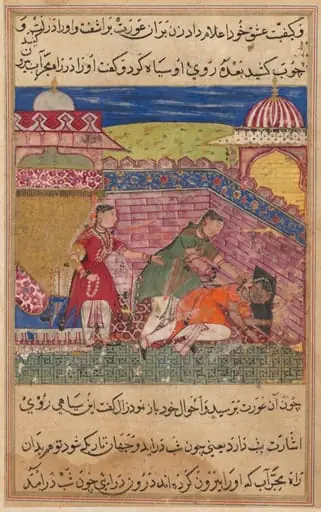 The deceitful wife ejects the procuress after blackening her face, from a Tuti-nama (Tales of a Parrot): Eighth Night
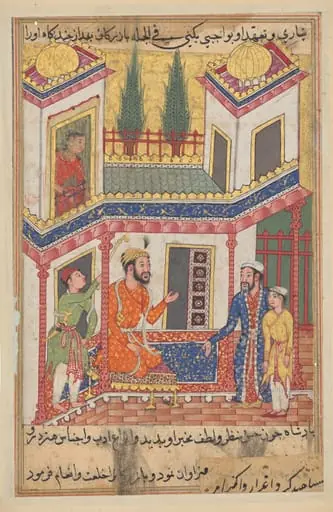 The merchant returns bringing a young slave who is really the son of the princess of Rum, now married to the king, from a Tuti-nama (Tales of a Parrot): Fiftieth Night
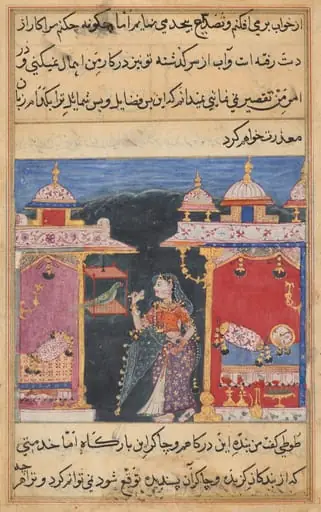 The Parrot Addresses Khujasta at the Beginning of the Seventh Night, from a Tuti-nama (Tales of a Parrot)
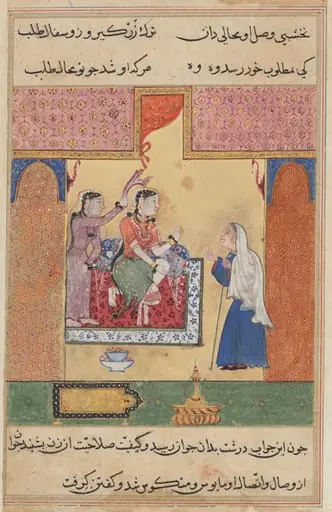 The old procuress conveys the young man’s message of love to Mansur’s wife, from a Tuti-nama (Tales of a Parrot: Seventeenth Night
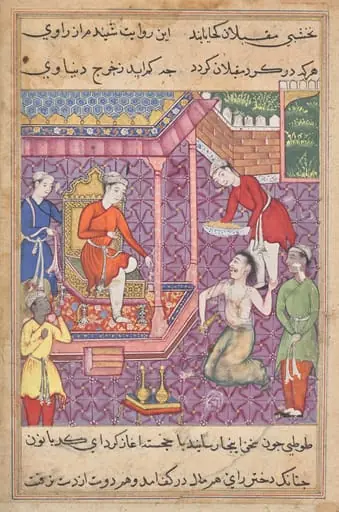 The magician disguised as a Brahman returns to claim his “daughter-in-law,” from a Tuti-nama (Tales of a Parrot): Thirty-fifth Night
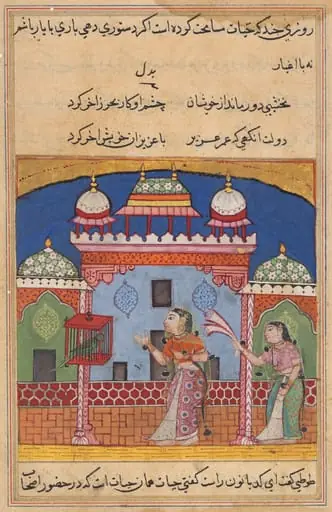 The Parrot Addresses Khujasta at the Beginning of the Twenty-second Night, from a Tuti-nama (Tales of a Parrot)
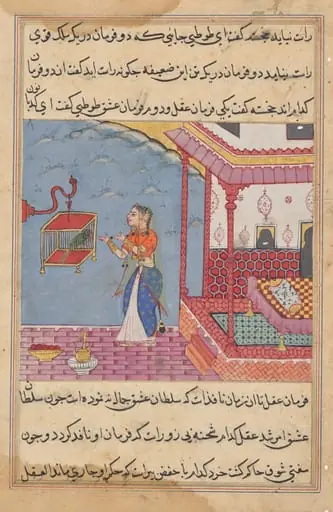 The Parrot Addresses Khujasta at the Beginning of the Twenty-Fourth Night, from a Tuti-nama (Tales of a Parrot)
 The Parrot Addresses Khujasta at the Beginning of the Eleventh Night, from a Tuti-nama (Tales of a Parrot)