Artwork
Brant Goose
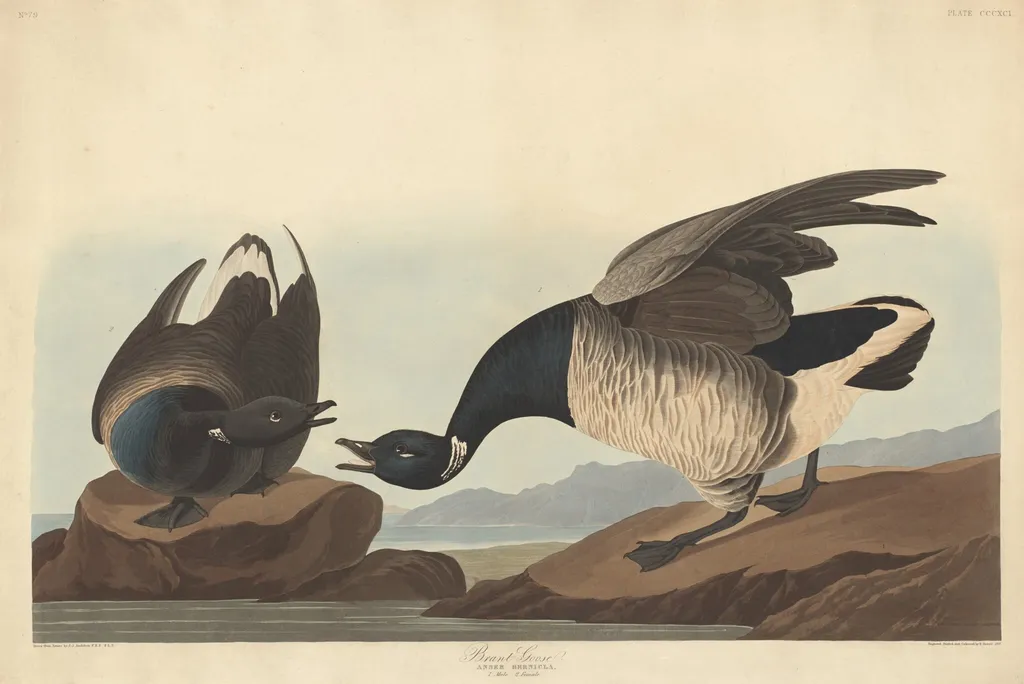
Brant Goose is an ink print by the Romanticist artist Robert Havell Jr.. It dates from 1837 and is held in the collection of the National Gallery of Art.
About this work
Overview
Executed on Whatman wove paper, the work is part of a tradition of natural history illustration that combined scientific observation with fine printmaking.
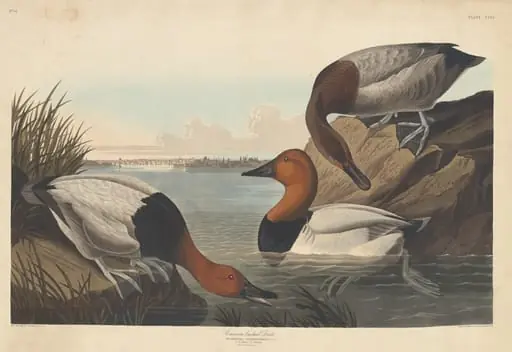
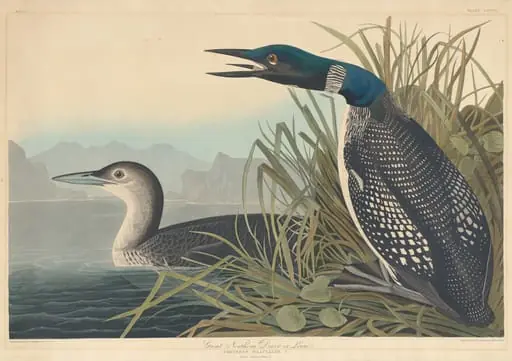
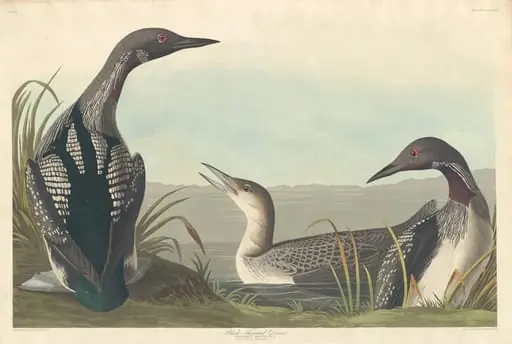
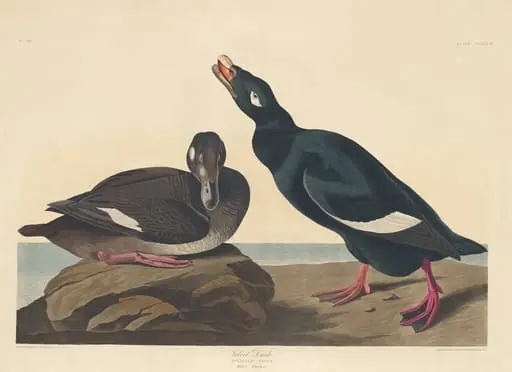
Created in 1837 by Robert Havell Jr., this hand-colored engraving and aquatint depicts a pair of brant geese on rocky terrain. Executed on Whatman wove paper, the work is part of a tradition of natural history illustration that combined scientific observation with fine printmaking. Havell, trained in a family of engravers, applied technical precision to render wildlife with lifelike detail, reflecting the era’s growing interest in documenting the natural world.
Subject & Meaning
The composition features two brant geese in naturalistic poses—one standing with wings slightly spread, the other mid-stride, head turned as if vocalizing. Set against a muted landscape of distant hills and pale sky, the birds are the sole focus, emphasizing their form and behavior. The image conveys quiet observation rather than narrative, aligning with 19th-century naturalist goals of capturing species in their habitat without anthropomorphism.
Technique & Style
Havell employed engraving and aquatint to achieve fine linear detail and subtle tonal gradations. Hand-coloring with water-based pigments in black, white, and soft browns enhanced the texture of the geese’s plumage. The use of delicate hatching and cross-hatching mimicked feather structure, while the soft background tones preserved depth without distraction. This method was typical of reproductive prints meant for scientific accuracy and aesthetic restraint.
History & Provenance
Robert Havell Jr. belonged to a family of engravers based in Reading, Berkshire, known for their work in reproductive prints and connections to Indian artistic traditions. His father and uncle were established publishers and printmakers, and Havell Jr. continued their legacy through meticulous natural history illustrations. This print likely originated from a larger project documenting North American wildlife, though its exact publication context remains unconfirmed.
Context
In the 1830s, detailed wildlife prints were in demand among naturalists, collectors, and institutions seeking accurate visual records. Havell’s work emerged alongside publications like Audubon’s *Birds of America*, sharing a commitment to lifelike representation. Unlike ornamental art, these prints served educational purposes, reflecting a broader cultural shift toward empirical study of nature through visual media.
Legacy
Havell’s *Brant Goose* exemplifies the technical standards of 19th-century natural history printmaking. While not widely celebrated outside specialist circles, it represents a quiet but significant contribution to the documentation of avian species. Its enduring value lies in its fidelity to observation and the craftsmanship of a family tradition that helped bridge art and science during a formative period in biological illustration.
Artist & collection

Artist
The Havell family of Reading, Berkshire, England, included a number of notable engravers, etchers and painters, as well as writers, publishers, educators, and musicians.