Artwork
Pectoral Sandpiper
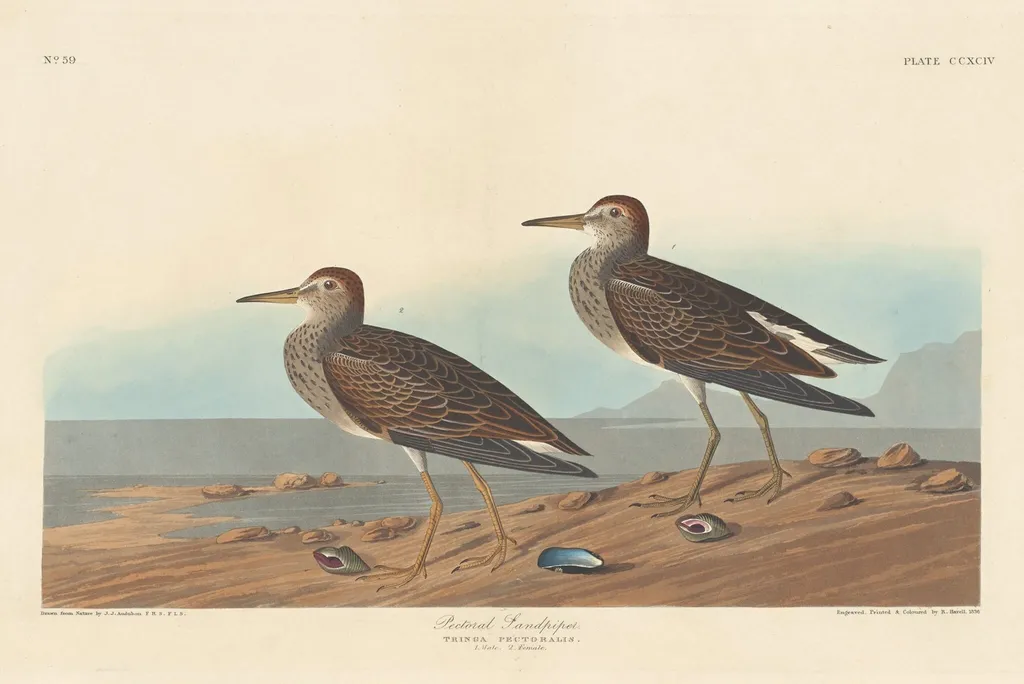
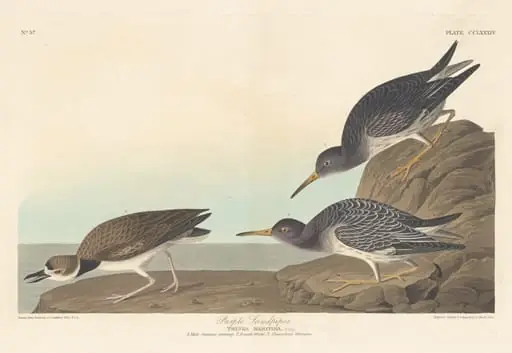
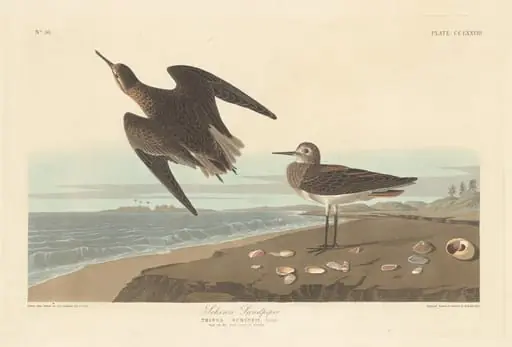
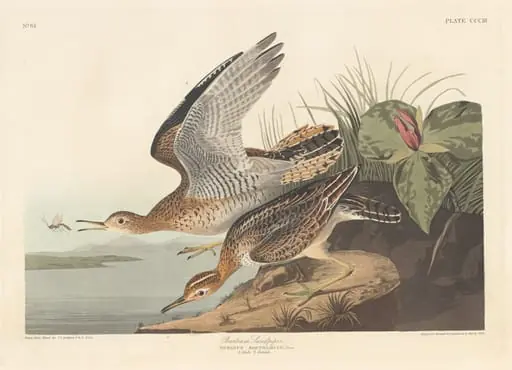
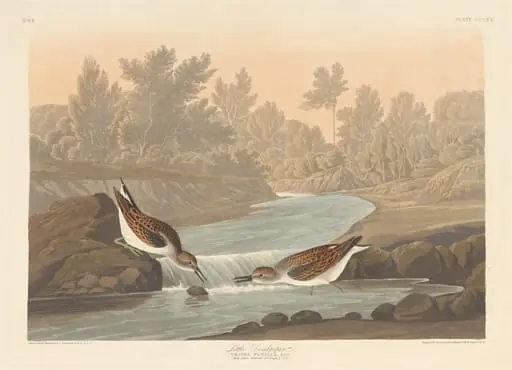
Pectoral Sandpiper is an ink print by the Romanticist artist Robert Havell Jr.. It dates from 1836 and is held in the collection of the National Gallery of Art.
About this work
This print shows a sandpiper bird standing on one leg beside a few feathers.
This print shows a sandpiper bird standing on one leg beside a few feathers. The background is plain, letting the bird stand out. Details like tiny claw marks in the sand are easy to miss at first glance.
Robert Havell Jr. made this in 1836 for a book on American birds. He used engraving with cross-hatching to get soft shadows and texture. This gives the feathers and skin a lifelike feel.
Look up Havell, Jr., Robert if you want to see more prints like this.
Overview
Created in 1836, this hand-colored engraving and aquatint depicts a Pectoral Sandpiper on Whatman wove paper. Produced by Robert Havell Jr., it was part of a larger project documenting North American bird species. The print exemplifies the Havell family’s technical precision in reproductive printmaking, blending engraving with subtle aquatint tonality to achieve naturalistic detail.
Subject & Meaning
The image captures a solitary Pectoral Sandpiper standing on one leg, poised on a sparse, textured ground. A few scattered feathers and faint claw marks suggest recent movement, grounding the bird in a quiet, transient moment. The plain background eliminates distraction, focusing attention on the bird’s form and behavior, reflecting a scientific interest in natural history rather than symbolic narrative.
Technique & Style
Havell employed fine engraving with cross-hatching to render the bird’s plumage and skin, achieving delicate gradations of light and shadow. Aquatint added soft tonal transitions, particularly in the feather edges and underbelly. Hand-coloring enhanced realism without overwhelming the line work, while the use of Whatman paper ensured durability and fine ink absorption, typical of high-quality 19th-century naturalist prints.
History & Provenance
Robert Havell Jr. produced this print as part of a multi-volume ornithological publication, continuing a family tradition established by his father and uncles. The Havells were known for their work on natural history texts, particularly in England and America. This print was likely issued in limited numbers, distributed to scientific institutions and private collectors interested in American fauna.
Context
In the 1830s, detailed ornithological illustration was a vital tool for naturalists documenting North American wildlife. Havell’s work aligned with the scientific rigor of contemporaries like Audubon, though his style emphasized subtlety over spectacle. The focus on a single, unadorned specimen reflects a shift toward observational accuracy in natural history publishing during this period.
Legacy
Havell’s prints remain valued for their technical discipline and quiet fidelity to nature. Though less celebrated than larger-scale works, his contributions helped standardize the visual language of American ornithology. The Pectoral Sandpiper exemplifies how reproductive printmaking served science by making precise, accessible records of species for study and preservation.
Artist & collection

Artist
The Havell family of Reading, Berkshire, England, included a number of notable engravers, etchers and painters, as well as writers, publishers, educators, and musicians.