Artwork
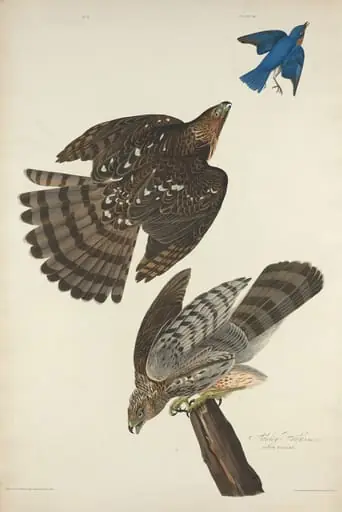
Goshawk and Stanley Hawk
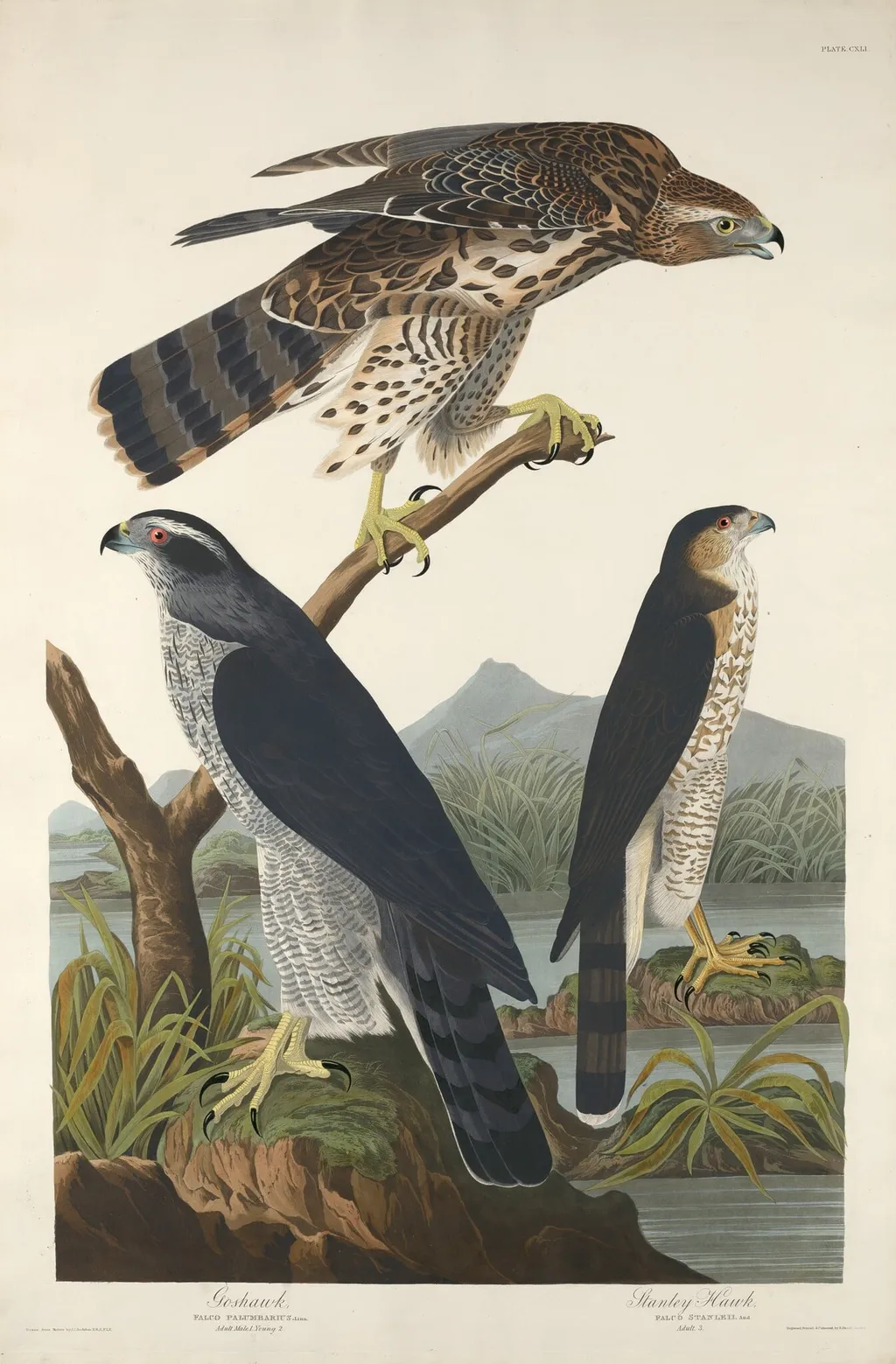
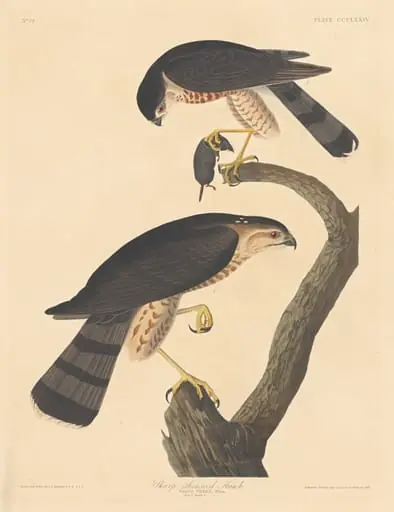
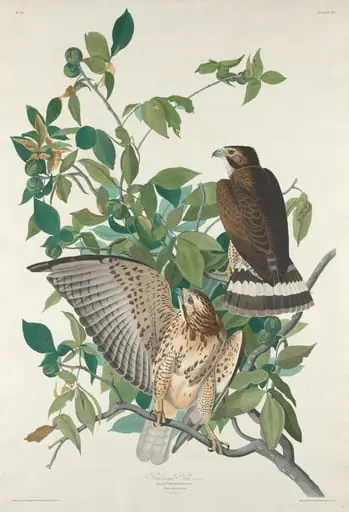
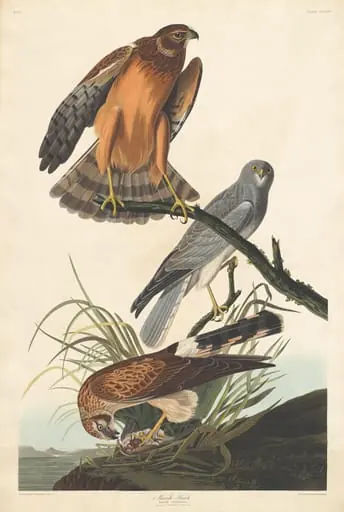
Goshawk and Stanley Hawk is an ink print by the Romanticist artist Robert Havell Jr.. It dates from 1832 and is held in the collection of the National Gallery of Art.
About this work
Overview
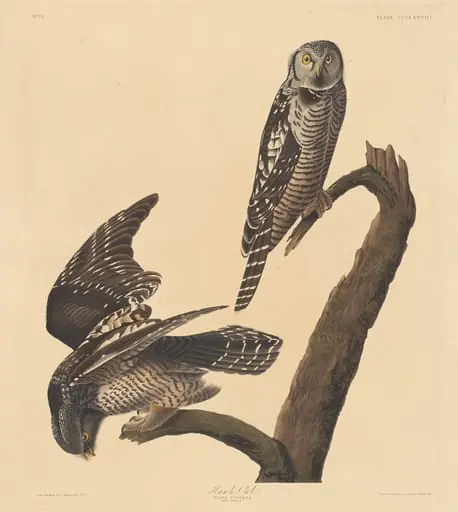
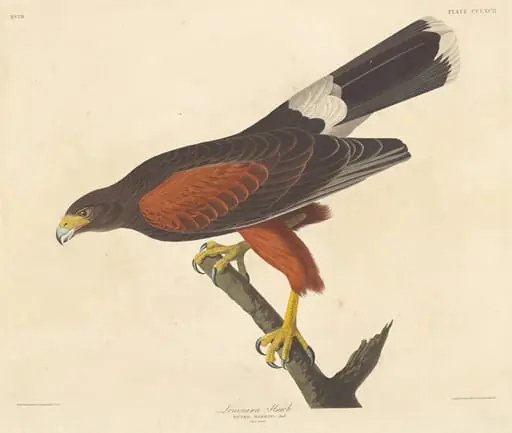
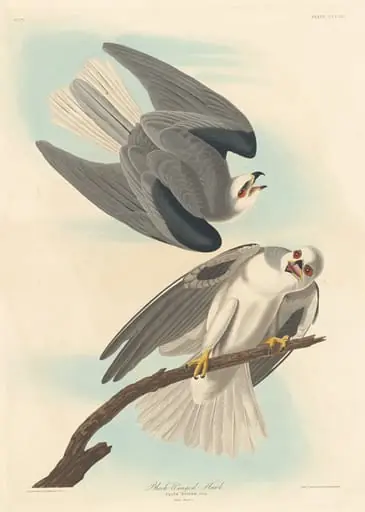
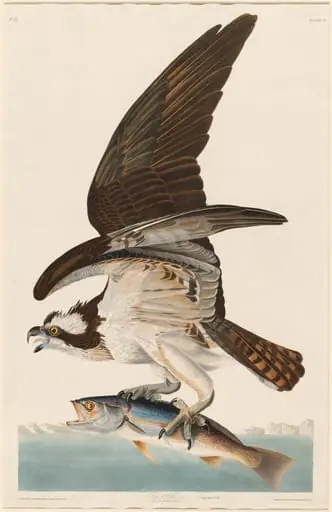
, this hand-colored engraving and aquatint on Whatman wove paper depicts two species of raptors alongside a third, identified as the Stanley hawk.
Created in 1832 by Robert Havell Jr., this hand-colored engraving and aquatint on Whatman wove paper depicts two species of raptors alongside a third, identified as the Stanley hawk. The work belongs to a series of natural history illustrations produced by the Havell family, known for their precision in printmaking and their role in documenting avian life during the early 19th century. The technique combines fine line engraving with delicate aquatint washes to achieve subtle tonal variation.
Subject & Meaning
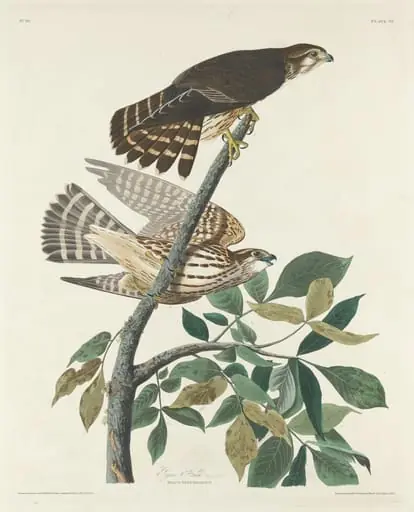
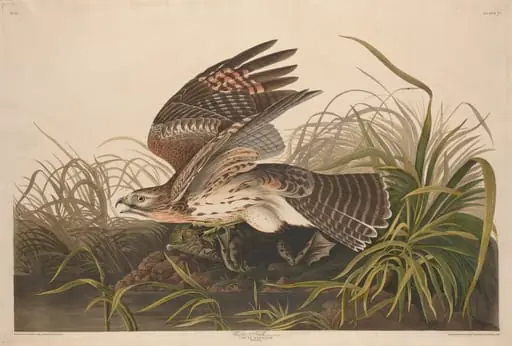
The composition presents three birds of prey in a naturalistic setting: a goshawk on the left, a smaller hawk in the center, and a Stanley hawk on a rock to the right. Each is labeled with its common and scientific name, reflecting a scientific intent rather than purely aesthetic purpose. The birds are rendered with anatomical accuracy, suggesting the illustration served as a reference for ornithological study, aligning with broader Enlightenment-era efforts to classify and document wildlife.
Technique & Style
Havell employed engraving to define sharp contours and fine feather details, while aquatint provided soft gradations of tone for plumage and landscape. The hand-coloring, applied with water-based pigments, enhances realism without overwhelming the underlying line work. Earth tones dominate, accented by muted blues and greens in the background, creating a quiet, atmospheric depth. The use of Whatman wove paper, prized for its smooth texture, allowed for precise ink retention and delicate color layering.
History & Provenance
Robert Havell Jr. was part of a multi-generational family of engravers based in Reading, Berkshire, who specialized in natural history prints. His father, Robert Havell the Elder, was a publisher and engraver who collaborated on major projects, including John James Audubon’s *Birds of America*. This work likely emerged from the same network of scientific patrons and collectors, reflecting the Havells’ established reputation for technical excellence and their involvement in transatlantic natural history publishing.
Context
In the early 1830s, detailed ornithological illustration was gaining traction as natural science became more systematic. European and American collectors sought accurate depictions of birds, especially those from distant regions. The Havells’ work intersected with this trend, blending artistic skill with emerging biological taxonomy. Though the Stanley hawk is now considered a regional name for a known species, the labeling reflects contemporary efforts to catalog avian diversity with precision.
Legacy
The Havell family’s prints remain valued for their technical rigor and contribution to natural history documentation. While less celebrated than Audubon’s larger-scale works, Robert Havell Jr.’s smaller engravings like this one exemplify the quiet, meticulous tradition of 19th-century scientific illustration. Their influence endures in the archival record of ornithology and in the continued study of printmaking techniques used to capture biological detail before photography.
Artist & collection

Artist
The Havell family of Reading, Berkshire, England, included a number of notable engravers, etchers and painters, as well as writers, publishers, educators, and musicians.