Artwork
American Scoter Duck
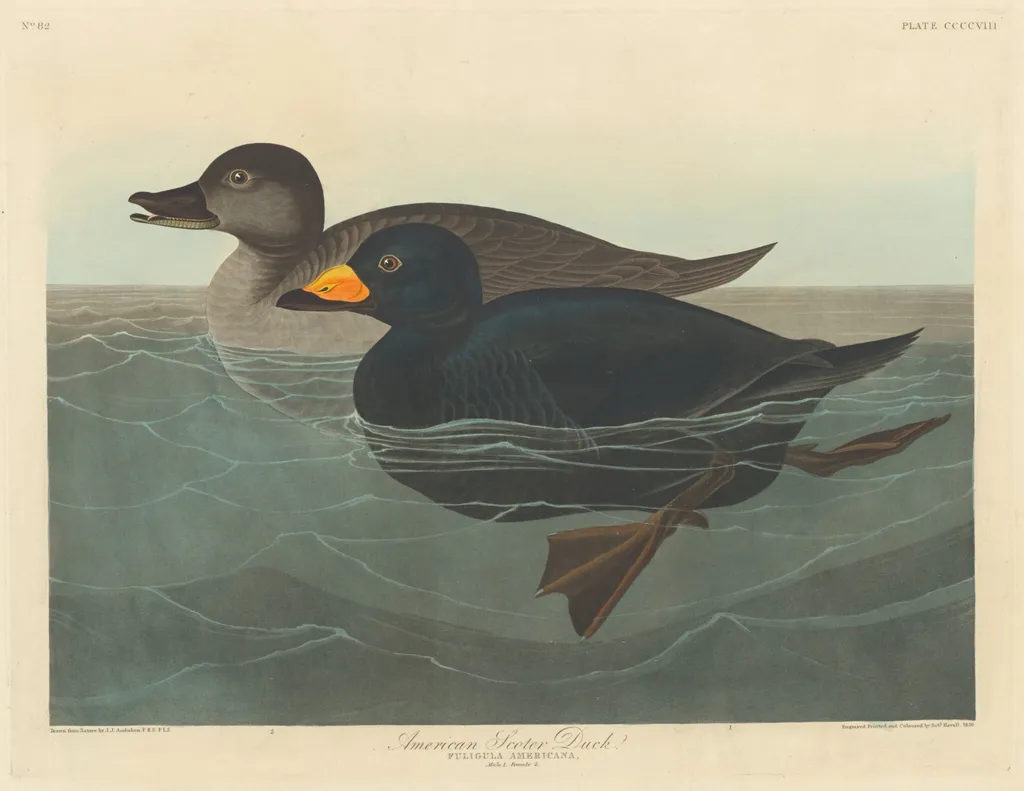
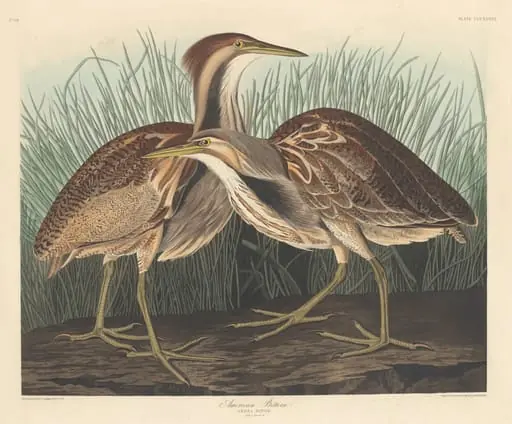
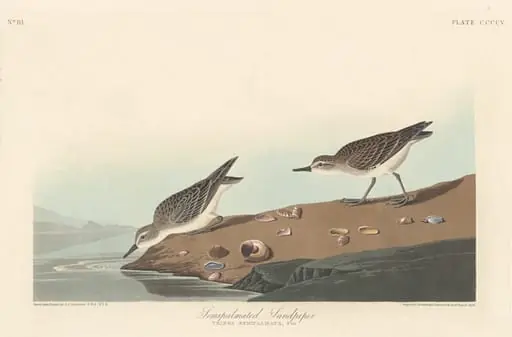
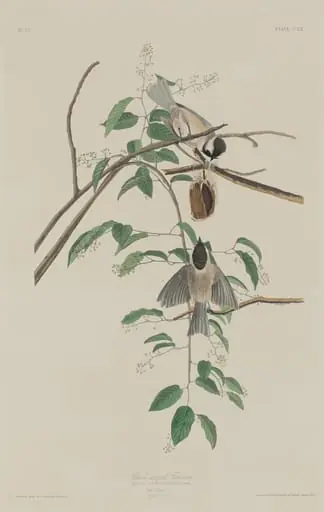
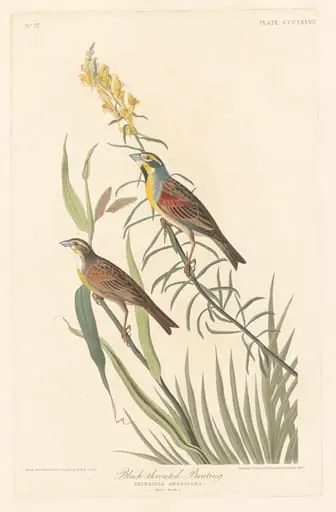
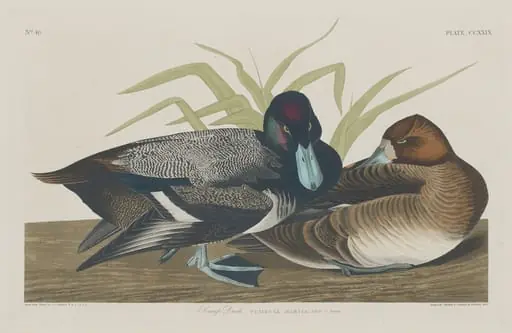
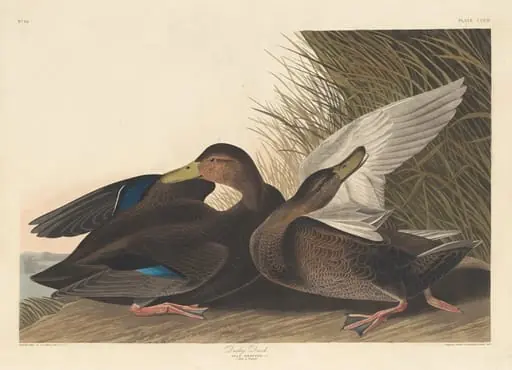
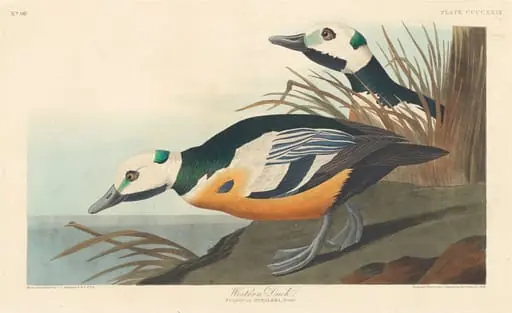
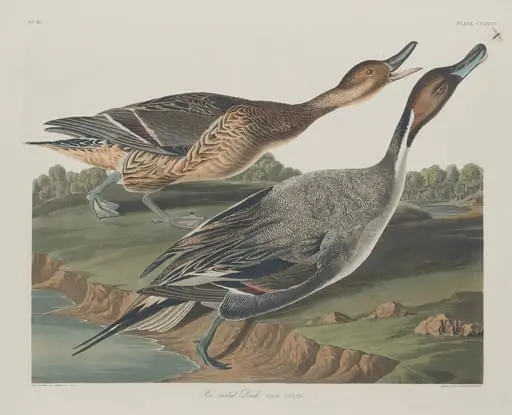
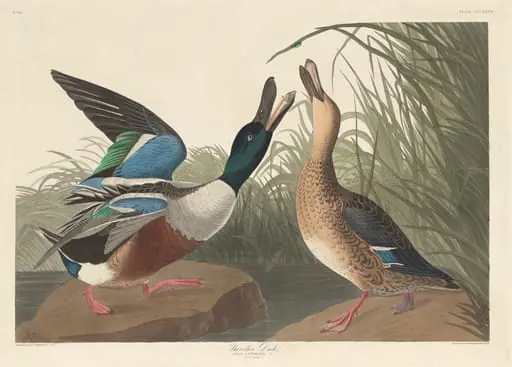
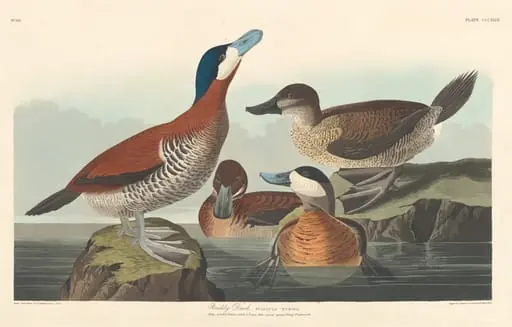
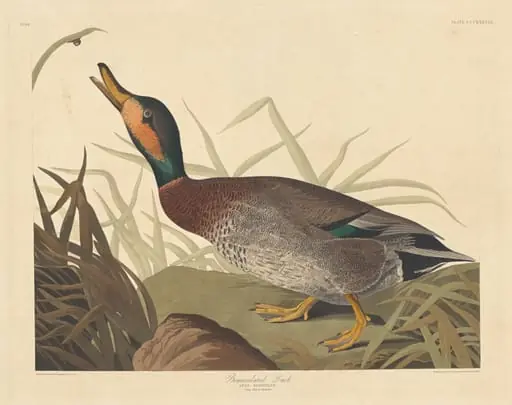
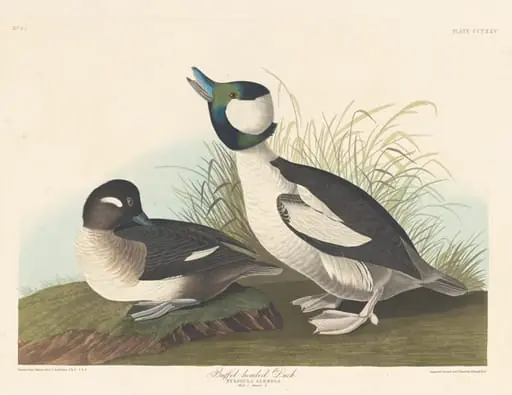
American Scoter Duck is an ink print by the Romanticist artist Robert Havell Jr.. It dates from 1838 and is held in the collection of the National Gallery of Art.
About this work
Overview
The image balances delicate line work with subtle tonal washes, offering a naturalistic snapshot of the waterfowl.
Robert Havell Jr. produced the hand‑colored engraving and aquatint titled *American Scoter Duck* in 1838. Executed on Whatman wove paper, the print presents a close study of two scoter ducks on calm water, distinguishing the male’s black head and orange bill from the female’s muted brown plumage. The image balances delicate line work with subtle tonal washes, offering a naturalistic snapshot of the waterfowl.
Technique & Style
The work combines traditional copper engraving with aquatint, a method that creates soft, watercolor‑like tones through powdered resin and acid exposure. Havell employed fine cross‑hatching to render feather texture and employed hand‑applied color to accent beaks and wing highlights. The interplay of crisp lines and gentle washes demonstrates the family’s mastery of reproductive printmaking, achieving both detail and atmospheric depth.
Subject & Meaning
The composition focuses on the American scoter, a sea duck native to North America’s northern waters. By portraying both male and female together, the print emphasizes sexual dimorphism and the species’ natural habitat. The tranquil water surface, rendered with faint ripples, situates the birds within their environment, inviting observation of their form and behavior rather than symbolic narrative.
History & Provenance
Robert Havell Jr. belonged to a prominent line of English engravers; his father, Robert Havell the Elder, and uncle, Luke Havell, were noted for publishing natural history plates. The Havell workshop had longstanding connections with Indian art markets, which informed their technical expertise. This 1838 print was likely produced for a series of ornithological illustrations circulated among collectors and scientific societies in the early nineteenth century.
Context
The early nineteenth century saw a surge in interest in natural history illustration, driven by expanding scientific societies and colonial exploration. Prints like Havell’s served both educational and aesthetic purposes, providing detailed visual records before photography. The use of hand‑coloring on aquatint allowed for greater realism, aligning the work with contemporary standards for scientific accuracy and artistic refinement.
Artist & collection

Artist
The Havell family of Reading, Berkshire, England, included a number of notable engravers, etchers and painters, as well as writers, publishers, educators, and musicians.