Artwork
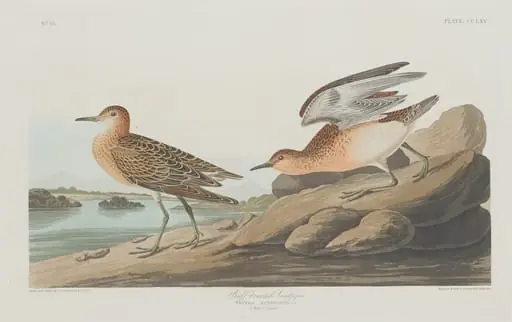
Hudsonian Godwit
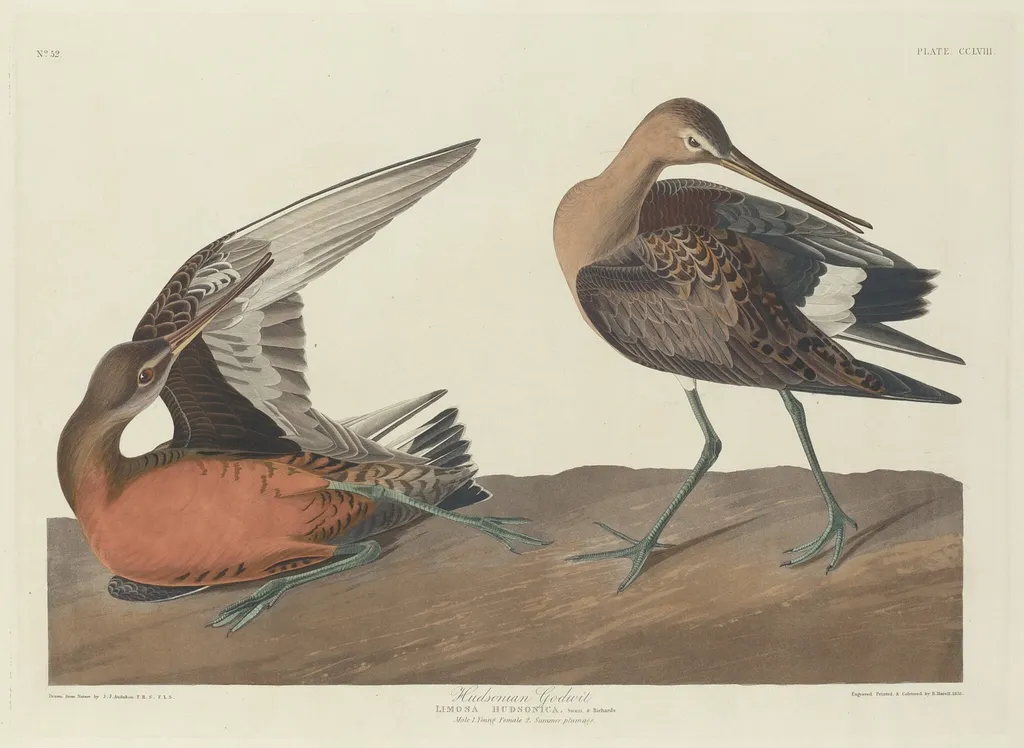
Hudsonian Godwit is an ink print by the Romanticist artist Robert Havell Jr.. It dates from 1835 and is held in the collection of the National Gallery of Art.
About this work
Overview
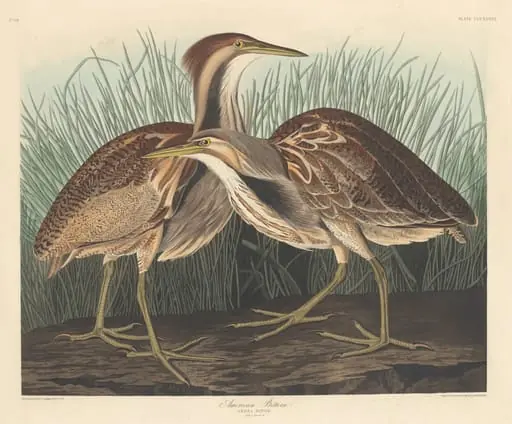
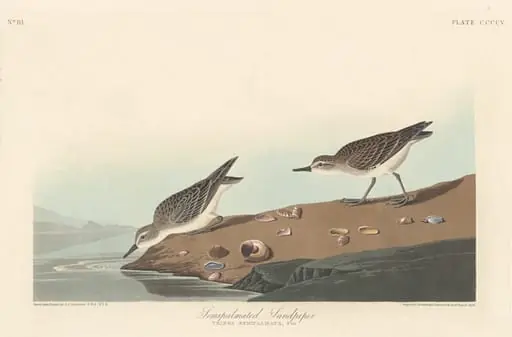
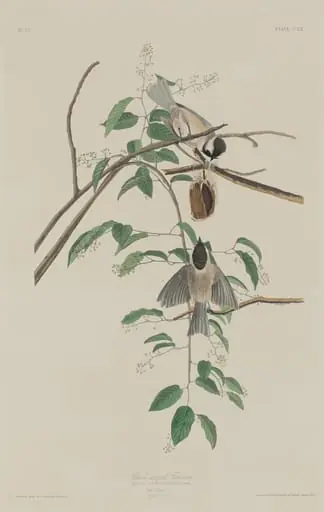
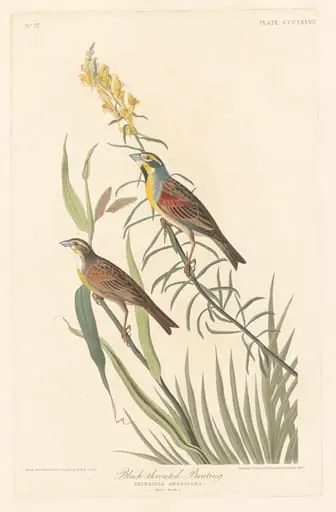
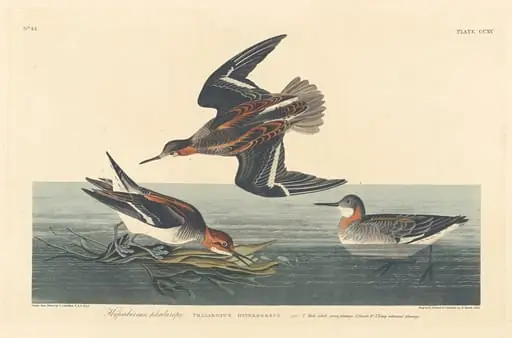
Robert Havell Jr. produced the print *Hudsonian Godwit* in 1835. Executed as a hand‑coloured engraving combined with aquatint on fine Whatman wove paper, the work presents a naturalistic study of the migratory shorebird after which it is named.
Subject & Meaning
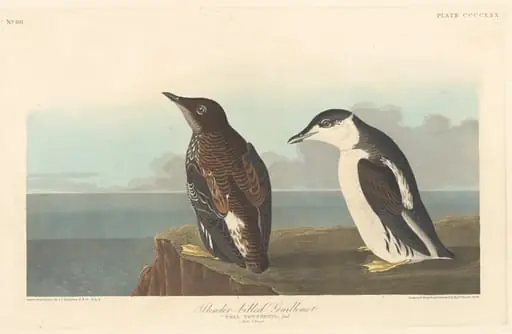
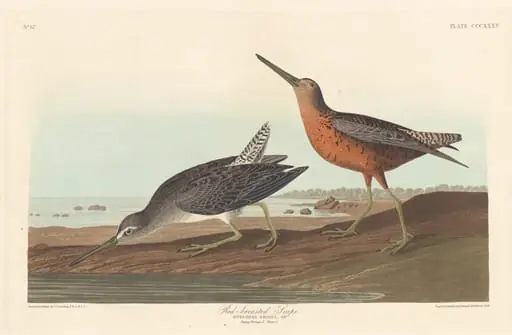
The image shows two Hudsonian Godwits on a rocky shoreline. One bird displays its wings fully extended, revealing a pattern of grey‑white feathers, while the other stands with folded wings, its plumage marked by brown and black speckles. Both figures possess long bills and green‑tinged legs, emphasizing the species’ distinctive anatomy.
Technique & Style
Havell employed fine line engraving to render feather texture, while the aquatint process provided subtle tonal washes. Hand‑applied colour adds delicate, precise hues that enhance the three‑dimensional illusion of the birds without sacrificing the crispness of the engraved lines.
Context
The Havell family were leading practitioners of engraving and aquatint in the early nineteenth century. Robert Havell Jr. continued the workshop established by his father, Robert Havell the Elder, and his relatives Luke, Daniel and other family members, who were noted for their work on Indian subjects as well as European natural history.
Artist & collection

Artist
The Havell family of Reading, Berkshire, England, included a number of notable engravers, etchers and painters, as well as writers, publishers, educators, and musicians.