Artwork
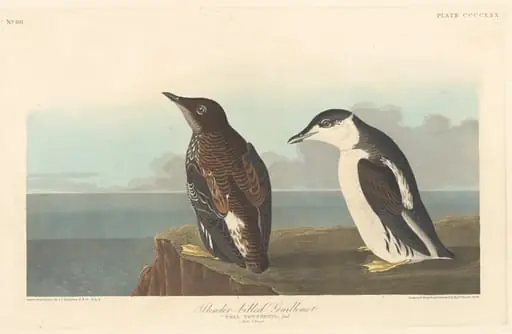
Razor Bill
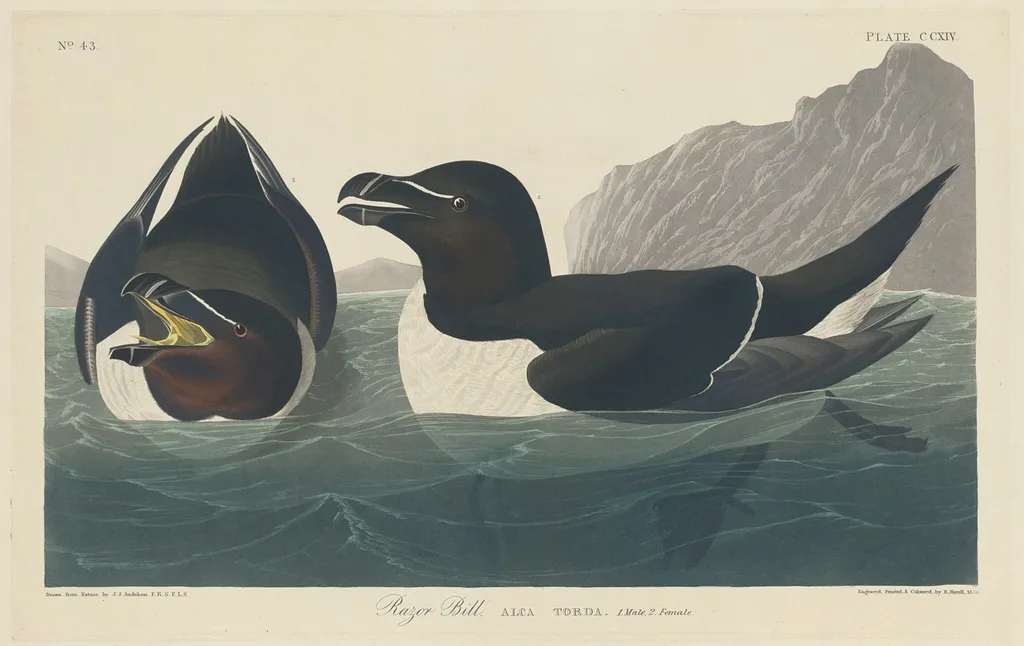
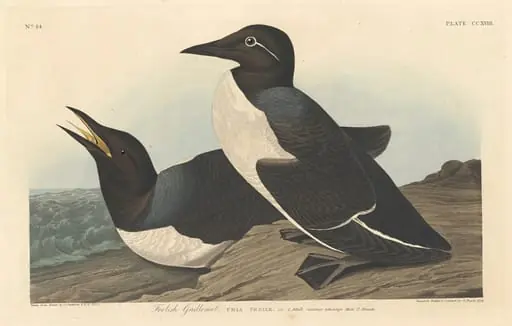
Razor Bill is an ink print by the Romanticist artist Robert Havell Jr.. It dates from 1834 and is held in the collection of the National Gallery of Art.
About this work
Overview
Razor Bill is a hand-colored engraving and aquatint on Whatman wove paper created by Robert Havell Jr. in 1834. It is a print that showcases the artist's skill in capturing the details of his subjects.
Subject & Meaning
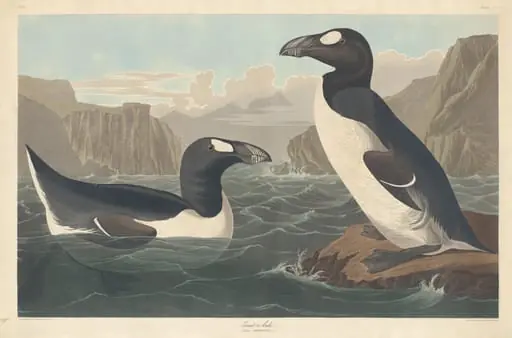
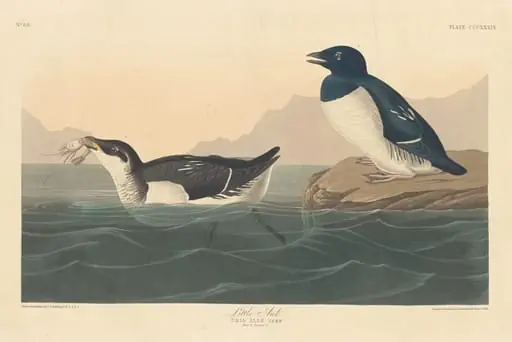
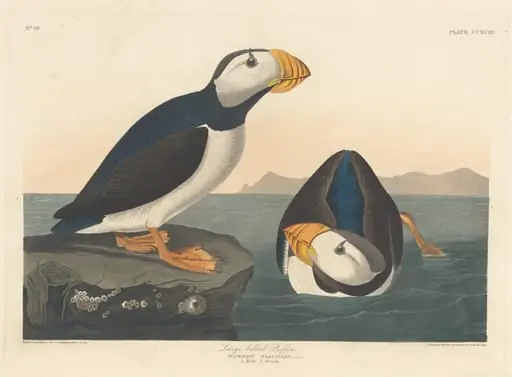
The print depicts two birds, identified as a male and female Razor Bill, floating on choppy water with a rocky cliff in the background. The level of detail in their feathers and beaks suggests the artist's close study of the birds.
Technique & Style
The work combines hand-coloring with aquatint, a technique in which the Havell family was particularly skilled. The use of aquatint allowed for the creation of precise and detailed prints from metal plates.
History & Provenance
Robert Havell Jr. came from a family of engravers, etchers, painters, and publishers, following in the footsteps of his relatives, who were influential in their field.
Artist & collection

Artist
The Havell family of Reading, Berkshire, England, included a number of notable engravers, etchers and painters, as well as writers, publishers, educators, and musicians.