Artwork
Red Phalarope
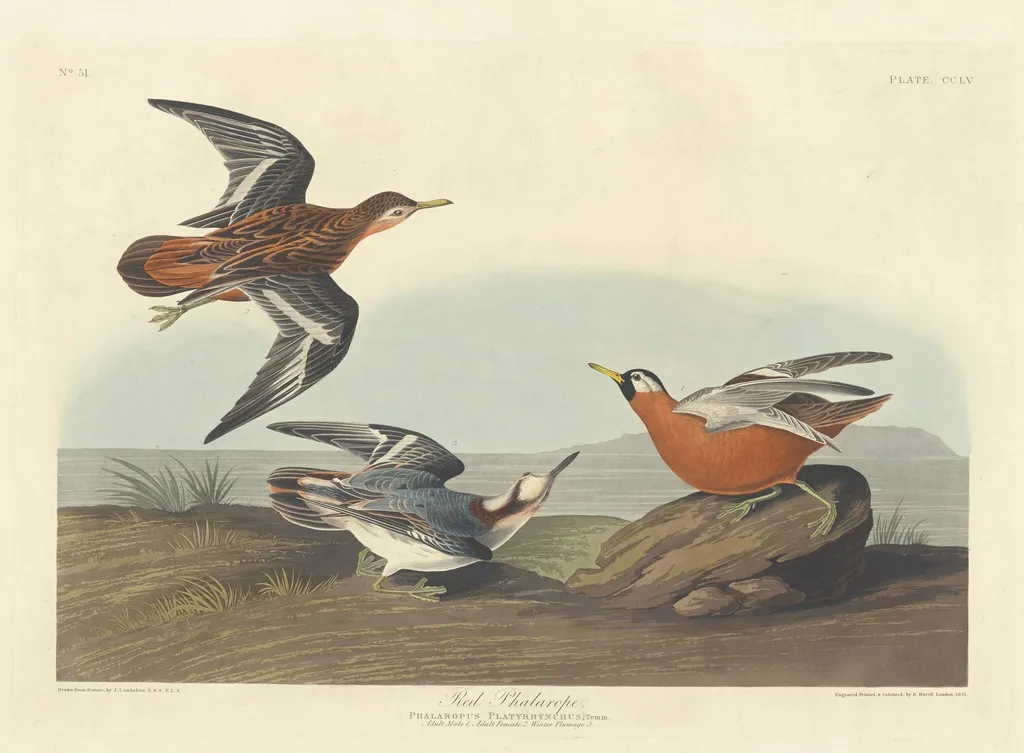
Red Phalarope is an ink print by the Romanticist artist Robert Havell Jr.. It dates from 1835 and is held in the collection of the National Gallery of Art.
About this work
Overview
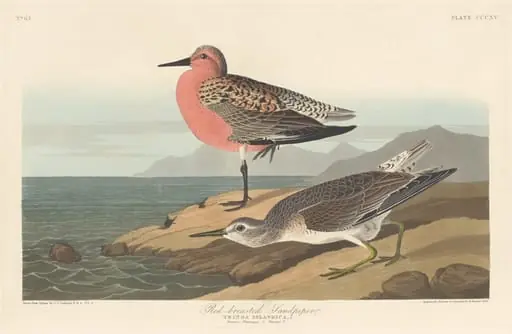
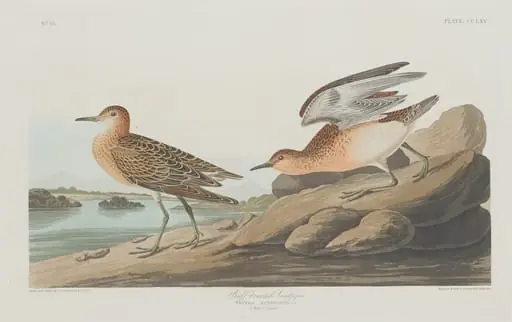
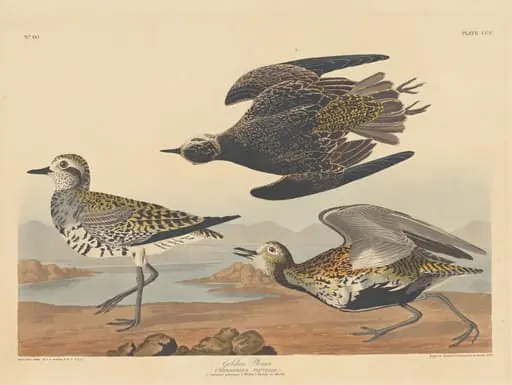
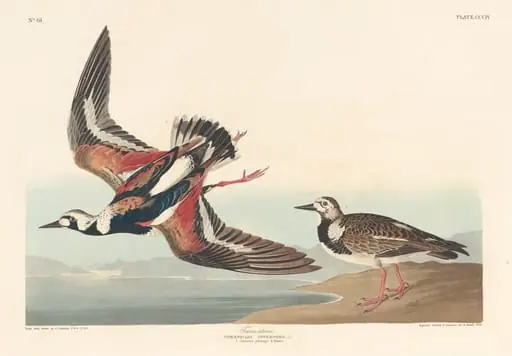
Robert Havell Jr.’s 1835 print *Red Phalarope* is a hand‑coloured engraving combined with aquatint, executed on smooth Whatman wove paper. The image presents three individuals of the small wading bird, one in flight and two perched on rocks beside water, rendered with the meticulous detail for which the Havell workshop was known.
Subject & Meaning
The work portrays the red phalarope (Phalaropus fulicarius), emphasizing its distinctive orange‑breasted plumage, slender legs and the contrast between the brown‑white wing pattern of the airborne bird and the vivid chest of the perched specimens. The naturalistic setting—calm water, distant hills and grassy shore—highlights the bird’s habitat and behavior.
Technique & Style
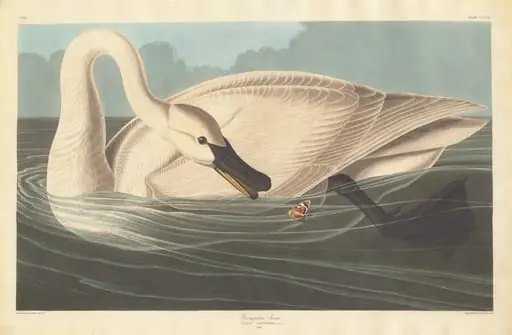
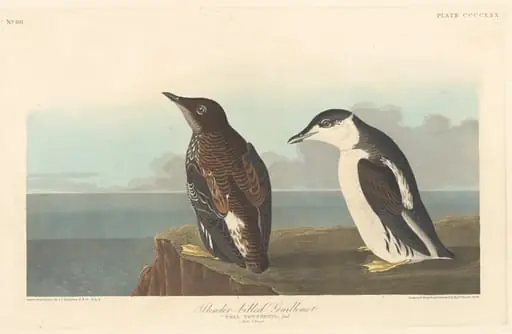
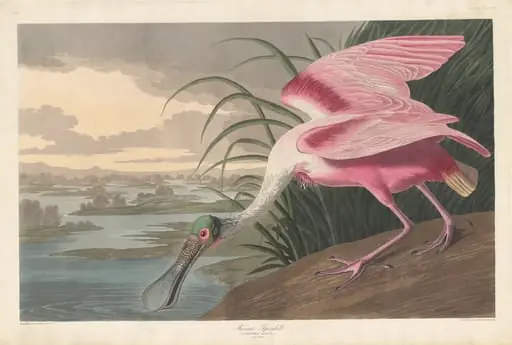
The image combines line engraving, cross‑hatching and aquatint tones to achieve fine texture and depth. Hand‑applied colour accents the orange breast and subtle shading of the feathers, while the aquatint provides a soft, atmospheric background. The Havell family’s mastery of these processes yields a precise, almost scientific rendering.
History & Provenance
Robert Havell Jr. belonged to a prominent Reading family of engravers; his father, Robert Havell the Elder, and uncle, Luke Havell, established a workshop renowned for natural‑history illustration. The print reflects the family’s long‑standing involvement with aquatint and their interest in documenting Indian and British wildlife during the early nineteenth century.
Context
Produced at a time when British naturalists commissioned detailed prints for scientific publications, the *Red Phalarope* exemplifies the era’s blend of artistic skill and empirical observation. The choice of a wading bird aligns with contemporary interest in ornithology and the expanding knowledge of avian species across the empire.
Artist & collection

Artist
The Havell family of Reading, Berkshire, England, included a number of notable engravers, etchers and painters, as well as writers, publishers, educators, and musicians.