Artwork
Saint Félicité and Her Seven Sons
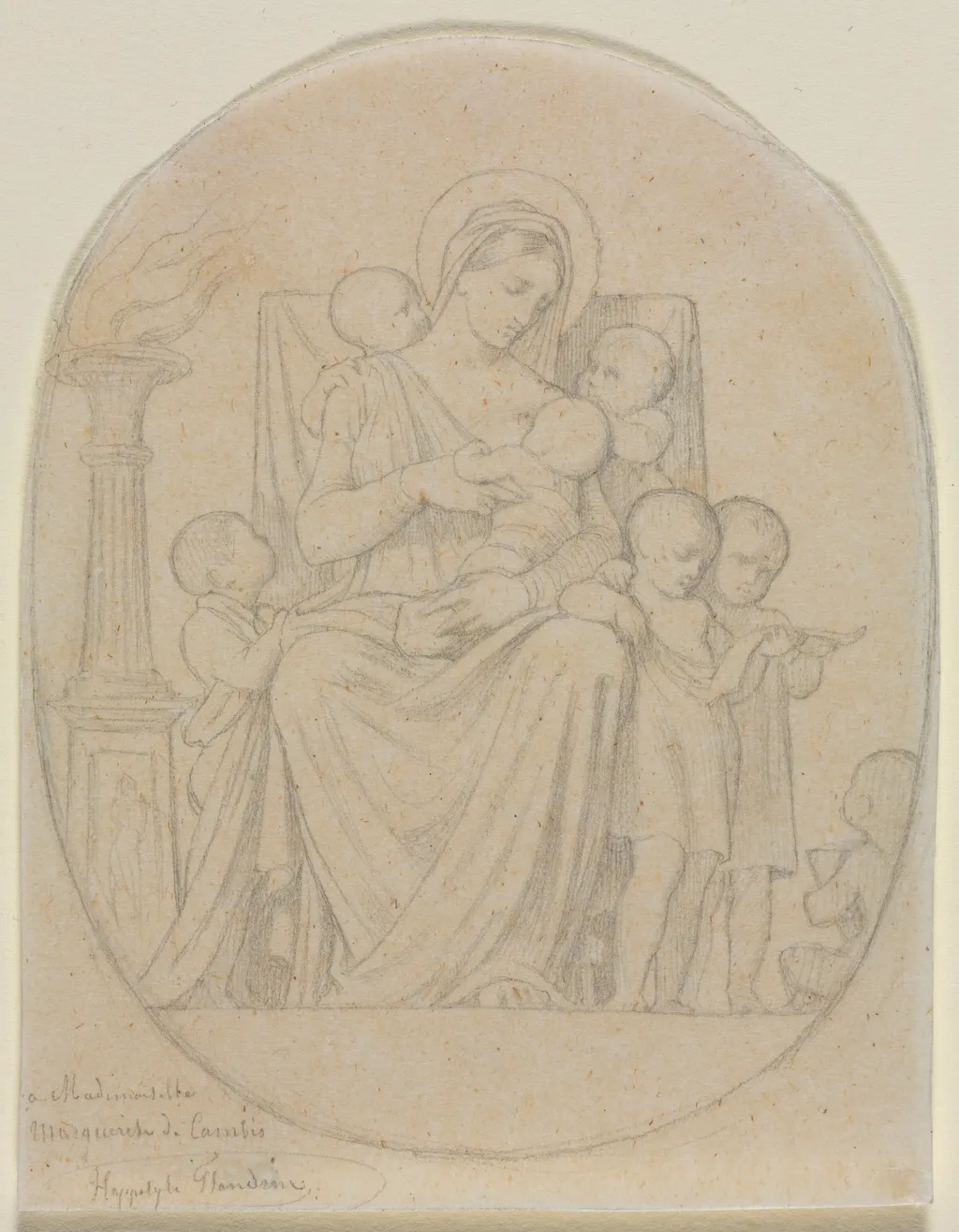
Saint Félicité and Her Seven Sons is a drawing by the Romanticist artist Hippolyte Flandrin. It dates from 1836 and is held in the collection of the Cleveland Museum of Art. Hippolyte Jean Flandrin produced this drawing in 1836 as part of his engagement with early Christian narratives.
About this work
Overview
Executed in pencil and ink on paper, the work belongs to a series of religious studies he developed during his time in Rome.
Hippolyte Jean Flandrin produced this drawing in 1836 as part of his engagement with early Christian narratives. Executed in pencil and ink on paper, the work belongs to a series of religious studies he developed during his time in Rome. It is now held in the collection of The Cleveland Museum of Art, where it reflects his disciplined approach to historical subjects and his interest in emotional restraint within sacred themes.
Subject & Meaning
The scene portrays Saint Felicity, an early Christian martyr, seated with her seven sons, who were executed for refusing to renounce their faith. The composition emphasizes maternal composure amid impending tragedy. Rather than depicting violence, Flandrin focuses on quiet unity and spiritual resolve, suggesting endurance through familial devotion rather than overt suffering, aligning with a contemplative interpretation of martyrdom.
Technique & Style
Flandrin employed fine linear draftsmanship to define forms, using subtle tonal gradations to model the figures against a deep, shadowed background. The soft, directional light enhances the sculptural quality of the bodies without theatricality. His Neoclassical training is evident in the clarity of line and balanced composition, while the emotional stillness and intimate grouping reflect emerging Romantic sensibilities toward inner life and moral gravity.
History & Provenance
Created during Flandrin’s formative years after his studies at the French Academy in Rome, the drawing was likely made as a preparatory study for a larger commission. It remained in private hands until acquired by The Cleveland Museum of Art in the 20th century. Its preservation as a standalone work, rather than a sketch for a lost painting, offers rare insight into Flandrin’s process and thematic priorities.
Context
In 1830s France, religious art experienced a revival amid political instability and a renewed interest in spiritual endurance. Flandrin’s focus on early Christian martyrs resonated with contemporary audiences seeking moral clarity. His approach diverged from dramatic Baroque treatments, favoring calm dignity and psychological depth, aligning with broader shifts in French art toward introspective historicism.
Legacy
Though less known than his monumental frescoes, this drawing exemplifies Flandrin’s ability to convey profound emotion through restraint. It influenced later French religious illustrators who prioritized quiet solemnity over spectacle. The work remains a key reference for understanding how 19th-century artists reimagined hagiographic subjects through disciplined draftsmanship and emotional subtlety.
Artist & collection
Artist
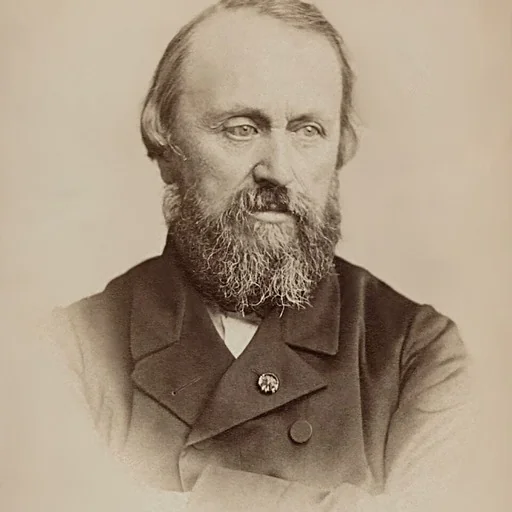
Jean-Hippolyte Flandrin (23 March 1809 – 21 March 1864) was a French Neoclassical painter. His most celebrated work, Jeune Homme Nu Assis au Bord de la Mer (1836) is held in the Louvre.

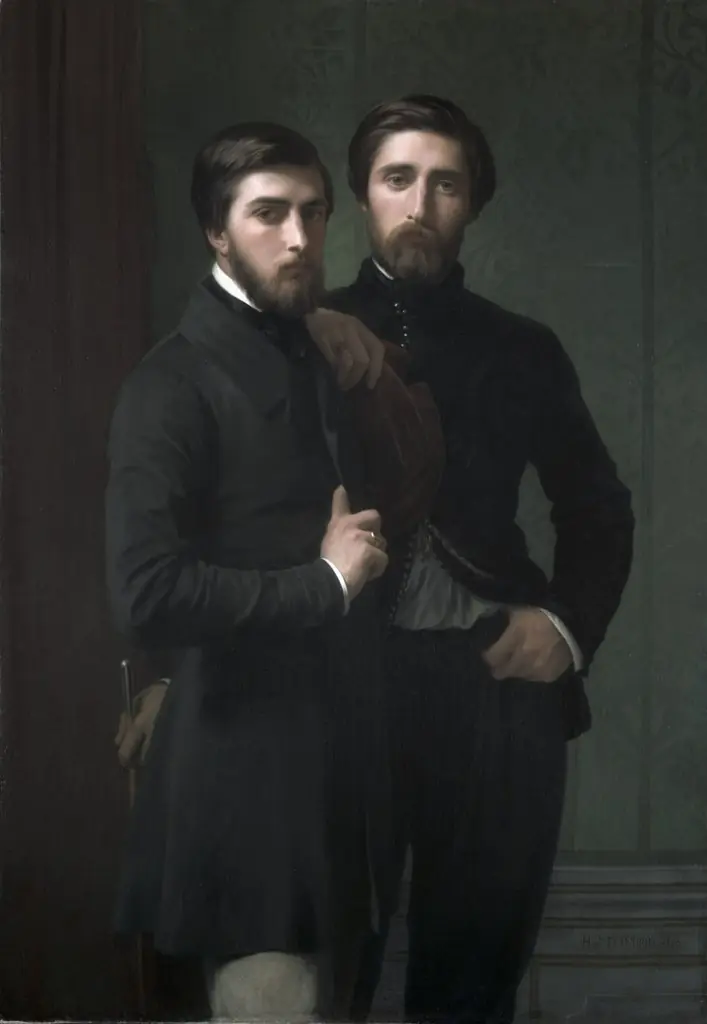 René-Charles Dassy and His Brother Jean-Baptiste-Claude-Amédé Dassy
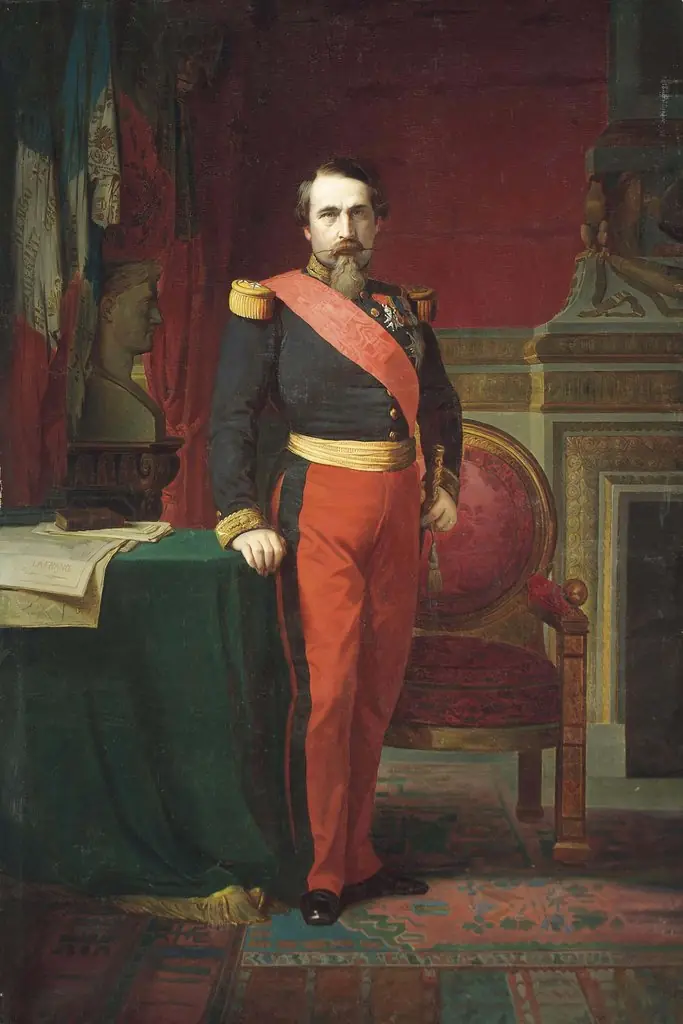 Portrait of Napoleon III
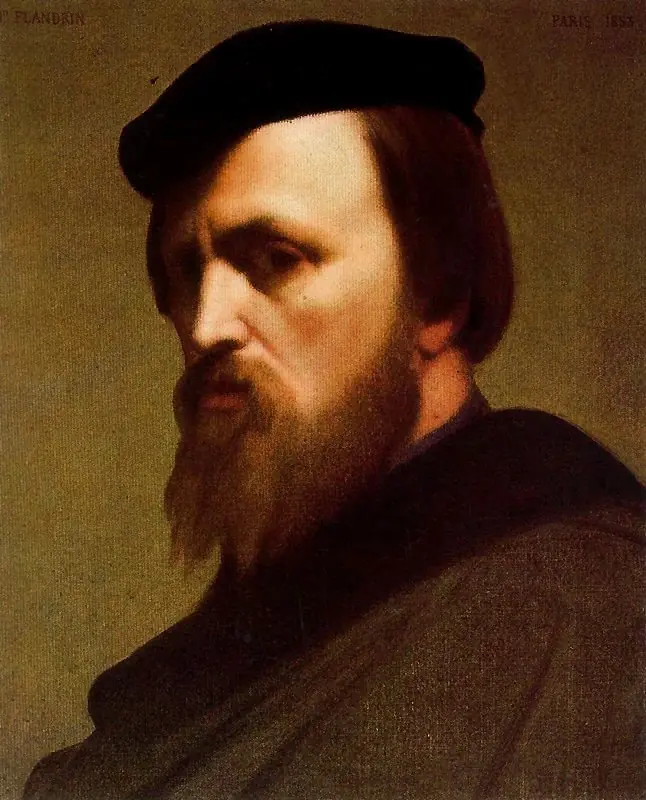 Self-portrait
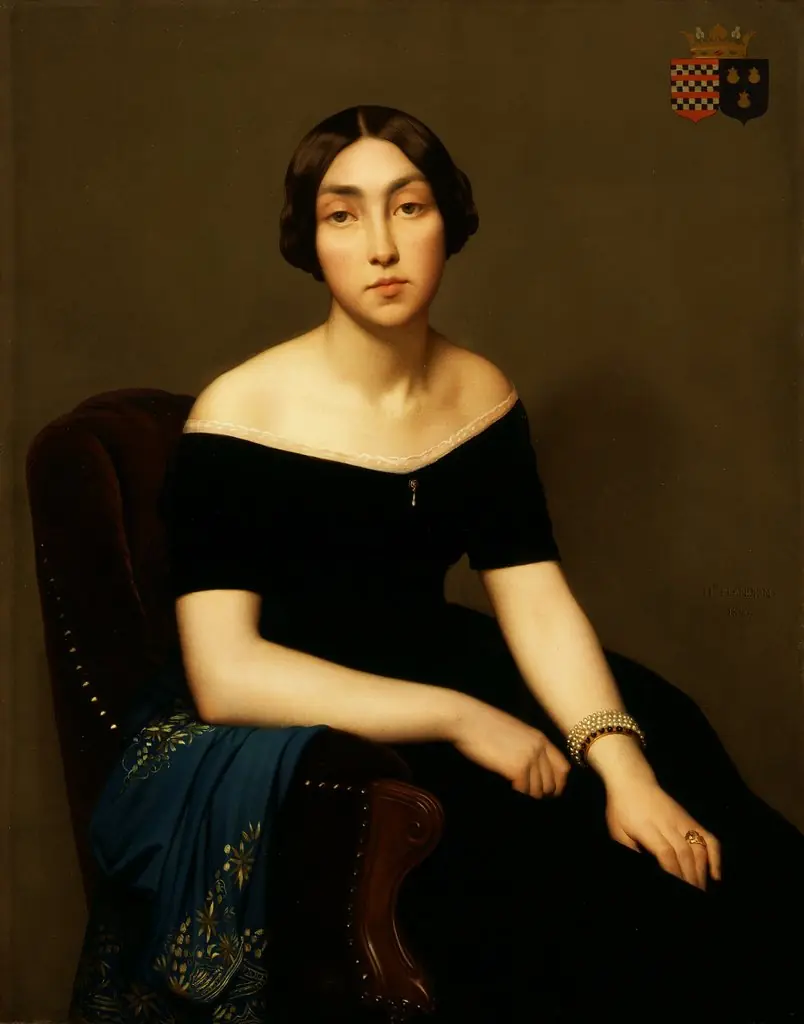 Madame Louis Antoine de Cambourg
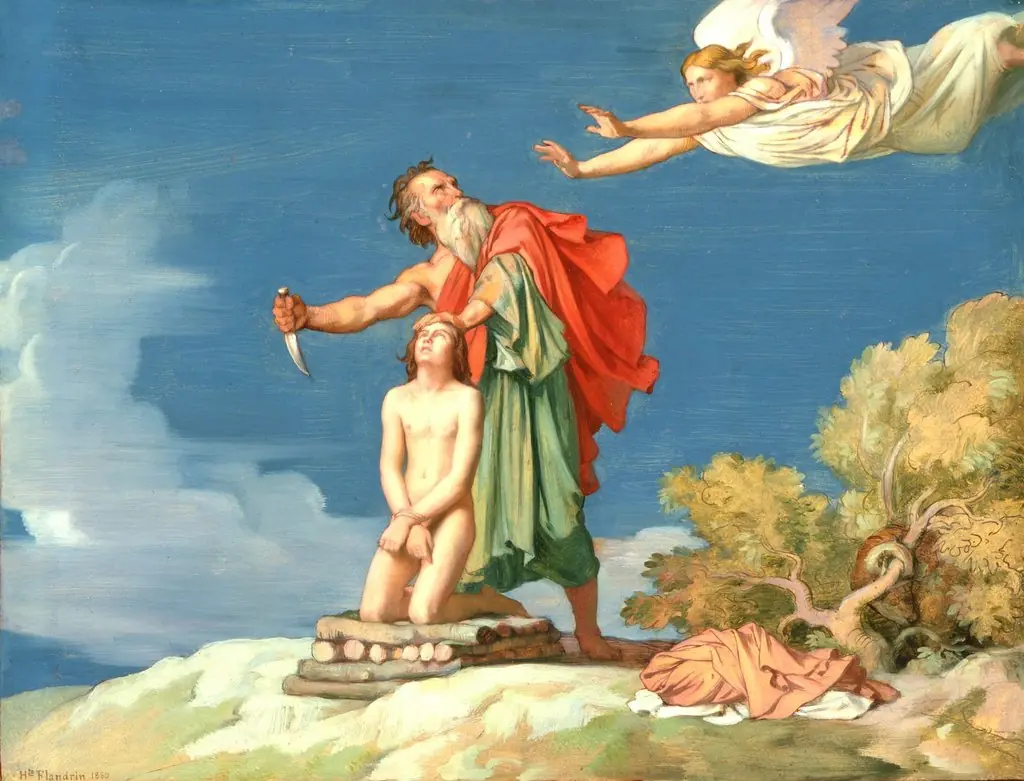 The Sacrifice of Isaac
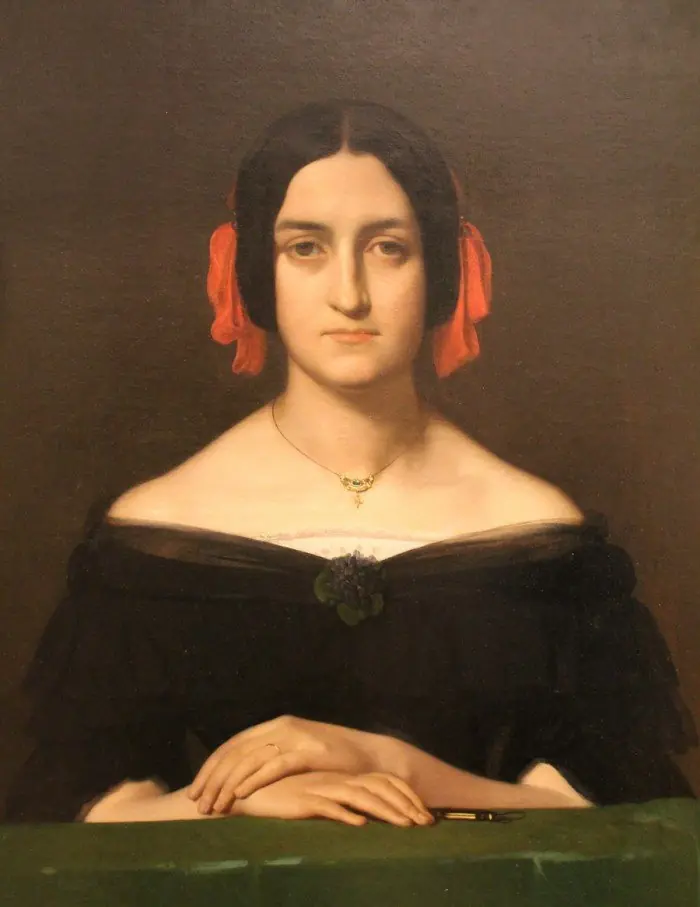 Portrait de Madame Oudiné
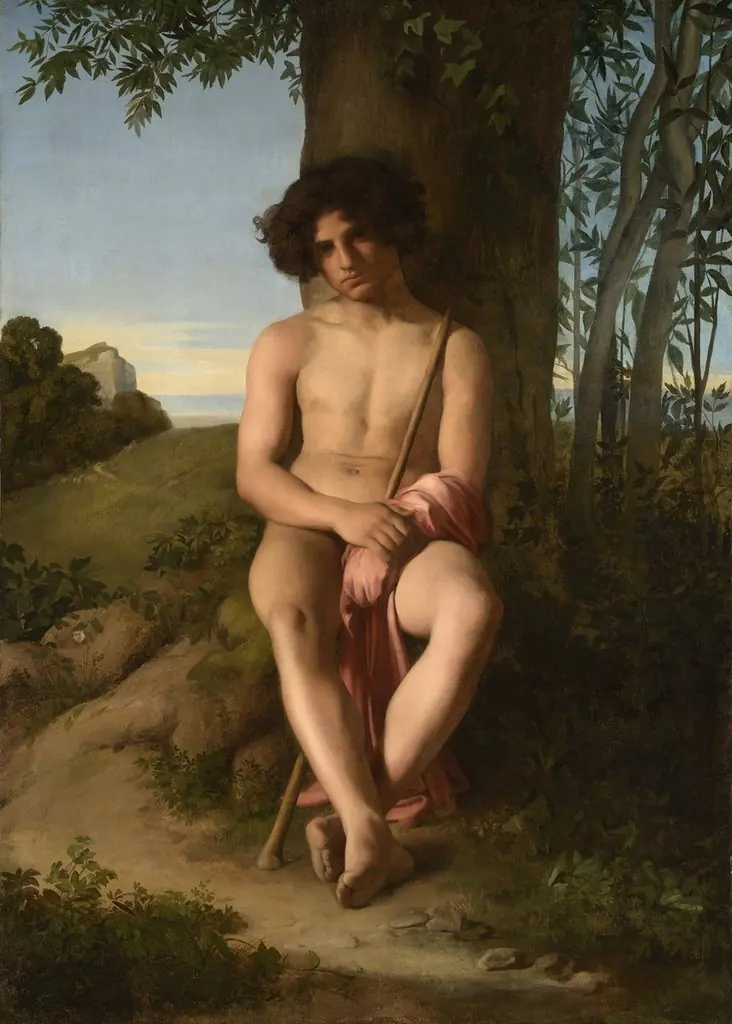 Seated Young Shepherd
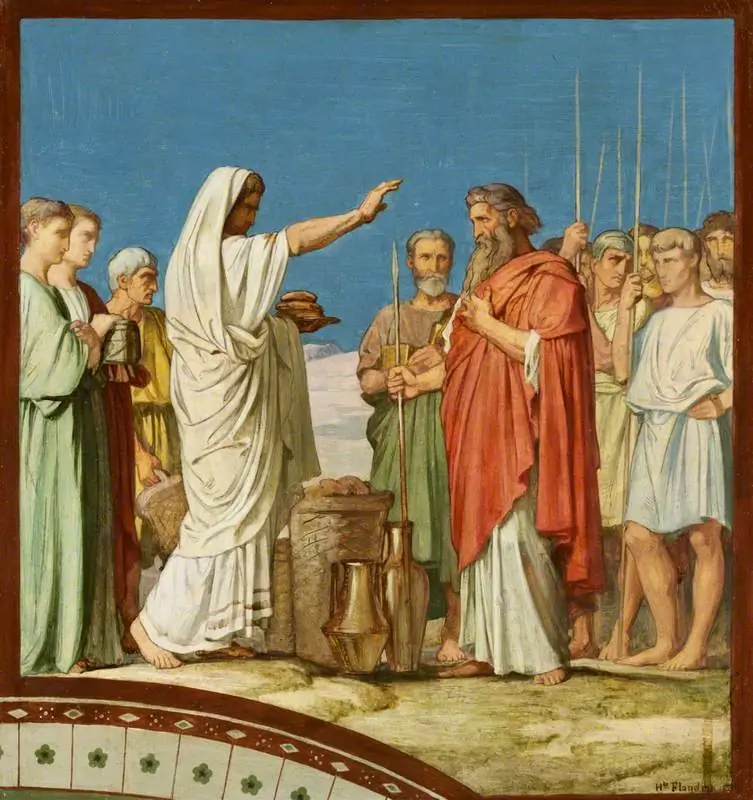 Melchisédech offrant du pain et du vin, bénit Abraham: Modello for the Fresco in the left nave of Saint-Germain-des-Prés, Paris, 1859 (Melchizedek Blesses Abraham and Offers Bread and Wine)
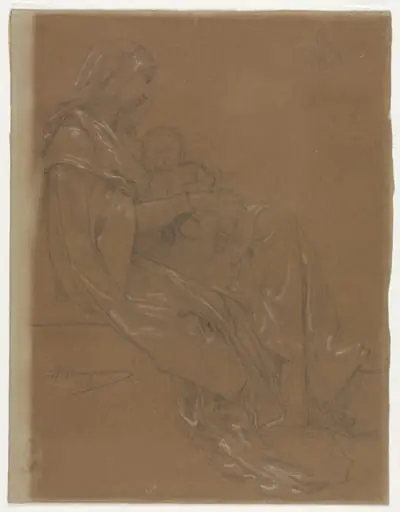 The Virgin and Child
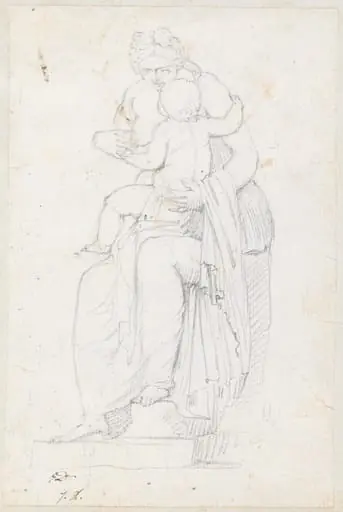 Leucothea, Front View
 Virgin and Child with Two Angels
 Virgin and Child with St. John
 Bas-relief depicting the Virgin and Child on blue ground Luca della Robbia ware
 Mother and Child
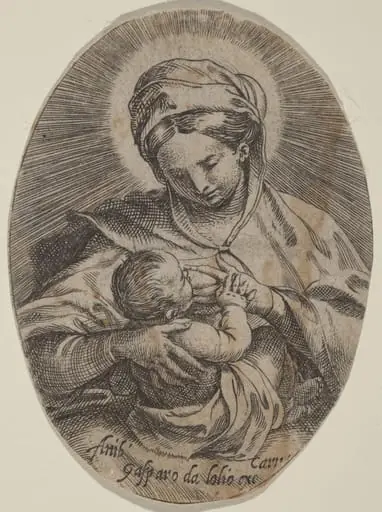 The Madonna Nursing the Christ Child
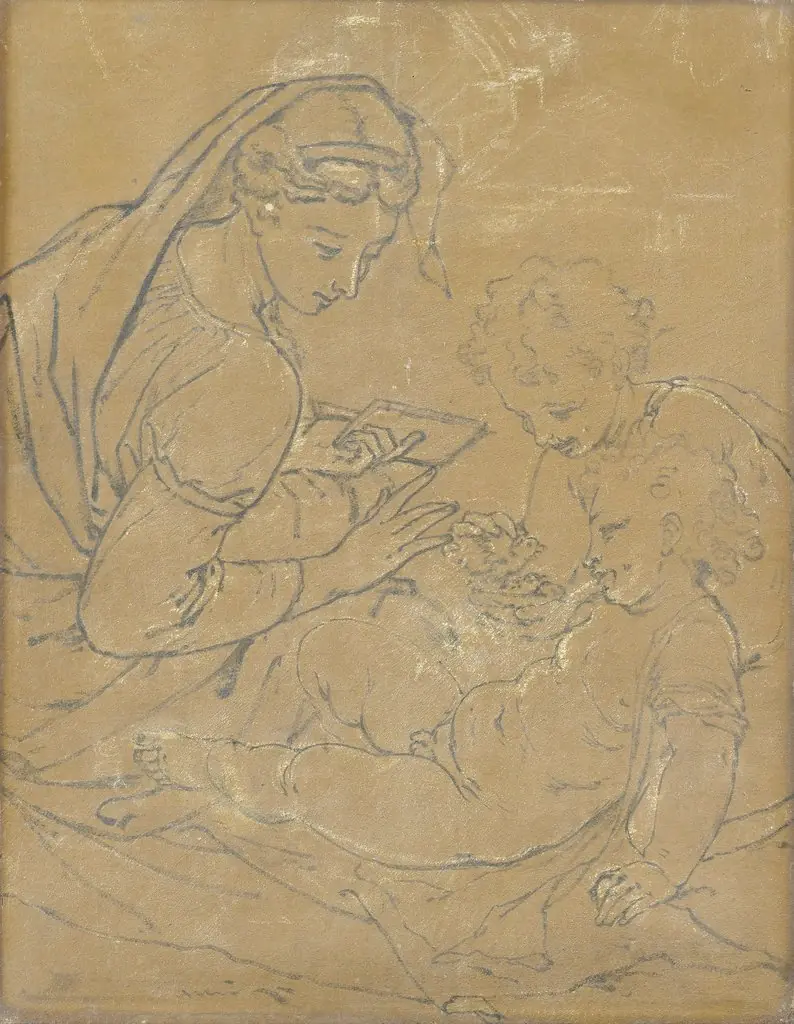 Virgin and Child with Saint John (chalk sketch)
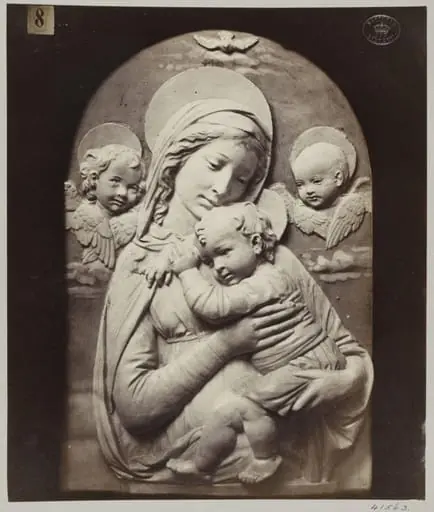 Bas-relief depicting the Virgin and Child in enamelled earthenware
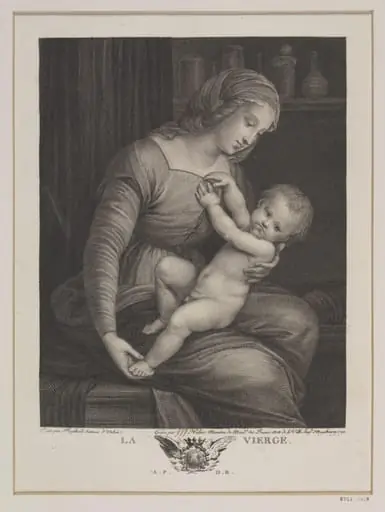 The Virgin Mary
 Domestic Scene
 Saint John, from Henry the Seventh's Chapel Westminster Abbey