Artwork
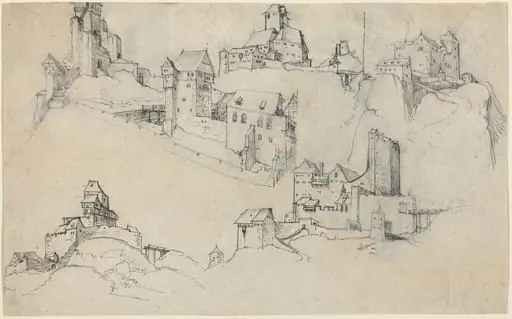
Courtyard of a Castle
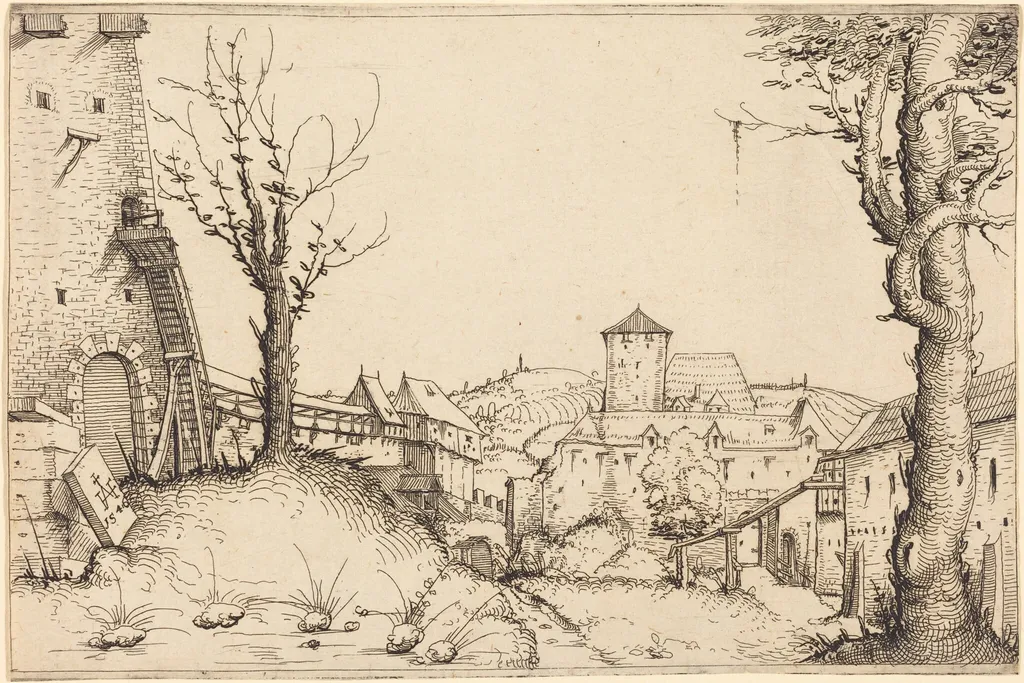
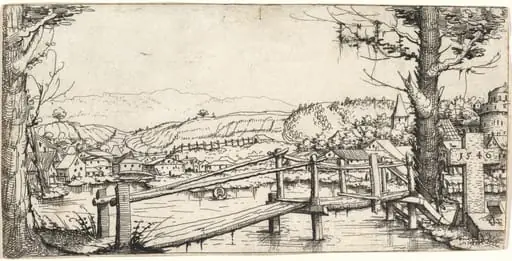
Courtyard of a Castle is an ink print by the Renaissance artist Augustin Hirschvogel. It dates from 1546 and is held in the collection of the National Gallery of Art.
About this work
Overview
The print reflects a shift toward intimate, observational imagery in Northern Renaissance printmaking.
Created in 1546 by Augustin Hirschvogel, *Courtyard of a Castle* is an etching from a series of thirty-five small landscape prints produced between 1545 and 1549. Hirschvogel, known for his expertise in mathematics and cartography, applied precise draftsmanship to this work, aligning it with the Danube School’s interest in naturalistic scenery and architectural detail. The print reflects a shift toward intimate, observational imagery in Northern Renaissance printmaking.
Subject & Meaning
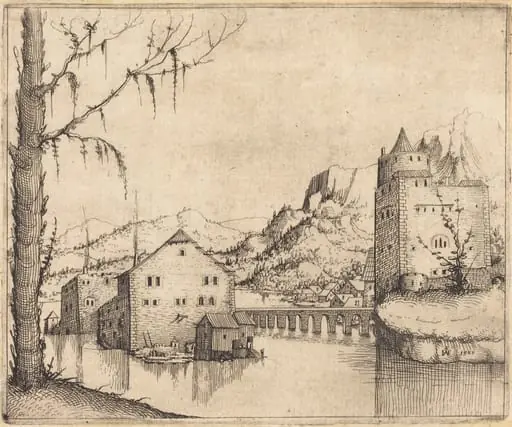
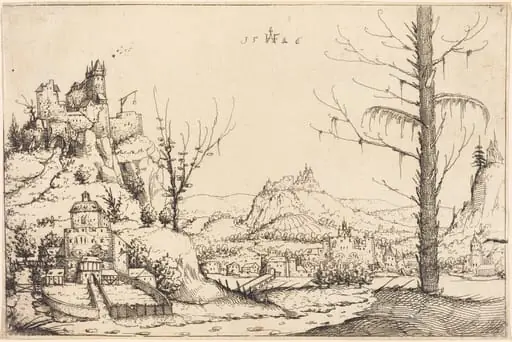
The scene depicts a secluded castle courtyard enclosed by high, weathered walls and towers, with bare trees and a narrow water feature at the base. The crumbling masonry and steeply pitched roofs suggest age and quiet decay. Rather than celebrating power or grandeur, the image conveys a contemplative stillness, emphasizing solitude and the passage of time within a fortified domestic space.
Technique & Style
Hirschvogel employed etching, a method involving acid-bitten lines on a metal plate, to achieve fine, controlled detail. The sharp, clean ink lines define architectural forms and tree branches with clarity, while the dense patterning of hatching suggests texture and shadow. This technique allowed for greater precision than woodcut, enabling subtle gradations and a sense of depth uncommon in earlier prints of the period.
History & Provenance
The etching was made during Hirschvogel’s most productive period in Nuremberg, where he worked alongside other artists associated with the Danube School. Though the print’s early ownership is undocumented, it circulated among collectors of Northern Renaissance prints. Its inclusion in the larger series helped solidify Hirschvogel’s reputation as a leading printmaker of his generation.
Context
In mid-16th-century Bavaria and Austria, artists began turning from religious themes toward secular landscapes and architectural views. Hirschvogel’s etchings responded to this shift, blending topographical accuracy with poetic atmosphere. His background in surveying informed his precise rendering of space, contributing to a growing interest in the natural and built environment as subjects worthy of artistic study.
Legacy
Hirschvogel’s series of landscape etchings, including *Courtyard of a Castle*, influenced later generations of printmakers by demonstrating the potential of etching for detailed, atmospheric scenes. Though less celebrated than his contemporaries, his work helped establish landscape as a legitimate genre in Northern European printmaking, bridging cartographic precision and artistic expression.
Artist & collection
Artist
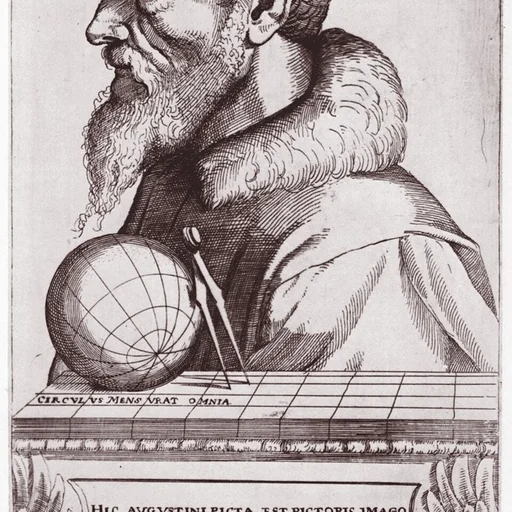
Augustin Hirschvogel (1503 – February 1553) was a German artist, mathematician, and cartographer known primarily for his etchings.