Artwork
River Landscape with Wooden Bridge
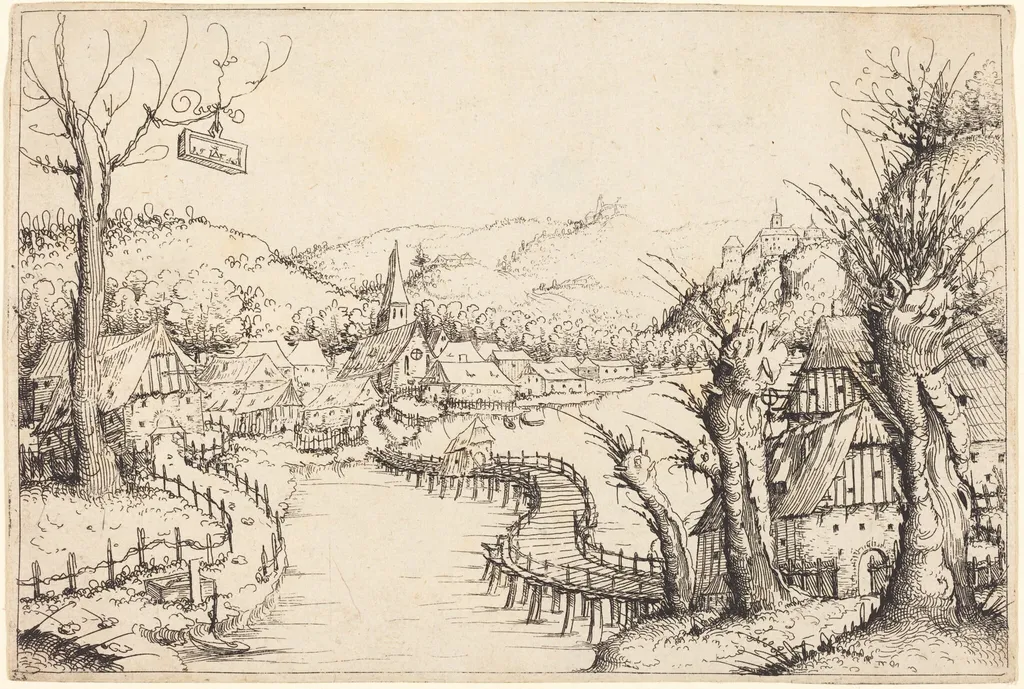
River Landscape with Wooden Bridge is an ink print by the Renaissance artist Augustin Hirschvogel. It dates from 1546 and is held in the collection of the National Gallery of Art.
About this work
Overview
Created in 1546 by the German artist Augustin Hirschvogel, this etching is one of thirty-five small landscape prints produced between 1545 and 1549.
Created in 1546 by the German artist Augustin Hirschvogel, this etching is one of thirty-five small landscape prints produced between 1545 and 1549. Hirschvogel, known for his work in cartography and mathematics, applied precise draftsmanship to natural scenes. This piece exemplifies his contribution to the Danube School, a regional movement focused on intimate, detailed depictions of the natural world.
Subject & Meaning
The scene portrays a tranquil riverside village with a wooden bridge crossing the water. Figures move quietly across the span, while clustered buildings with steep roofs and a distant church tower suggest a modest settlement. The composition emphasizes harmony between human habitation and the natural environment, reflecting a quiet, observational approach rather than narrative or symbolic intent.
Technique & Style
Hirschvogel employed fine, controlled etching lines to model light and texture. The water’s surface is rendered with minimal, agile strokes suggesting ripples; tree branches are defined by delicate, angular contours. Buildings and terrain gain depth through subtle gradations of line density, creating a sense of spatial recession without perspective distortion, characteristic of his precise, linear style.
History & Provenance
The etching belongs to a series Hirschvogel produced during his time in Nuremberg, where he collaborated with printmakers and engaged with humanist circles. These works circulated among collectors and scholars, valued for their technical refinement. While specific early ownership records are sparse, the print’s survival in multiple institutional collections attests to its sustained recognition among early modern print audiences.
Context
Hirschvogel’s landscapes emerged alongside a growing interest in secular natural scenery in 16th-century Central Europe. Unlike religious or mythological subjects, these works offered contemplative views of everyday environments. His etchings aligned with regional trends in the Danube region, where artists began to prioritize direct observation over idealized composition.
Legacy
Hirschvogel’s small-scale etchings influenced later generations of Northern European printmakers who sought to capture landscape with precision and restraint. Though not widely celebrated in his lifetime, his technical discipline and quiet compositions contributed to the evolution of landscape as an independent genre in printmaking, paving the way for more naturalistic approaches in the 17th century.
Artist & collection
Artist
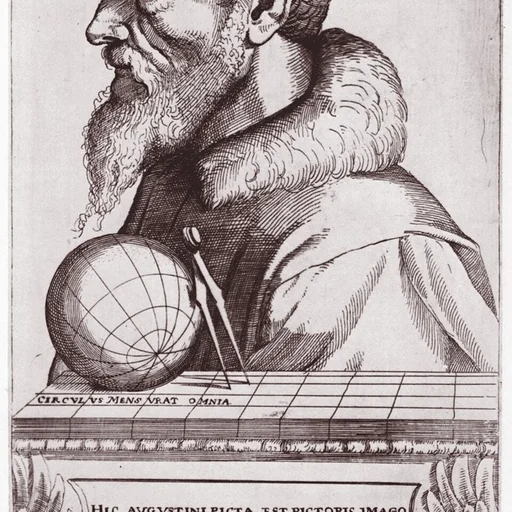
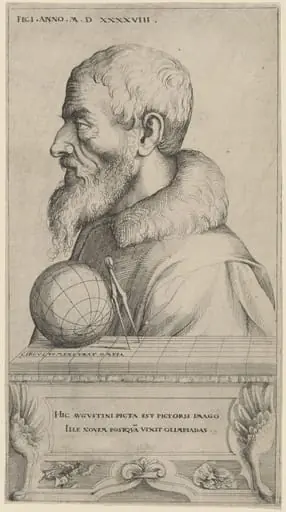
Augustin Hirschvogel (1503 – February 1553) was a German artist, mathematician, and cartographer known primarily for his etchings.

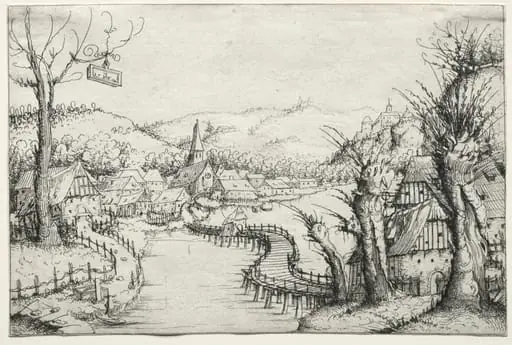 River Landscape with Three Bare Willow Trees at Right and a Long Winding Wooden Bridge at Center Leading to a Village
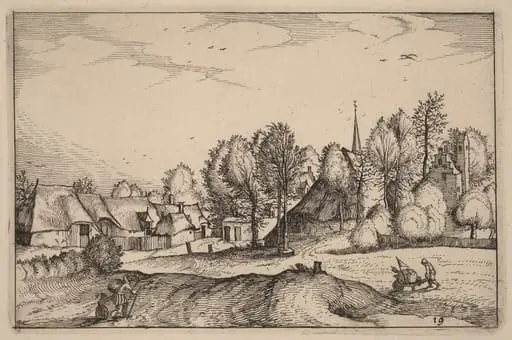 Road into a Village
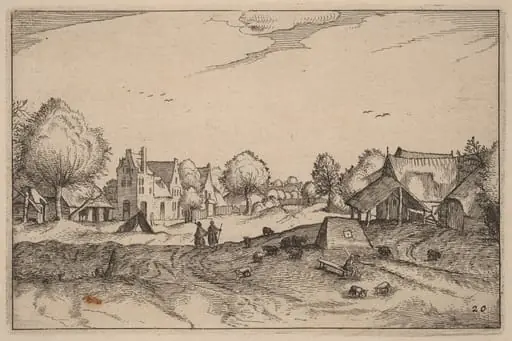 Village Road
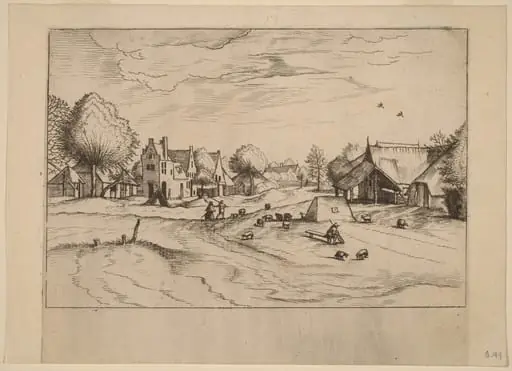 Country Village with Sheep and Sitting Shepherd
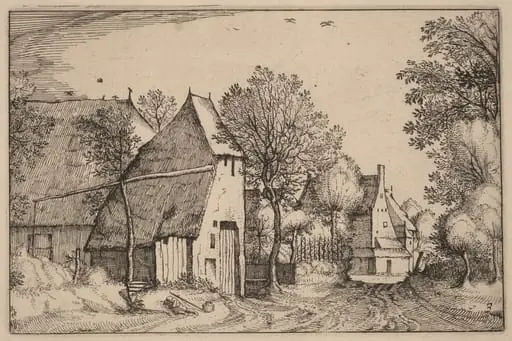 Village Road
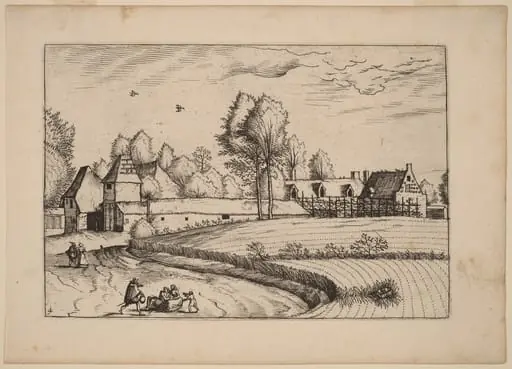 Country Houses
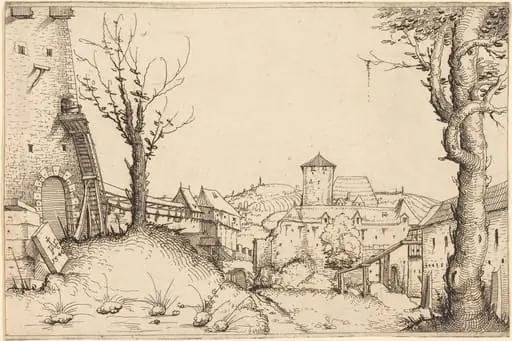 Courtyard of a Castle
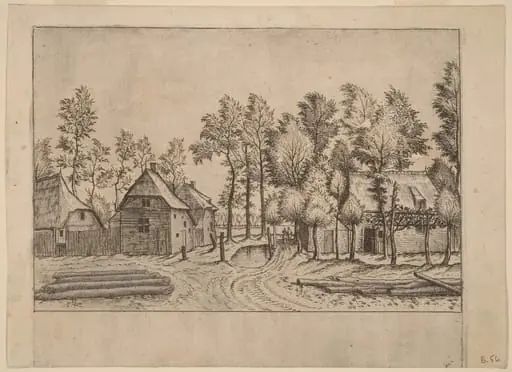 Village Street
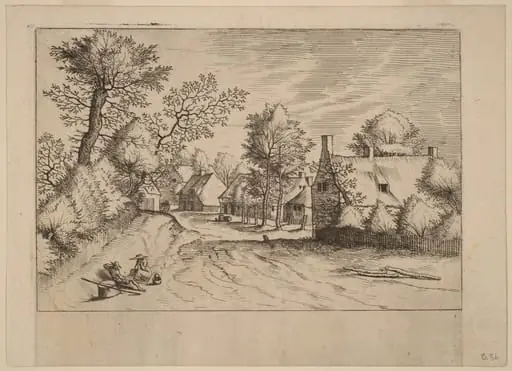 Village Road
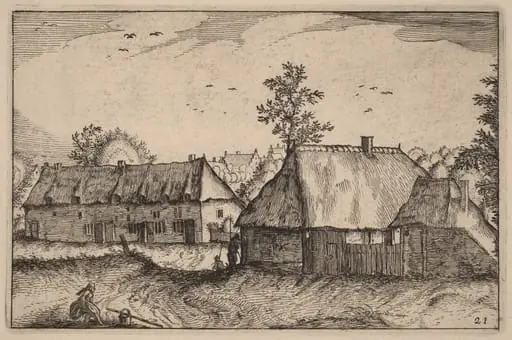 Large Sheds
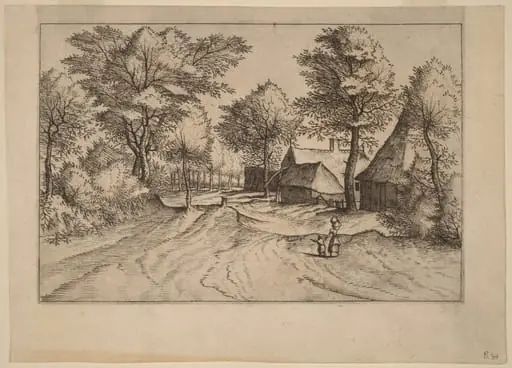 Village Road with Farm and Sheds
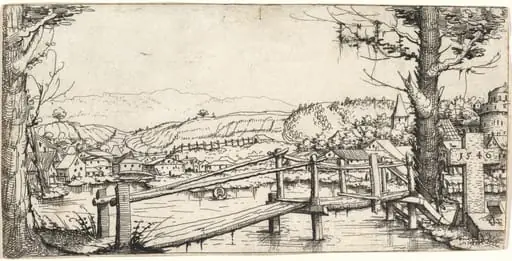 River Landscape with a Footbridge