Artwork
Elisha Punishes Gehazi with Naaman's Leprosy
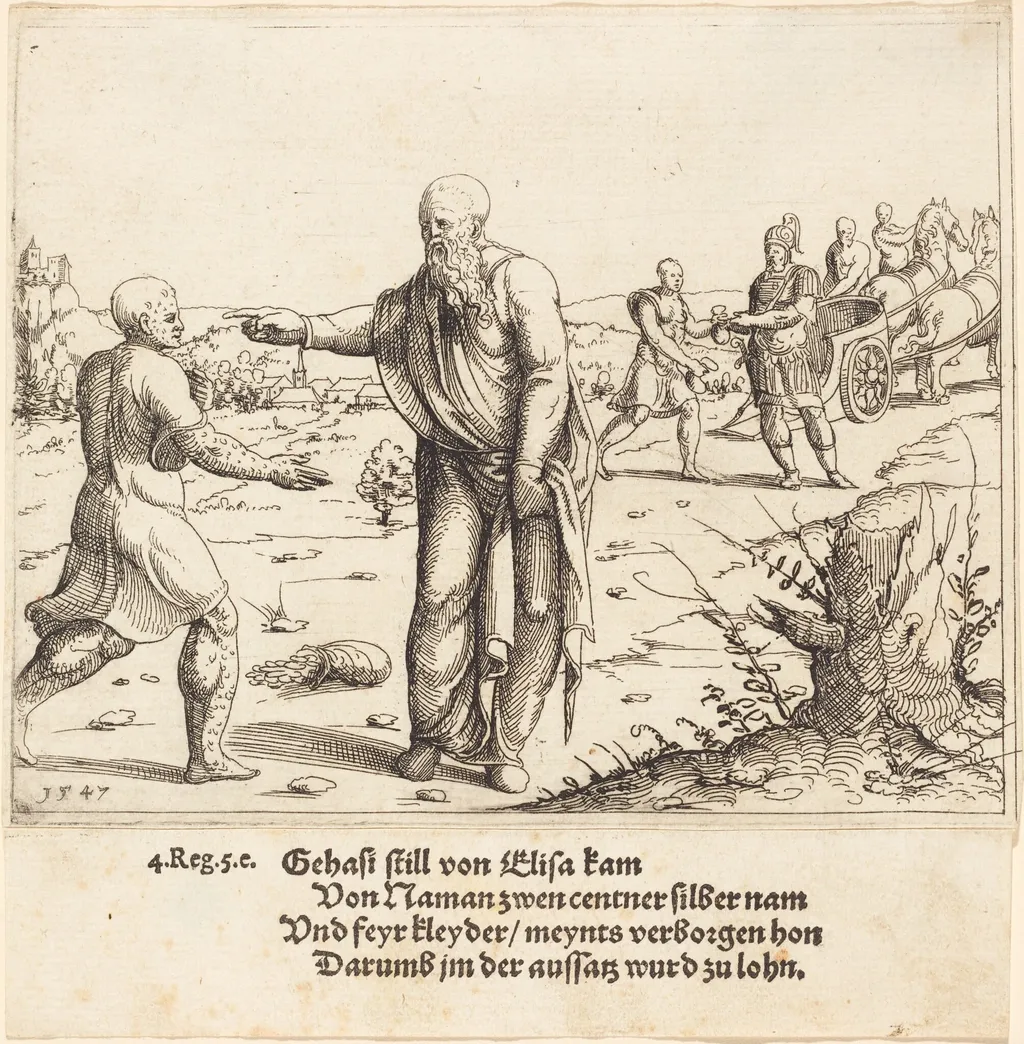
Elisha Punishes Gehazi with Naaman's Leprosy is an ink print by the Renaissance artist Augustin Hirschvogel. It dates from 1547 and is held in the collection of the National Gallery of Art.
About this work
Overview
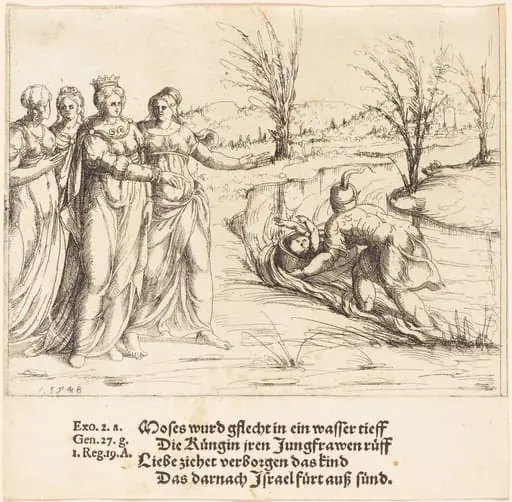
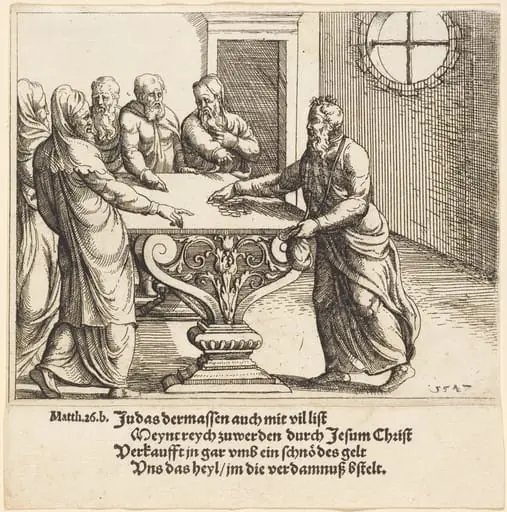
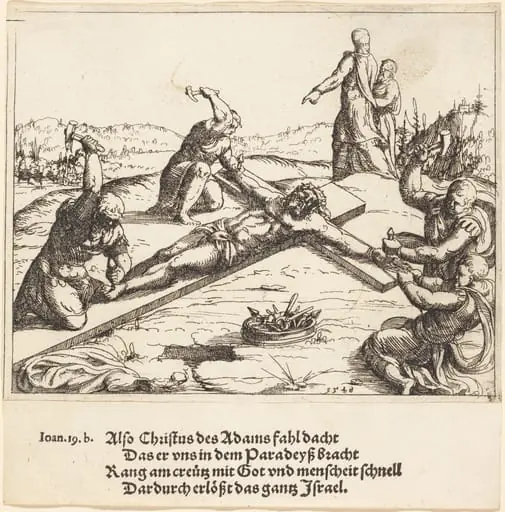
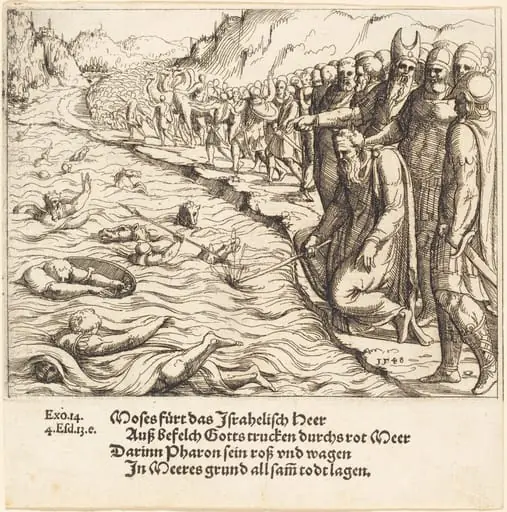
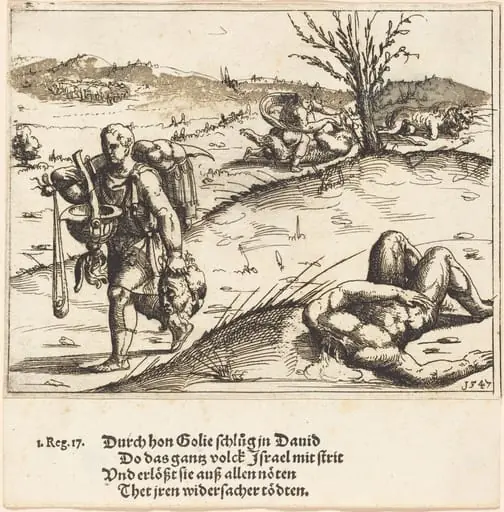
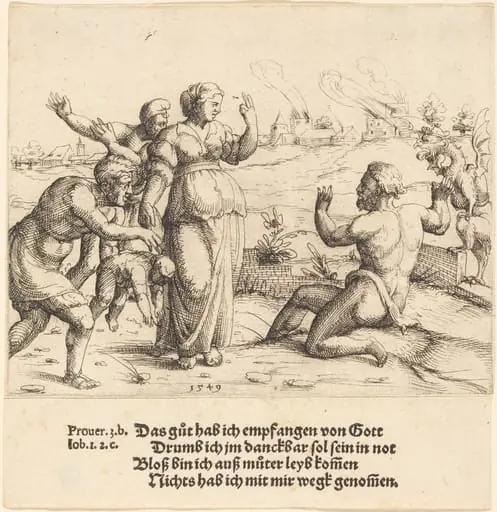
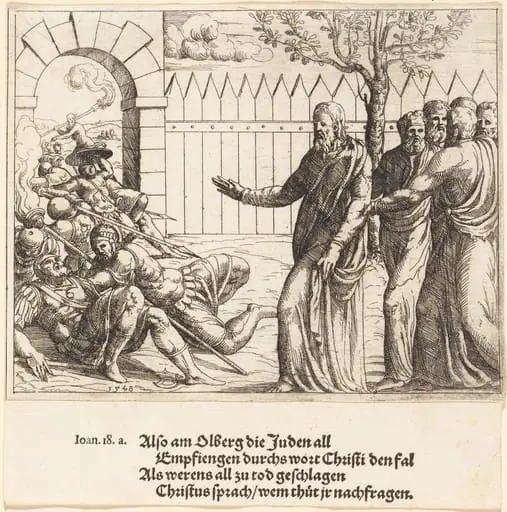
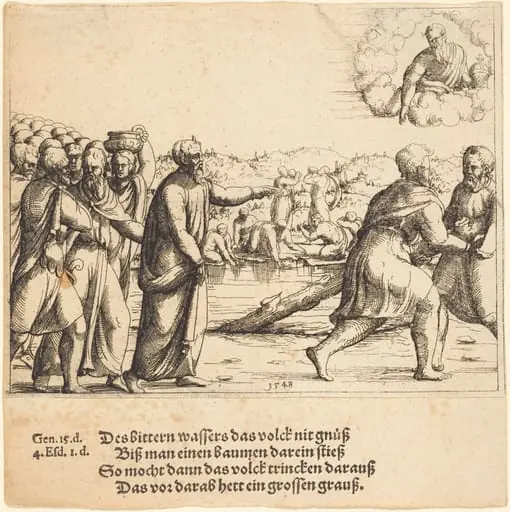
The work is rendered entirely in monochrome, relying on fine, controlled lines to convey narrative and spatial depth.
Created in 1547 by the German artist Augustin Hirschvogel, this etching illustrates a moment from the biblical Second Kings, where the prophet Elisha condemns his servant Gehazi for deceit. Hirschvogel, known for his precise linear style and cartographic precision, produced this as part of a small series of biblical prints during his most active period in printmaking. The work is rendered entirely in monochrome, relying on fine, controlled lines to convey narrative and spatial depth.
Subject & Meaning
The scene captures the divine retribution against Gehazi, who secretly accepted gifts from Naaman, the Syrian commander healed of leprosy by Elisha. Elisha, depicted as a commanding figure, gestures toward Gehazi, who clutches a scroll—symbolizing his betrayal. Behind them, soldiers march in formation, reinforcing the gravity of the moment. The scattered figures and distant city suggest a world disrupted by moral failure, emphasizing the consequences of greed in a sacred context.
Technique & Style
Hirschvogel employed etching to achieve sharp, intricate lines that define form and movement without color or shading. The wavy ground lines suggest terrain or atmospheric movement, while the orderly ranks of soldiers contrast with the chaotic posture of Gehazi. His background in mathematics informs the composition’s spatial clarity, and the restrained palette enhances the moral seriousness of the scene. The technique allows for fine detail in fabric, armor, and facial expression despite the small scale.
History & Provenance
This print emerged during Hirschvogel’s brief but influential phase of biblical etchings between 1545 and 1549, a period when he shifted from cartography to religious imagery. It was likely circulated among educated audiences in southern Germany and Austria, where interest in biblical narratives and print culture was growing. No specific early ownership records are documented, but its survival in institutional collections suggests early recognition of its technical merit.
Context
Hirschvogel worked within the broader cultural currents of the Protestant Reformation, where biblical stories were increasingly depicted in prints for private devotion and moral instruction. Though associated with the Danube School’s expressive landscapes, this work aligns more closely with the Northern tradition of narrative clarity. The etching reflects a time when religious imagery served both spiritual and didactic purposes, appealing to literate urban elites.
Legacy
Though Hirschvogel is better known for his landscapes and maps, this etching stands as a testament to his skill in conveying complex narratives through line alone. It influenced later printmakers interested in biblical drama and linear precision. While not widely reproduced in popular culture, it remains a significant example of mid-16th-century German printmaking, valued for its restraint and narrative economy.
Artist & collection
Artist
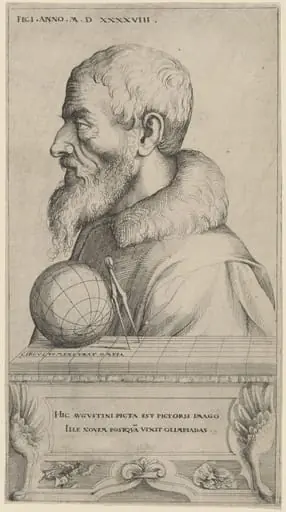
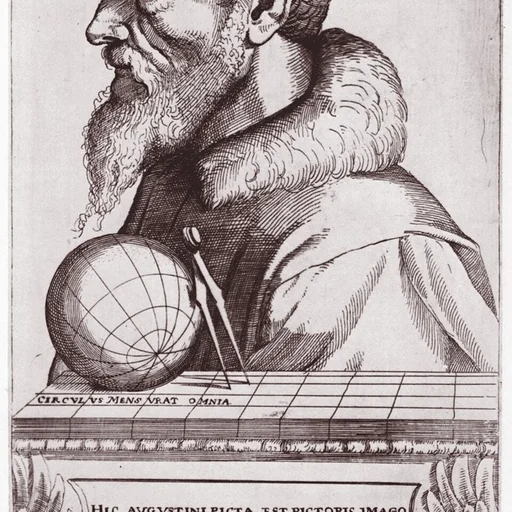
Augustin Hirschvogel (1503 – February 1553) was a German artist, mathematician, and cartographer known primarily for his etchings.