Artwork
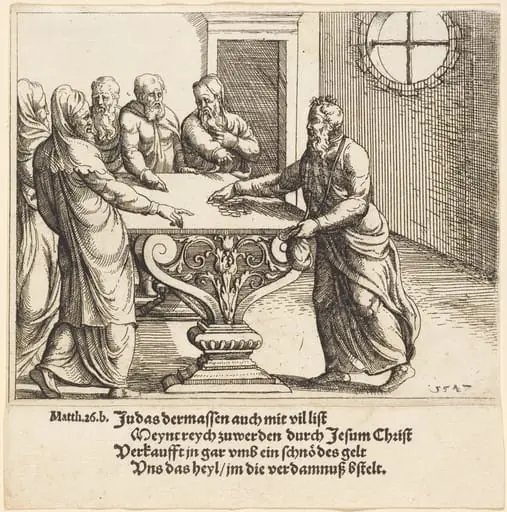
Judas Returns the Thirty Pieces of Silver
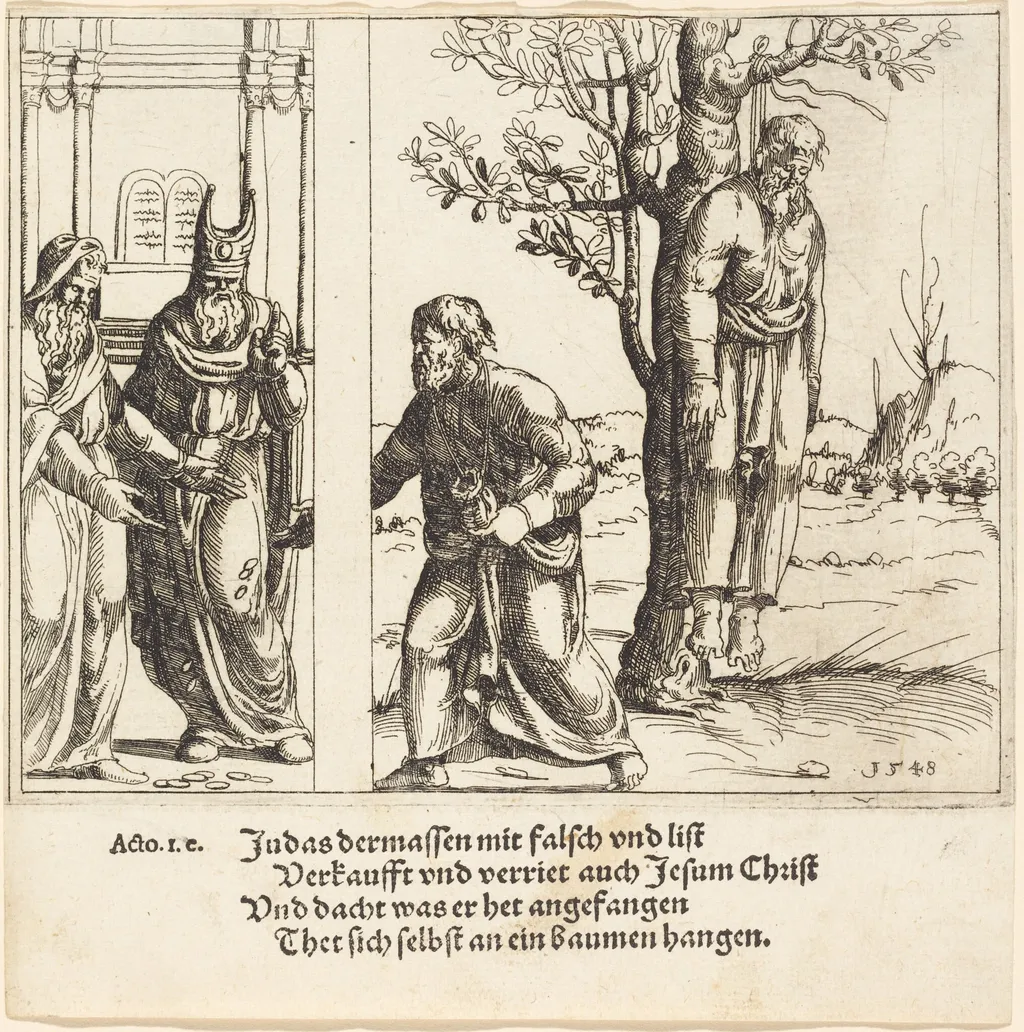
Judas Returns the Thirty Pieces of Silver is an ink print by the Renaissance artist Augustin Hirschvogel. It dates from 1548 and is held in the collection of the National Gallery of Art.
About this work
Overview
Augustin Hirschvogel, a German printmaker active in the mid‑16th century, produced the etching *Judas Returns the Thirty Pieces of Silver* in 1548. Executed in black and white, the work combines two narrative moments within a single plate, illustrating a biblical episode through a compact, detailed composition typical of the period’s print culture.
Subject & Meaning
Together the scenes reference the biblical story of Judas returning the silver he received for betraying Jesus, highlighting themes of guilt and restitution.
The left side of the image depicts two figures before a classical façade, one crowned and holding a staff, suggesting authority or judgment. The right side shows a man suspended from a tree, his bare feet and simple clothing emphasizing his vulnerability. Together the scenes reference the biblical story of Judas returning the silver he received for betraying Jesus, highlighting themes of guilt and restitution.
Technique & Style
Hirschvogel employed fine line etching to render architectural detail, foliage, and the distant landscape with precision. The contrast between the crisp, linear architecture on the left and the softer, atmospheric background on the right reflects the Danube School’s interest in integrating narrative with naturalistic settings. The monochrome palette underscores the dramatic tension of the two juxtaposed episodes.
History & Provenance
Created during a prolific period when Hirschvogel produced thirty‑five small landscape etchings (1545‑1549), the plate aligns with his broader output that blended cartographic skill and artistic observation. While specific ownership records are scarce, the work survives in several museum collections, attesting to its circulation among early modern print collectors.
Context
The etching emerges from the Danube School, a network of artists working in Bavaria and Austria who emphasized detailed natural scenery and narrative content. Hirschvogel’s background in cartography informed his precise rendering of space, while his engagement with biblical subjects placed the work within the Reformation‑era visual culture that favored didactic, morally charged imagery.
Artist & collection
Artist
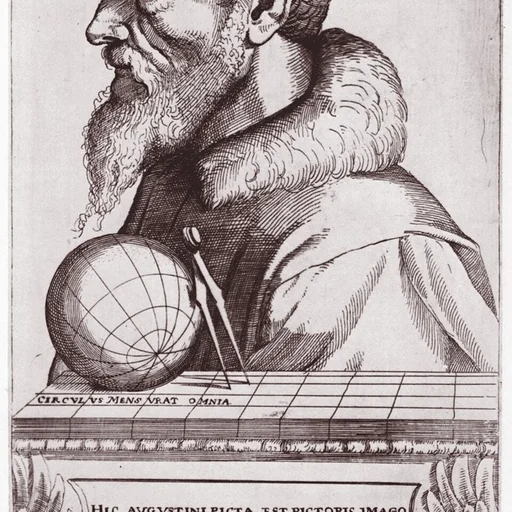
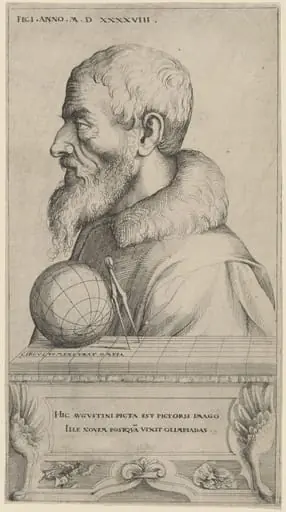
Augustin Hirschvogel (1503 – February 1553) was a German artist, mathematician, and cartographer known primarily for his etchings.

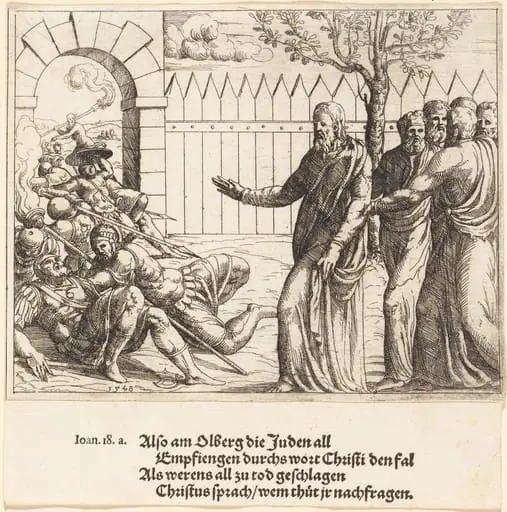 Jesus Identifies Himself before the Arrest
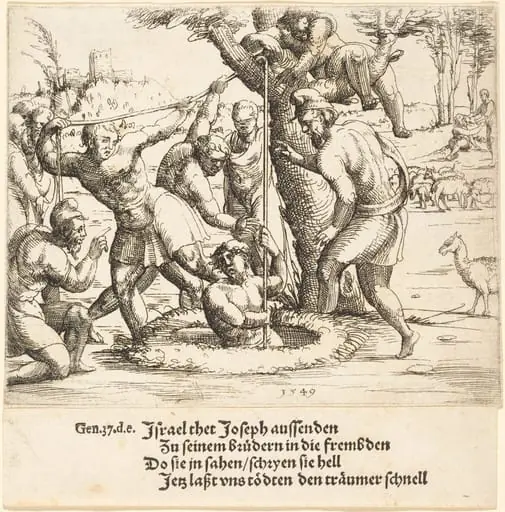 Joseph Thrown into the Well
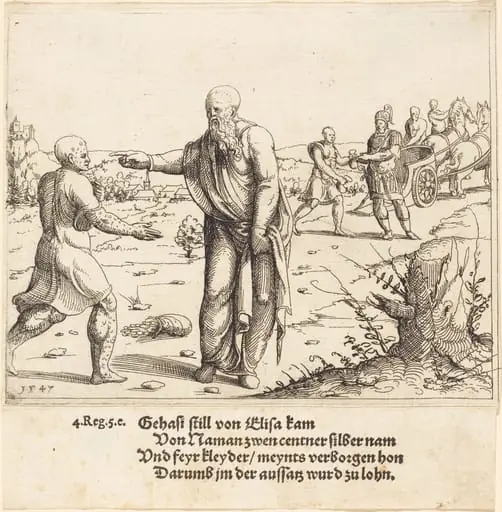 Elisha Punishes Gehazi with Naaman's Leprosy
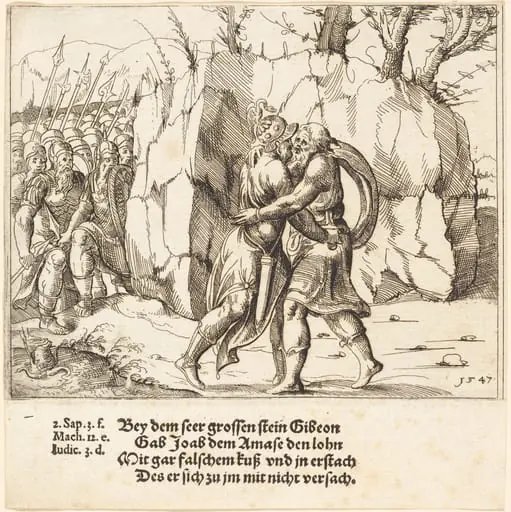 Joab Betrays Abner
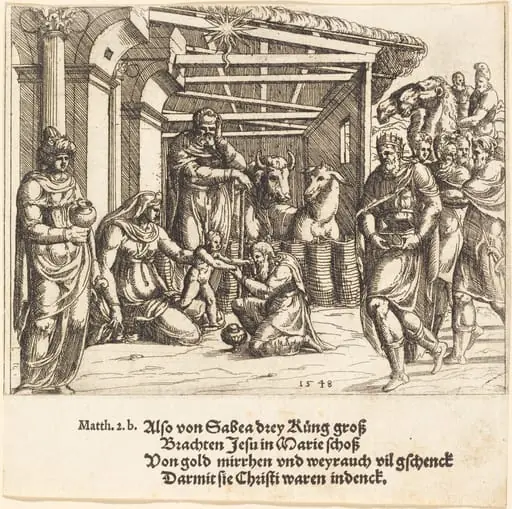 The Adoration of the Magi
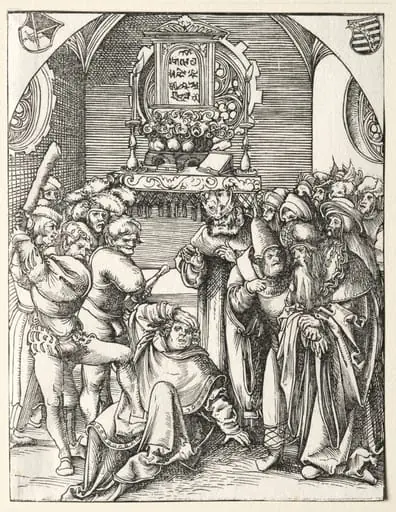 Martyrdom of St. Judas Thaddeus
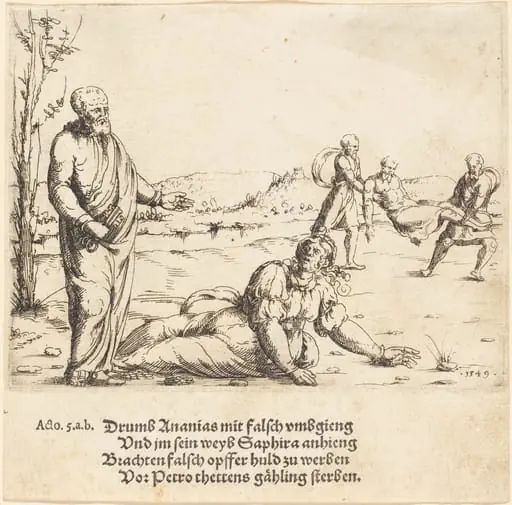 The Punishment of Ananias and Sapphira
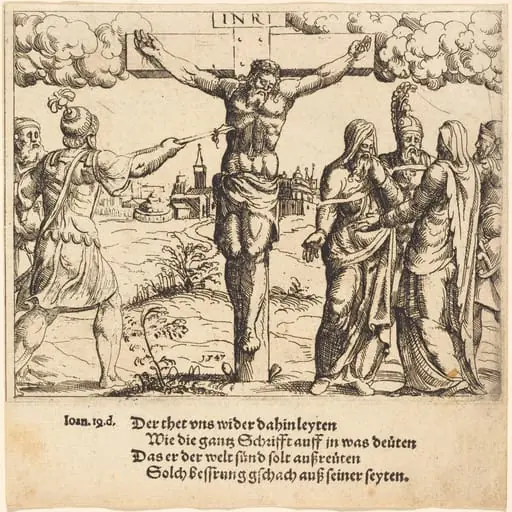 Christ is Pierced with the Lance
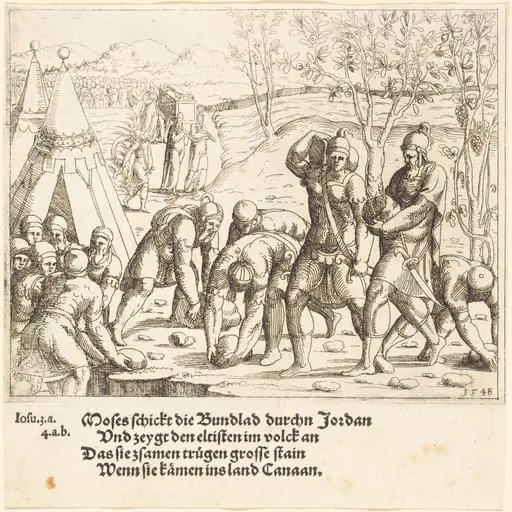 The Twelve Stones, and the Waters of the Jordan are Divided
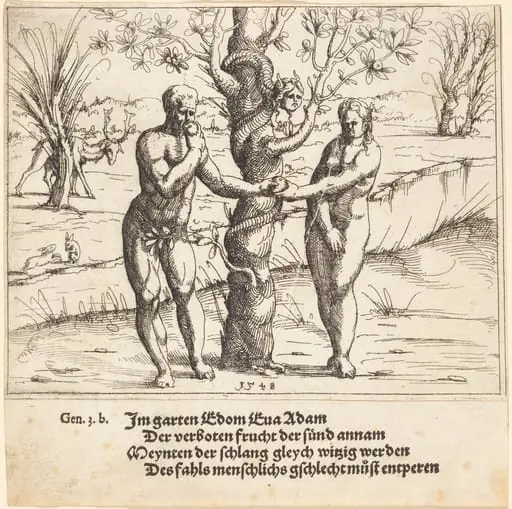 The Fall of Man
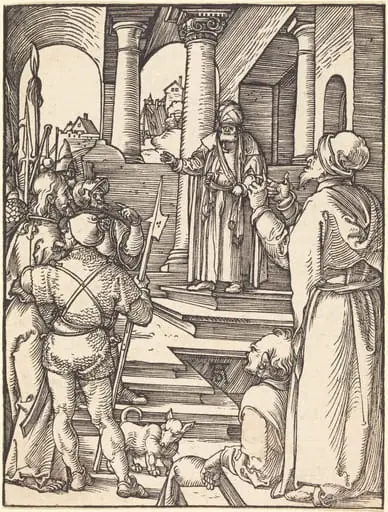 Christ before Pilate
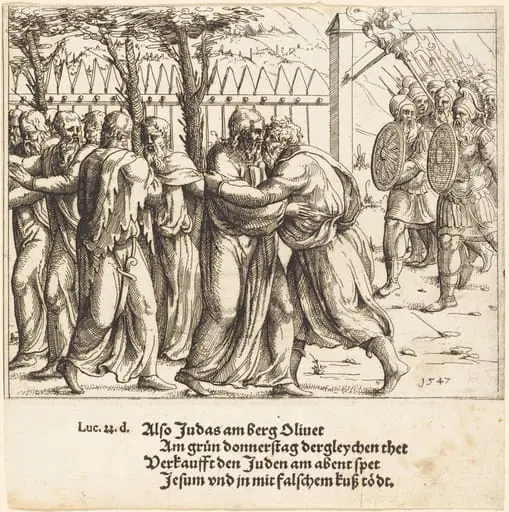 The Kiss of Judas