Artwork
Joab Betrays Abner
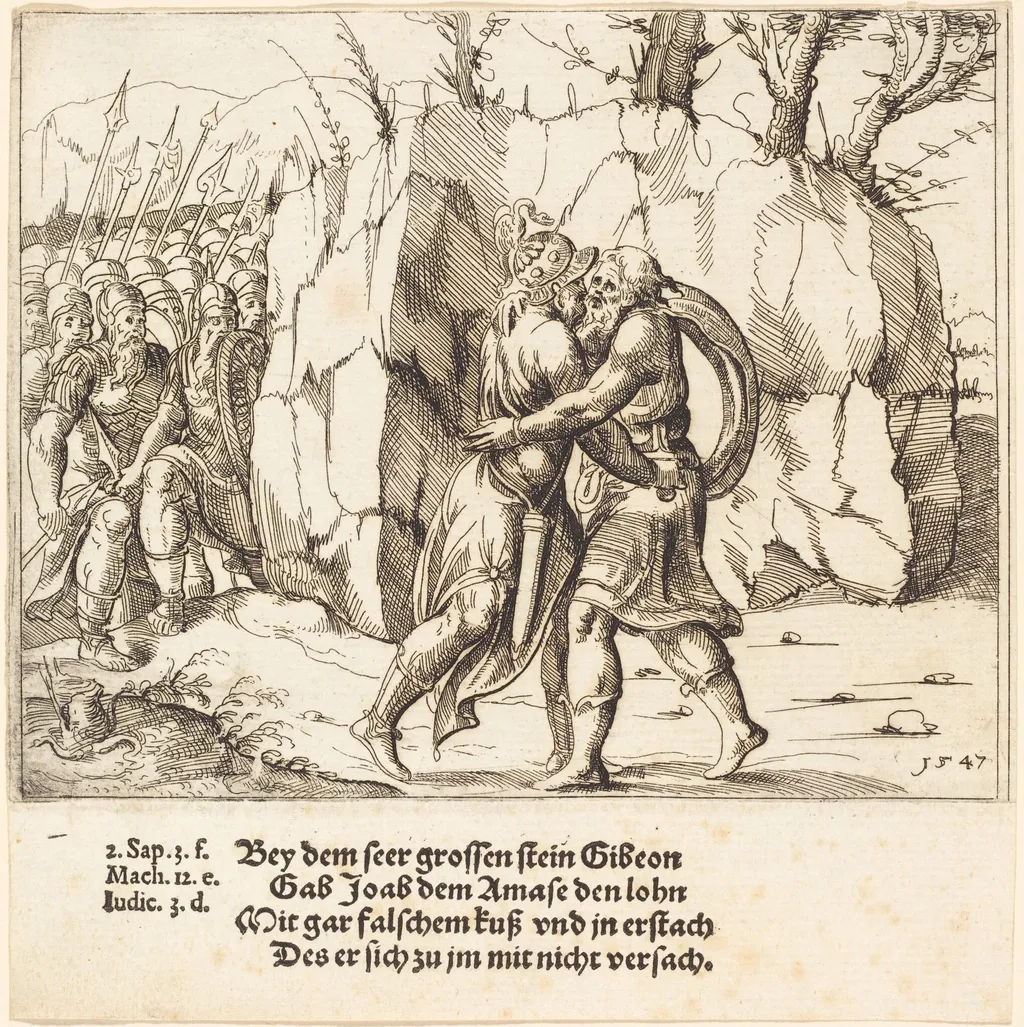
Joab Betrays Abner is an ink print by the Renaissance artist Augustin Hirschvogel. It dates from 1547 and is held in the collection of the National Gallery of Art.
About this work
Overview
Augustin Hirschvogel, a 16th-century German artist known for his precision in etching, produced *Joab Betrays Abner* in 1547.
Augustin Hirschvogel, a 16th-century German artist known for his precision in etching, produced *Joab Betrays Abner* in 1547. This print belongs to a small series of landscape-infused biblical scenes he created between 1545 and 1549. Though trained in mathematics and cartography, Hirschvogel applied his technical discipline to graphic art, producing works that blend narrative intensity with detailed natural settings.
Subject & Meaning
The scene illustrates a moment from the biblical Book of Samuel, in which Joab, commander of David’s army, ambushes and kills Abner, a former general of Saul’s house. The betrayal occurs under false pretenses of peace. Hirschvogel captures the violence of the moment—Joab thrusting his weapon as Abner falls—while surrounding figures react with urgency or stillness, underscoring the moral gravity of the act.
Technique & Style
Hirschvogel employed etching to render dense, linear textures that evoke movement and disorder. Fine, rapid strokes define the tangled foliage and muscular forms, creating a sense of chaotic energy. The background trees are sketched with loose, expressive lines, contrasting with the sharper contours of the central figures. This technique, common in his small-scale prints, emphasizes atmospheric depth without relying on heavy shading.
History & Provenance
Created during Hirschvogel’s most active period as a printmaker, the work emerged from his time in Nuremberg, a hub for artistic and scientific exchange. Though no early ownership records are documented, the print aligns with the dissemination of biblical imagery among Northern European collectors. Its survival in multiple institutional collections suggests it was widely circulated in the decades following its creation.
Context
Hirschvogel’s work reflects the Danube School’s interest in combining naturalistic landscapes with dramatic religious narratives. Unlike contemporaries who favored grand altarpieces, he focused on intimate, print-based storytelling accessible to a broader audience. The inclusion of German text beneath the image indicates an audience familiar with scriptural stories, reinforcing the print’s role in devotional or educational contexts.
Legacy
Hirschvogel’s etchings, including this one, contributed to the evolution of narrative printmaking in Central Europe. His integration of landscape as both setting and emotional counterpoint influenced later generations of printmakers. Though not widely celebrated in his lifetime, his technical precision and compositional economy secured his place in the history of Renaissance graphic arts.
Artist & collection
Artist
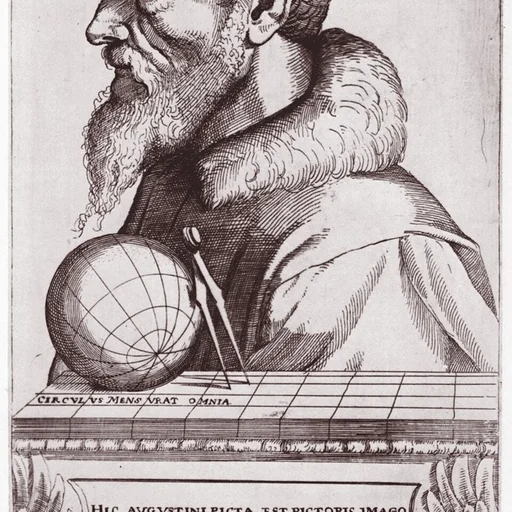
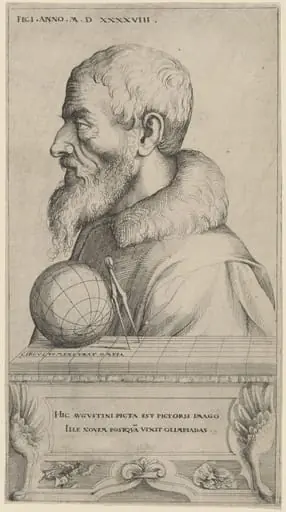
Augustin Hirschvogel (1503 – February 1553) was a German artist, mathematician, and cartographer known primarily for his etchings.

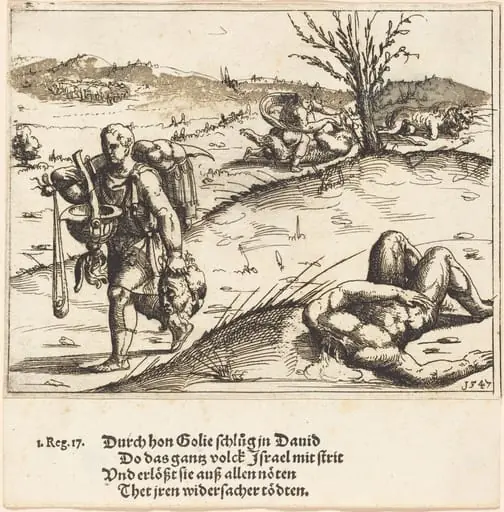 David Beheads Goliath
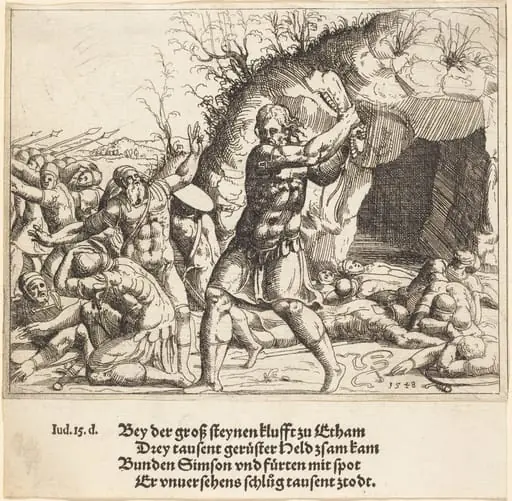 Samson Slays the Philistines
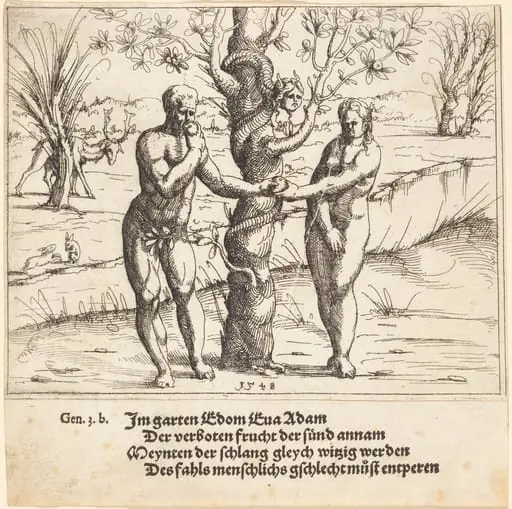 The Fall of Man
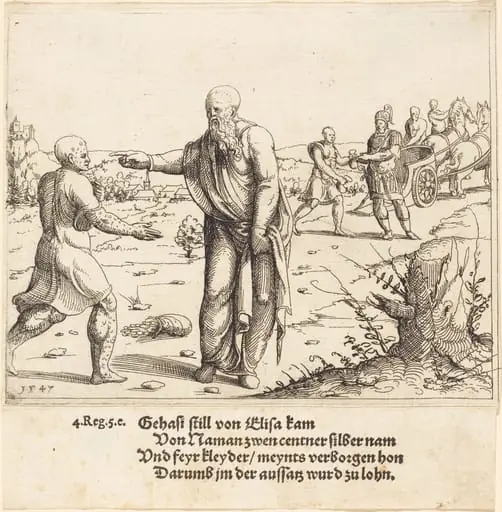 Elisha Punishes Gehazi with Naaman's Leprosy
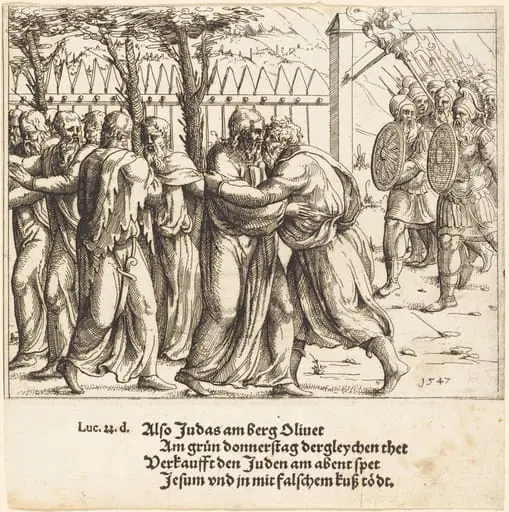 The Kiss of Judas
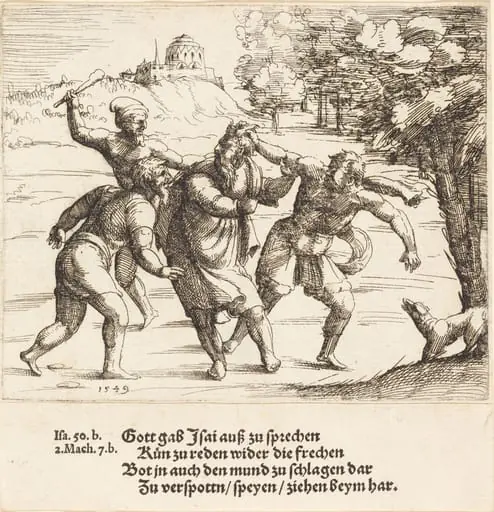 Isaiah Accepts Mockery because of His Faith
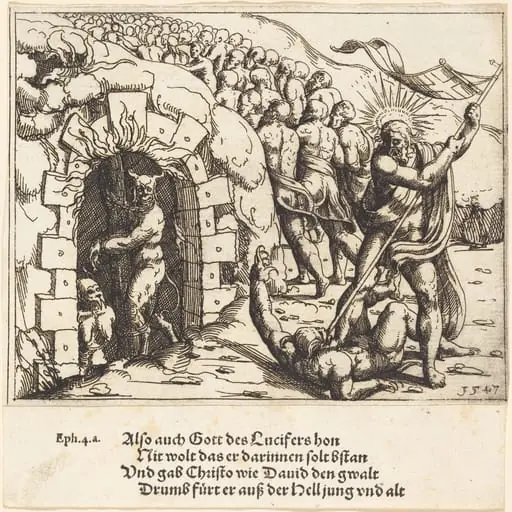 The Harrowing of Hell
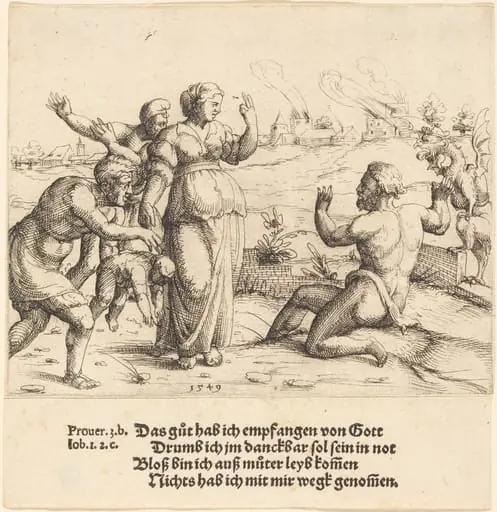 Job Learns of His Misfortunes
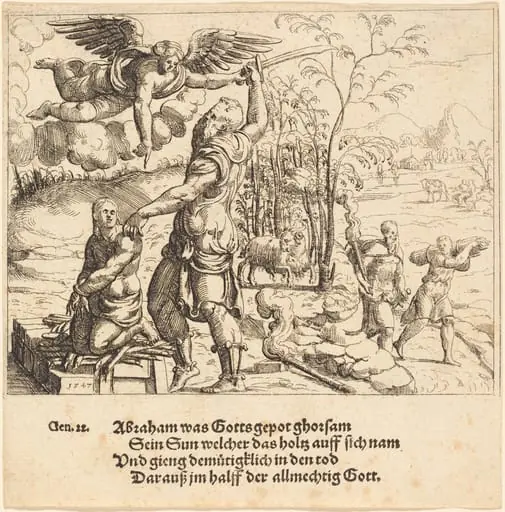 The Sacrifice of Isaac
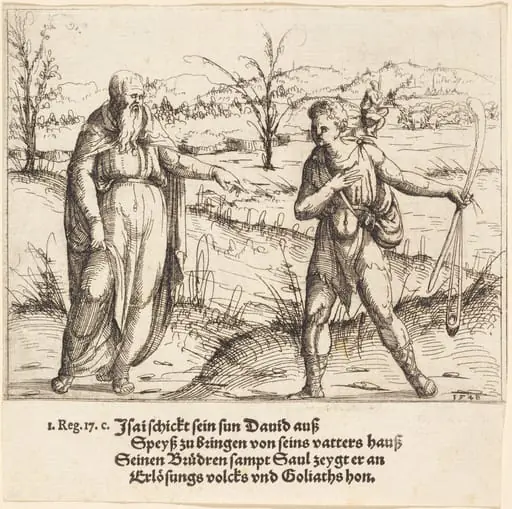 Jesse Sends David to His Brothers and Saul
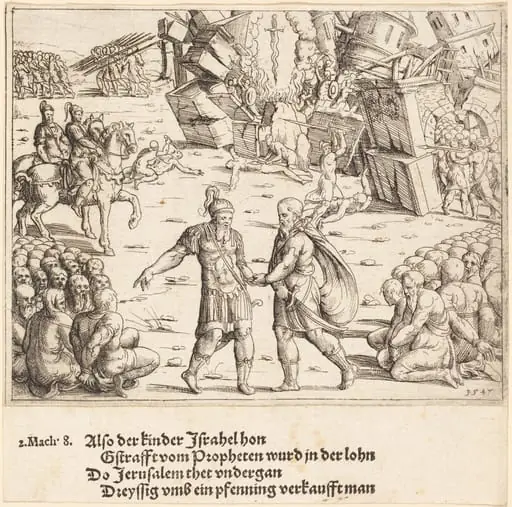 The Victory of Judas Maccabeus Over Niccanor
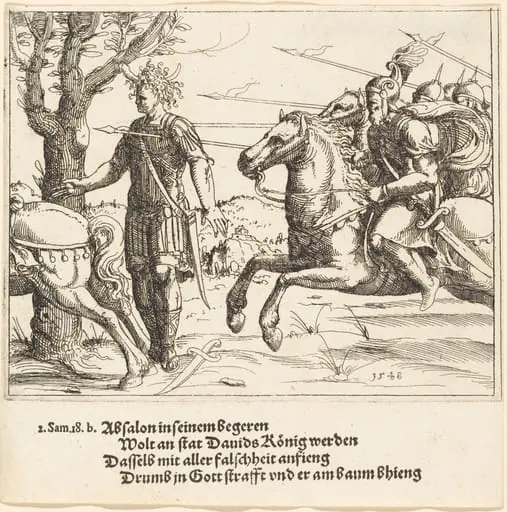 Absalom Slain by Joab