Artwork
Jonah is Delivered from the Whale
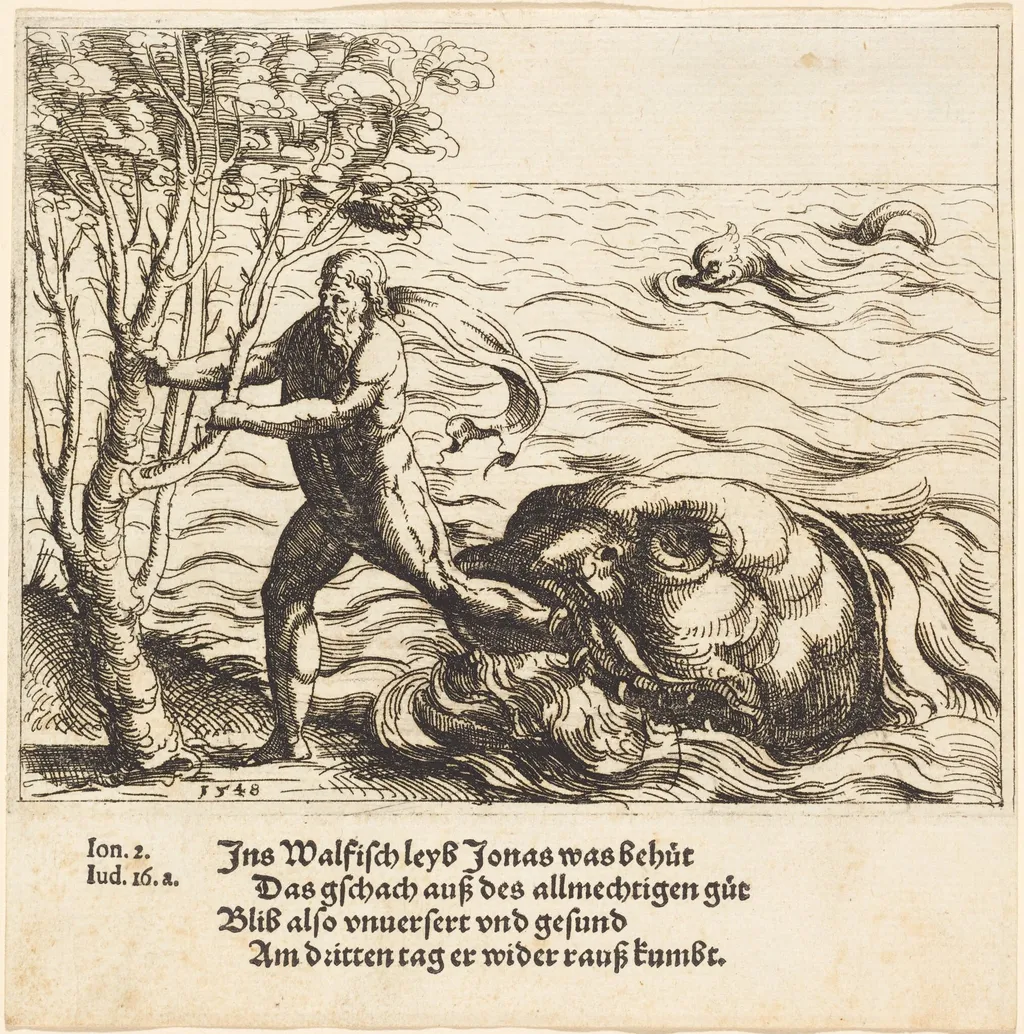
Jonah is Delivered from the Whale is an ink print by the Renaissance artist Augustin Hirschvogel. It dates from 1548 and is held in the collection of the National Gallery of Art.
About this work
The text below is in German and tells a story about a man being spit out of the whale after three days.
This black-and-white print shows a man standing on a rock inside a giant whale’s open mouth. The waves crash around them, and a tree grows on the rock. The whale’s mouth is wide, with sharp teeth visible.
The text below is in German and tells a story about a man being spit out of the whale after three days. The artist signed the bottom with the year 1548.
Check out how this was made using the technique: etching.
Overview
Created in 1548 by the German artist Augustin Hirschvogel, this etching depicts the biblical moment of Jonah being expelled from the whale. As part of a small series of landscape-focused prints made between 1545 and 1549, the work exemplifies Hirschvogel’s precision in fine-line engraving and his interest in integrating natural elements with narrative scenes. The print bears his signature and the date, confirming its origin in the late Renaissance period.
Subject & Meaning
The scene illustrates Jonah’s deliverance after three days inside the whale, a story from the Old Testament symbolizing divine intervention and redemption. Hirschvogel captures the moment of emergence: Jonah stands on a rocky outcrop within the whale’s gaping jaws, surrounded by turbulent waves. A solitary tree on the rock suggests life amid chaos, reinforcing themes of survival and renewal. The German inscription below narrates the event, anchoring the image in its scriptural context.
Technique & Style
Executed in etching, the print relies on fine, controlled lines to render texture and depth. Hirschvogel’s technique emphasizes detail in the whale’s teeth, the ripple of water, and the delicate foliage of the tree. The composition balances dramatic scale—the vast mouth of the creature—with intimate naturalism in the landscape. This approach reflects the Danube School’s tendency to merge religious subject matter with carefully observed environmental elements.
History & Provenance
Hirschvogel produced this print during a concentrated period of etching activity in Nuremberg, where he lived and worked. Though few of his prints survive in large numbers, this work is documented in early collections and aligns with his known output from the late 1540s. Its survival in museum and private holdings suggests it was valued for its technical refinement and religious resonance among contemporary collectors.
Context
In mid-16th-century Germany, religious imagery remained central to print culture, even as Reformation ideals reshaped artistic priorities. Hirschvogel’s work reflects a regional tradition—associated with the Danube School—that favored lyrical landscapes and intimate biblical moments over grand altarpieces. His background in mathematics and cartography likely informed the precision and spatial clarity evident in this composition.
Legacy
Though Hirschvogel is less widely known than contemporaries like Dürer, his etchings contributed to the development of Northern Renaissance printmaking by expanding the expressive potential of the medium. This print, with its fusion of narrative and landscape, influenced later artists interested in combining naturalism with sacred themes. It remains a representative example of small-scale, intellectually engaged printmaking from the period.
Artist & collection
Artist
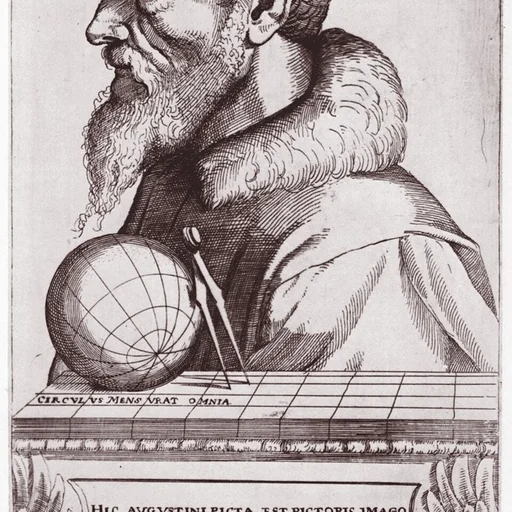
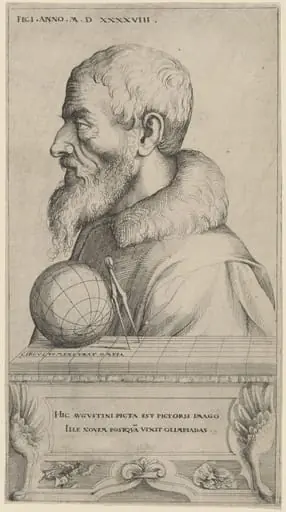
Augustin Hirschvogel (1503 – February 1553) was a German artist, mathematician, and cartographer known primarily for his etchings.

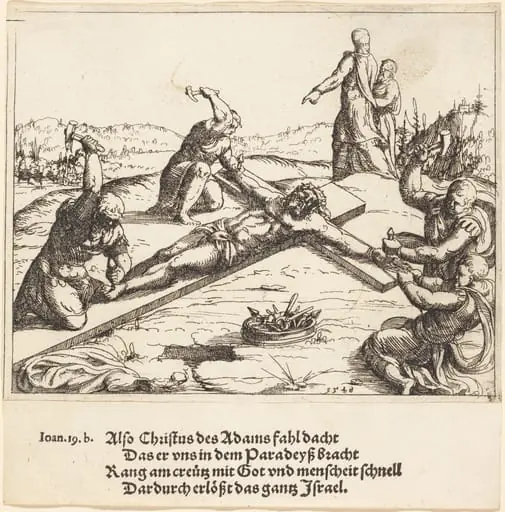
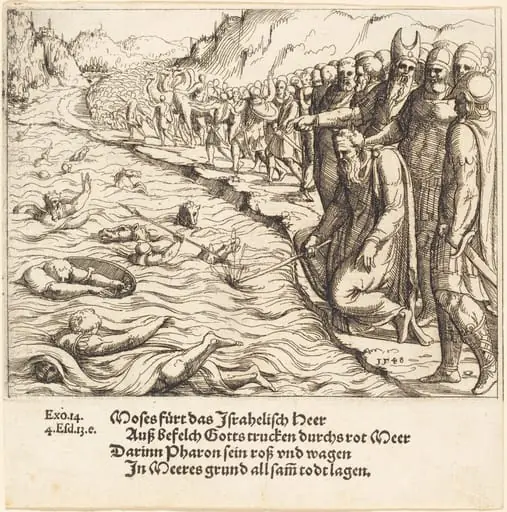
!["You Are Tying a Dolphin by the Tail" [fol. 17 recto], by French early 16th Century](https://artifactworldgallery.com/img/french-early-16th-century--you-are-tying-a-dolphin-by-the-tail-fol-17-recto--0abe83abfb5ccd1d-w320.webp) "You Are Tying a Dolphin by the Tail" [fol. 17 recto]
"You Are Tying a Dolphin by the Tail" [fol. 17 recto]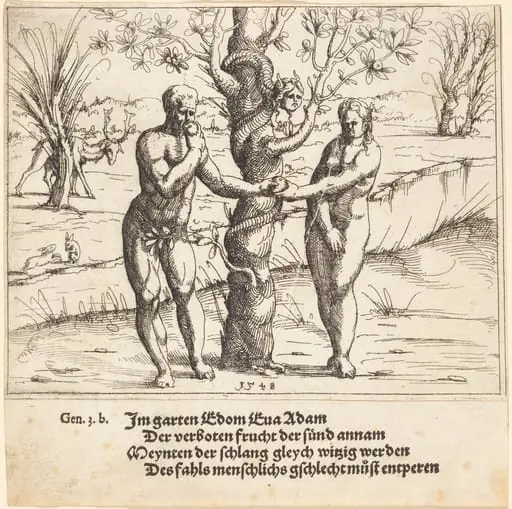 The Fall of Man
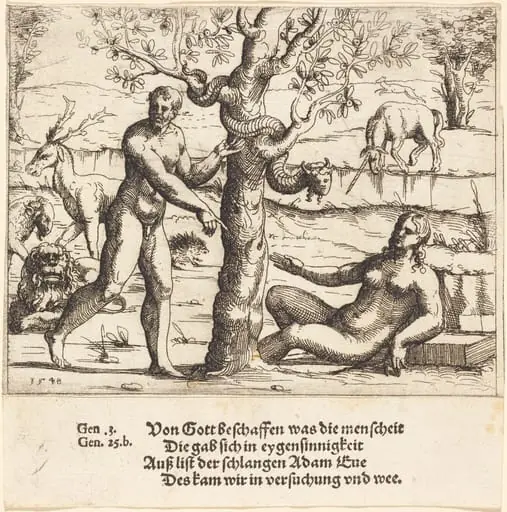 The Temptation of Eve
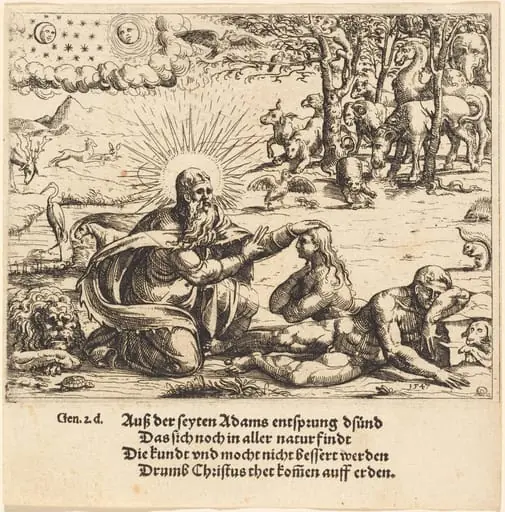 Creation of Eve
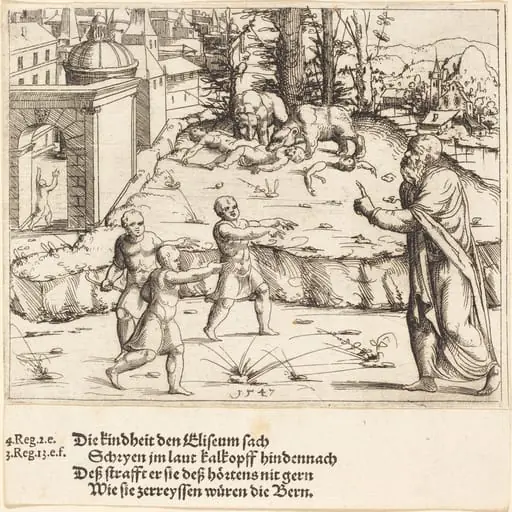 The Murder of the Children of Bethel
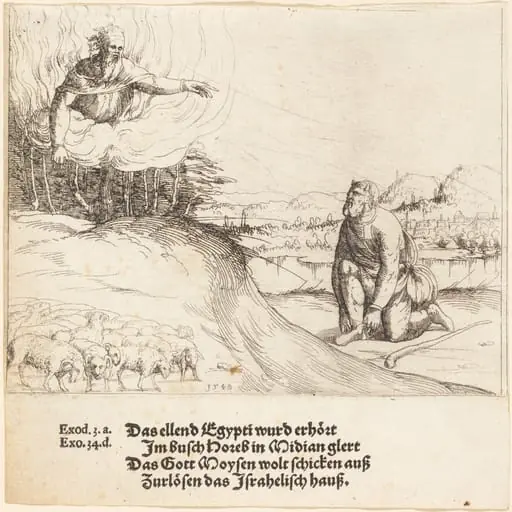 Moses and the Burning Bush
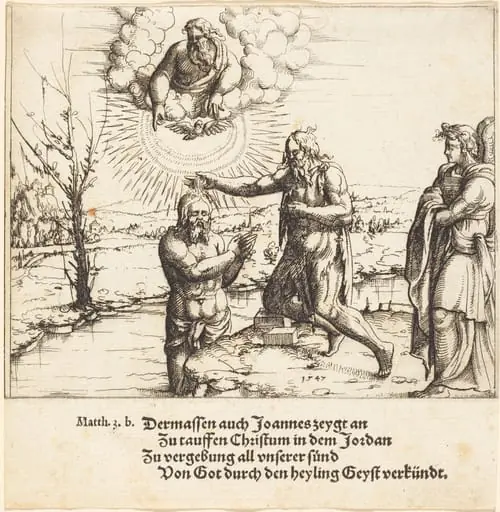 The Baptism of Christ
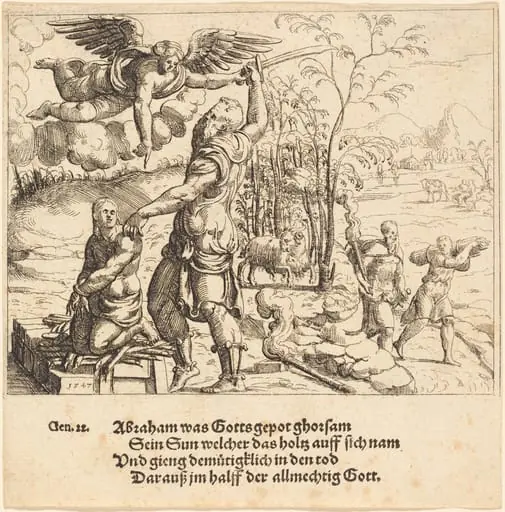 The Sacrifice of Isaac
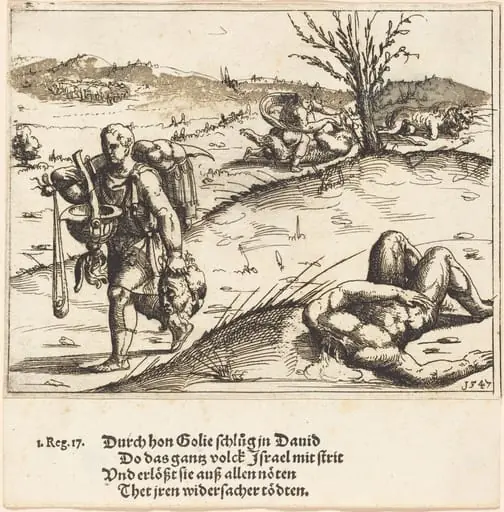 David Beheads Goliath
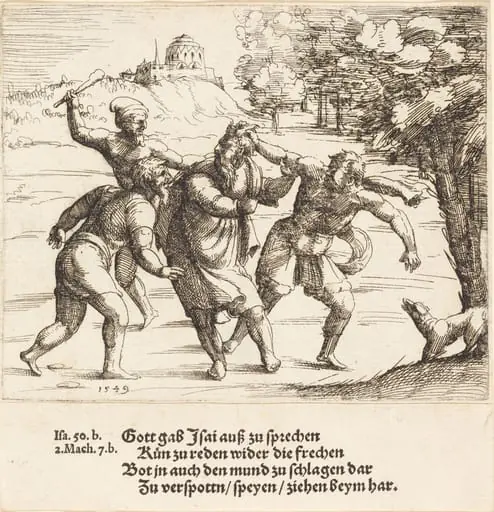 Isaiah Accepts Mockery because of His Faith
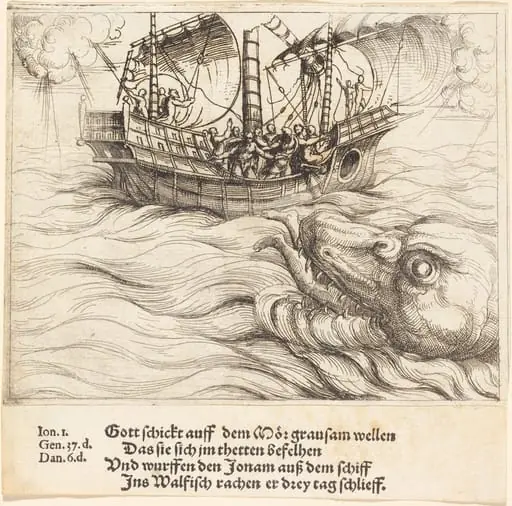 Jonah in the Whale
 Joab Betrays Abner