Artwork
Melchizedek with Bread and Wine
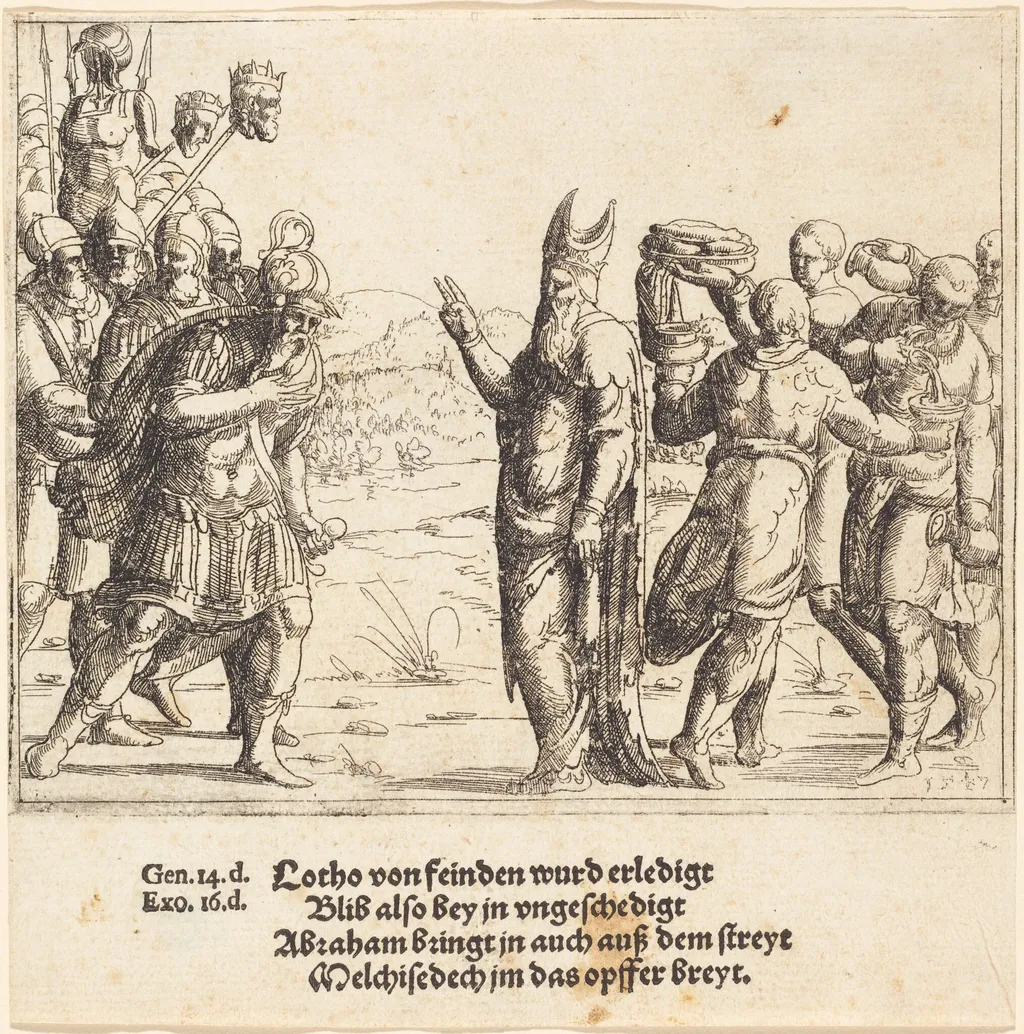
Melchizedek with Bread and Wine is an ink print by the Renaissance artist Augustin Hirschvogel. It dates from 1547 and is held in the collection of the National Gallery of Art.
About this work
Overview
Hirschvogel, known for his precise linear technique and small-scale landscapes, produced this work during a brief but prolific period between 1545 and 1549.
Created in 1547 by the German artist Augustin Hirschvogel, this etching portrays the biblical figure Melchizedek presenting bread and wine. Hirschvogel, known for his precise linear technique and small-scale landscapes, produced this work during a brief but prolific period between 1545 and 1549. Though primarily recognized for topographical prints, he also engaged with religious themes, applying his technical mastery to narrative subjects drawn from scripture.
Subject & Meaning
The scene illustrates Melchizedek, king of Salem and priest of God Most High, as described in Genesis, offering sustenance to Abraham. His crowned figure, draped in a long robe, stands at the center, holding a bowl and chalice, suggesting a sacred rite. Surrounding figures, some armored, others in simple garments, imply a retinue or witnesses, reinforcing the ritual’s solemnity. The composition emphasizes hierarchy and spiritual authority through spatial arrangement and attire.
Technique & Style
Hirschvogel employed fine, controlled etching lines to render texture and depth with remarkable clarity. The figures and landscape are defined by delicate cross-hatching and parallel strokes, creating subtle tonal variations without heavy shading. The background features minimalistic trees and water, contrasting with the detailed rendering of clothing and armor. This precision reflects his background in mathematics and cartography, where accuracy and structure were paramount.
History & Provenance
The etching was made during Hirschvogel’s time in Nuremberg, a center of printmaking in the mid-16th century. While no early ownership records are widely documented, the work aligns with the circulation of small religious prints among educated patrons. Its survival in museum collections suggests it was valued for its technical refinement rather than mass appeal, likely collected by individuals interested in both religious iconography and artistic craftsmanship.
Context
Hirschvogel operated within the broader cultural milieu of the German Reformation, where biblical imagery remained relevant despite iconoclastic tensions. His choice of Melchizedek—a figure later interpreted in Christian theology as a prefiguration of Christ—resonated with contemporary theological discourse. Though associated with the Danube School’s landscape focus, this print reveals his engagement with humanist themes and scriptural narrative beyond natural scenery.
Legacy
Though not among Hirschvogel’s most widely reproduced works, this etching exemplifies his contribution to the refinement of printmaking in Central Europe. His integration of mathematical precision with religious subject matter influenced later generations of engravers. The piece endures as a quiet testament to the intersection of technical discipline and spiritual symbolism in 16th-century German art.
Artist & collection
Artist
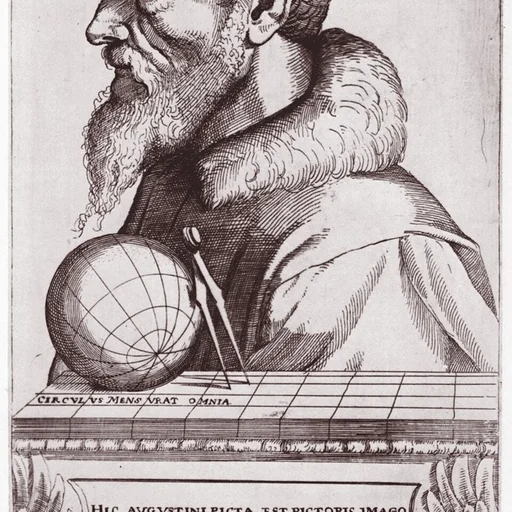
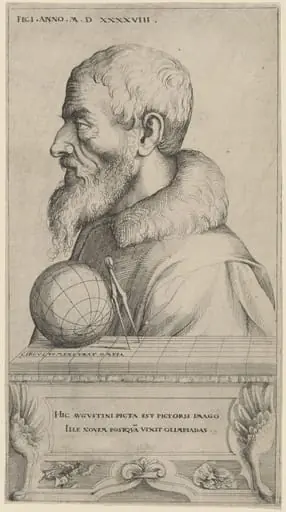
Augustin Hirschvogel (1503 – February 1553) was a German artist, mathematician, and cartographer known primarily for his etchings.

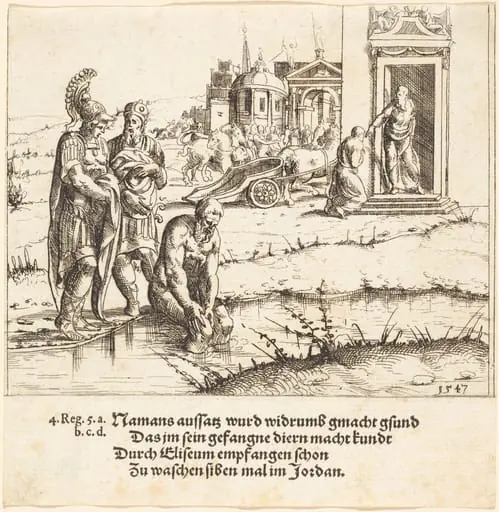 Naaman is Cured of Leprosy
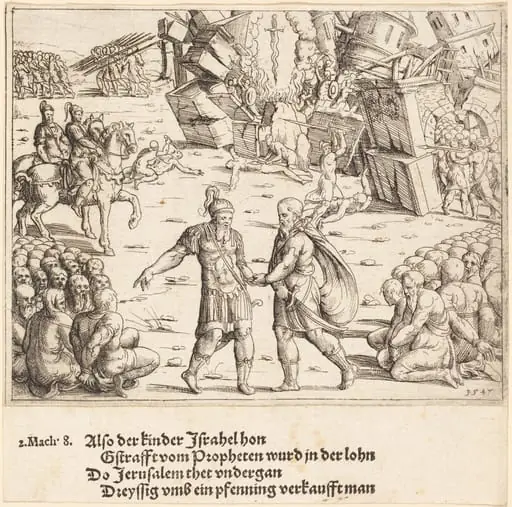 The Victory of Judas Maccabeus Over Niccanor
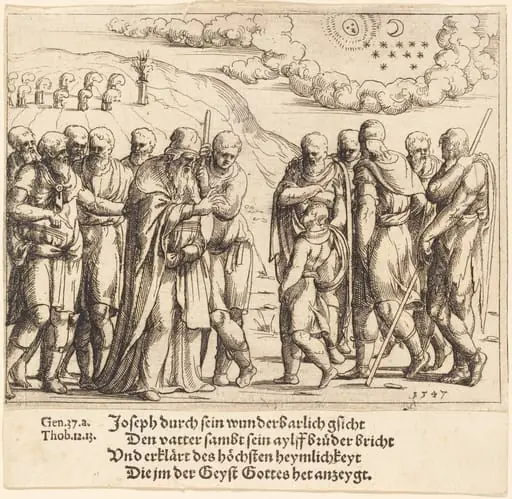 Joseph Recounts His Dreams
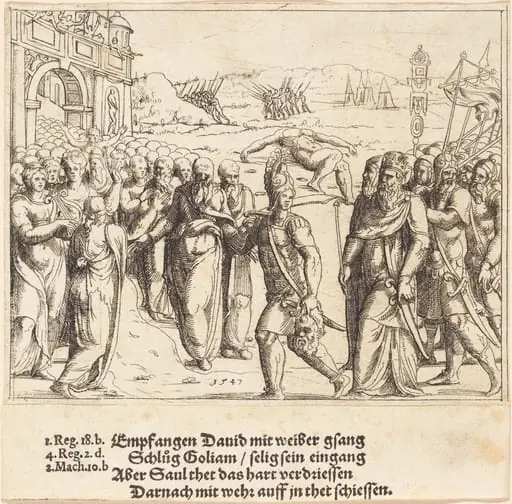 David is Welcomed after Killing Goliath, and Saul's Jealousy
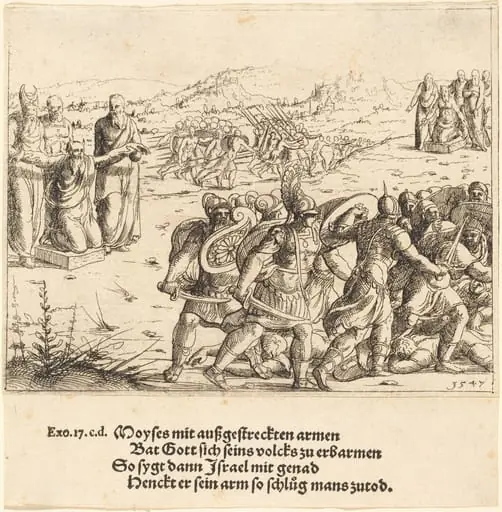 Moses with Outstretched Arms
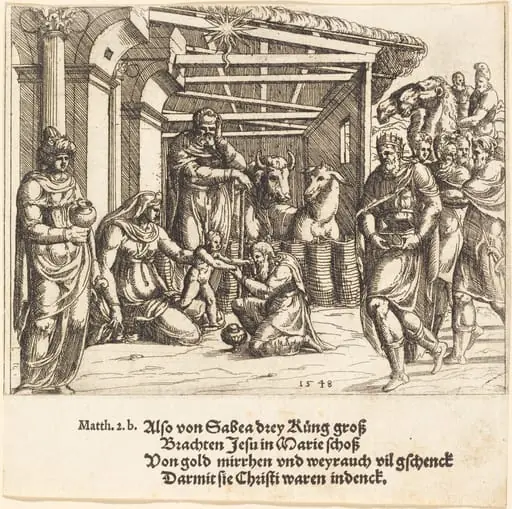 The Adoration of the Magi
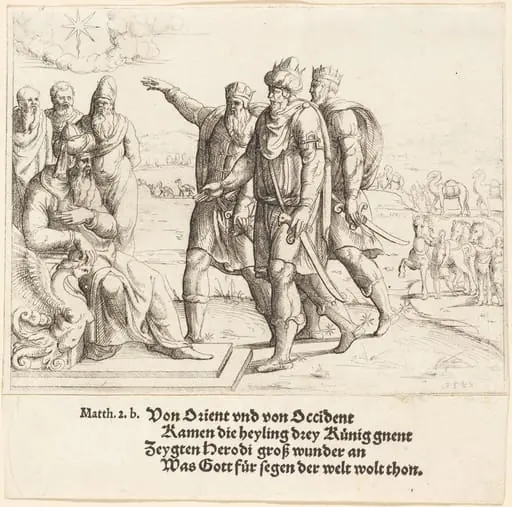 The Three Kings Tell Herod of Christ's Birth
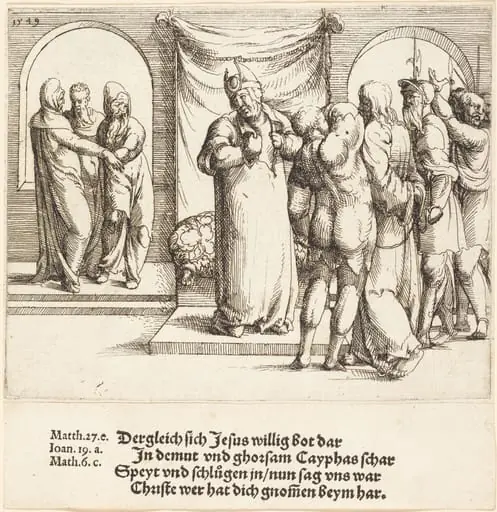 Christ is Mocked, and Caiaphas Rends His Garments
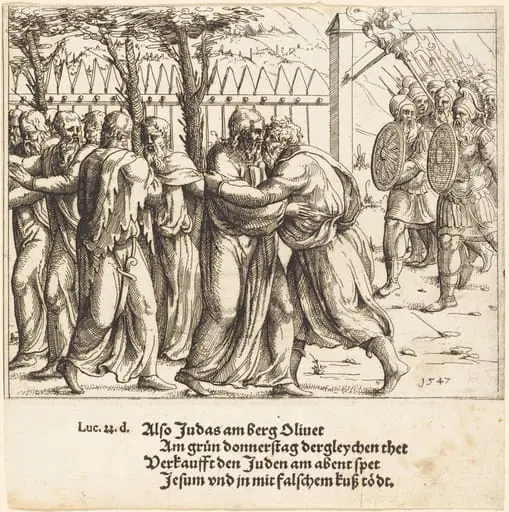 The Kiss of Judas
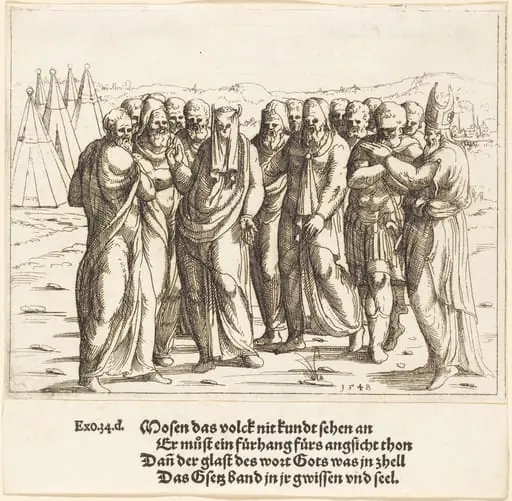 Moses Speaks to the Children of Israel
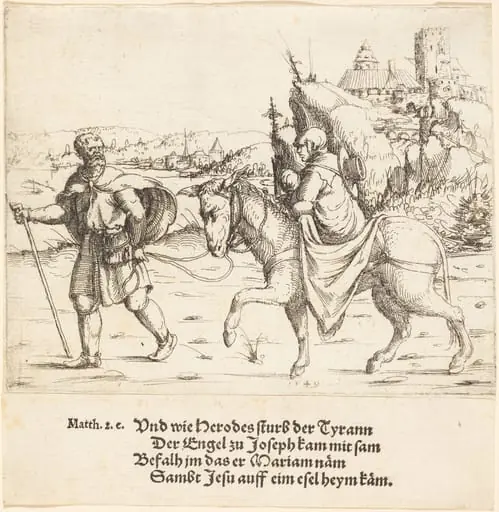 The Holy Family Returns from Egypt
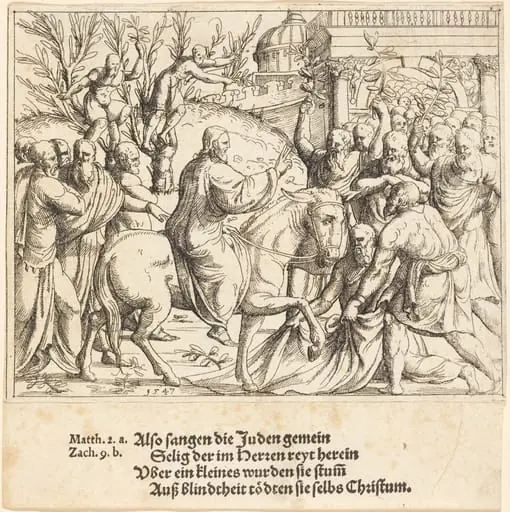 The Entry into Jerusalem