Artwork
Moses Receiving the Tablets
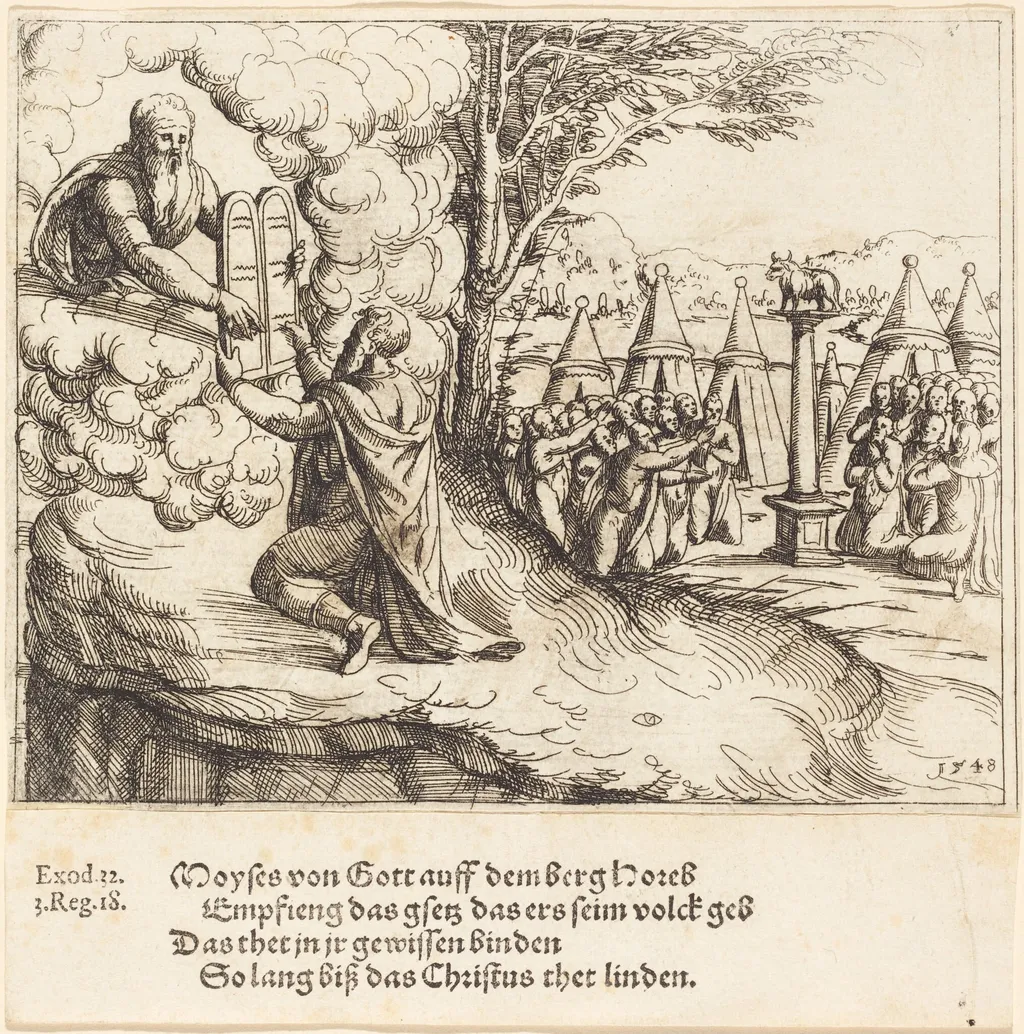
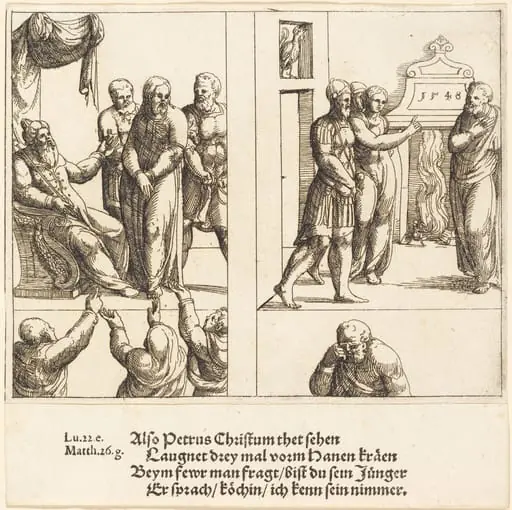
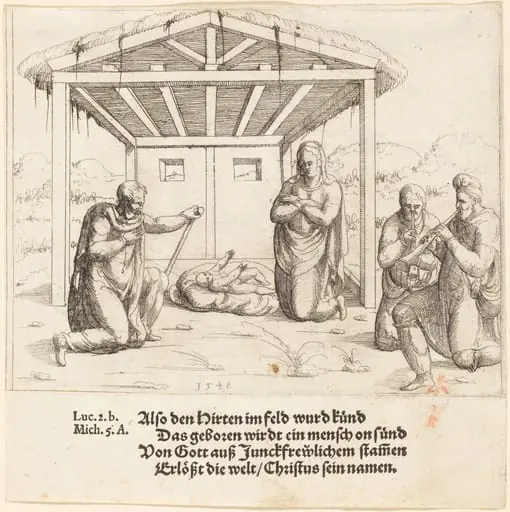
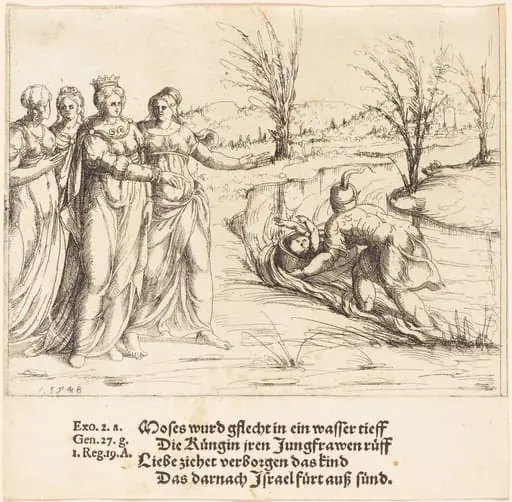
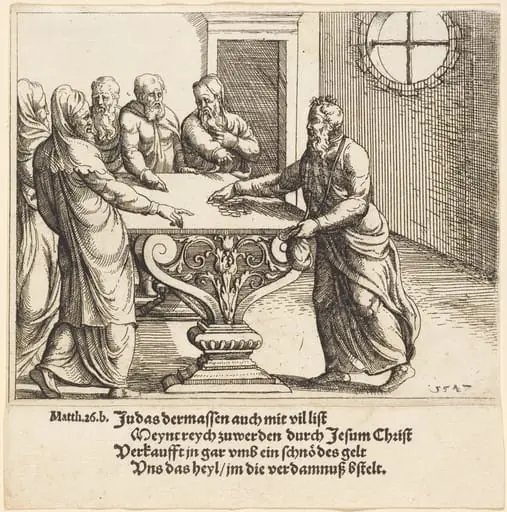
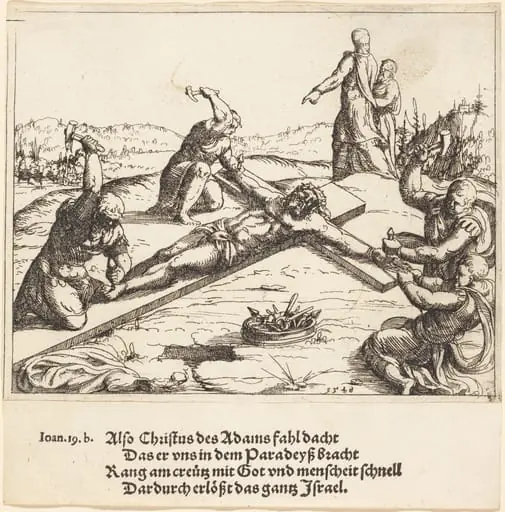
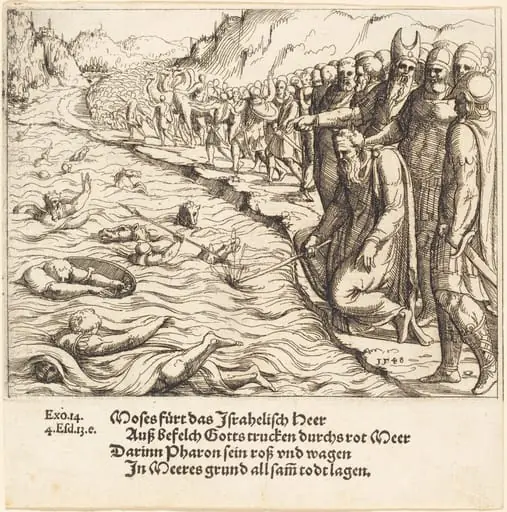
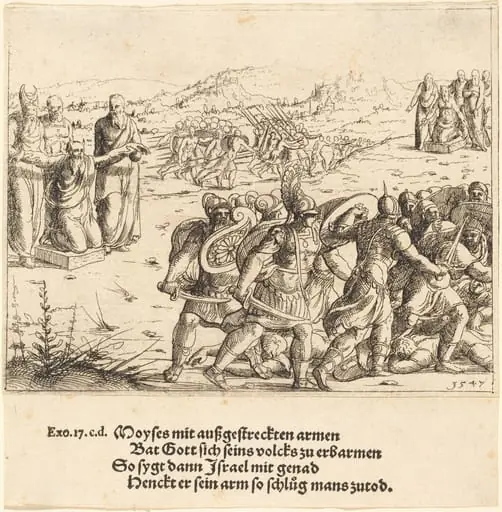
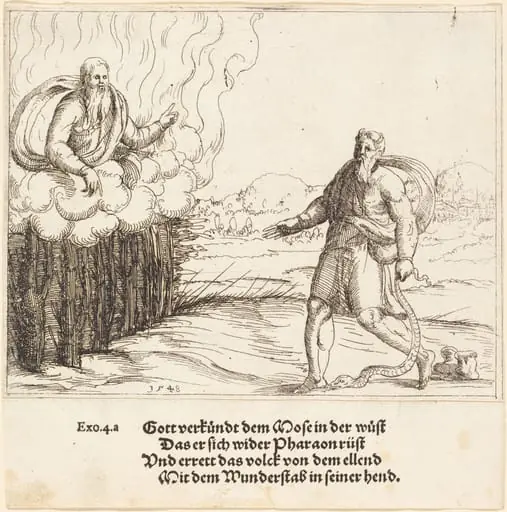
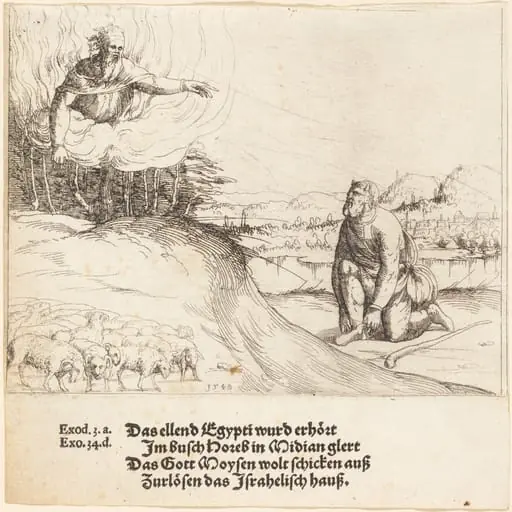
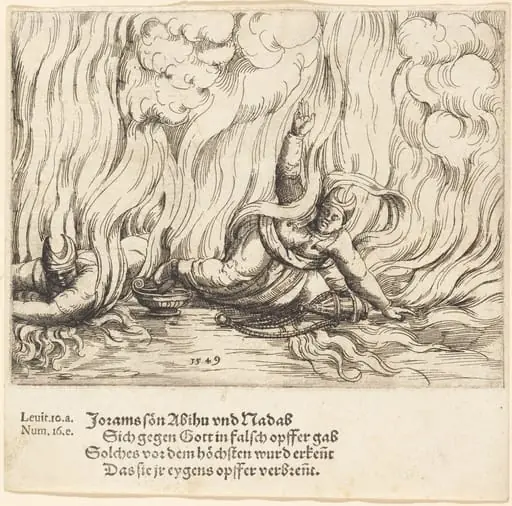
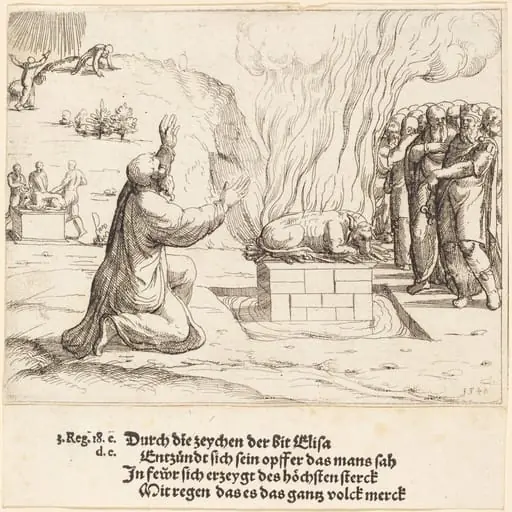
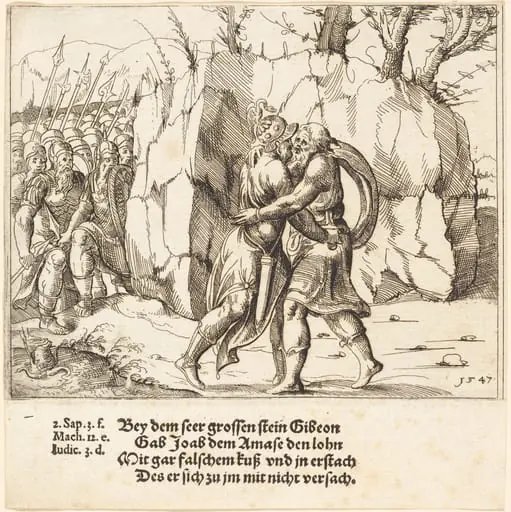
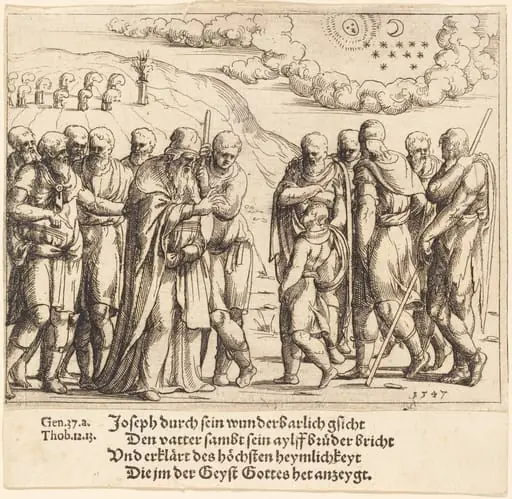
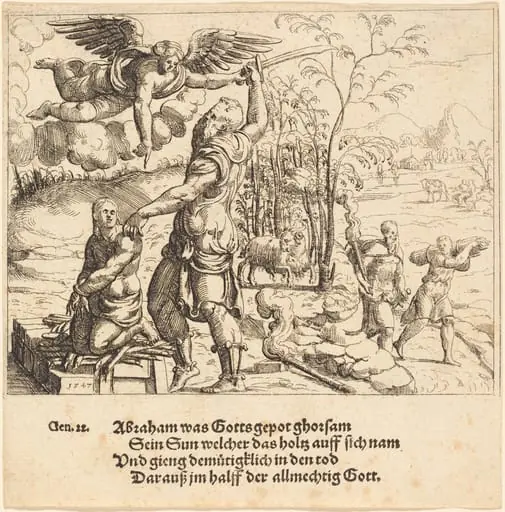
Moses Receiving the Tablets is an ink print by the Renaissance artist Augustin Hirschvogel. It dates from 1548 and is held in the collection of the National Gallery of Art.
About this work
Overview
Augustin Hirschvogel, a German artist active in the mid-16th century, produced this etching in 1548.
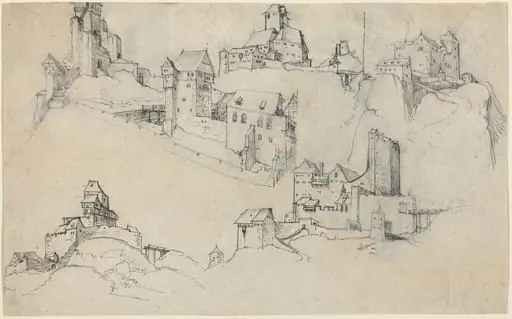
Augustin Hirschvogel, a German artist active in the mid-16th century, produced this etching in 1548. Known primarily for his precise small-scale landscapes, Hirschvogel applied his technical skill to biblical subjects during a brief but productive period between 1545 and 1549. This print belongs to a series of works that reflect his engagement with religious themes through the medium of etching, a technique he mastered alongside his work in cartography and mathematics.
Subject & Meaning
The scene illustrates the moment Moses receives the Ten Commandments from God on Mount Sinai, as described in Exodus. Figures are arranged to emphasize divine revelation: Moses stands centrally, receiving the tablets, while others observe from below. The composition avoids overt drama, instead focusing on quiet reverence. The presence of witnesses underscores the communal significance of the law, aligning with Protestant emphasis on scripture during the Reformation era.
Technique & Style
Hirschvogel employed fine, controlled lines typical of etching to render texture and spatial depth. The landscape background—trees, clouds, and distant terrain—is rendered with delicate hatching, creating atmospheric perspective. Figures are simplified yet distinct, their forms defined by subtle shading rather than heavy modeling. His approach reflects the Danube School’s interest in naturalistic detail and intimate scale, prioritizing clarity and precision over grandeur.
History & Provenance
Created in 1548 during Hirschvogel’s time in Nuremberg, the etching was likely made for a scholarly or devotional audience. Few original impressions survive, and those held in major collections suggest limited early circulation. The work was not widely reproduced in its time, and its historical trajectory remains obscure until its inclusion in 19th-century print collections, where its technical refinement attracted renewed attention.
Context
Hirschvogel worked in a period of religious upheaval, when biblical imagery was being reinterpreted across Protestant and Catholic regions. His choice of Moses receiving the tablets resonated with reformers who emphasized direct access to divine law. As a cartographer and mathematician, his precision in line and structure may reflect broader intellectual currents favoring order and clarity—values also present in the emerging scientific worldview of the 16th century.
Legacy
Though Hirschvogel’s religious prints were never as widely disseminated as those of contemporaries like Dürer, they remain significant for their technical discipline and quiet intensity. Scholars recognize his etchings as exemplars of the Danube School’s unique synthesis of landscape and narrative. His work influenced later German printmakers who valued subtlety and craftsmanship over dramatic effect, securing his place in the history of Northern Renaissance printmaking.
Artist & collection
Artist
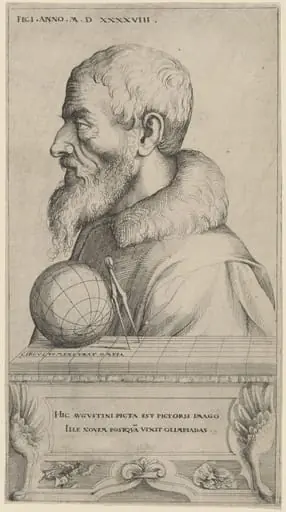
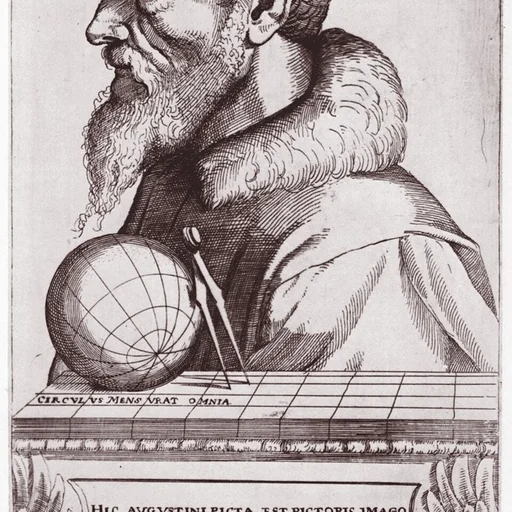
Augustin Hirschvogel (1503 – February 1553) was a German artist, mathematician, and cartographer known primarily for his etchings.