Artwork
Nadab and Abihu
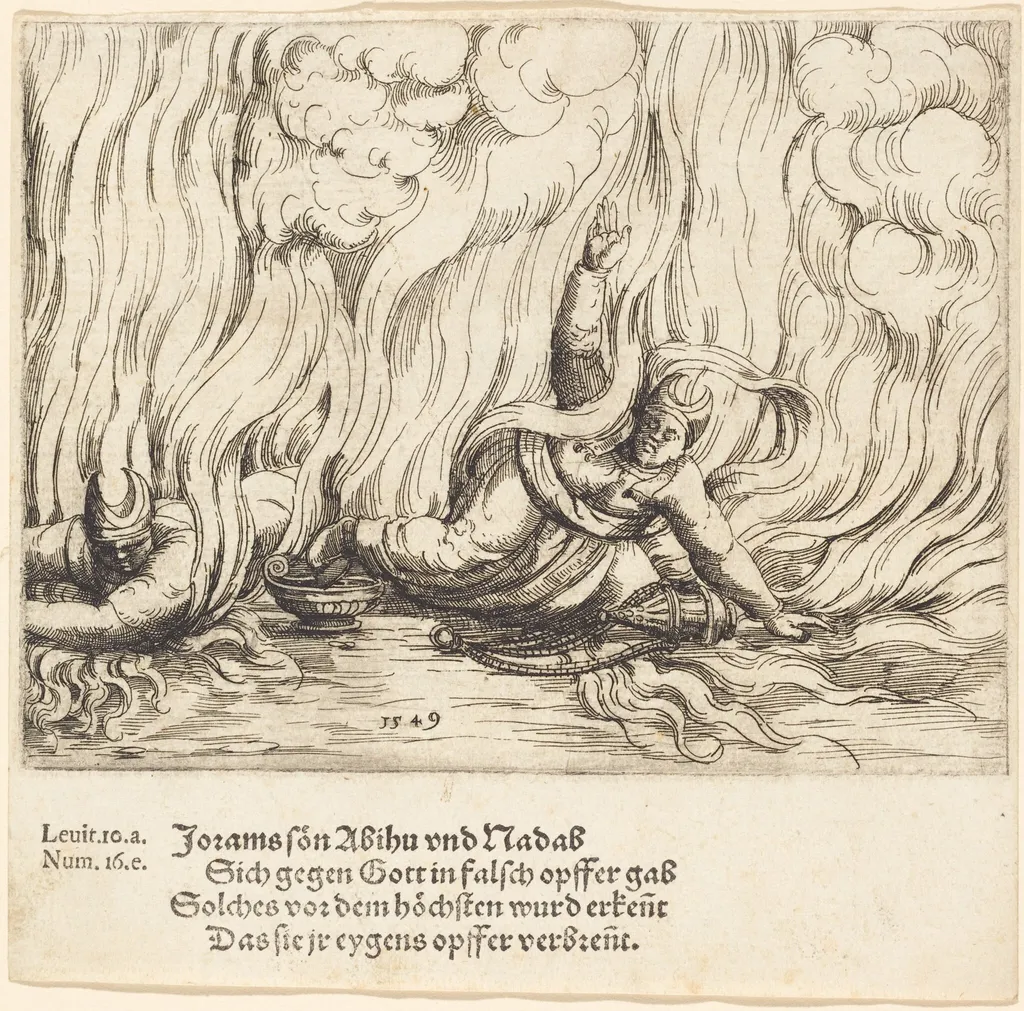
Nadab and Abihu is an ink print by the Renaissance artist Augustin Hirschvogel. It dates from 1549 and is held in the collection of the National Gallery of Art.
About this work
Overview
Created in 1549 by the German artist Augustin Hirschvogel, this etching depicts the biblical story of Nadab and Abihu.
Created in 1549 by the German artist Augustin Hirschvogel, this etching depicts the biblical story of Nadab and Abihu. Hirschvogel, active in the mid-16th century, was known for his precise line work and small-scale landscapes. This print stands apart from his more typical scenes, focusing instead on a moment of divine judgment with intense, angular composition and dramatic contrasts of light and shadow.
Subject & Meaning
The scene illustrates the biblical account from Leviticus 10, in which Nadab and Abihu, sons of Aaron, offer unauthorized fire before the Lord and are consumed by divine flame. Hirschvogel captures the instant of their punishment: one figure kneels in surrender, the other stands as if struck mid-motion. The swirling flames, rendered as jagged lines, symbolize divine wrath, while the absence of other figures emphasizes isolation and consequence.
Technique & Style
Hirschvogel employed etching to achieve fine, controlled lines, using acid to bite into a metal plate. The composition relies on sharp, intersecting strokes to convey movement and tension, particularly in the chaotic flames that engulf the figures. Unlike his landscape works, this piece uses dense, rhythmic patterning to evoke emotional intensity, demonstrating his mastery of line as both descriptive and expressive tool.
History & Provenance
Produced during a brief but prolific period between 1545 and 1549, this etching belongs to a series of small religious prints Hirschvogel made alongside his cartographic work. Though few records of its early ownership survive, it aligns with the devotional print culture of Protestant Germany, where biblical narratives were disseminated through accessible graphic media for private contemplation.
Context
In mid-16th century southern Germany, religious imagery was shaped by Reformation ideals that favored direct scriptural representation over saintly veneration. Hirschvogel’s depiction of Nadab and Abihu reflects this shift, emphasizing divine authority and human transgression without intermediaries. His style, influenced by the Danube School’s expressive line, merges Northern precision with a sense of spiritual drama.
Legacy
Though Hirschvogel is better known for his maps and landscapes, this etching remains a notable example of his engagement with theological narrative. It contributes to the broader tradition of biblical prints that used graphic clarity to convey moral lessons. Its technical discipline and emotional restraint influenced later engravers who sought to balance narrative force with formal control.
Artist & collection
Artist
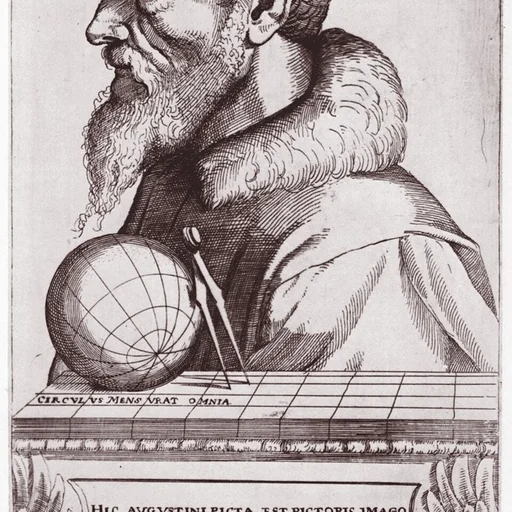
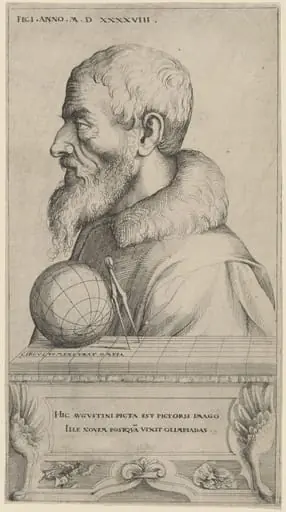
Augustin Hirschvogel (1503 – February 1553) was a German artist, mathematician, and cartographer known primarily for his etchings.

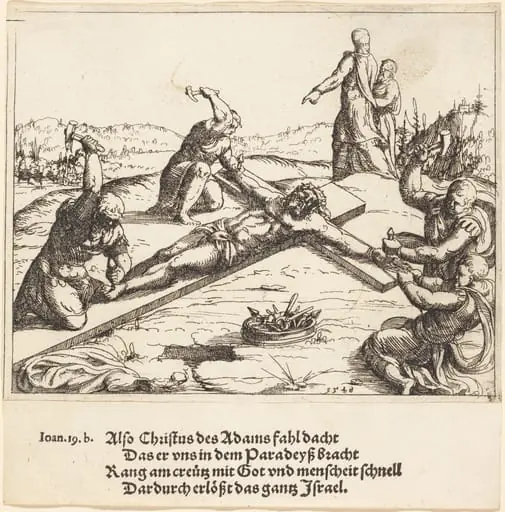
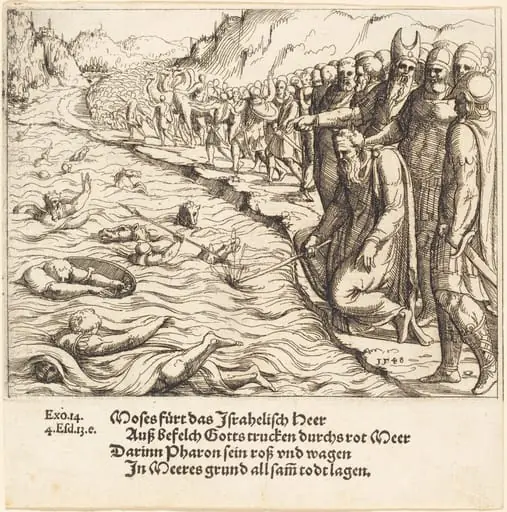
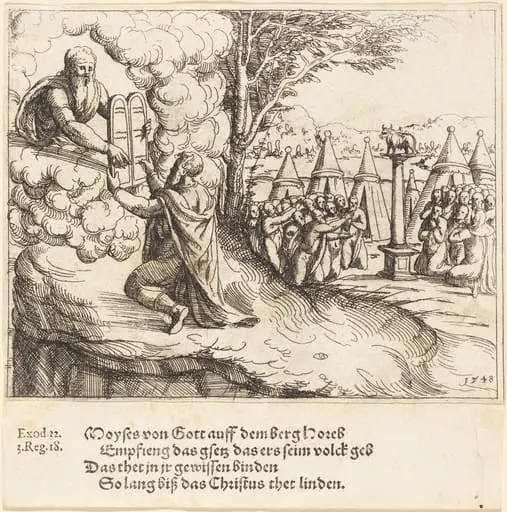 Moses Receiving the Tablets
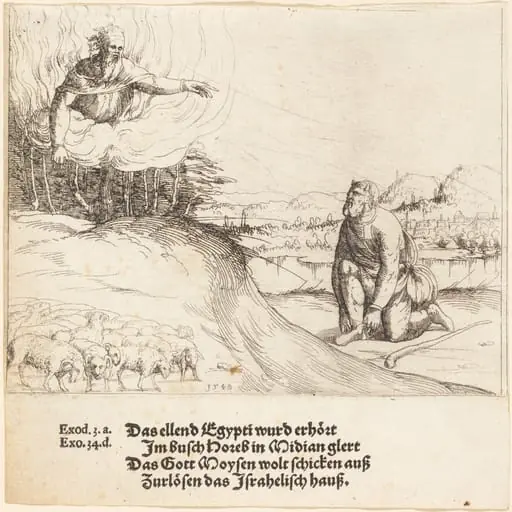 Moses and the Burning Bush
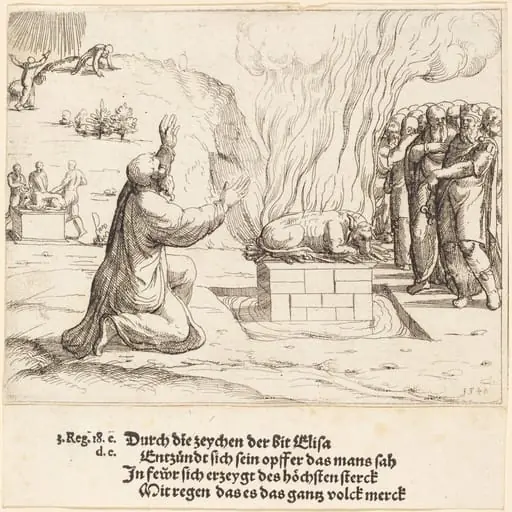 The Rival Sacrifices of Elijah and the Priests of Baal
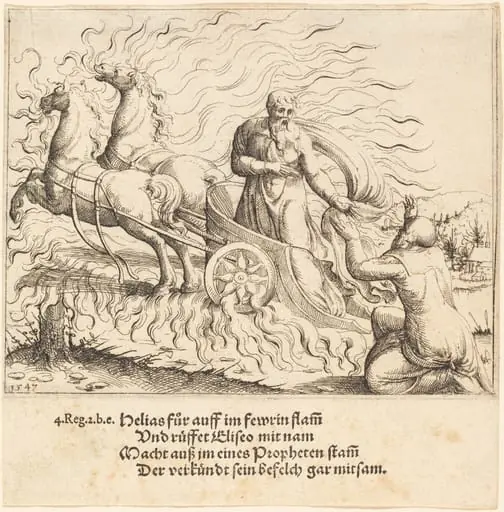 Elijah is Taken up to Heaven
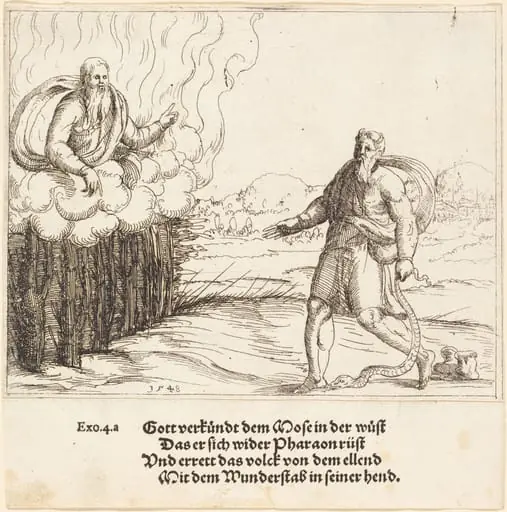 Moses and the Serpent
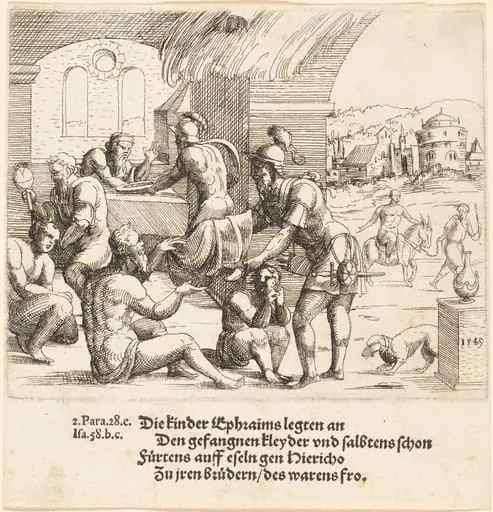 The Men of Ephraim Care for their Captives and Return Them to Jerico
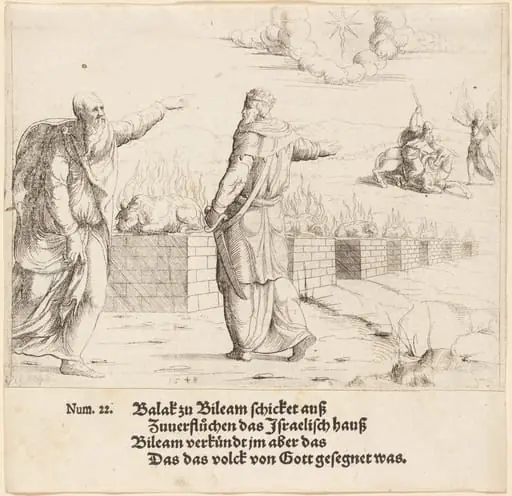 Balak's Sacrifice, and Balaam's Prophecy
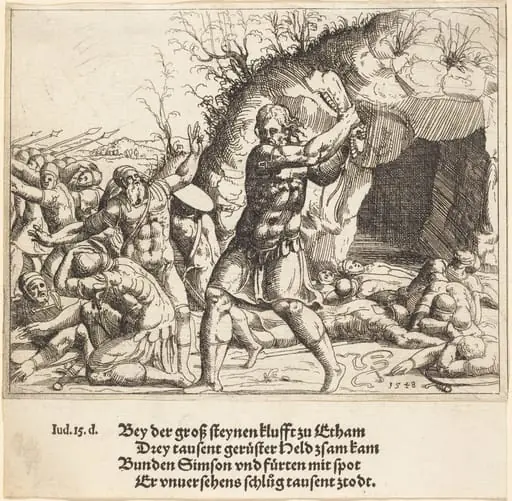 Samson Slays the Philistines
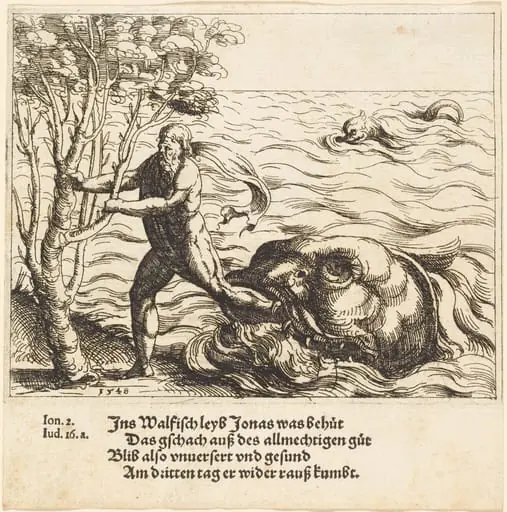 Jonah is Delivered from the Whale
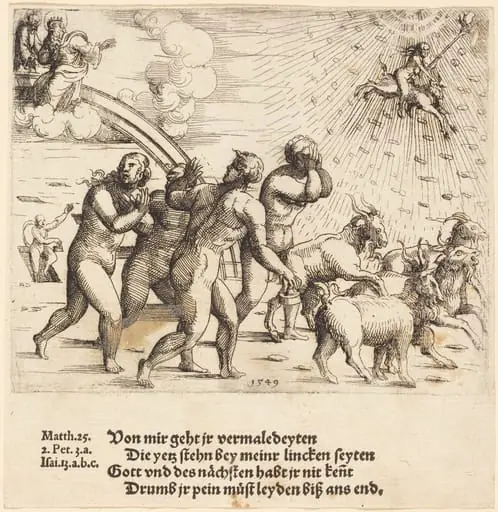 The Last Judgment
 Joab Betrays Abner