Artwork
The Harrowing of Hell
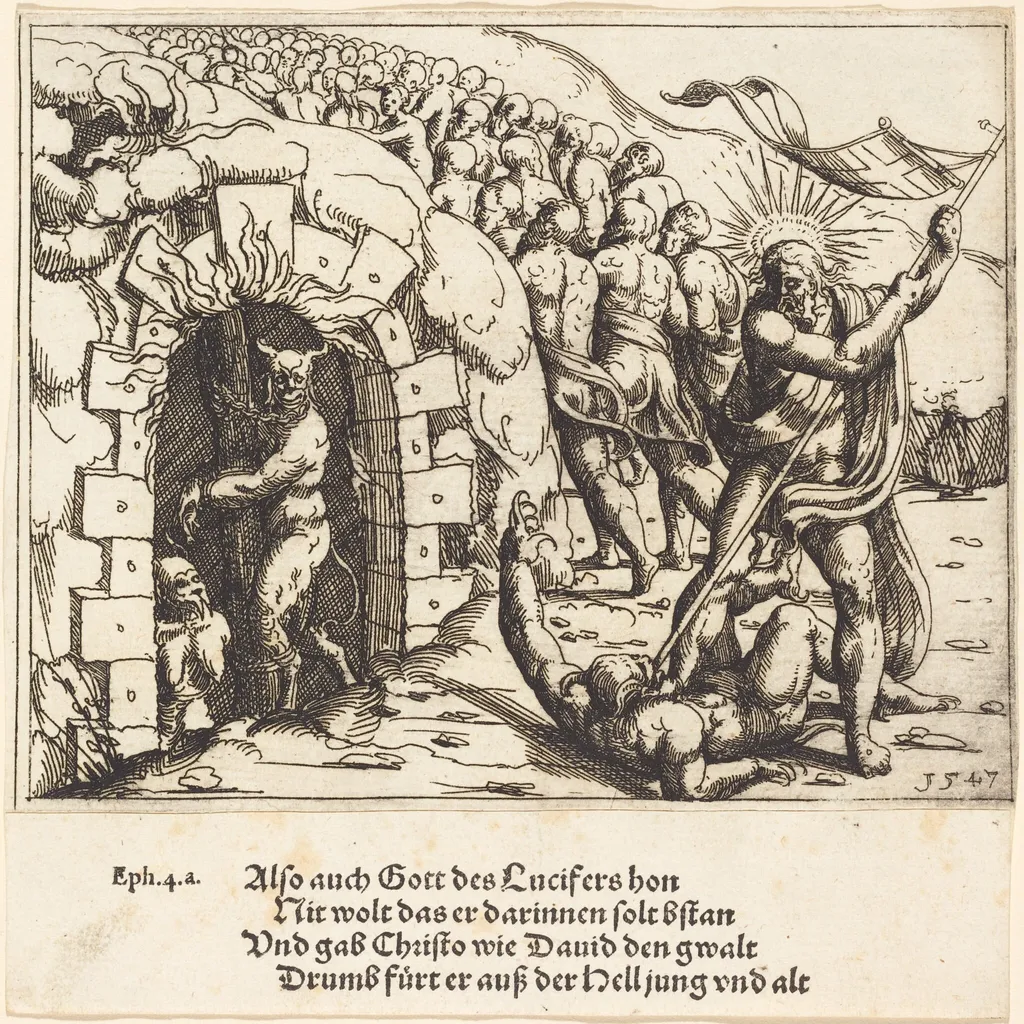
The Harrowing of Hell is an ink print by the Renaissance artist Augustin Hirschvogel. It dates from 1547 and is held in the collection of the National Gallery of Art.
About this work
Overview
The Harrowing of Hell is an etching created by Augustin Hirschvogel in 1547. It is a black-and-white print that showcases the artist's skill in capturing dynamic movement and emotion through sharp lines.
Subject & Meaning
The print depicts a chaotic underground scene where a crowned figure is being pulled upward, surrounded by twisted bodies in flames and smoke. A horned creature below grasps a key, suggesting a narrative related to liberation from darkness, likely referencing a biblical story.
Technique & Style
Hirschvogel's work exemplifies the printmaking techniques of the 16th century, characterized by the use of sharp lines to convey movement and emotion. As a member of the Danube School, his style is associated with the landscape etchings typical of this group.
History & Provenance
Created in 1547, The Harrowing of Hell is part of Hirschvogel's oeuvre during a period when he produced thirty-five small landscape etchings between 1545 and 1549.
Context
The print reflects the religious subject matter common during the 16th century, as well as the artistic influences of the Danube School, a group active in Bavaria and Austria.
Own this work as a print
Artist & collection
Artist
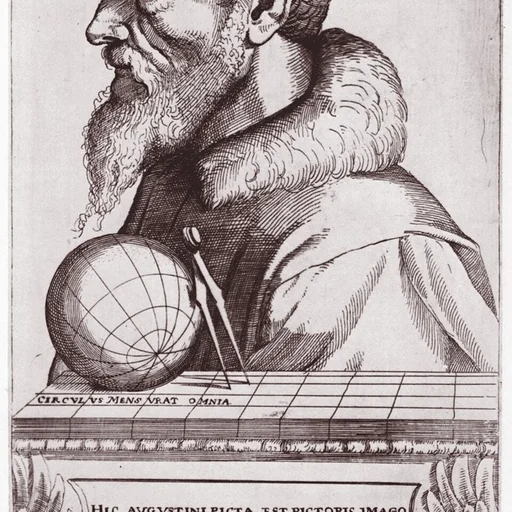
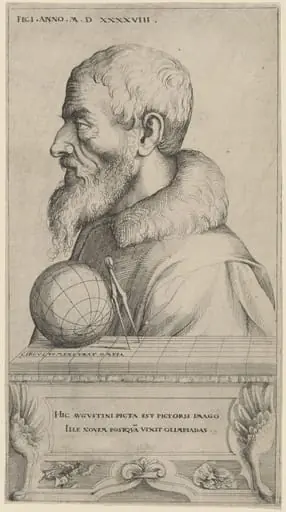
Augustin Hirschvogel (1503 – February 1553) was a German artist, mathematician, and cartographer known primarily for his etchings.

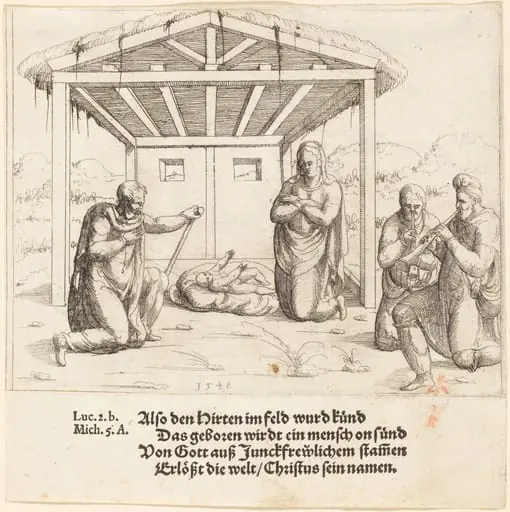
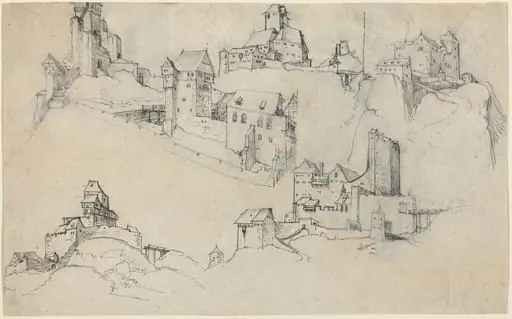
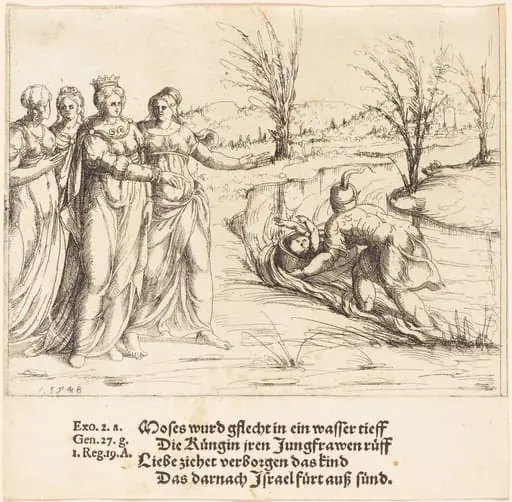
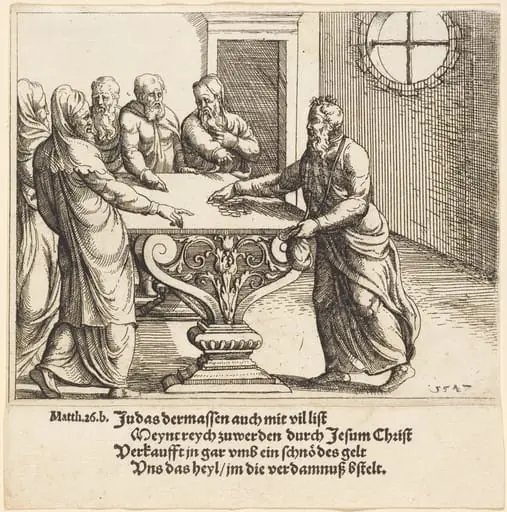
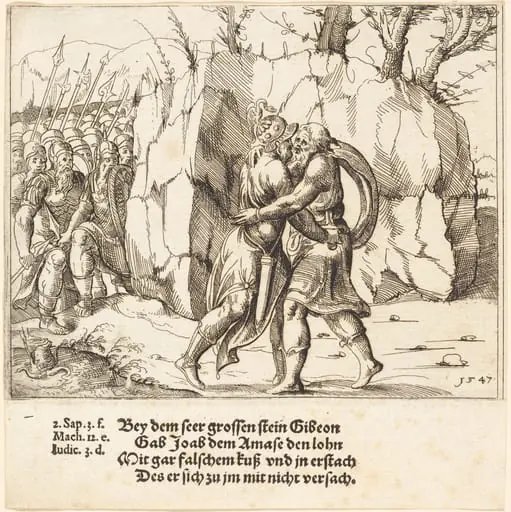 Joab Betrays Abner
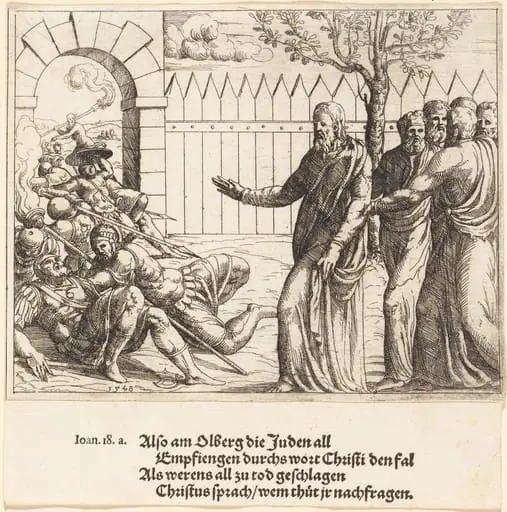 Jesus Identifies Himself before the Arrest
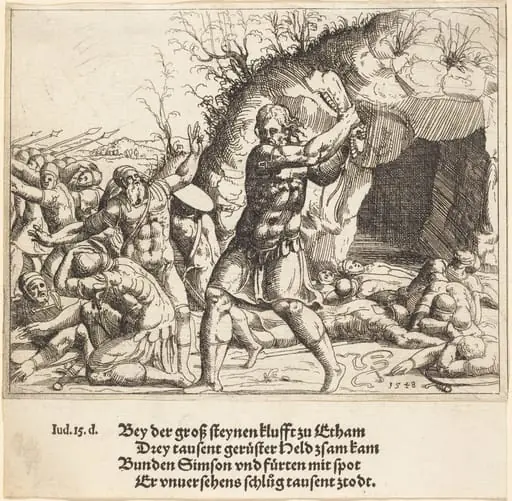 Samson Slays the Philistines
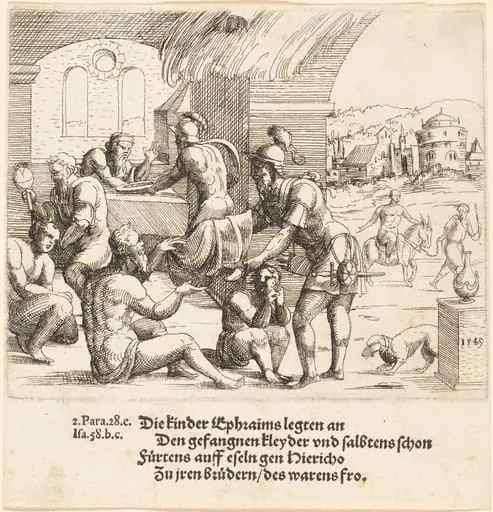 The Men of Ephraim Care for their Captives and Return Them to Jerico
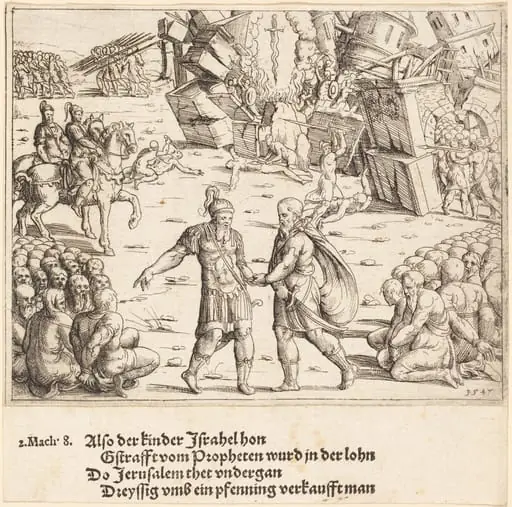 The Victory of Judas Maccabeus Over Niccanor
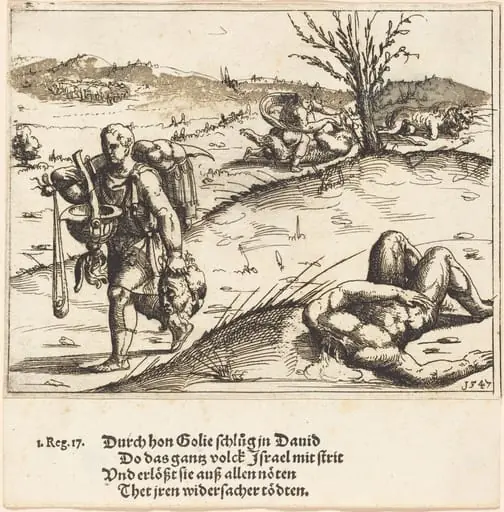 David Beheads Goliath
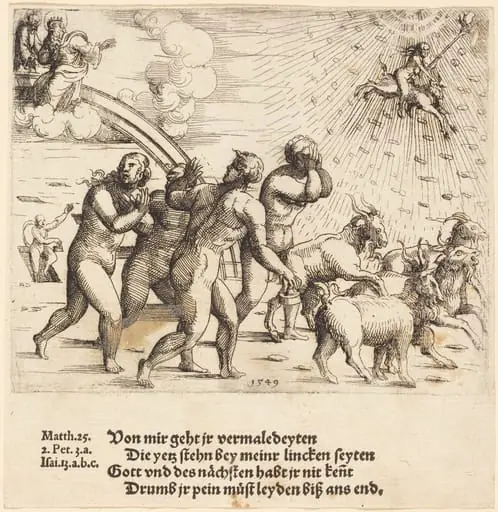 The Last Judgment
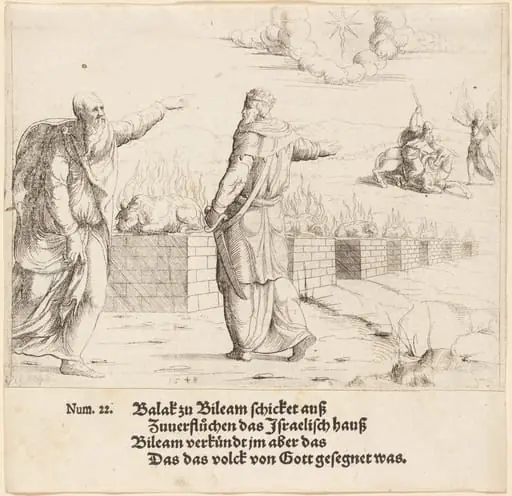 Balak's Sacrifice, and Balaam's Prophecy
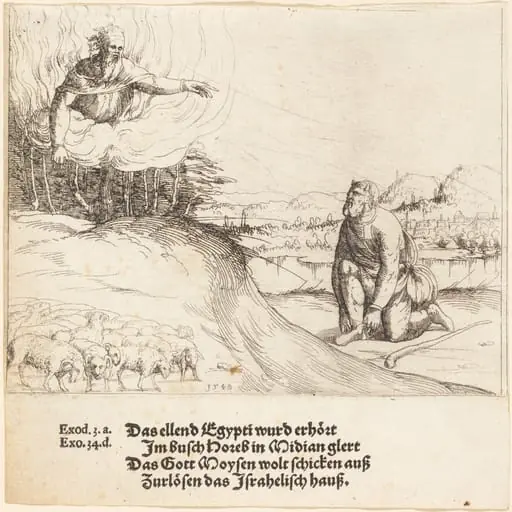 Moses and the Burning Bush
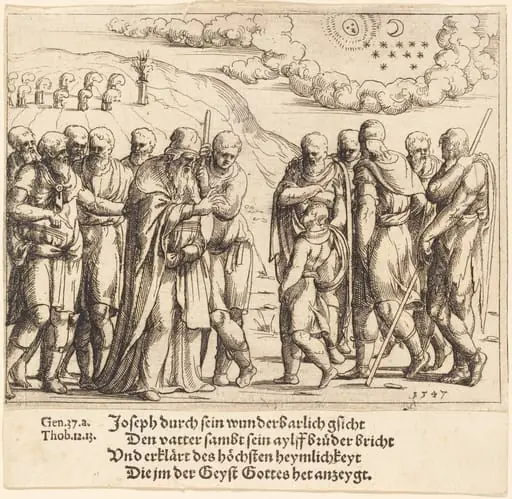 Joseph Recounts His Dreams
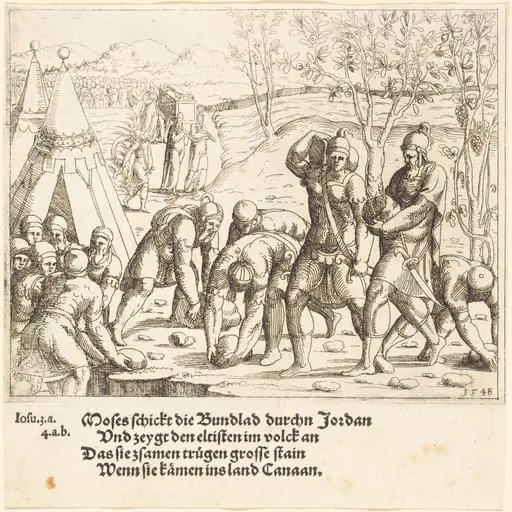 The Twelve Stones, and the Waters of the Jordan are Divided
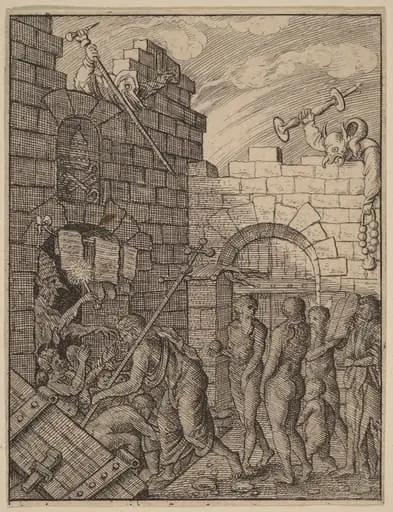 Descent into Hell