Artwork
The Sacrifice of Gideon
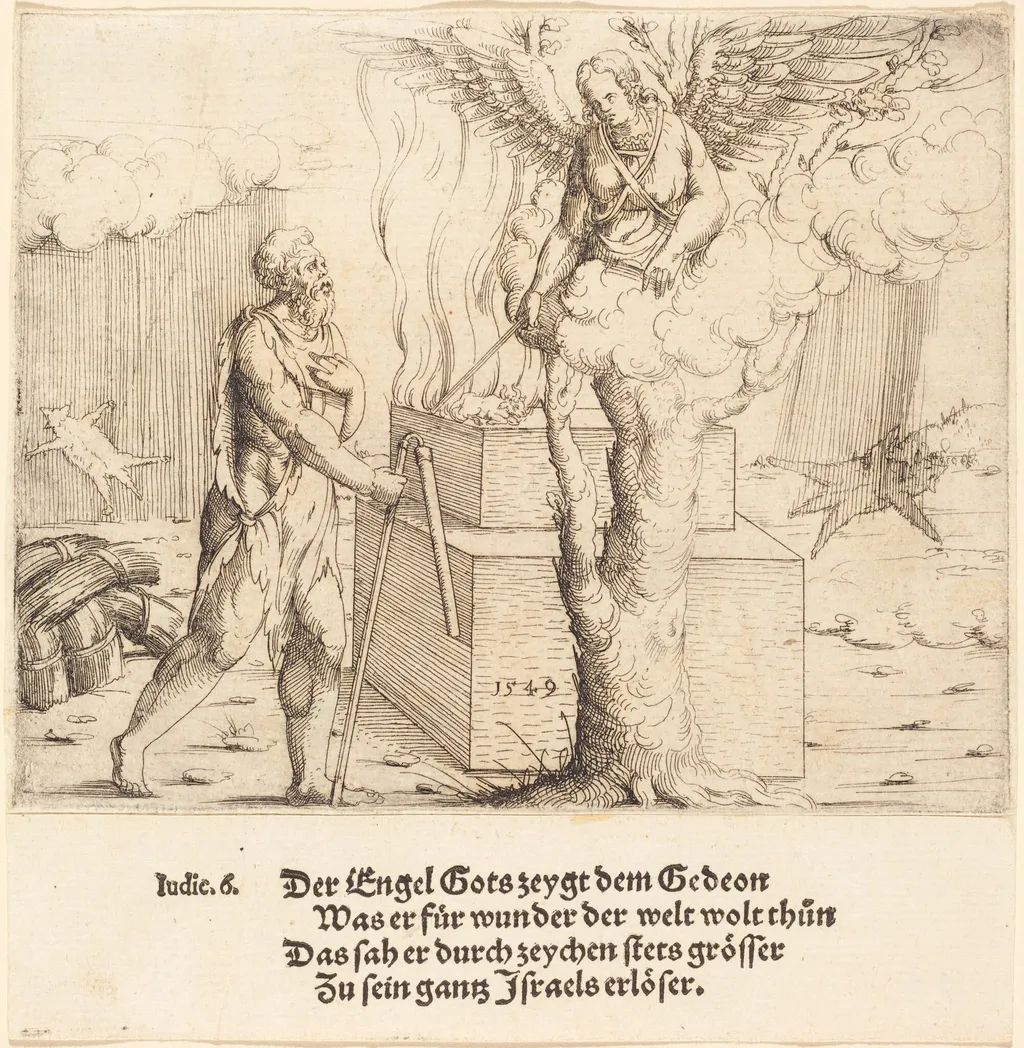
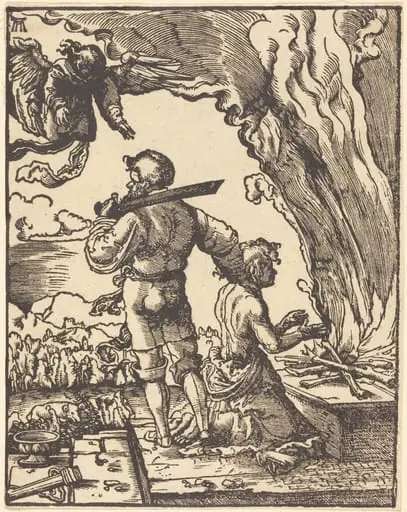
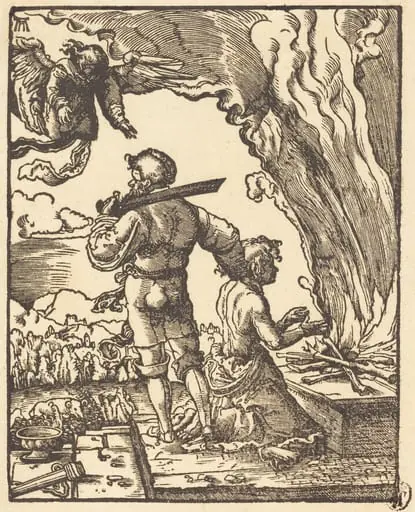
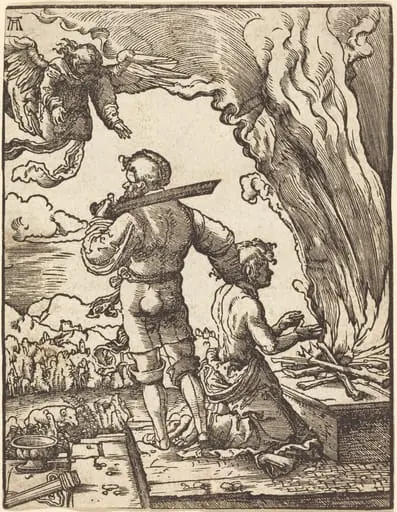
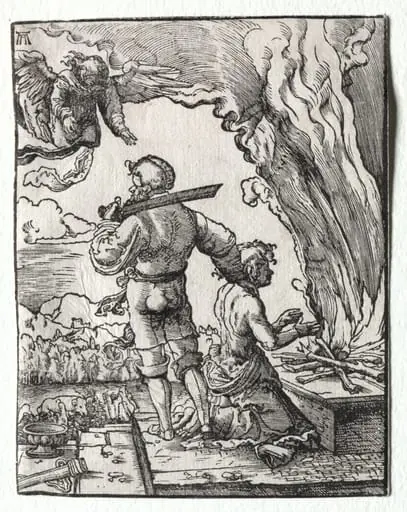
The Sacrifice of Gideon is an ink print by the Renaissance artist Augustin Hirschvogel. It dates from 1549 and is held in the collection of the National Gallery of Art.
About this work
If you like this kind of detailed drawing, look up etching to see how artists create these kinds of prints.
This sketch shows two men near a fire. One is an older man with a beard, leaning on a staff. The other is a winged figure standing on a block, holding what looks like a torch or sword. The background has swirling lines and clouds, and a small boat floats in the distance.
The text below is in German and seems to describe a story about an angel showing a man something special. The date "1549" is written on the block.
If you like this kind of detailed drawing, look up etching to see how artists create these kinds of prints.
Overview
Created in 1549, this etching by Augustin Hirschvogel presents a compact, narrative scene drawn from the biblical account of Gideon. Executed on a single plate, the print combines human figures with a celestial presence, set against a dynamic background of swirling clouds and distant water. The composition is characteristic of the Northern Renaissance interest in detailed storytelling through printmaking.
Subject & Meaning
The central focus is the Old Testament judge Gideon, shown alongside an older, bearded figure leaning on a staff. A winged being, possibly an angel, stands on a raised block, holding a torch‑like implement that may symbolize divine guidance or sacrifice. The surrounding fire and the faint boat suggest themes of journey, revelation, and the providential aid offered to Gideon.
Technique & Style
Hirschvogel employed the etching process, incising lines into a copper plate before acid treatment, allowing for fine, intricate detailing. The work reflects the Danube School’s aesthetic, noted for its expressive lines, atmospheric effects, and integration of natural elements such as clouds and water. The swirling background and delicate hatching convey movement and a sense of the supernatural.
History & Provenance
The print originates from Hirschvogel’s active period in mid‑16th‑century Bavaria, where he was also known for cartographic and mathematical publications. The date “1549” appears on the block, confirming its creation year. While specific ownership records are scarce, the piece is documented within collections of Northern Renaissance prints and has been referenced in studies of early German etching.
Context
During the 1540s, the Danube School artists explored religious subjects through print media, making complex biblical narratives accessible to a broader audience. Hirschvogel’s background in mathematics and cartography informed his precise line work, while his engagement with theological themes aligned with contemporary Reformation interests in scriptural illustration.
Artist & collection
Artist
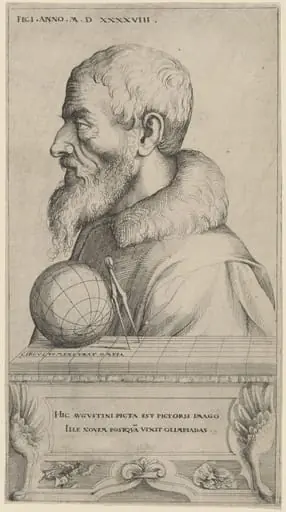
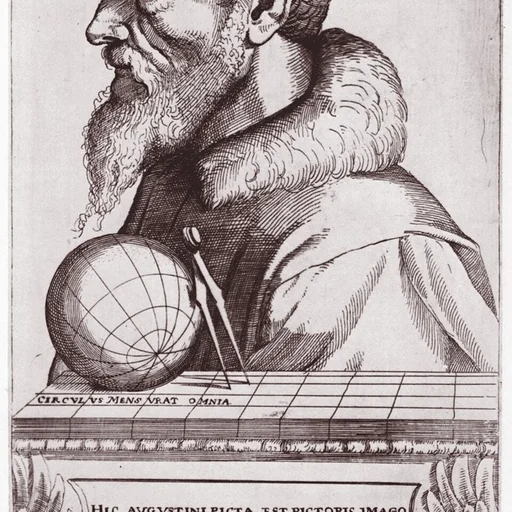
Augustin Hirschvogel (1503 – February 1553) was a German artist, mathematician, and cartographer known primarily for his etchings.