Artwork
George Chapman
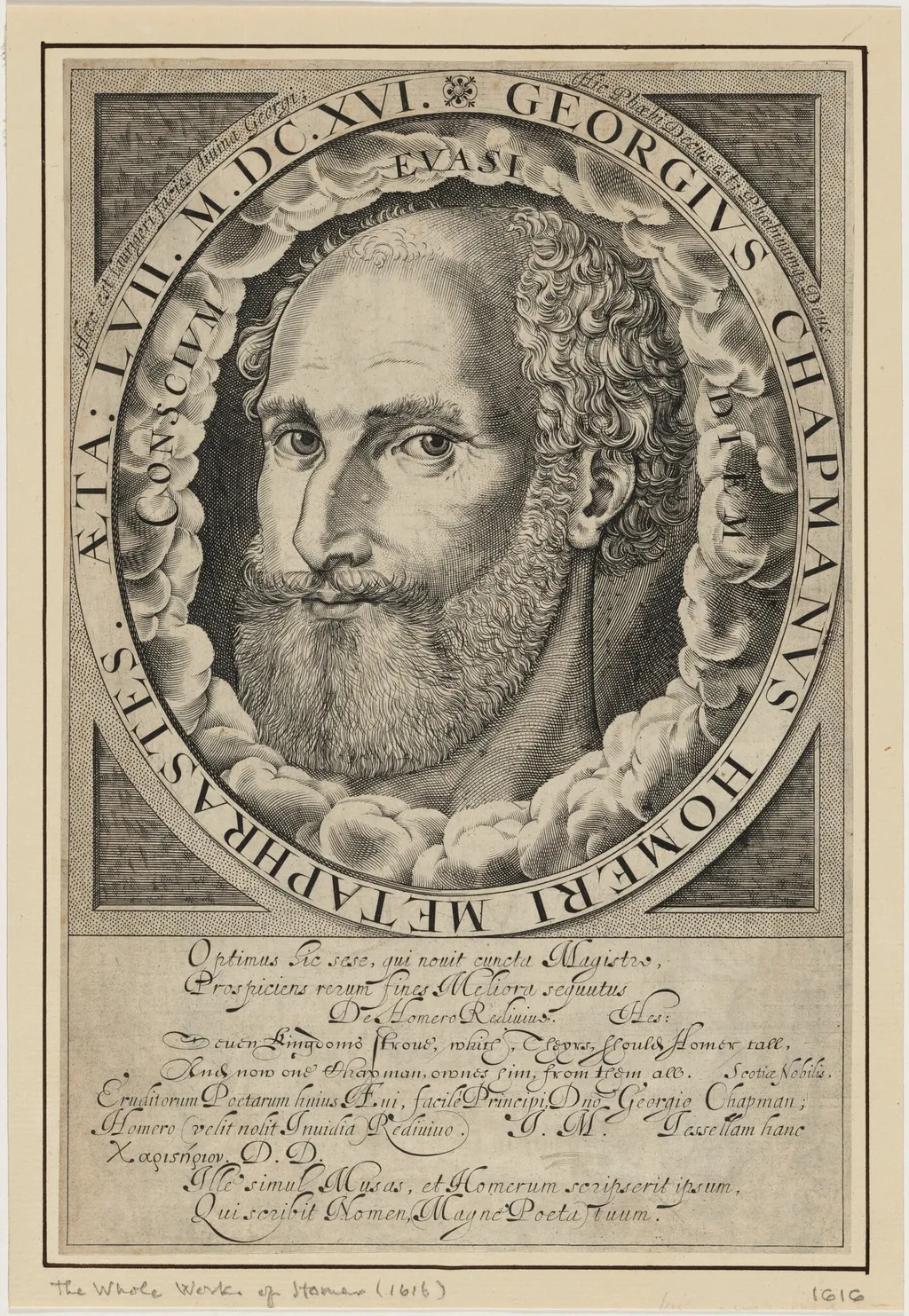
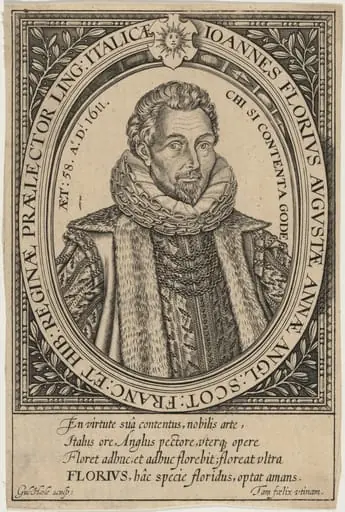
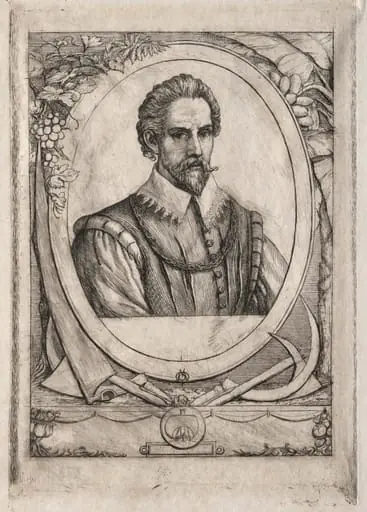
George Chapman is an ink print by the Baroque artist William Hole. It dates from 1616 and is held in the collection of the National Gallery of Art.
About this work
The text around the face spells out the name "George Chapman," and the bottom notes it’s from *The Whole Works of Homer* (1616).
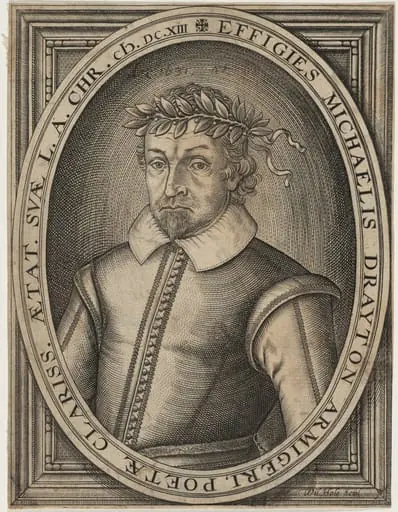
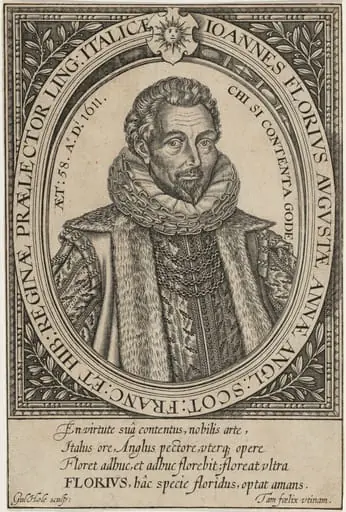
This is a black-and-white portrait of a bearded man with curly hair and a serious expression. His face fills most of the image, framed by a circular border with text around it. Below the circle, there’s more writing in neat, old-fashioned handwriting.
The text around the face spells out the name "George Chapman," and the bottom notes it’s from *The Whole Works of Homer* (1616). The artist used fine lines to create shading and detail, giving the face a three-dimensional look.
Next, look up engraving to see how this technique works.
Overview
This engraving, created by William Hole in 1616, portrays George Chapman in a circular, framed portrait. The black-and-white image features a bearded, curly-haired man with a serious expression, set against a background of decorative text.
Subject & Meaning
The subject of the engraving is George Chapman, identified by the text encircling his portrait. The image is associated with *The Whole Works of Homer* (1616), suggesting Chapman's connection to the publication, likely as a translator.
Technique & Style
The engraving utilizes fine lines to achieve detailed shading, imparting a three-dimensional quality to the subject's face. This technique is characteristic of the engraving process, which involves carving designs onto metal plates for printing.
History & Provenance
Created in 1616 by William Hole, the engraving is specifically linked to the publication *The Whole Works of Homer*, indicating its original context as part of this book.
Context
The engraving's creation and style reflect the early 17th-century practice of illustrating literary works with portraits of key figures involved in their production or translation.
Legacy
While specific details on the engraving's legacy are not provided, it remains a historical example of 17th-century engraving techniques and a visual record of George Chapman's association with *The Whole Works of Homer*.
Artist & collection