Artwork
Bolikana and Markolfus
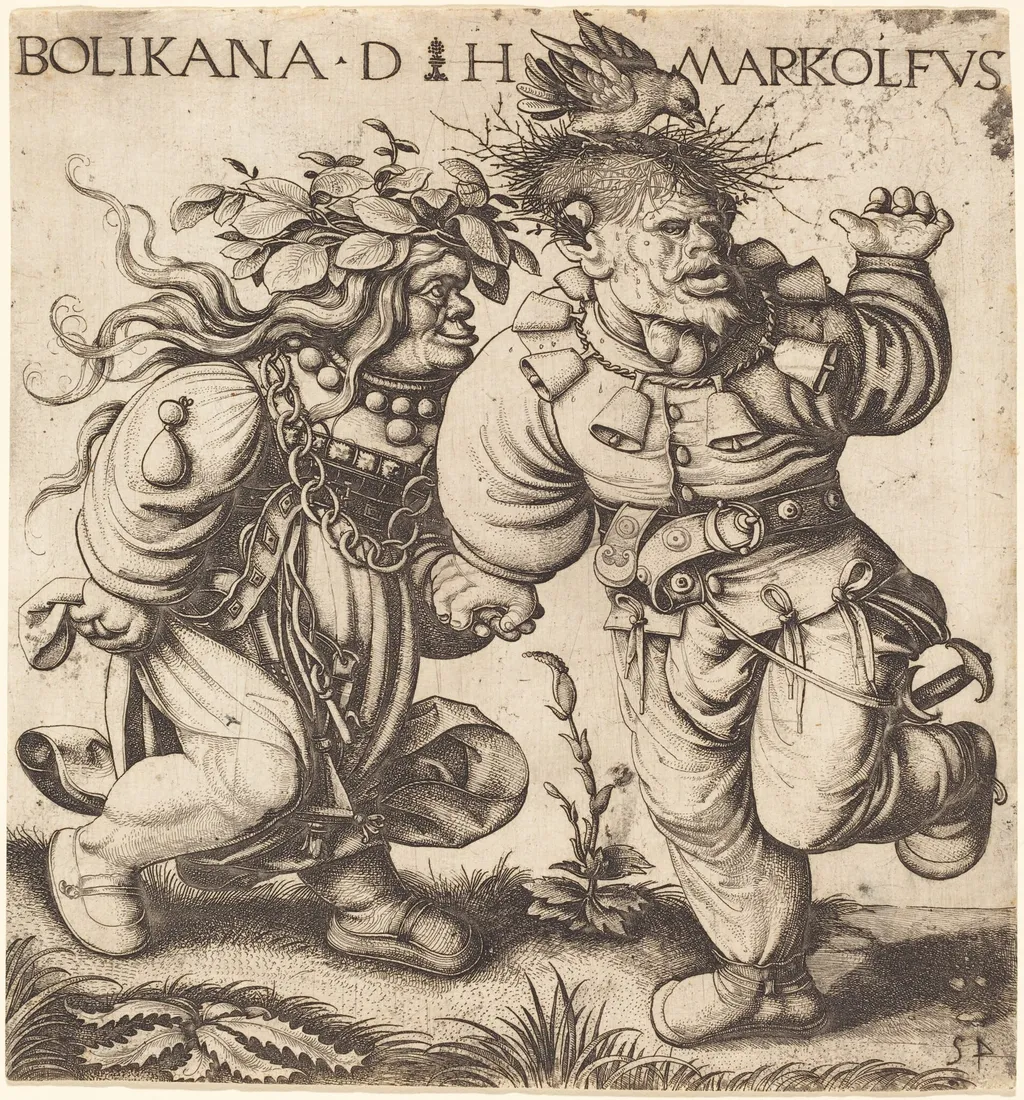
Bolikana and Markolfus is an ink print by the Renaissance artist Daniel Hopfer. It dates from 1501 and is held in the collection of the National Gallery of Art.
About this work
Overview
Created in 1501, *Bolikana and Markolfus* is a print that combines etching and engraving on iron plates. The work presents two contorted figures enmeshed in a tangle of vines and roots, each bearing distinctive attributes—a scroll in one hand and a key in the other—set against a densely vegetated background.
Subject & Meaning
The title names, Bolikana and Markolfus, suggest the figures are not portraiture but allegorical or narrative characters. Their exaggerated, carved‑like faces, wild hair, and the struggle implied by their poses invite interpretation as a symbolic confrontation, perhaps representing opposing forces or ideas rendered through a fantastical visual language.
Technique & Style
Hopfer employed iron plates, a material linked to his experience as a maker of steel armor, to execute both etching and engraving. The sharp, precise lines and the deep, textured shading indicate the use of metal tools to incise the design, while the overall composition reflects a hybrid of the linear clarity of engraving and the tonal richness of etching.
History & Provenance
Daniel Hopfer, a German printmaker active at the turn of the 16th century, is credited with pioneering the use of etching in the late 15th century. This print illustrates his early adoption of the technique and his role in shaping the nascent print‑publishing industry, even though his contributions were long overlooked by art historians.
Context
The work emerges from the early Renaissance period in Germany, a time when artists were experimenting with new print media. Hopfer’s background in metalworking allowed him to explore the possibilities of iron plate printing, positioning him among the first to integrate etching into the broader repertoire of printmaking alongside woodcut.
Artist & collection

Artist
Daniel Hopfer (c. 1470 – 1536) was a German artist who is widely believed to have been the first to use etching in printmaking, at the end of the 15th century. He also worked in woodcut. Although his etchings were…

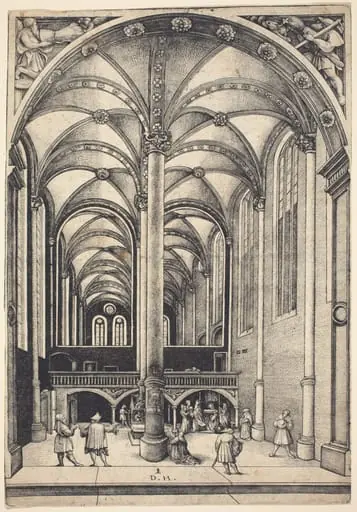 Interior of the Church of Saint Maria Magdalena with the Parable of the Offering of the Widow
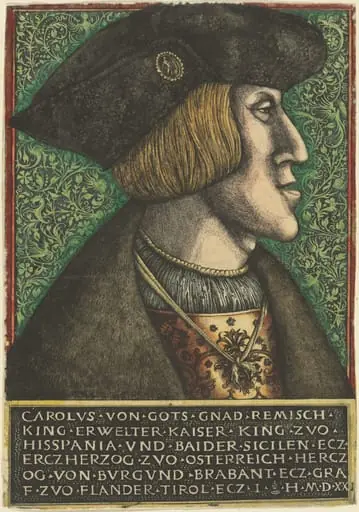 Emperor Charles V
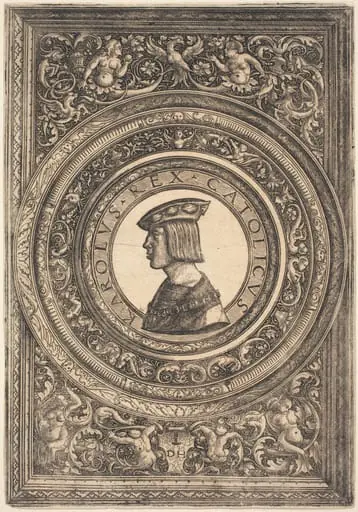 Emperor Charles V
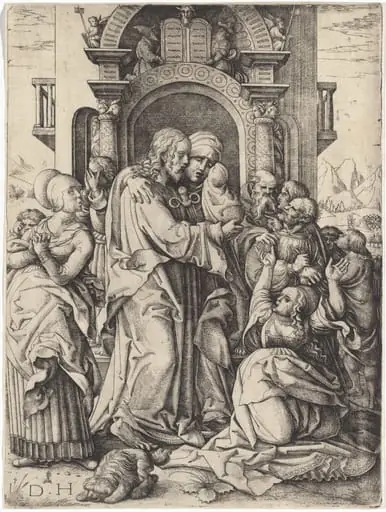 The Virgin Mary Taking Leave of Christ
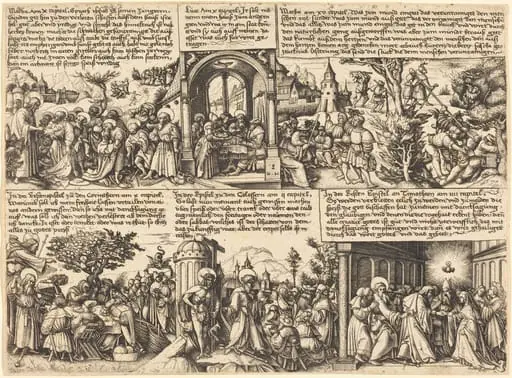 Jesus Christ Giving the Mission to the Apostles and Other New Testament Scenes
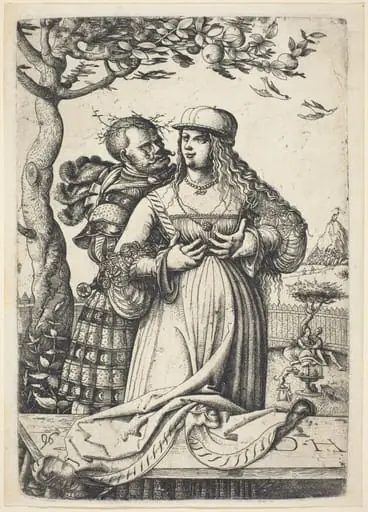 Soldier Embracing a Woman
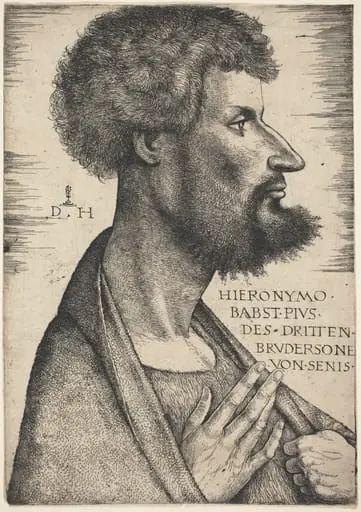 Girolamo da Siena
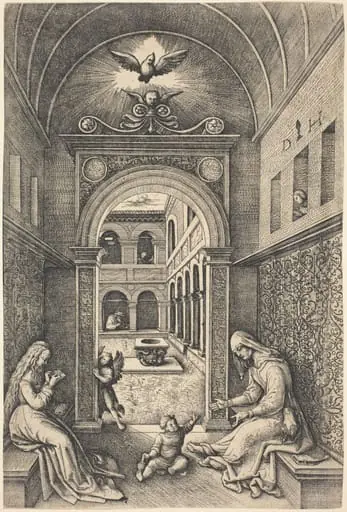 The Virgin and Child with Saint Anne by a Portal
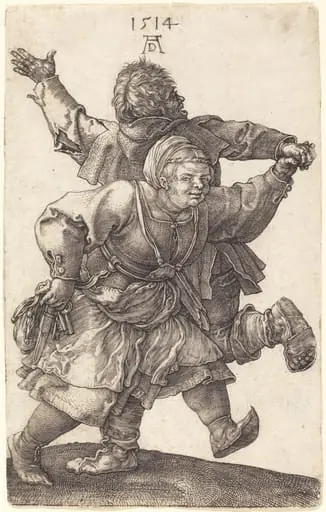 Peasant Couple Dancing
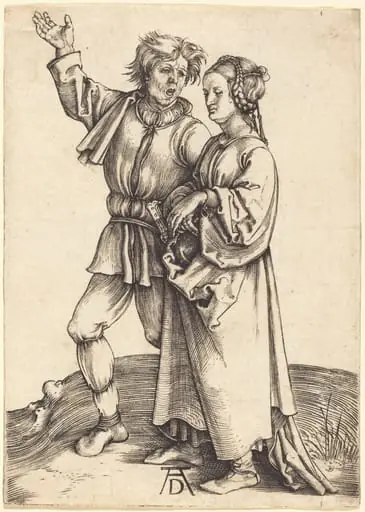 Peasant and His Wife
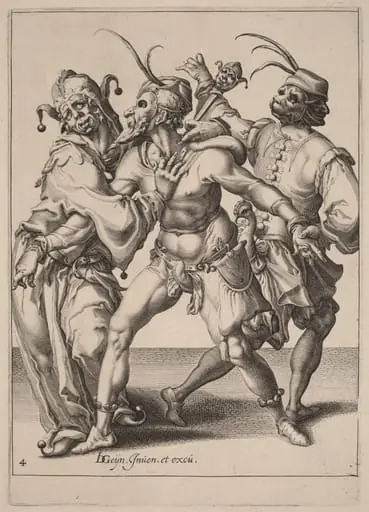 Three Dancing Mummers, Including a Jester
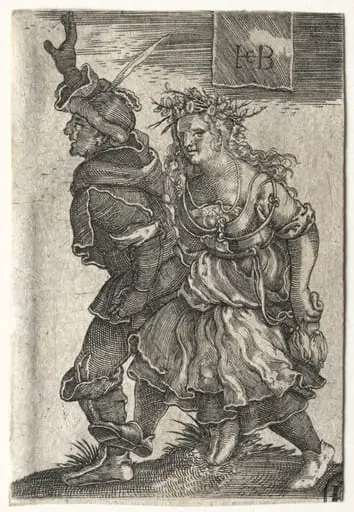 A Dancing Couple of Peasants
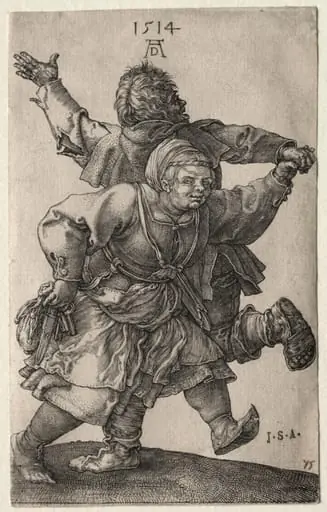 Peasant Couple Dancing
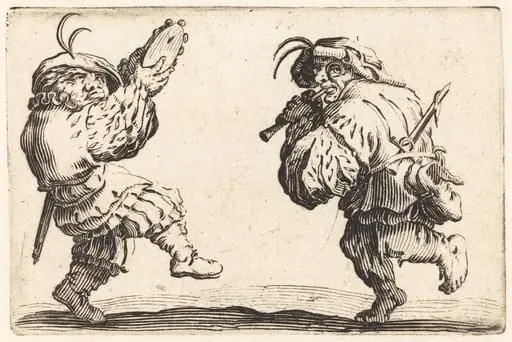 Dancers with Flute and Tambourine
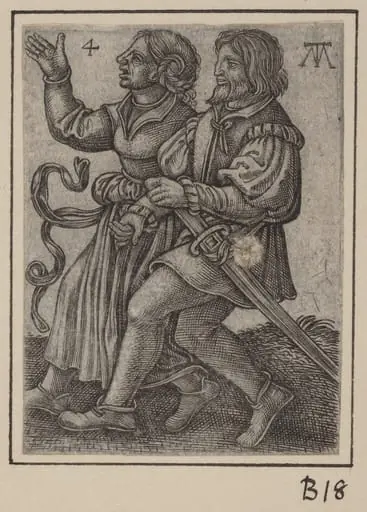 Dancing Couple, Facing Left
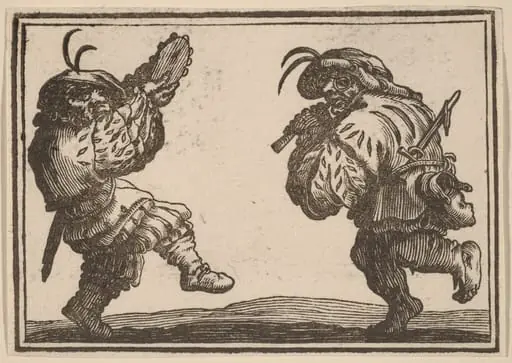 Dancers with Flute and Tambourine
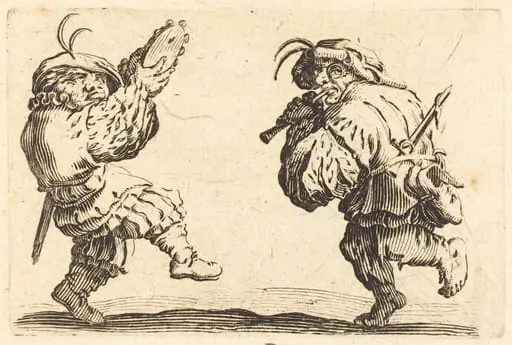 Dancers with Flute and Tambourine
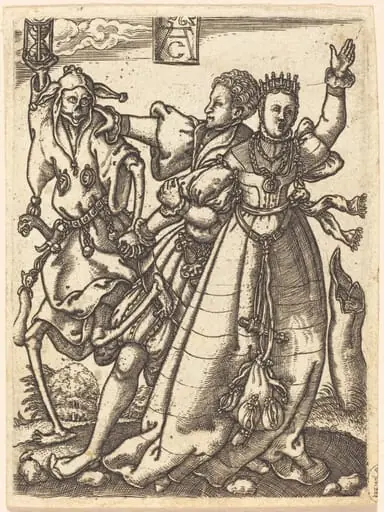 Dance of Death V
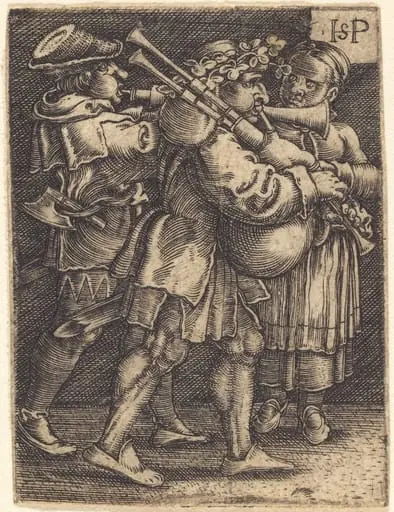 Two Street Players and a Girl
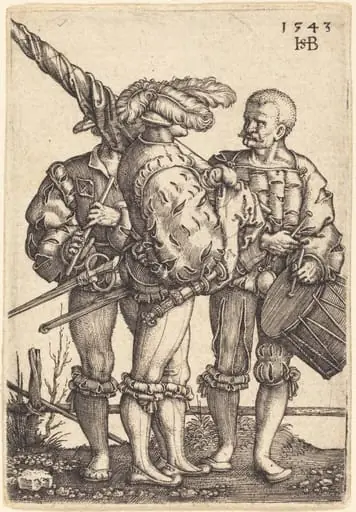 Standard Bearer, Drummer, and Piper