Artwork
Adriaen van Ostade
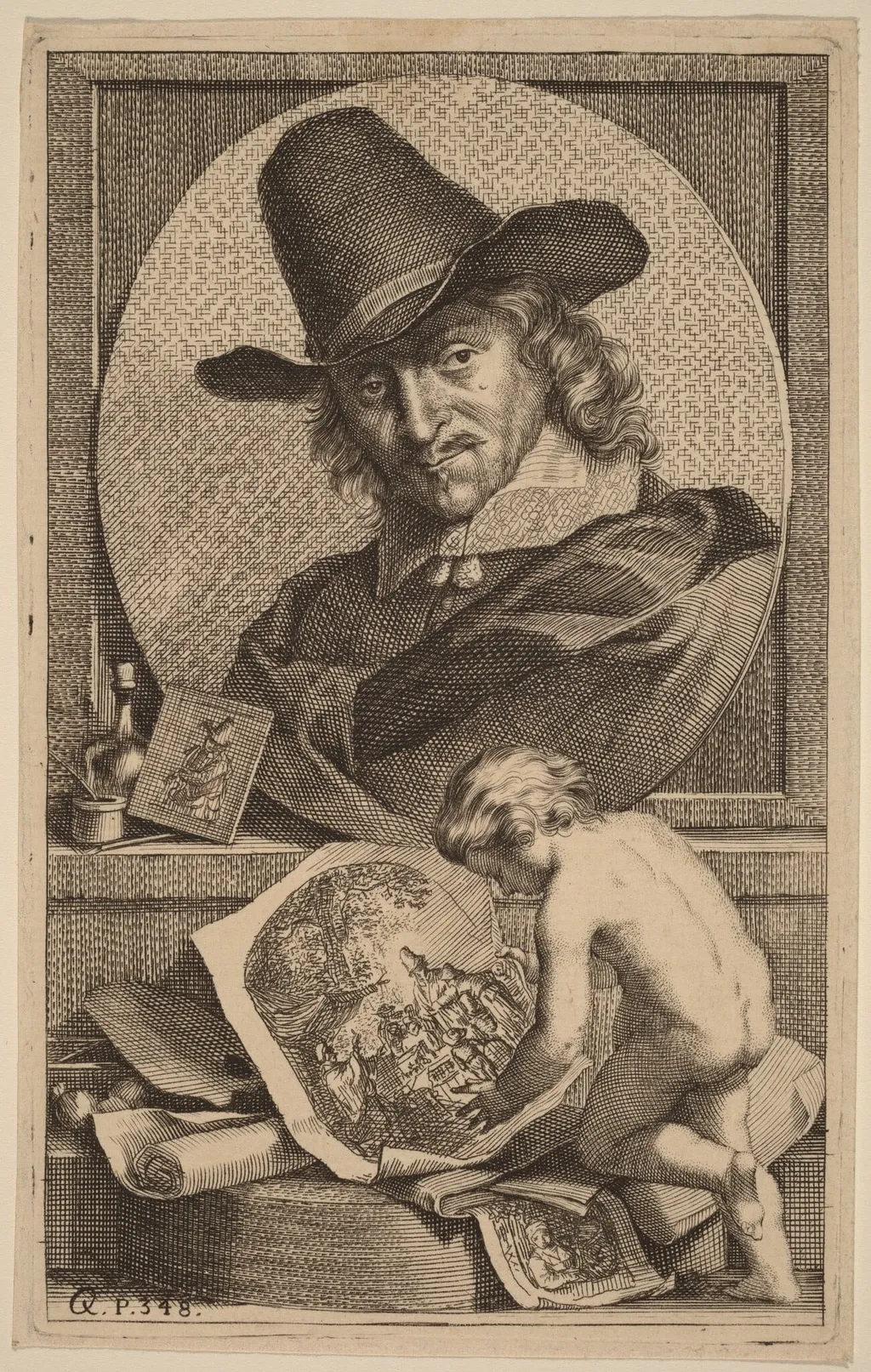
Adriaen van Ostade is an ink print by the Baroque artist Jacobus Houbraken. It dates from 1739 and is held in the collection of the National Gallery of Art.
About this work
Overview
The 1739 print, executed by Jacobus Houbraken, bears the name of the Dutch genre painter Adriaen van Ostade. Rendered as an engraving, the work presents a single figure dressed in a tall hat and dark attire, accented by a prominent collar, and set amid a modest still‑life.
Subject & Meaning
The central figure appears contemplative, his serious expression directed toward a small painting within the composition. Accompanying objects—a book, a candle, and the miniature artwork—suggest scholarly or artistic preoccupations, while a nude child in the foreground gazes at the same painting, introducing a note of youthful curiosity.
Technique & Style
Houbraken employed fine line engraving to delineate textures of fabric, metal, and flesh, achieving a clear contrast between light and shadow. The careful rendering of the child's delicate form alongside the adult's more robust features demonstrates the printmaker’s skill in balancing detail and tonal variation typical of early 18th‑century Dutch printmaking.
History & Provenance
Created in 1739, the engraving was likely intended as a commemorative portrait of the earlier artist, whose own works celebrated everyday life. As a printed image, it could be reproduced and circulated among collectors interested in Dutch genre painting and its leading figures.
Context
The print emerges during a period when Dutch artists and engravers often honored their predecessors through portraiture, reflecting a broader European interest in documenting artistic lineage. The inclusion of a child and scholarly items aligns with contemporary ideals of education and moral instruction.
Legacy
While not as widely reproduced as other portrait prints of the era, Houbraken’s engraving contributes to the visual record of Adriaen van Ostade’s reputation, offering insight into how 18th‑century audiences perceived the earlier painter’s cultural significance.
Artist & collection


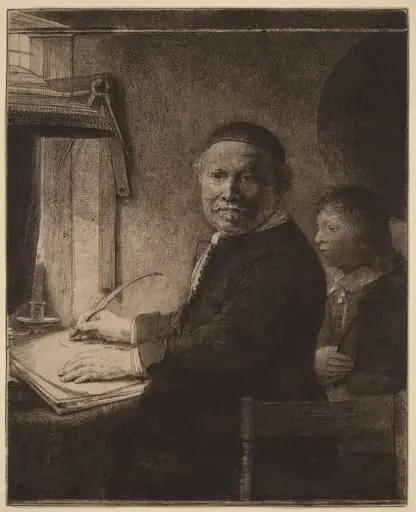 Lieven Willemsz van Coppenol: the Smaller Plate
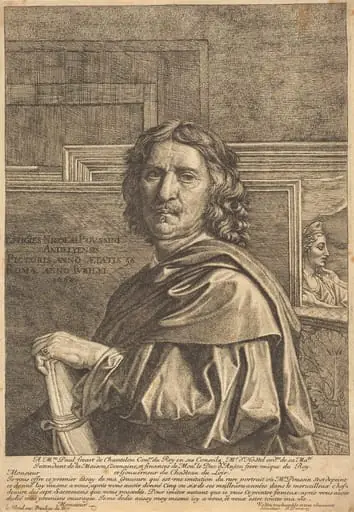 Nicolas Poussin
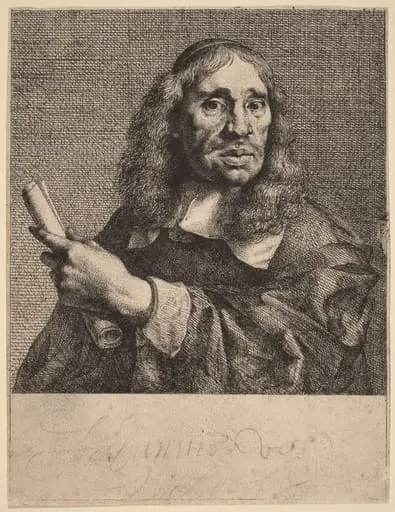 Jan de Vos
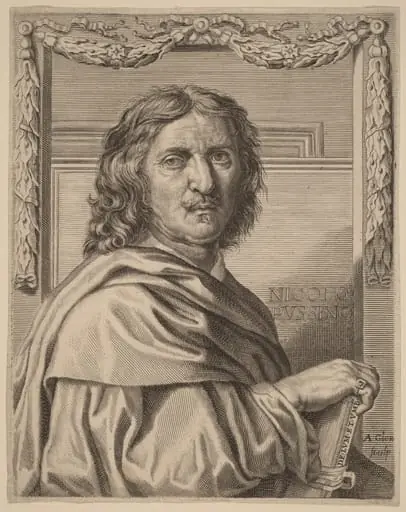 Nicolas Poussin
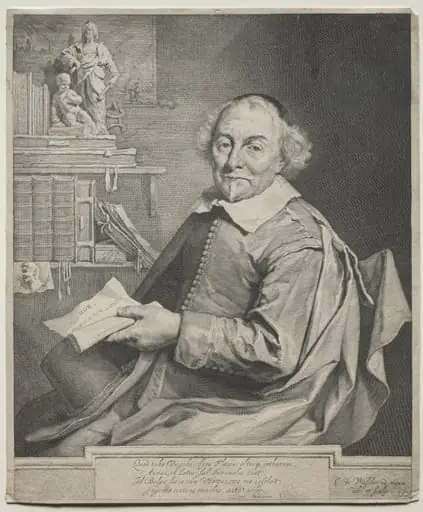 Vondel
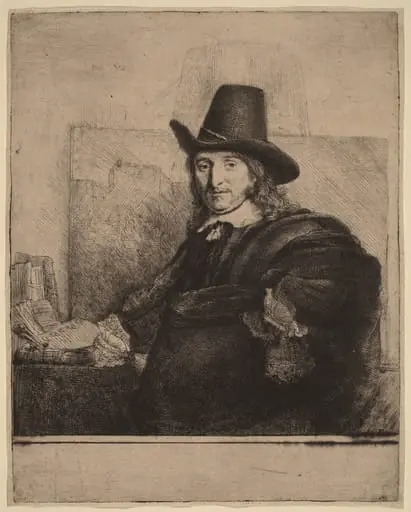 Jan Asselijn
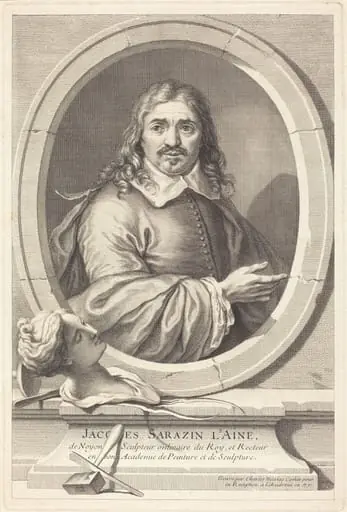 Jacques Sarazin the Elder
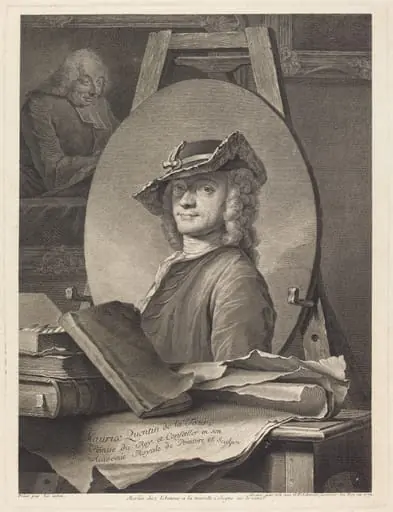 Maurice Quentin de la Tour
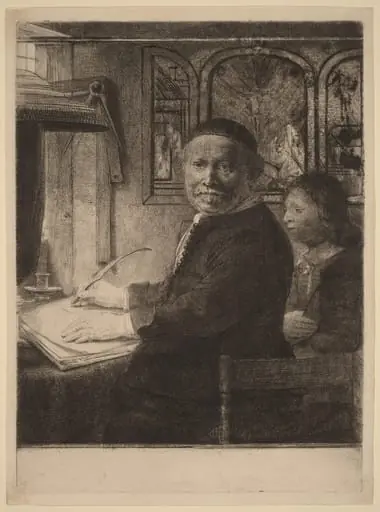 Lieven Willemsz van Coppenol: the Smaller Plate
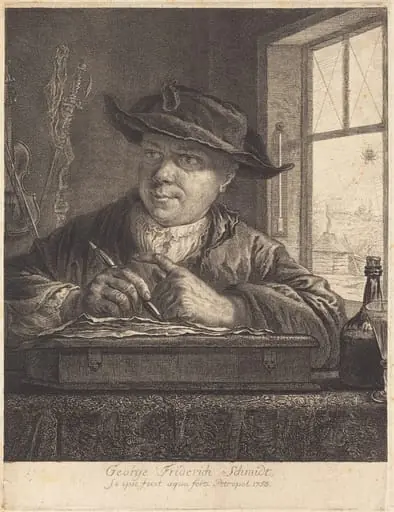 Self-Portrait with a Spider in the Window
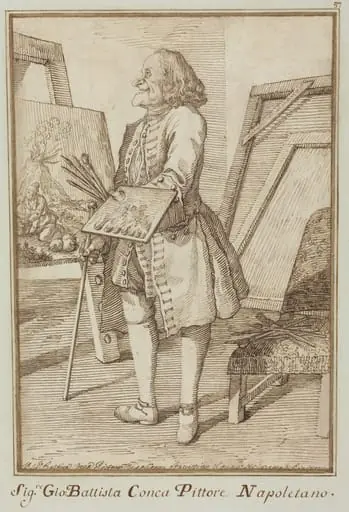 Signore Sebastiano Conca, Pittore Napoletano (Signore Sebastiano Conca, Neapolitan Painter)
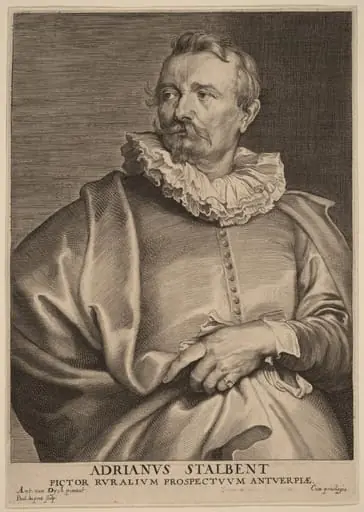 Adriaen van Stalbemt