Artwork
仮宅の後朝|Scene in the Yoshiwara
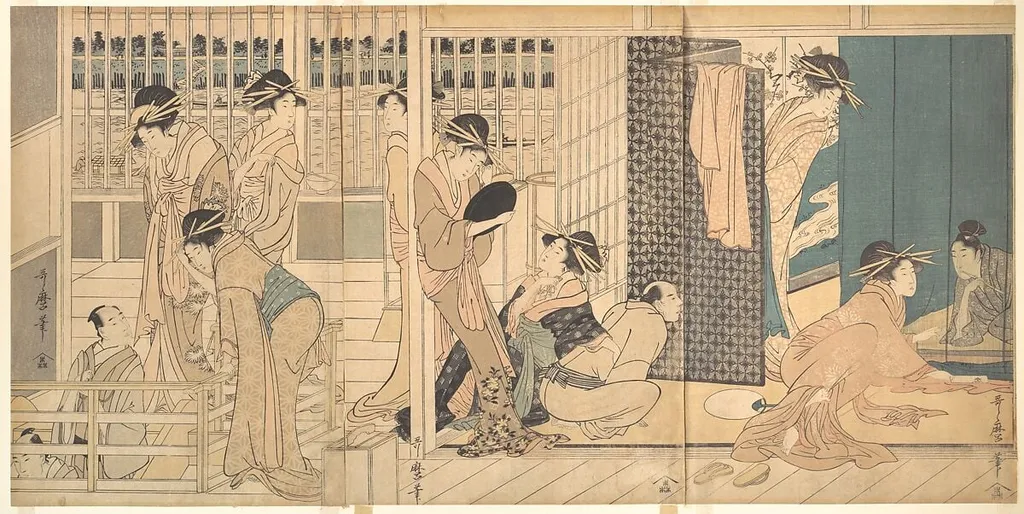
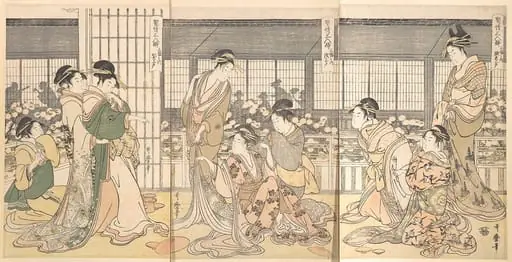
仮宅の後朝|Scene in the Yoshiwara is an ink print by the Romanticist artist Kitagawa Utamaro. It dates from 1790 and is held in the collection of the Metropolitan Museum of Art.
About this work
Overview
This triptych by Kitagawa Utamaro, dated 1790, depicts an interior scene in the Yoshiwara pleasure district of Edo. Composed of three connected woodblock prints, it captures a quiet moment in the daily life of courtesans and attendants. Rendered in ink and color on paper, the work exemplifies the ukiyo-e tradition of portraying transient urban experiences with subtle realism and intimate detail.
Subject & Meaning
The scene portrays women in loose robes engaged in ordinary post-morning activities—fanning themselves, resting, or tending to a child.
The scene portrays women in loose robes engaged in ordinary post-morning activities—fanning themselves, resting, or tending to a child. The presence of a child suggests domestic continuity amid a space associated with transient encounters. The composition avoids theatricality, instead emphasizing routine and quiet observation, hinting at the layered lives behind the public persona of Yoshiwara’s inhabitants.
Technique & Style
Utamaro employs fine black outlines to define forms, while soft washes of beige, blue, and muted green create a subdued palette. Each panel is densely populated with small details: folded garments, discarded sandals, lattice windows, and woven mats. The careful arrangement of figures within confined spaces reflects a mastery of spatial compression, enhancing the sense of intimacy and immediacy.
History & Provenance
Created during Utamaro’s peak years as a printmaker, this triptych was likely produced for private collectors rather than mass distribution. It entered the collection of The Metropolitan Museum of Art in the 20th century, where it remains part of its holdings of Edo-period Japanese prints. Its preservation reflects early Western interest in ukiyo-e as both art and cultural document.
Context
In late 18th-century Edo, Yoshiwara was a licensed district where courtesans lived under strict social codes. While often romanticized, Utamaro’s work reveals the mundane rhythms of their existence—moments of rest, care, and solitude between performances. His focus on private interiors distinguished him from contemporaries who emphasized spectacle, offering a more nuanced view of urban life.
Legacy
Utamaro’s quiet depictions of women’s daily lives influenced later generations of artists, both in Japan and abroad. This triptych exemplifies his ability to elevate ordinary moments into enduring visual records. Its emphasis on psychological nuance and spatial harmony contributed to the broader appreciation of ukiyo-e as a sophisticated art form beyond mere illustration.
Artist & collection


 Untitled
 Untitled
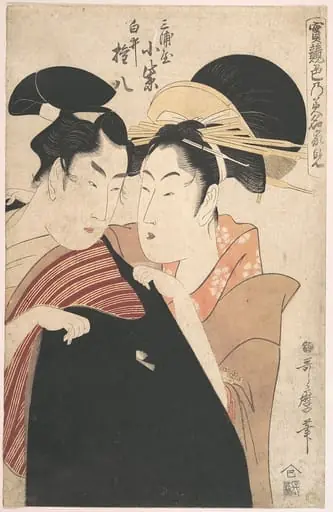 実競色乃美名家見 三浦屋小紫 白井権八|The Lovers Miura-ya Komurasaki and Shirai Gonpachi.
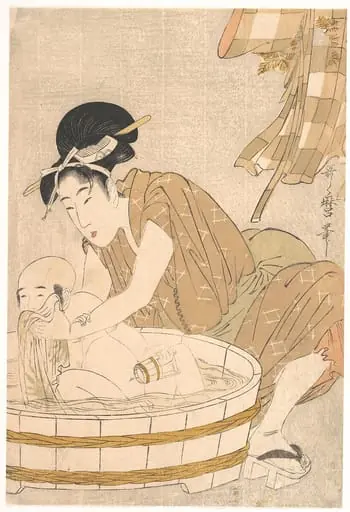 行水|Bathtime (Gyōzui)
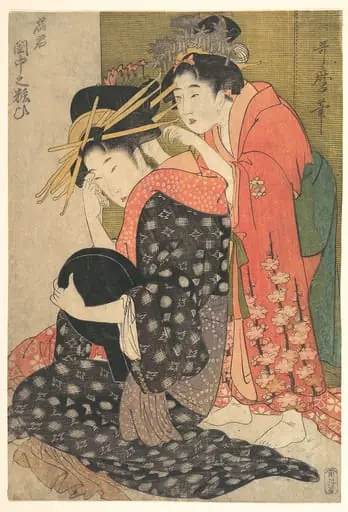 名君 閨中の粧ひ|The Oiran Yoso-oi Seated at Her Toilet
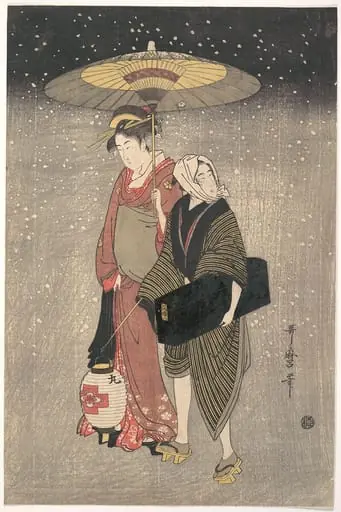 Untitled
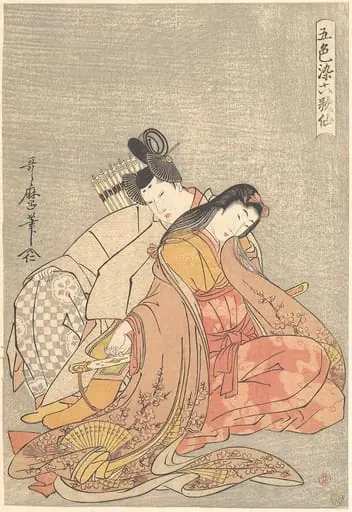 『五色染六歌仙』 在原業平と小野小町|“The Poet Ariwara no Narihira (825–880) and Ono no Komachi,” from the series Five Colors of Love for the Six Poetic Immortals (Goshiki-zome rokkasen)
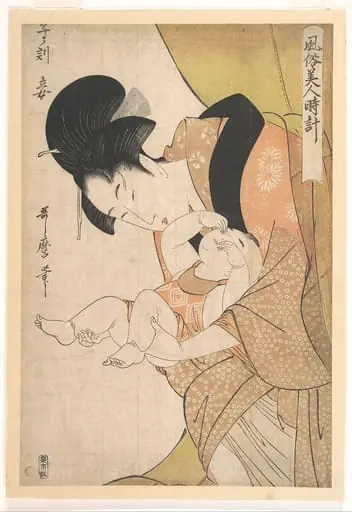 風俗美人時計 子ノ刻 妾|Midnight: Mother and Sleepy Child
 契情三人酔 三幅之内 腹立上戸 泣上戸 笑上戸|Three Intoxicated Courtesans
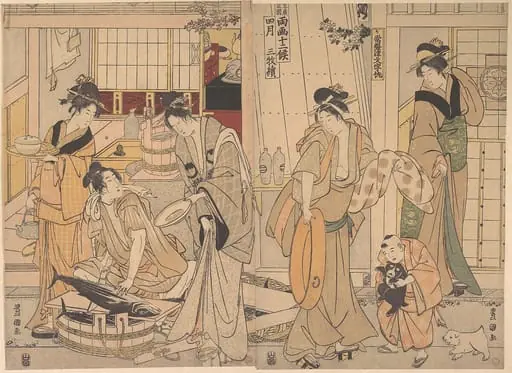 Untitled
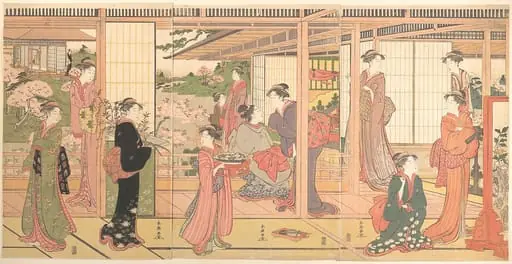 Untitled
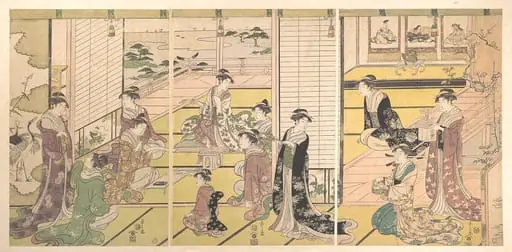 鳥文斎栄之画 和歌三神図|Honoring the Three Gods of Poetry: Women Composing Poems
 Untitled
 Untitled
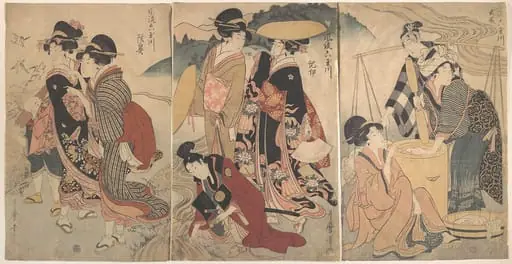 風流六玉川 武蔵 紀伊 陸奥|Women and a Man in the Country; Some pageant(?)
 Untitled
 A Thousand Autumns, Ten Thousand Years on Tokiwa Bridge
 三囲神社の御開帳|Display of Treasures at Mimeguri Shrine (Mimeguri jinja no onkaichō)