Artwork
女織蚕手業草 十|The Making of Silk Floss
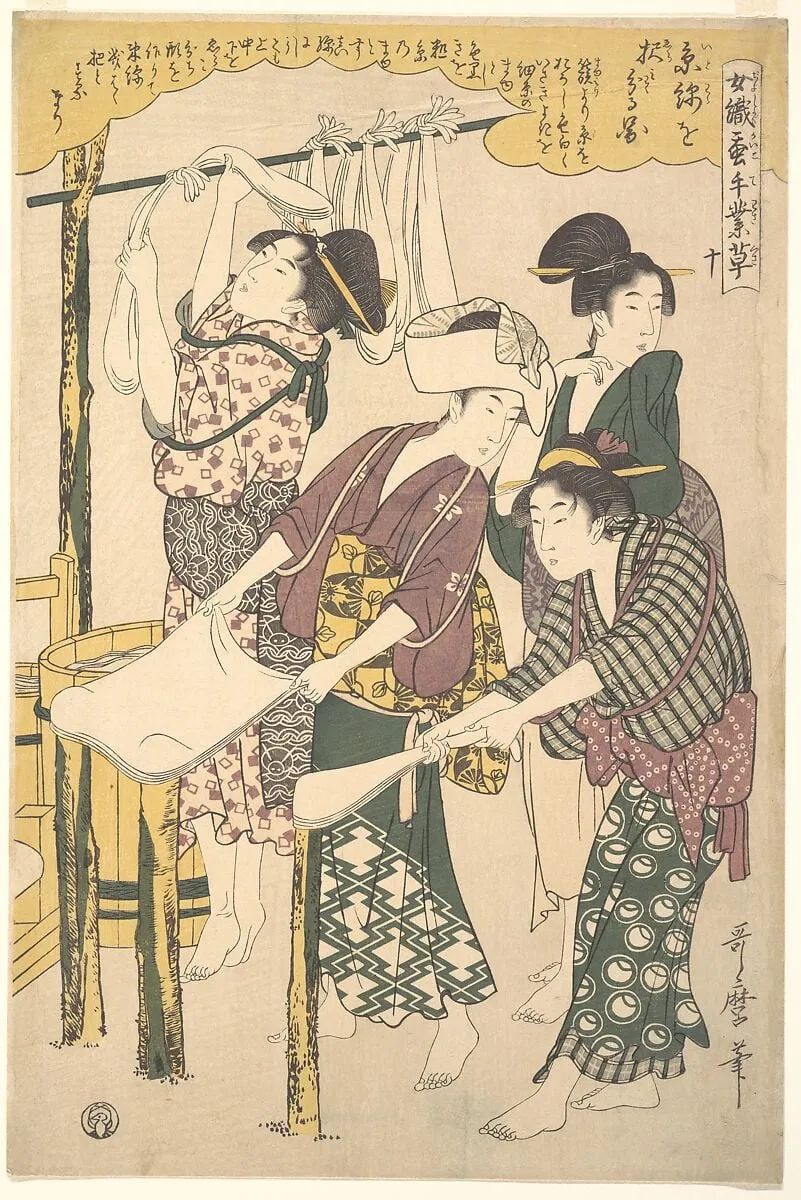
女織蚕手業草 十|The Making of Silk Floss is an ink print by the Romanticist artist Kitagawa Utamaro. It dates from 1790 and is held in the collection of the Metropolitan Museum of Art.
About this work
Overview
The Making of Silk Floss is a woodblock print by Kitagawa Utamaro, dating to around 1790. Executed in ink and color on paper, it belongs to the genre scene category within Utamaro's prints.
Subject & Meaning
The print portrays a woman in a pale blue robe, sleeves rolled up, intently pulling golden threads from a wooden frame. Notably, the scene emphasizes quiet focus on a mundane task, devoid of dramatic elements, highlighting the everyday nature of the worker's activity.
Technique & Style
Utamaro employs soft colors and flowing lines to convey a sense of everyday realism. The golden silk floss is depicted with a luminous quality, contrasting with the woman's calm, partially obscured face, emphasizing her concentration on the task.
History & Provenance
Created circa 1790, this work is among the earliest examples of an artist depicting a worker engaged in their profession without dramatic embellishment, focusing instead on the serenity of the task.
Context
Part of a series titled 女織蚕手業草 (The Making of Silk Floss), this print reflects 18th-century Japanese interest in depicting daily life, particularly the roles of women in traditional industries like silk production.
Legacy
This print influences the depiction of everyday working life in subsequent Japanese art, particularly in its understated portrayal of female workers. Its calm, observational style has resonated with those interested in the quieter aspects of Japanese genre scenes.
Artist & collection


 Untitled
 Untitled
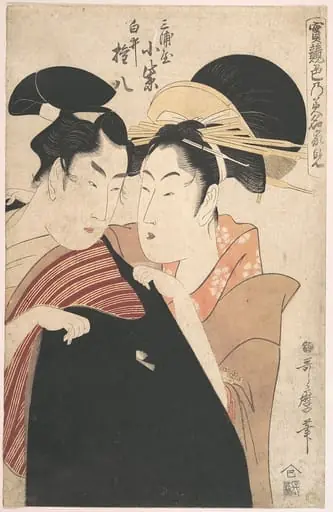 実競色乃美名家見 三浦屋小紫 白井権八|The Lovers Miura-ya Komurasaki and Shirai Gonpachi.
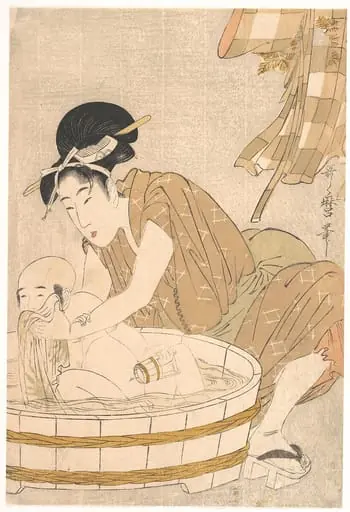 行水|Bathtime (Gyōzui)
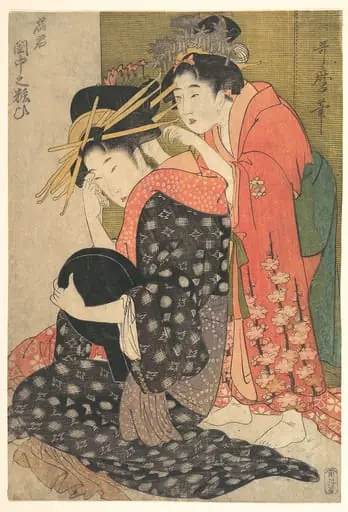 名君 閨中の粧ひ|The Oiran Yoso-oi Seated at Her Toilet
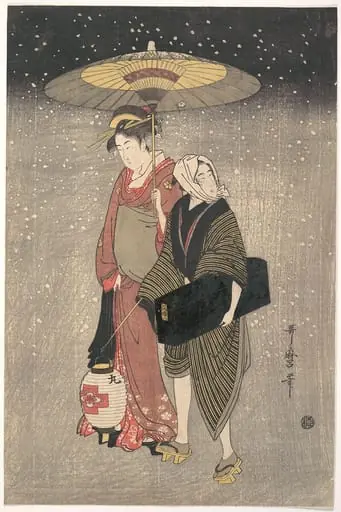 Untitled
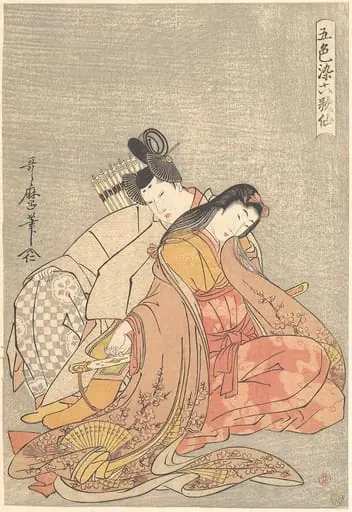 『五色染六歌仙』 在原業平と小野小町|“The Poet Ariwara no Narihira (825–880) and Ono no Komachi,” from the series Five Colors of Love for the Six Poetic Immortals (Goshiki-zome rokkasen)
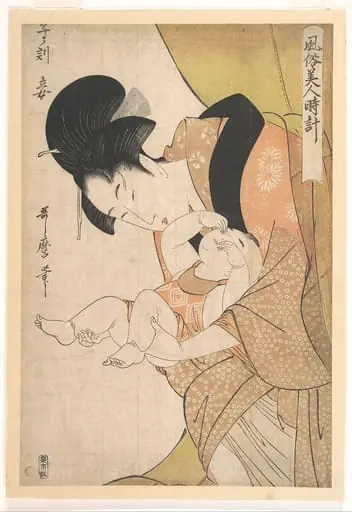 風俗美人時計 子ノ刻 妾|Midnight: Mother and Sleepy Child
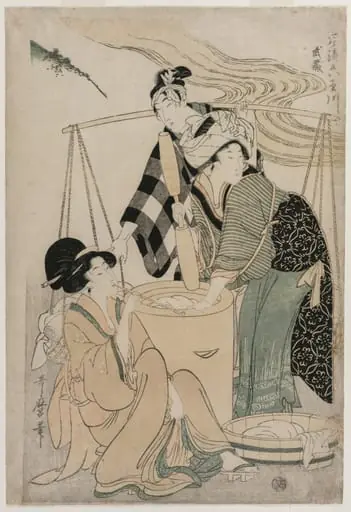 Settsu Province from the series Fashionable Six Jewel Rivers (Furyu Mu Tamagawa)
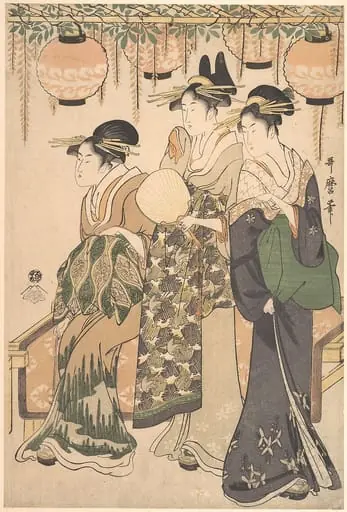 藤棚下の遊女たち|Courtesans Beneath a Wisteria Arbor (Fuji dana shita no yūjo tachi)
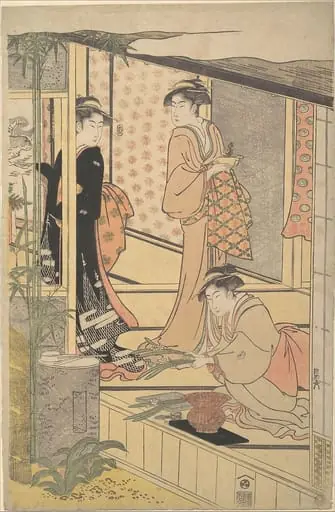 細田栄之画 正月準備|Preparing New Year Decorations
 Untitled
 Seven Komachi Episodes: A Woman Holding an Outer Garment for a Man
 Untitled
 Untitled
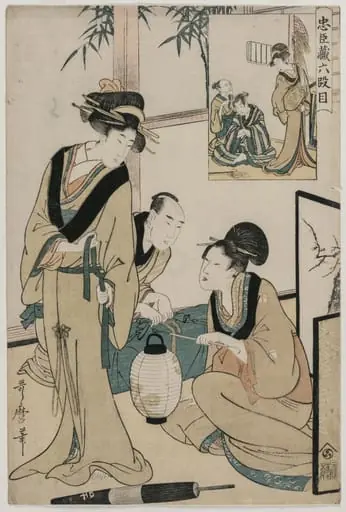 Chushingura: Act VI of The Storehouse of Loyalty
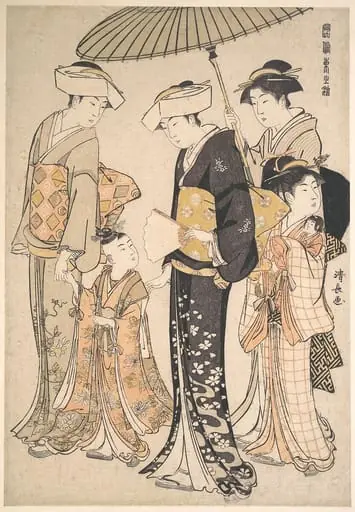 「風俗東之錦」 姫君と侍女四人|High-Ranking Samurai Girl with Four Attendants, from the series A Brocade of Eastern Manners (Fūzoku Azuma no nishiki)
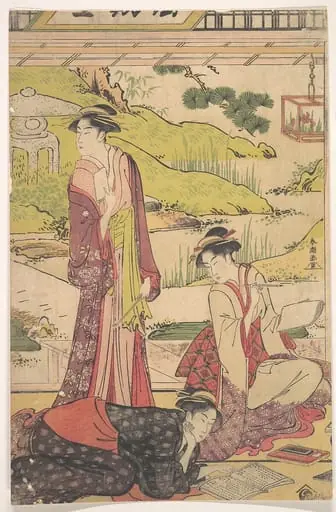 あやめ燈籠図|Three Women Enjoying Literary Pursuits
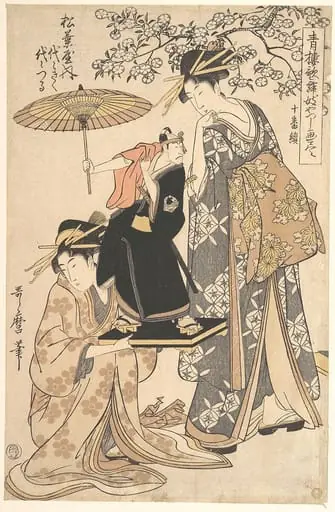 青楼歌舞妓やつし画尽 十番続|The Oiran Yoyogiku of Matsubaya Standing under a Cherry Tree
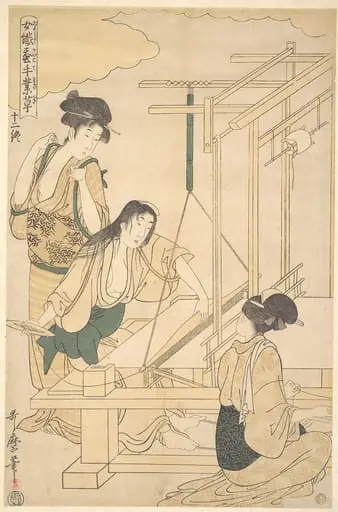 女織蚕手業草 十二終|Women Weaving Silk Cloth