Artwork
喜多川歌麿画 蚊帳の中の文読み美人|Woman Reading a Letter under a Mosquito Net
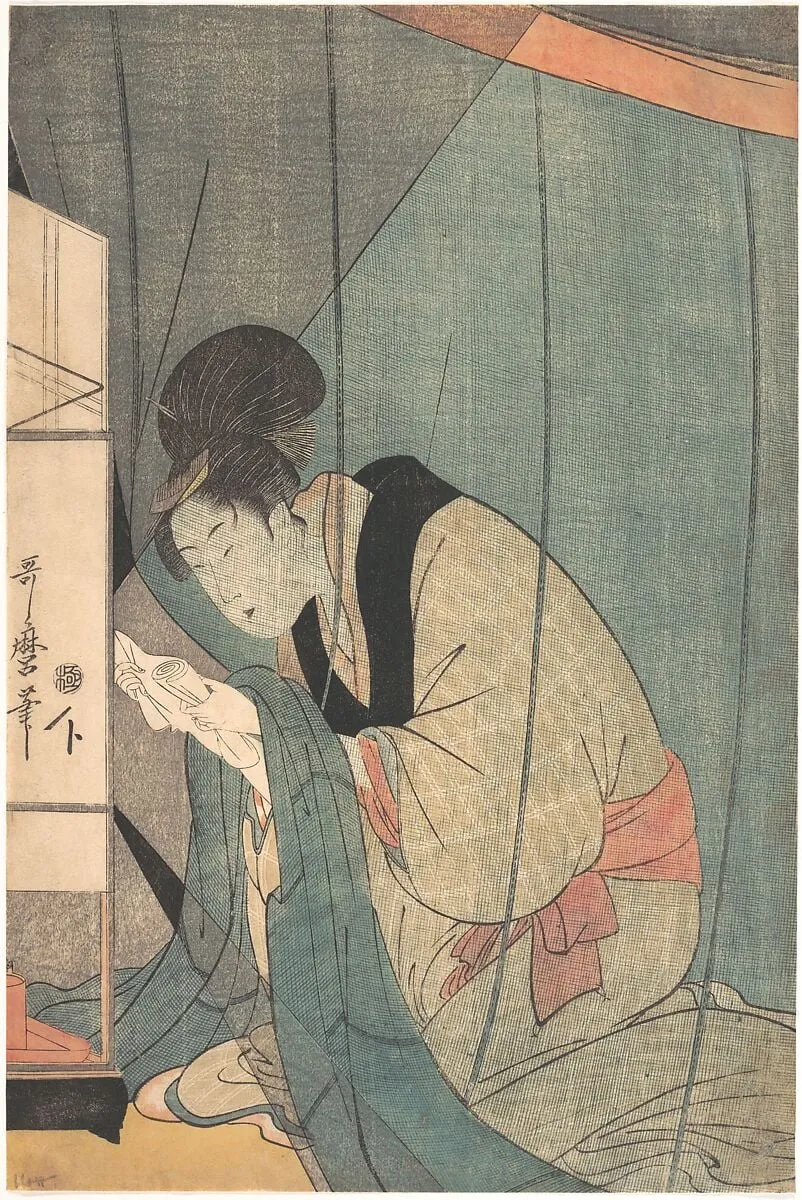
喜多川歌麿画 蚊帳の中の文読み美人|Woman Reading a Letter under a Mosquito Net is an ink print by the Romanticist artist Kitagawa Utamaro. It dates from 1798 and is held in the collection of the Metropolitan Museum of Art.
About this work
She appears to be deeply engrossed in the letter, and her facial expression is one of concentration.
This painting shows a woman sitting on the floor, reading a letter. She is wearing a kimono and has her hair styled in an updo. The woman is sitting under a mosquito net, which is a light blue color.
The woman is holding the letter in her right hand, and her left hand is resting on her lap. She appears to be deeply engrossed in the letter, and her facial expression is one of concentration.
The painting is a beautiful example of Japanese art from the late 18th century. The use of color and composition is striking, and the subject matter is relatable. To learn more about this style of art, explore the Romanticism movement.
Overview
Woman Reading a Letter under a Mosquito Net is a woodblock print by Kitagawa Utamaro, dated to around 1798. The work is part of the collection at The Metropolitan Museum of Art.
Subject & Meaning
The print depicts a woman intensely focused on reading a letter while seated under a light blue mosquito net. Her absorption in the letter is emphasized by her concentrated facial expression.
Technique & Style
Utamaro employed ink and color on paper to create this portrait. The composition and color palette, characteristic of late 18th-century Japanese woodblock printing, draw attention to the subject's emotional state.
History & Provenance
Created circa 1798, the print is now housed at The Metropolitan Museum of Art, though the specifics of its acquisition history are not detailed here.
Context
While often contextualized within broader discussions of Japanese ukiyo-e woodblock printing, superficial comparisons to Western Romanticism have been noted, though this work is distinctly rooted in Japanese artistic traditions.
Legacy
This work is recognized for its exemplary representation of Utamaro's skill in capturing the intimate, emotional moments of everyday life, influencing subsequent generations of artists in the portrayal of quiet, personal scenes.
Artist & collection


 Untitled
 Untitled
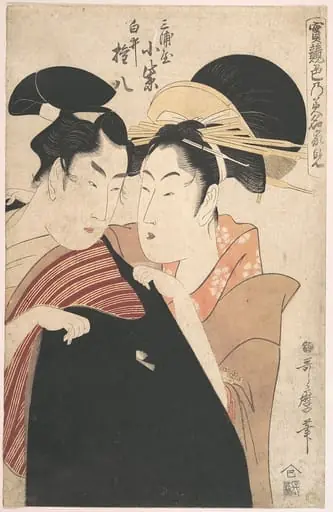 実競色乃美名家見 三浦屋小紫 白井権八|The Lovers Miura-ya Komurasaki and Shirai Gonpachi.
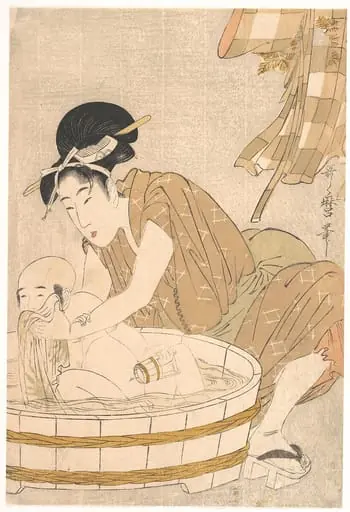 行水|Bathtime (Gyōzui)
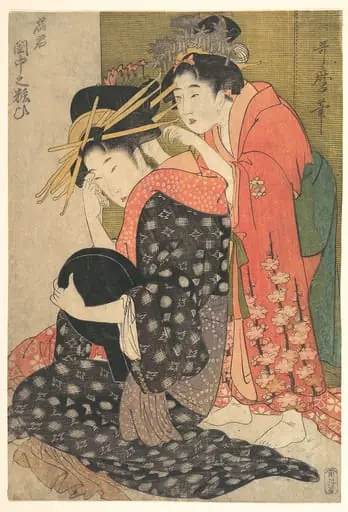 名君 閨中の粧ひ|The Oiran Yoso-oi Seated at Her Toilet
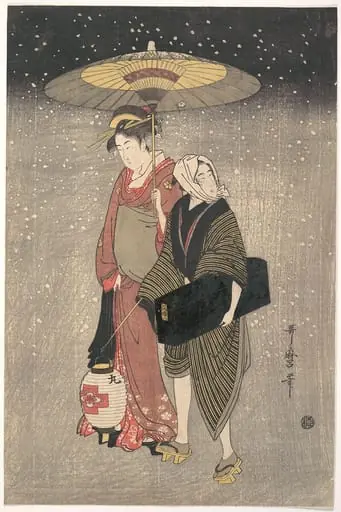 Untitled
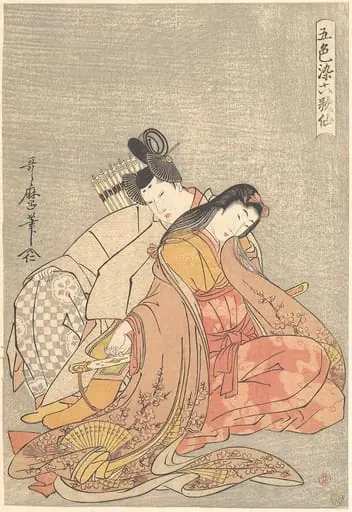 『五色染六歌仙』 在原業平と小野小町|“The Poet Ariwara no Narihira (825–880) and Ono no Komachi,” from the series Five Colors of Love for the Six Poetic Immortals (Goshiki-zome rokkasen)
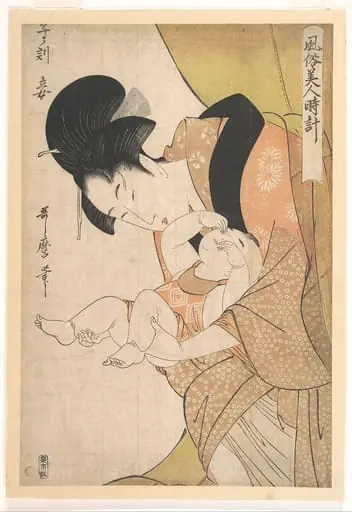 風俗美人時計 子ノ刻 妾|Midnight: Mother and Sleepy Child
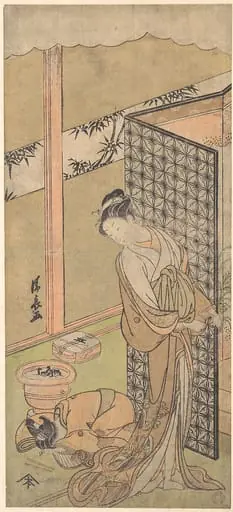 Untitled
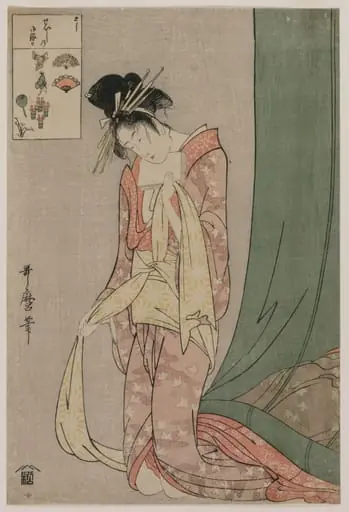 Hanaōgi of Ōgiya from the series Picture Puzzles
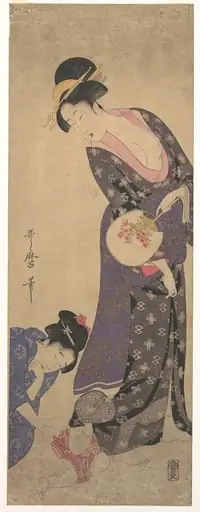 Untitled
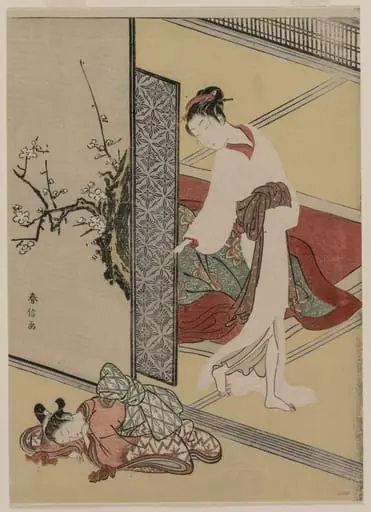 Courtesan and Sleeping Attendant
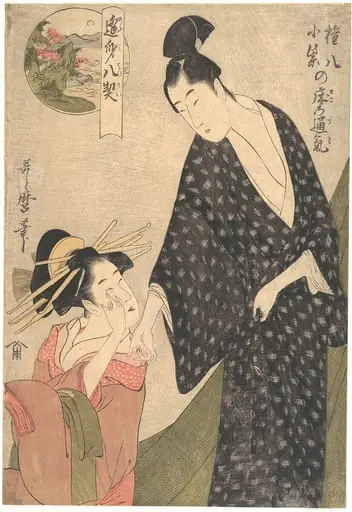 Gompachi Komurasaki no Toko no Tsuki|逢身八契 権八小紫の床の通気|Shared Feelings in the Bedchamber of Komurasaki and Gompachi
 百人一首 陽成院|Yozei no In
 Untitled
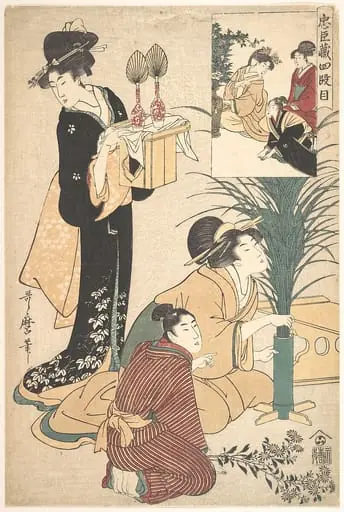 忠臣蔵四段目|A Woman and a Man Arranging Flowers for the Tsukimi (Moon Festival)
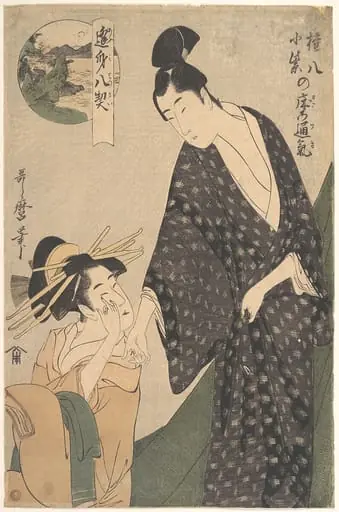 逢身八契 権八小紫の床の通気|Gonpachi ni Komurasaki no Toko no Tsuki
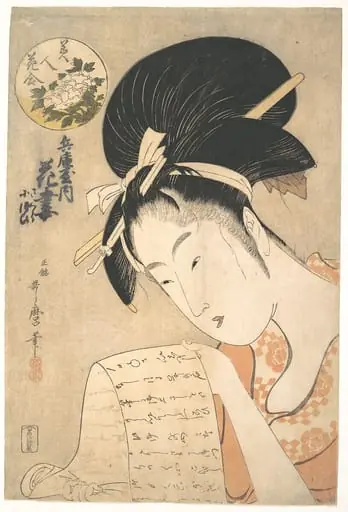 喜多川歌麿画 『美人花合』 「兵庫屋内 花妻図」|“The Courtesan Hanazuma Reading a Letter,” from the series Beauties Compared to Flowers (Bijin hana awase)