Artwork
The monkey slain, his blood to be used as medicine for the ailing prince he has bitten, from a Tuti-nama (Tales of a Parrot): Fifth Night
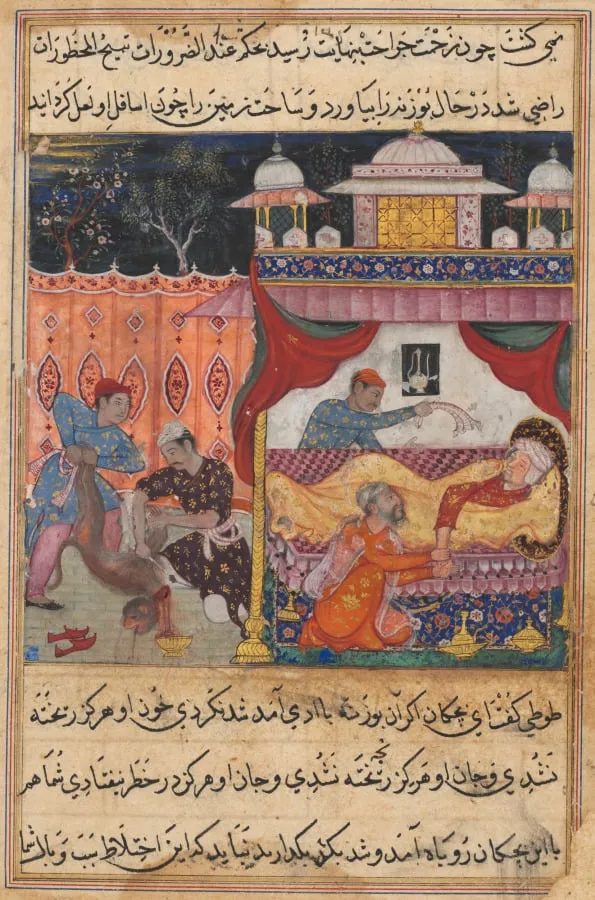
The monkey slain, his blood to be used as medicine for the ailing prince he has bitten, from a Tuti-nama (Tales of a Parrot): Fifth Night is an unspecified painting by the Mughal Painting artist Basawan. It dates from 1560 and is held in the collection of the Cleveland Museum of Art. This miniature painting depicts a dramatic scene from a Tuti-nama (Tales of a Parrot), a book of stories illustrated for the Mughal court.
About this work
You see a small, busy scene: two men in bright robes hold down a monkey while a third raises a sword.
You see a small, busy scene: two men in bright robes hold down a monkey while a third raises a sword. The monkey’s blood drips into a golden bowl. A sick prince watches from a balcony above.
This painting comes from a book of parrot tales told at the Mughal court. The story sounds strange today, but it was serious medicine back then. The artist signed his name in the corner—rare for the time.
To see more work from this court, look up *mughal india, court of akbar (reigned 1556–1605)*.
Overview
This miniature painting depicts a dramatic scene from a Tuti-nama (Tales of a Parrot), a book of stories illustrated for the Mughal court. The image shows the killing of a monkey, whose blood is collected for medicinal use to heal a prince bitten by the animal.
Subject & Meaning
The scene illustrates a medical remedy of its time: using the blood of the offending animal to cure the prince's infected wound. The prince observes from a balcony, highlighting his role in the narrative and the seriousness of his condition.
Technique & Style
Characterized by bright robes and intricate details, the painting showcases early elements of the Mughal painting style, which Basavana, the signed artist, would significantly influence in the following decades.
History & Provenance
Part of a Tuti-nama, this work contains some of the earliest known paintings by Basavana, a prolific artist. The piece is associated with the court of Akbar (reigned 1556–1605), reflecting the artistic patronage of the Mughal empire.
Context
Created for the Mughal court, this illustration was part of an entertainment and educational book (Tuti-nama). The story, though seemingly unusual today, represents the medical beliefs and narrative traditions of its time.
Legacy
As one of Basavana's early works, it contributes to the development of Mughal painting styles. The artist's signature, unusual for the period, underscores his emerging prominence within the court's artistic community.
Artist & collection
Artist
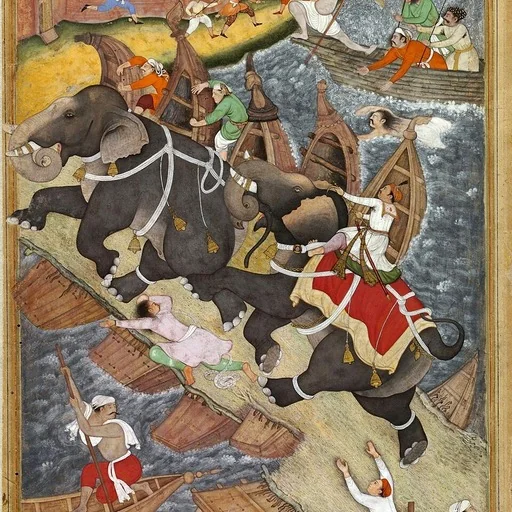
Basāwan, or Basāvan, was an Indian miniature painter in the Mughal style. He was known by his contemporaries as a skilled colorist and keen observer of human nature, and for his use of portraiture in the illustrations…

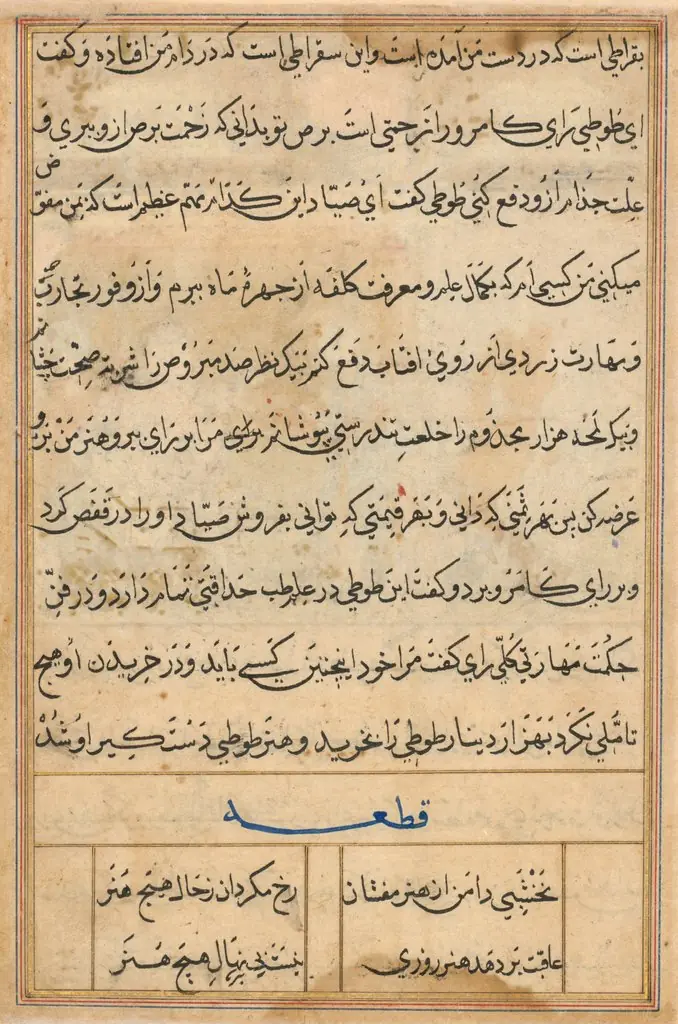 Page from Tales of a Parrot (Tuti-nama): text page
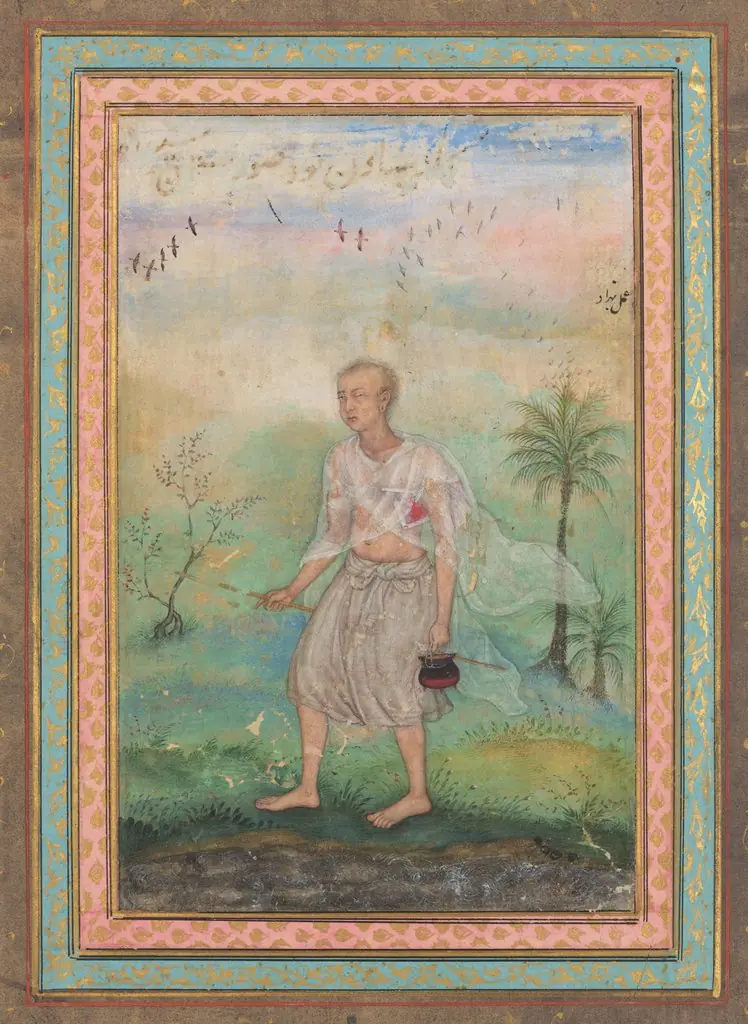 Jain Ascetic Walking Along a Riverbank
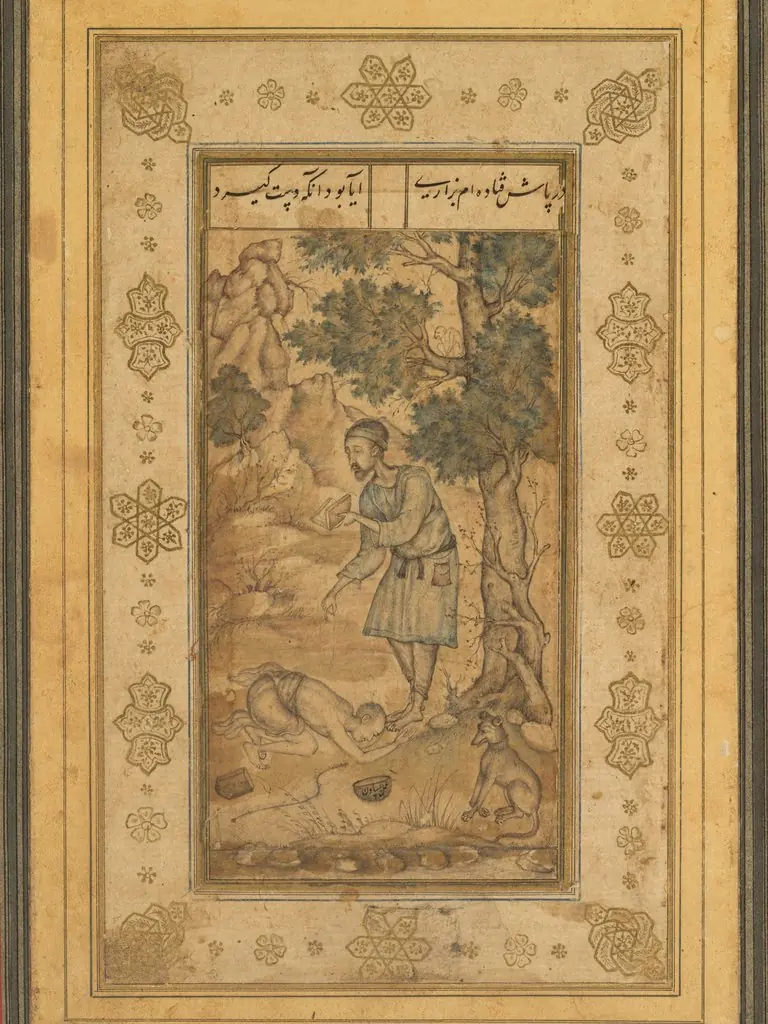 A mendicant bowing before a holy man, from the Prince Salim Album
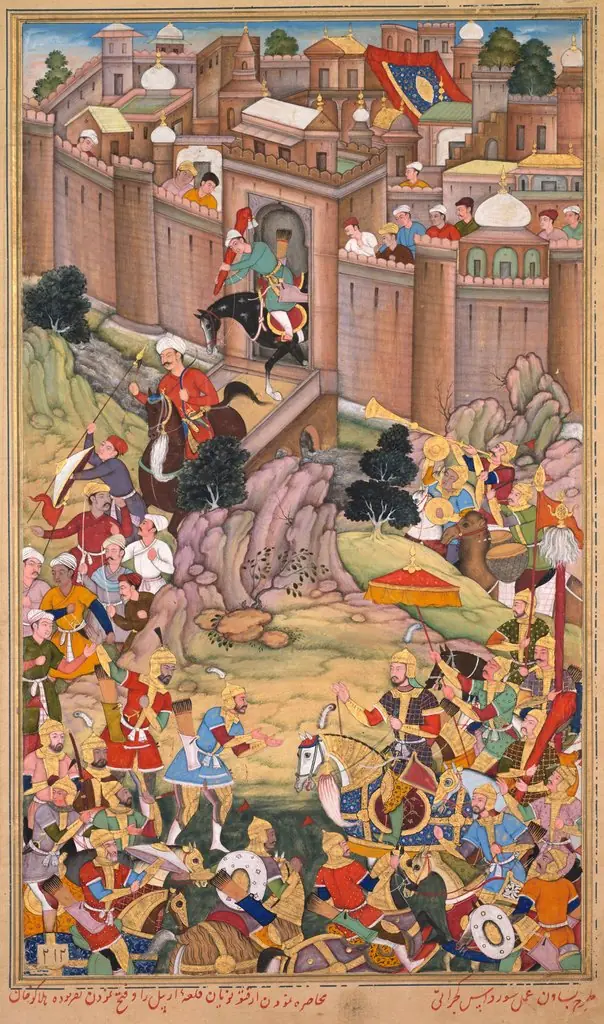 The siege of Arbela in the era of Hulagu Khan, from a Chingiz-nama (Book of Chingiz Khan) of the Jami al-tavarikh (Compendium of Chronicles) of Rashid al-Din (Persian, 1247–1318)
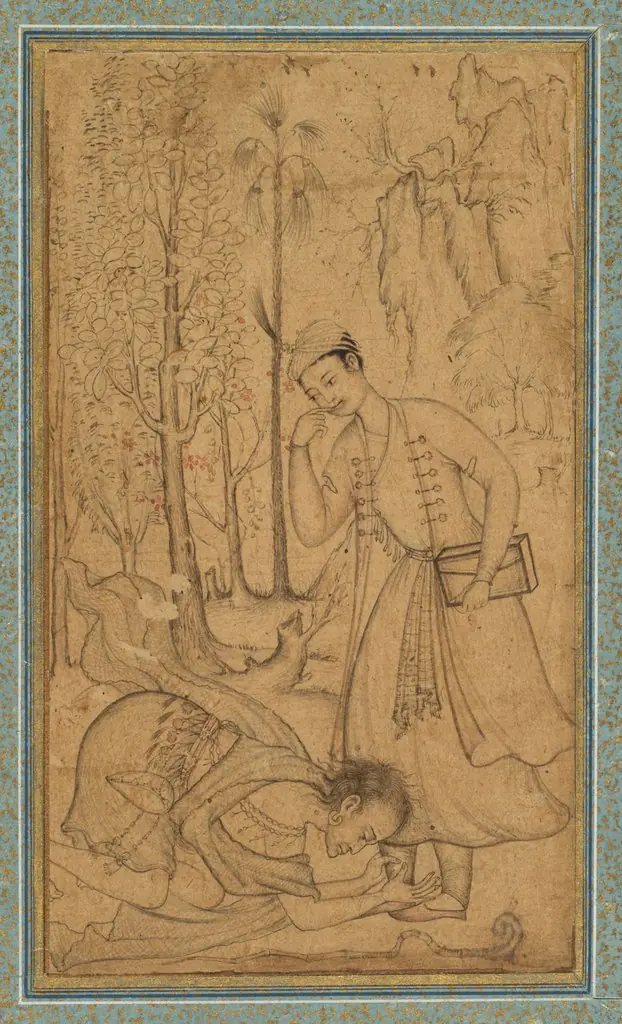 A holy man prostrating himself before a learned prince
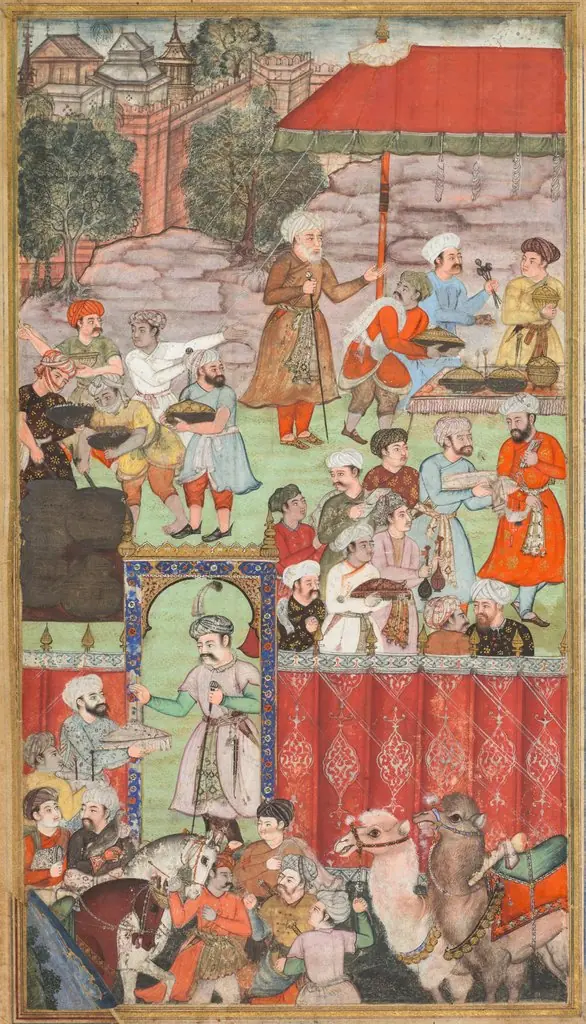 A feast for Babur hosted by his half-brother Jahangir Mirza in Ghazni in May 1505, from a Babur-nama (Memoirs of Babur)
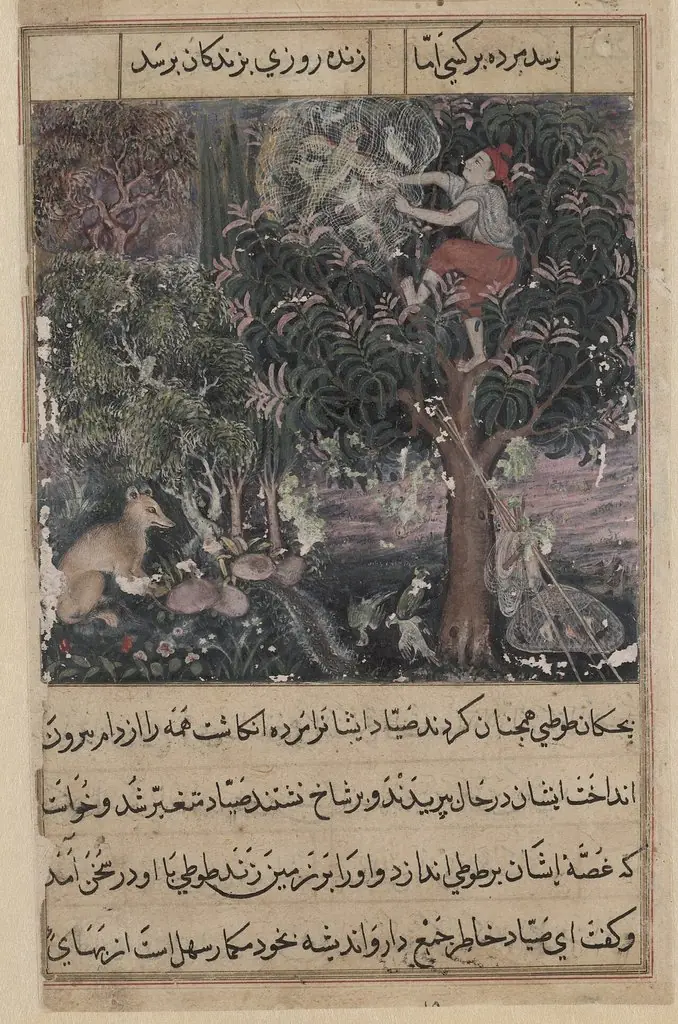 The hunter throws away the baby parrots, who pretend to be dead, and captures the mother, from a Tuti-nama (Tales of a Parrot): Fifth Night
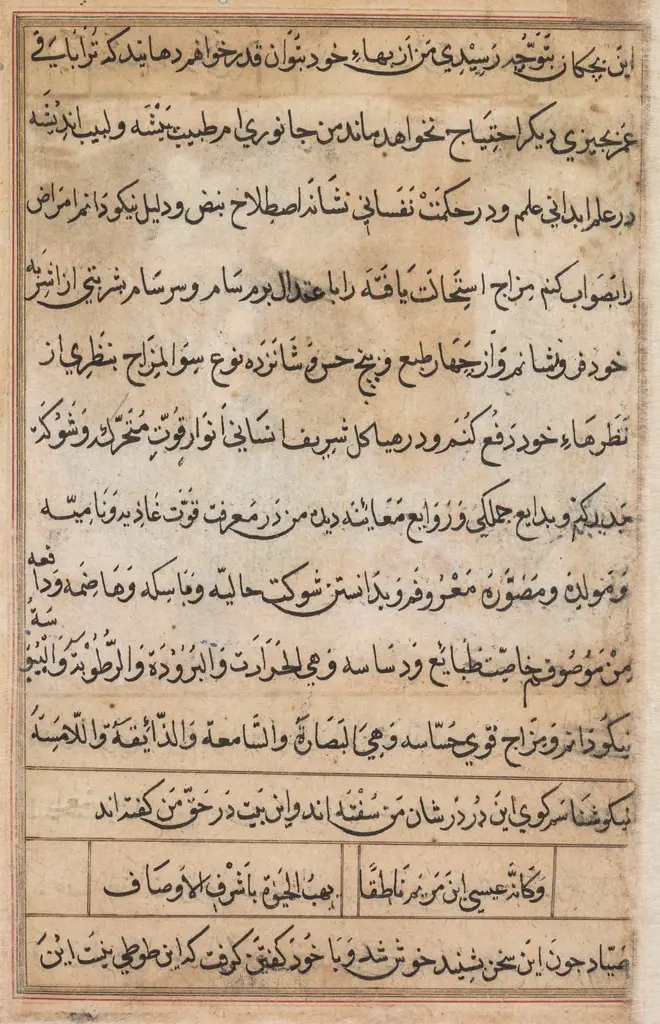 Page from Tales of a Parrot (Tuti-nama): text page
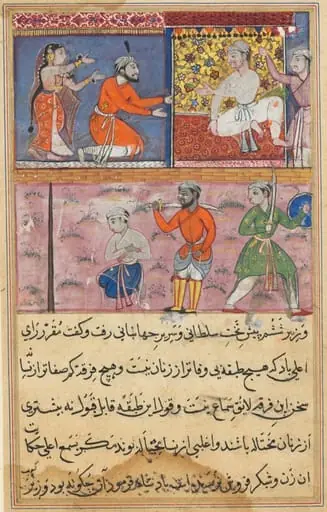 The prince sent back to the place of execution for the sixth time, from a Tuti-nama (Tales of a Parrot): Eighth Night
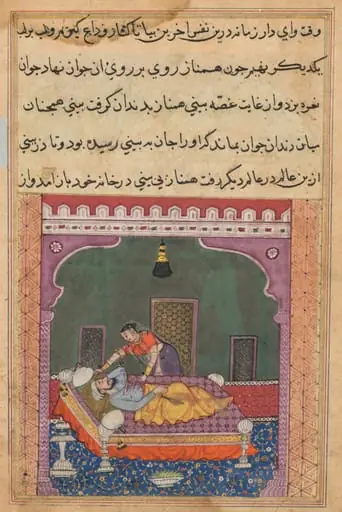 In order to falsely implicate her husband, Hamnaz places a knife by his side and lets the blood dripping from her nose stain his clothes, from a Tuti-nama (Tales of a Parrot): Twenty-fifth Night
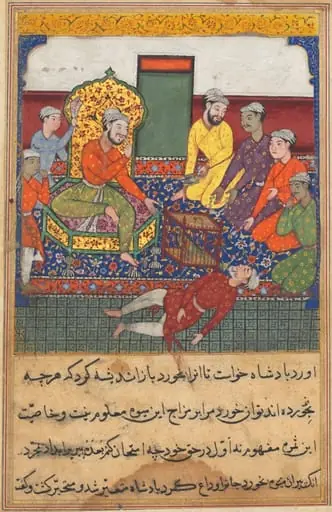 The old man eats of the fruit of the Tree of Life, but drops dead, from a Tuti-nama (Tales of a Parrot): Ninth Night
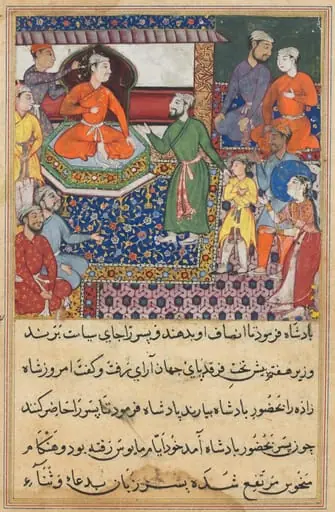 The handmaiden again pleads for the death of the prince, from a Tuti-nama (Tales of a Parrot): Eighth Night
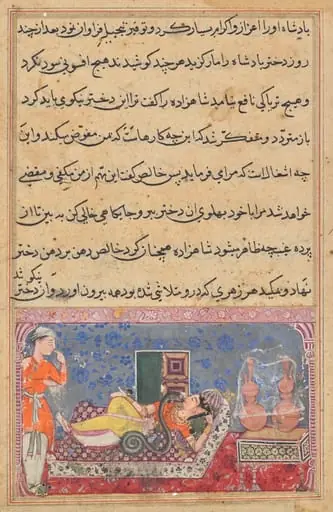 Khalis repays the prince for his kindness by changing into a snake and sucking the poison from the king’s daughter, from a Tuti-nama (Tales of a Parrot): Eighteenth Night
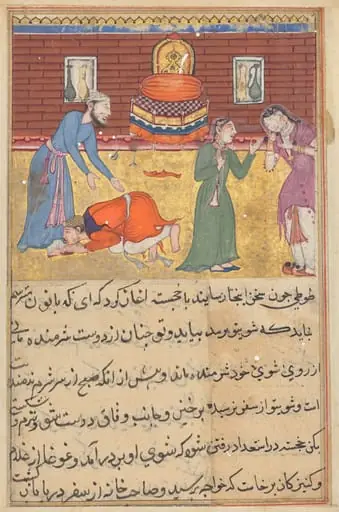 The pious man’s son, now a king, reveals himself to his father; his nurse upbraids his unfaithful mother, from a Tuti-nama (Tales of a Parrot): Fifty-second Night
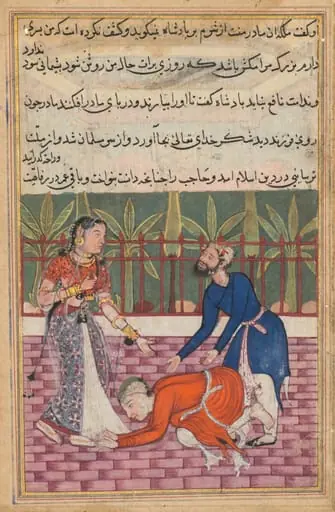 The guard restores the son who falls at his mother’s feet, from a Tuti-nama (Tales of a Parrot): Fiftieth Night
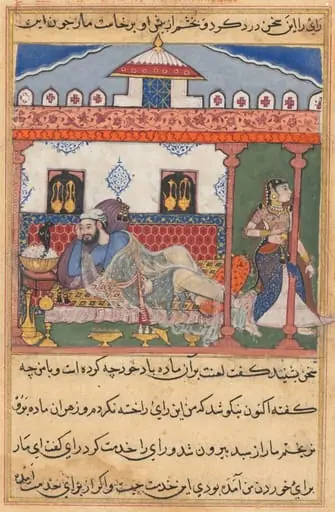 The snake, hidden in a basket of flowers, reveals himself to the Raja who has just sent away his wife, from a Tuti-nama (Tales of a Parrot): Forty-third Night
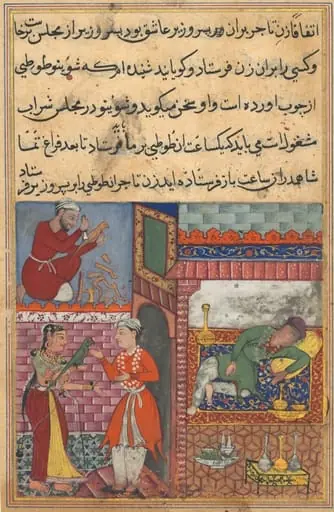 The vizier’s son receives the magic wooden parrot from the wife of the merchant, who is drunk, and has a replica made by a carpenter, from a Tuti-nama (Tales of a Parrot): Tenth Night
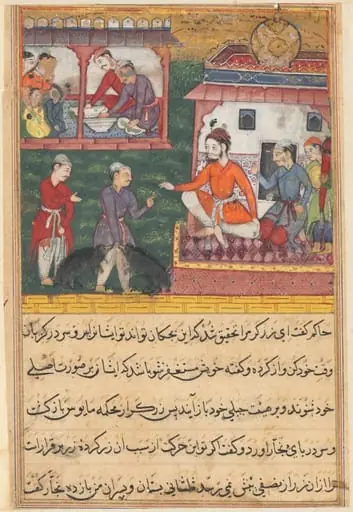 The goldsmith judged; the bear cubs trained by the carpenter as though they were his sons, from a Tuti-nama (Tales of a Parrot): Third Night