Artwork
The Prima Macchina for the Chinea of 1760: The Temple of Neptune
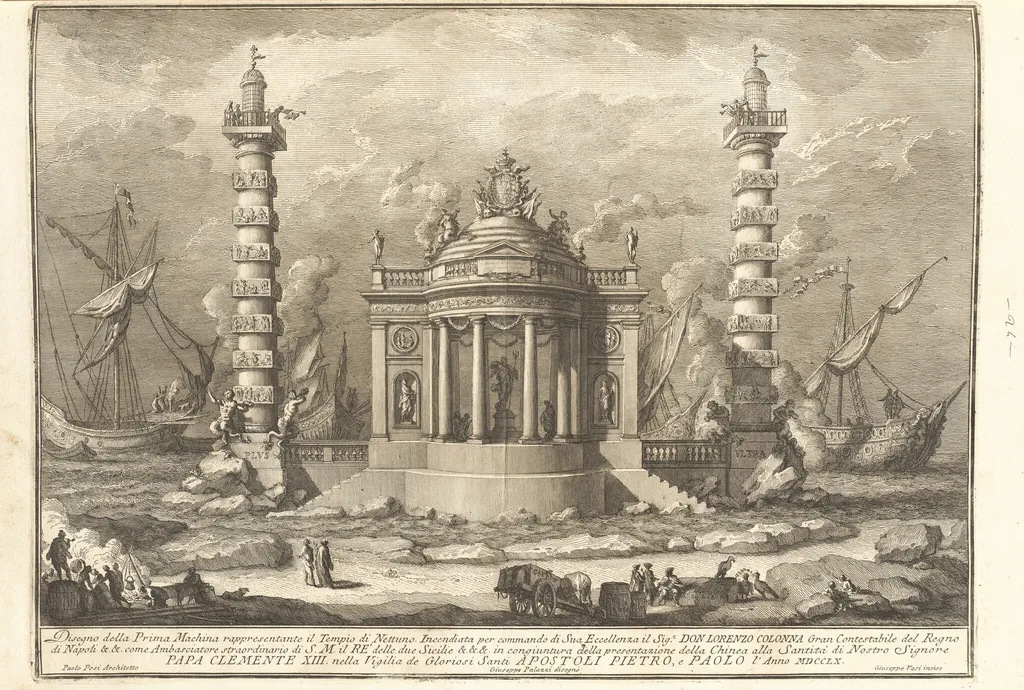
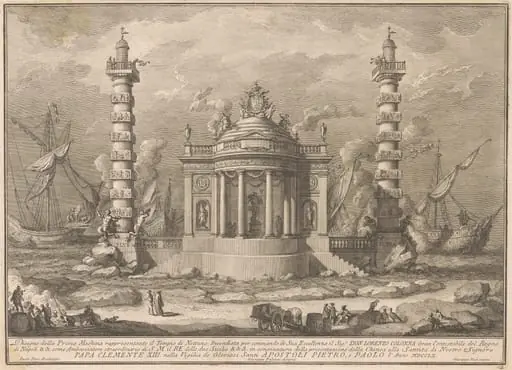
The Prima Macchina for the Chinea of 1760: The Temple of Neptune is an ink print by the Romanticist artist Giuseppe Vasi. It dates from 1760 and is held in the collection of the National Gallery of Art.
About this work
The text at the bottom explains this was built for a special event in 1760, but the details are too long to read here.
This print shows a grand, imaginary temple with tall columns and two towering obelisks on either side. In front, waves crash against rocks while ships sail in the background. People and animals are gathered below, some pulling carts loaded with objects. The temple’s roof has statues, and the whole scene looks like a mix of real and made-up architecture.
The text at the bottom explains this was built for a special event in 1760, but the details are too long to read here. Notice how the artist used shading to make the scene look three-dimensional.
Want to see more like this? Look up etching to learn how artists create prints like this one.
Overview
The Prima Macchina for the Chinea of 1760: The Temple of Neptune is an etching created by Giuseppe Vasi in 1760.
Subject & Meaning
The print depicts a fantastical temple dedicated to Neptune, flanked by obelisks and surrounded by a lively scene of people, animals, and maritime activity. The image blends real and imaginary architectural elements.
Technique & Style
Vasi employed shading techniques to create a sense of depth and dimensionality in the scene. The etching's level of detail, particularly in the temple's architecture and the surrounding activity, showcases the artist's skill.
History & Provenance
The print commemorates a temporary structure built for a special event, the Chinea, in 1760. The text at the bottom provides further context about the occasion, though the specifics are not legible.
Artist & collection

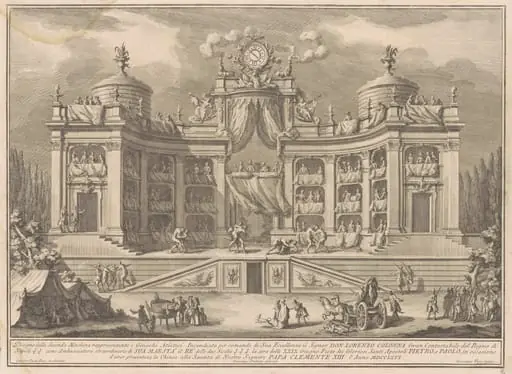 The Seconda Macchina for the Chinea of 1766: A Theater for Athletic Games
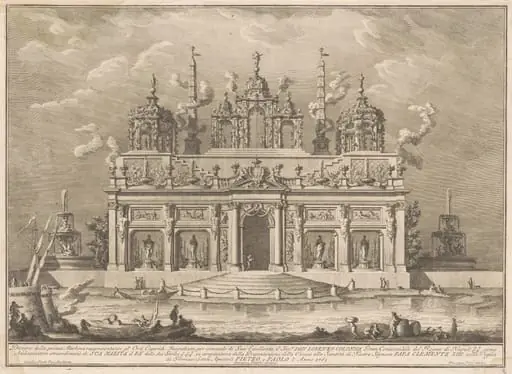 The Prima Macchina for the Chinea of 1765: The Garden of the Hesperides
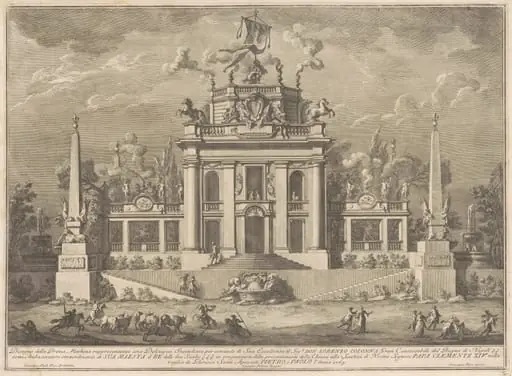 The Prima Macchina for the Chinea of 1769: A "Deliziosa"
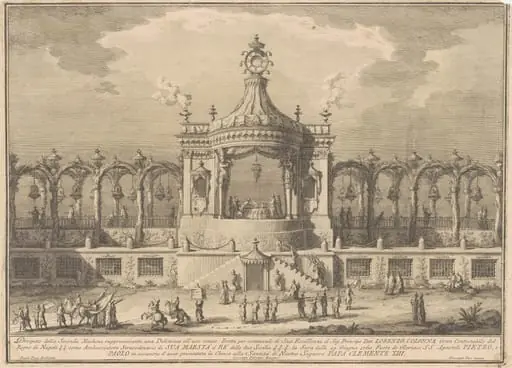 The Seconda Macchina for the Chinea of 1760: A Chinoiserie Pavilion
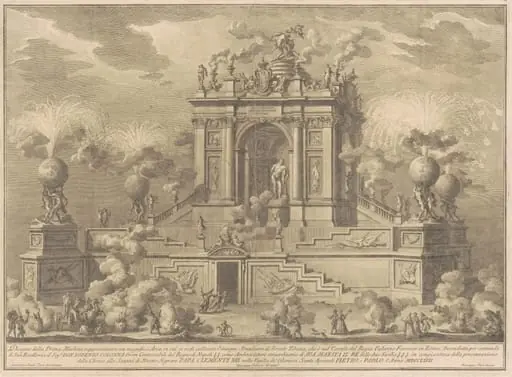 The Prima Macchina for the Chinea of 1767: A Triumphal Arch with the Farnese Hercules
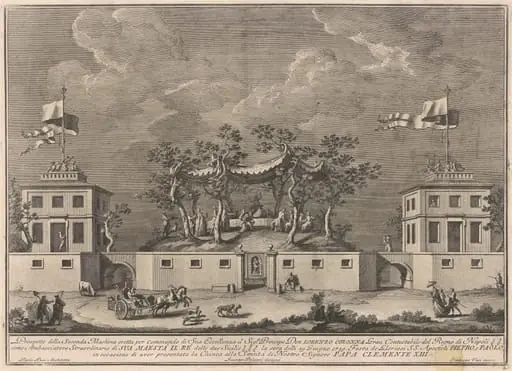 The Seconda Macchina for the Chinea of 1759: A "Deliziosa" with a Bacchanal
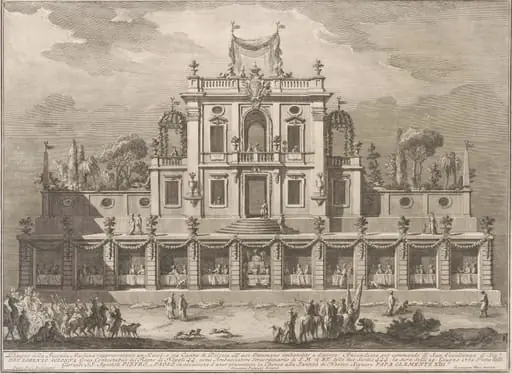 The Seconda Macchina for the Chinea of 1762: A Kiosk, or Pleasure-House in Ottoman Style
 The Seconda Macchina for the Chinea of 1763: The Grape Harvest
 The Prima Macchina for the Chinea of 1760: The Temple of Neptune
 The Prima Macchina for the Chinea of 1771: The Temple of Asclepius
 The Prima Macchina for the Chinea of 1771: The Temple of Asclepius
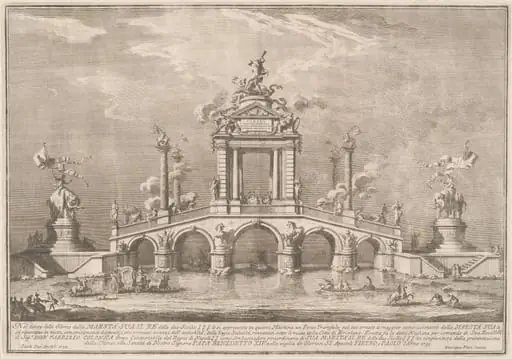 The Prima Macchina for the Chinea of 1755: A Triumphal Bridge with Antiquities from Herculaneum
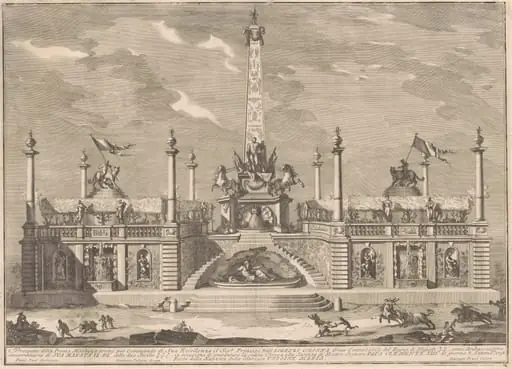 The Prima Macchina for the Chinea of 1758: A "Deliziosa" with Hanging Gardens
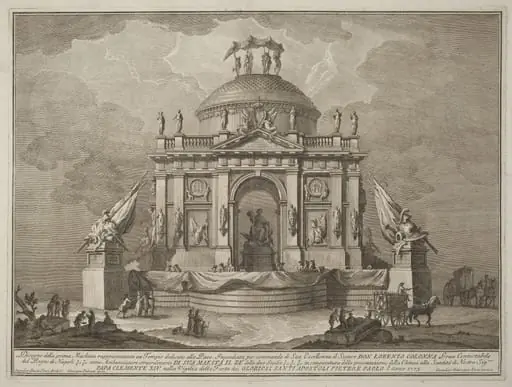 The Prima Macchina for the Chinea of 1773: The Temple of Peace
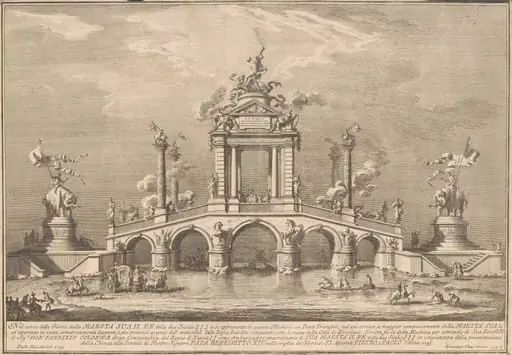 The Prima Macchina for the Chinea of 1755: A Triumphal Bridge with Antiquities from Herculaneum
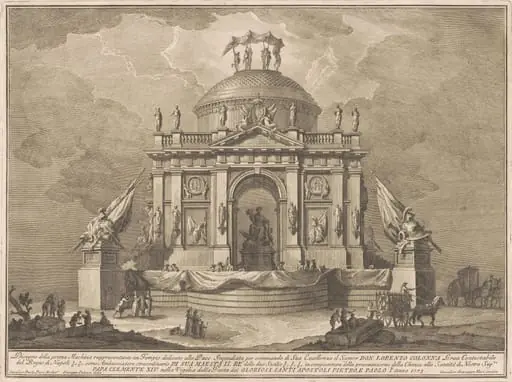 The Prima Macchina for the Chinea of 1773: The Temple of Peace
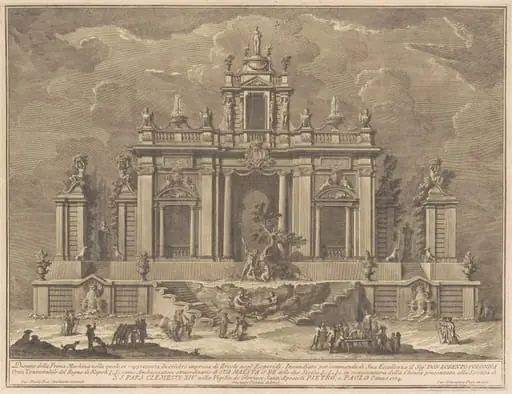 The Prima Macchina for the Chinea of 1774: Hercules and the Dragon in the Garden of the Hesperides