Artwork
The Ghat of the Nepalese Pagoda, Bénarès
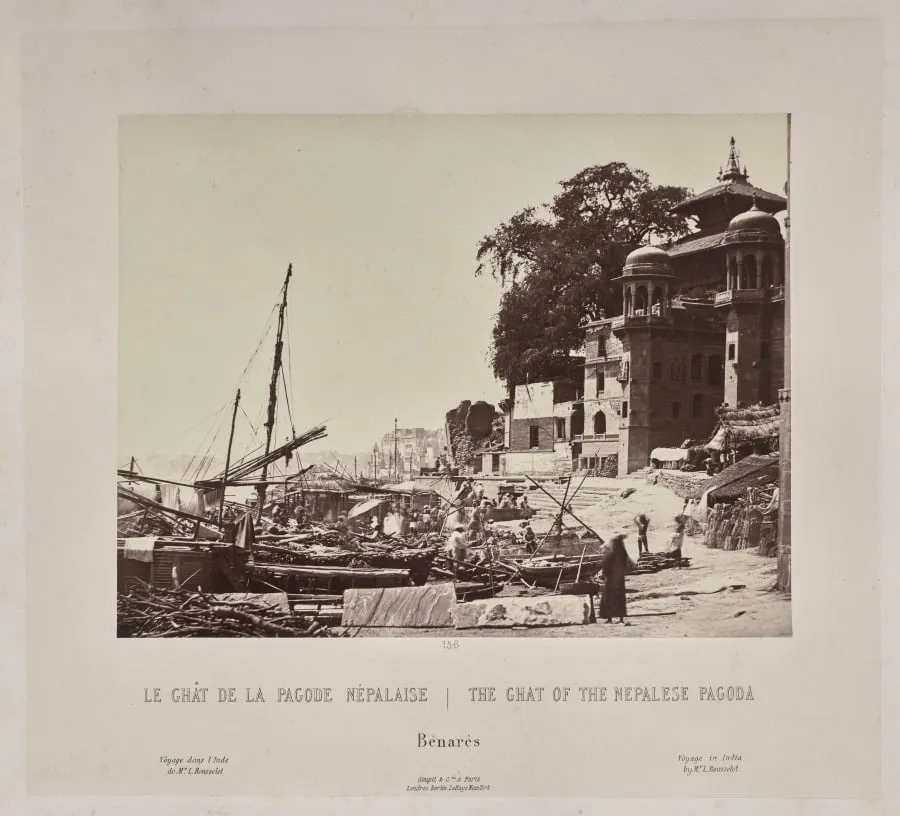
The Ghat of the Nepalese Pagoda, Bénarès is a photography by the Impressionist artist Louis-Théophile Marie Rousselet. It dates from 1866 and is held in the collection of the Cleveland Museum of Art. Taken in Varanasi during the 1860s, this photograph captures the ghats along the Ganges River as seen by French traveler Charles Rousselet.
About this work
You see a busy riverside in Varanasi, India—stone steps, a small pagoda, and people washing clothes or praying in the golden light.
You see a busy riverside in Varanasi, India—stone steps, a small pagoda, and people washing clothes or praying in the golden light.
Rousselet drew this while traveling through India in the 1860s. He was so struck by the sights that he learned photography there, trying to hold onto the colors and shapes he saw. The drawing feels quick, like a sketch from a notebook.
If you like this quiet, on-the-spot feel, look up the subject *france, 19th century* for more travel scenes.
Overview
Taken in Varanasi during the 1860s, this photograph captures the ghats along the Ganges River as seen by French traveler Charles Rousselet. Initially a draftsman, Rousselet turned to photography after finding his sketches inadequate to convey the visual richness of India. His images from this journey document both sacred and secular landscapes, reflecting a personal effort to preserve fleeting impressions through a new medium.
Subject & Meaning
The image centers on the stepped riverbank of Varanasi, where devotees gather for ritual bathing and prayer. A small pagoda rises above the stone terraces, framed by figures engaged in daily acts of devotion and domestic labor. The composition emphasizes the layered coexistence of architecture, spirituality, and routine life, offering a quiet record of a place where religious practice and daily existence are inseparable.
Technique & Style
Rousselet’s photographic approach is direct and unembellished, favoring natural light and balanced framing over theatrical staging. The golden hour illumination enhances texture in the stone steps and water, while the presence of human figures grounds the scene in lived experience. His technique reflects an emerging documentary sensibility, prioritizing clarity and spatial depth over artistic embellishment.
History & Provenance
Rousselet produced this image during an extended journey through northern India, where he documented sites associated with Sultanate, Rajput, and Mughal histories. The photograph was later included in a published album of his travels, one of the earliest Western photographic records of Indian religious architecture. Its survival offers insight into how European travelers engaged with Indian cultural landscapes during the colonial period.
Context
In the 1860s, photography was still a novel tool for ethnographic and topographical recording in India. While British officials often used it for administrative purposes, Rousselet’s work reflects a more personal, aesthetic motivation. His focus on Varanasi aligns with growing European interest in Hindu sacred sites, though his approach remains observational rather than interpretive.
Legacy
Rousselet’s photographs contributed to a broader 19th-century archive of Indian landscapes, influencing later travelers and scholars. His transition from drawing to photography underscores a shift in how visual documentation was conceived — from idealized representation to empirical record. His work remains a quiet but significant part of early photographic history in South Asia.
Artist & collection
Artist
Louis-Théophile Marie Rousselet
Louis-Théophile Marie Rousselet (1845–1929) was a French artist.

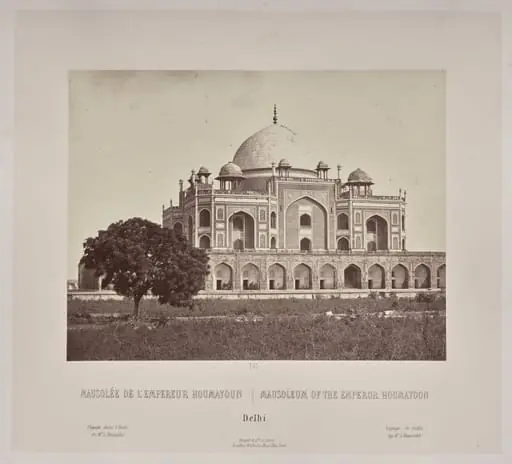
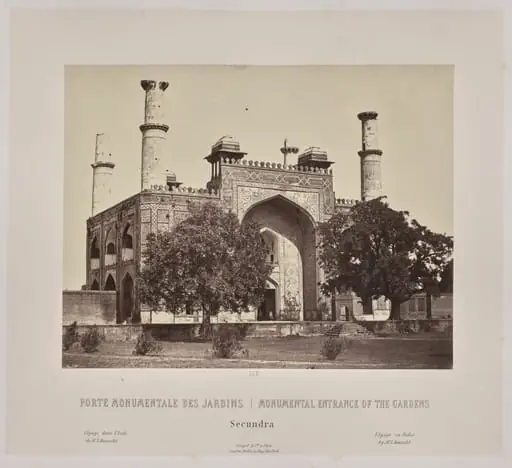
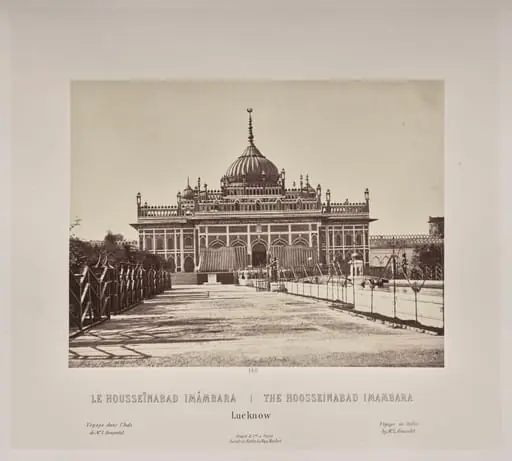
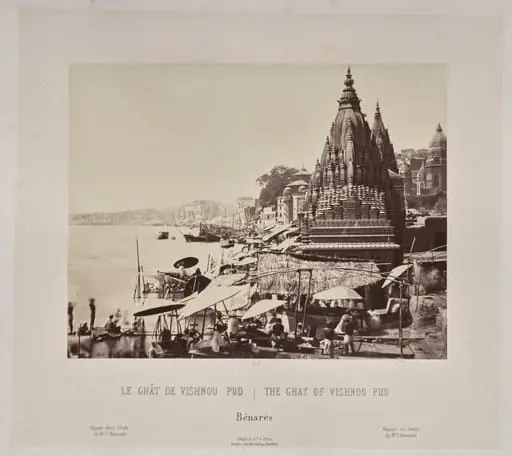 The Ghat of Vishnoo Pud, Bénarès
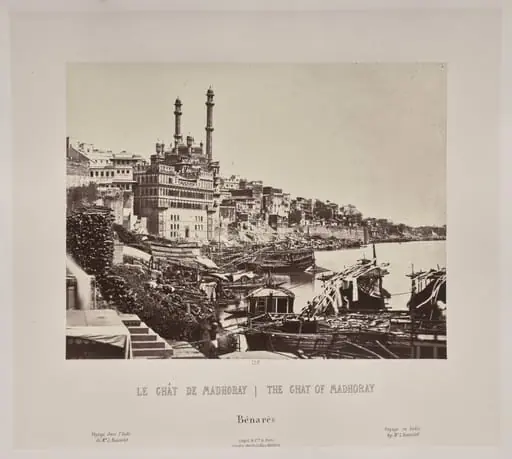 The Ghat of Madhoray, Bénarès
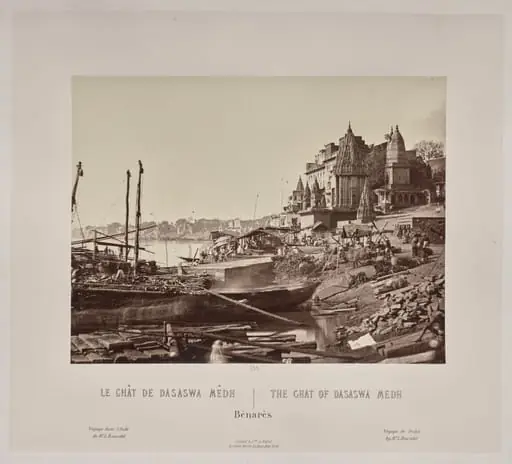 The Ghat of Dasaswa Medh, Bénarès
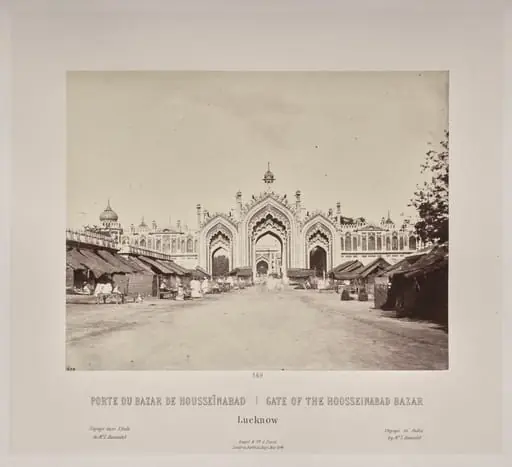 Gate of the Hoosseinabad Bazar, Lucknow
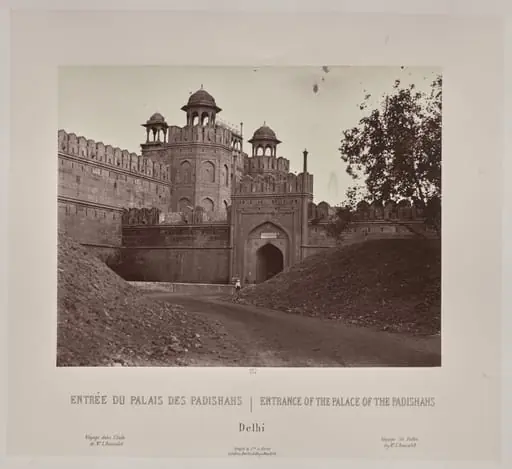 Entrance of the Palace of the Padishahs, Delhi
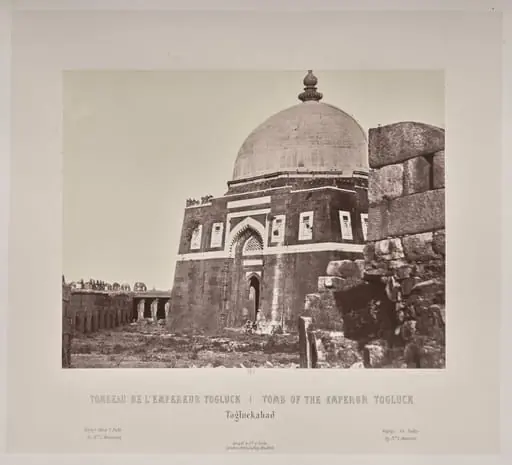 Tomb of the Emperor Togluck, Togluckabad
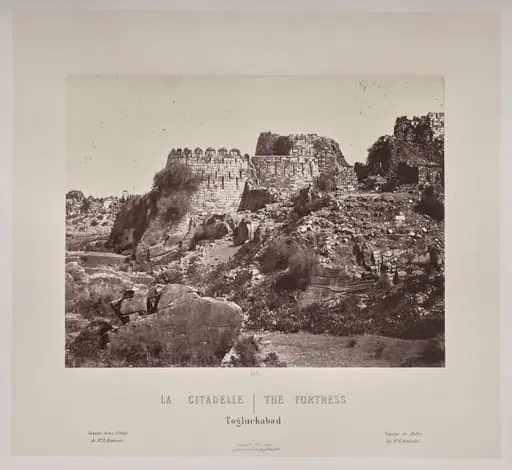 The Fortress, Togluckabad
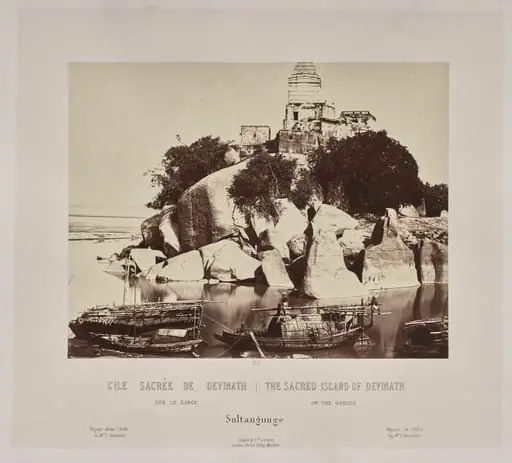 The Sacred Island of Devinath on the Ganges, Sultangunge
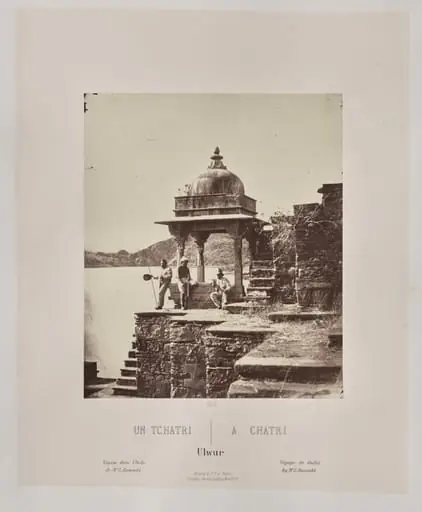 A Chatri, Ulwur