Artwork
Cebren (The River God)
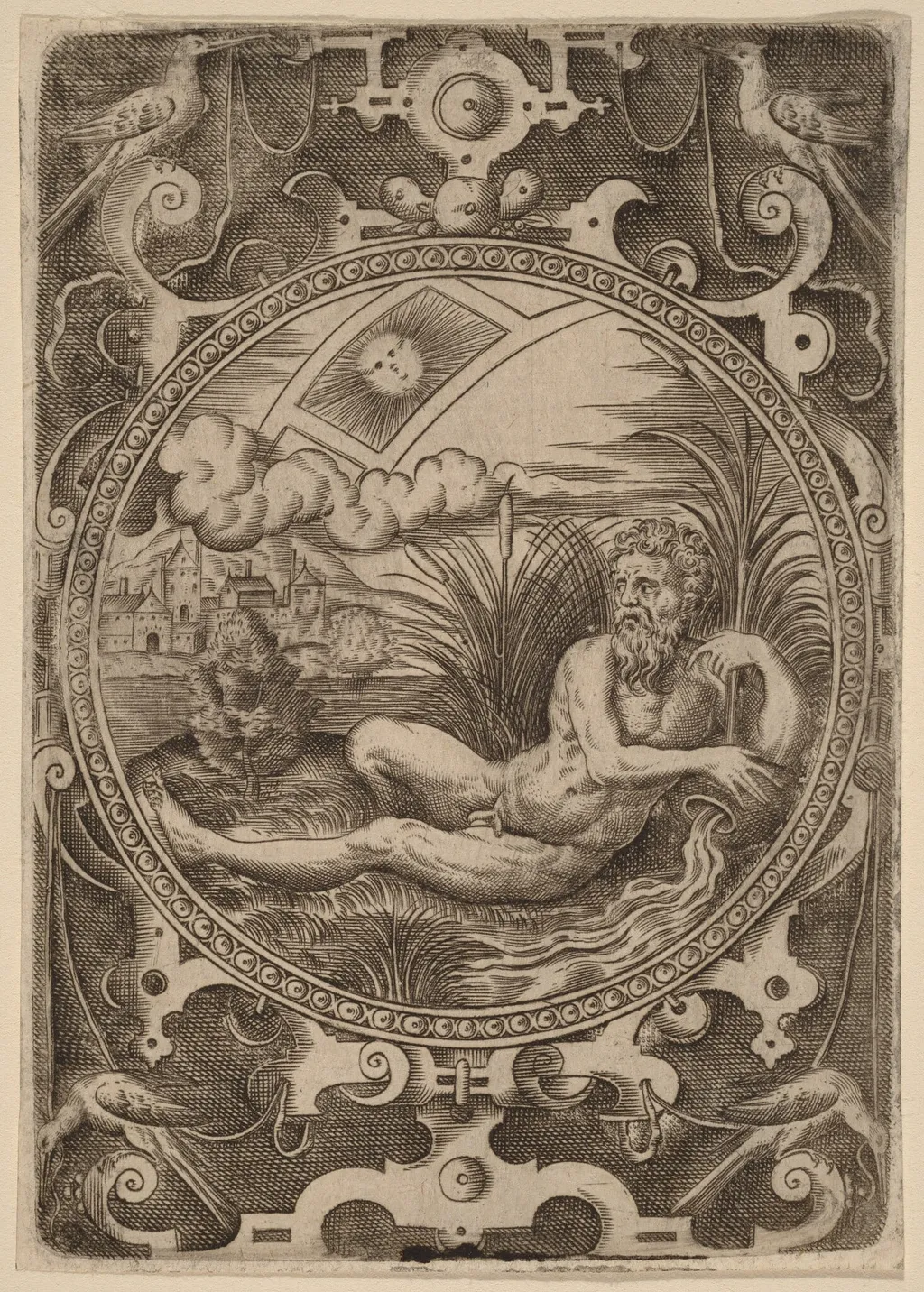
Cebren (The River God) is an ink print by the Renaissance artist Netherlandish 16th Century. It dates from 1564 and is held in the collection of the National Gallery of Art.
About this work
Overview
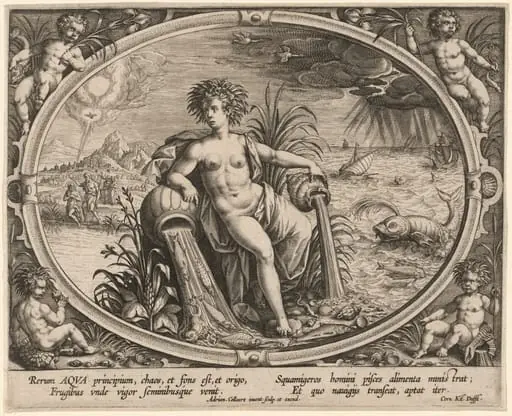
Cebren (The River God) is an engraving executed on laid paper, presenting a mythological figure in a tranquil setting. The composition centers on a bearded, wavy‑haired man reclining upon a wave, with a small settlement perched on a hill behind him under a radiant sun. The border is filled with ornamental swirls, shells and abstract forms that appear to drift around the central image.
Subject & Meaning
The reclining figure is identified as the river deity Cebren, a personification of a watercourse in classical mythology. His relaxed posture and the surrounding aquatic motifs emphasize the god’s dominion over the river, while the distant town suggests the beneficence of the waterway to human settlement. The surrounding decorative elements reinforce the theme of fluidity and natural abundance.
Technique & Style
The print is rendered entirely through line engraving, a process in which the artist incises fine grooves into a metal plate to hold ink. Varying line density creates tonal gradations, giving the figure and landscape a carved appearance. The ornamental border employs intricate, repetitive motifs typical of early modern print design, enhancing the overall decorative quality of the work.
History & Provenance
The engraving’s date and creator are not specified in the available information, and its ownership record is likewise undocumented. It exists as a printed work on laid paper, a material commonly used for fine prints from the 16th to 19th centuries, indicating it was likely produced within that historical window.
Context
River gods were a frequent subject in classical and Renaissance art, symbolizing the life‑giving and sometimes destructive power of water. This print aligns with that tradition, translating the mythological theme into a reproducible medium that could reach a broader audience than a singular painting or sculpture.
Artist & collection

Artist
This artist carved scenes with fine lines, mostly religious and mythological ones.