Artwork
Judith with the Head of Holofernes
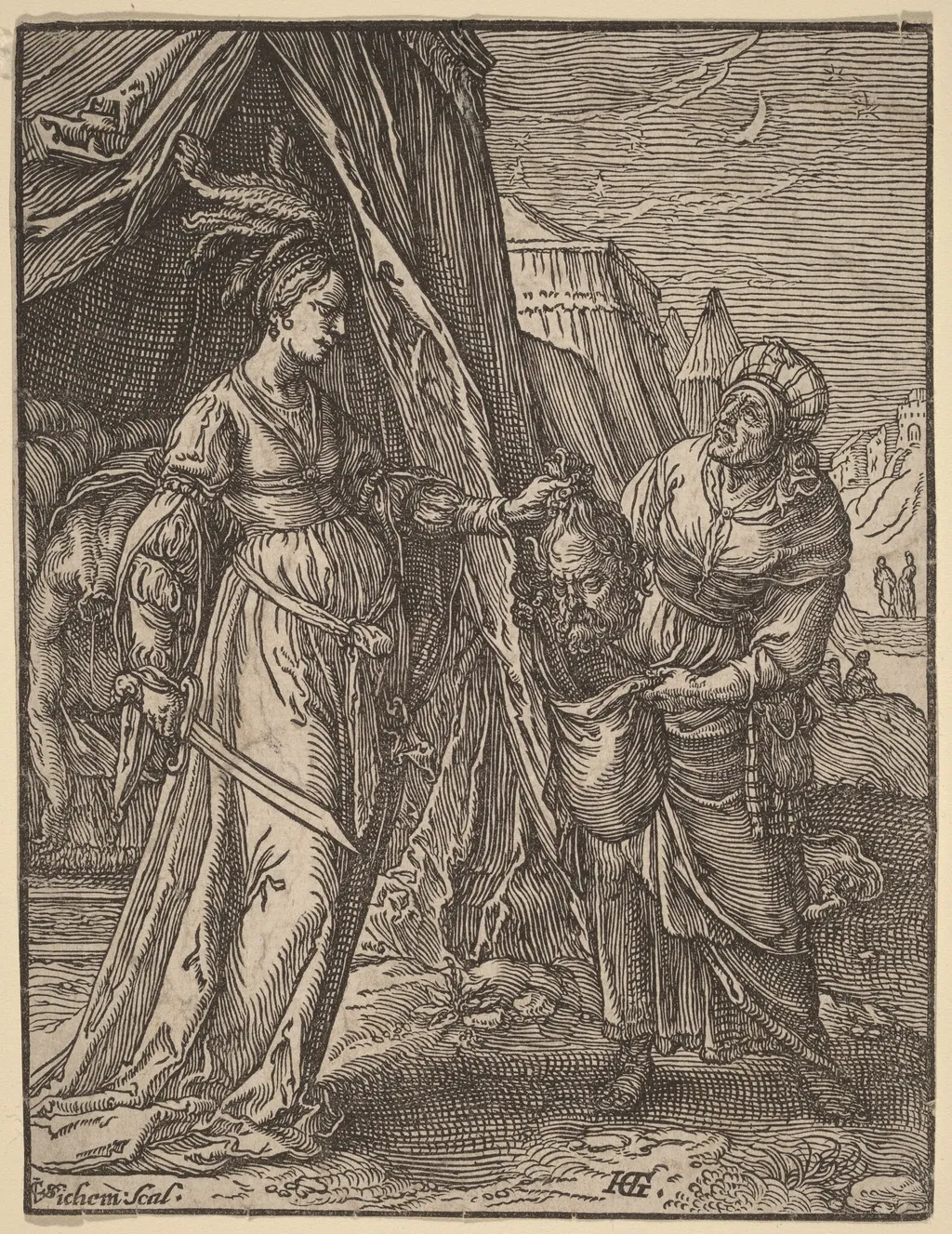
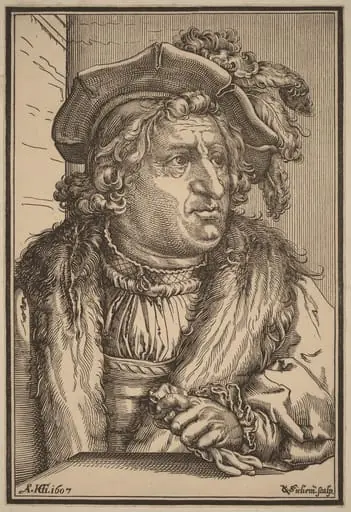
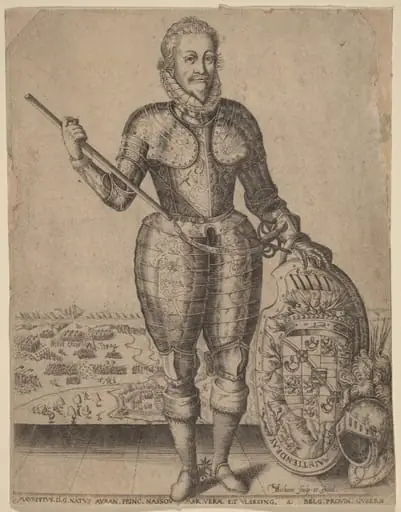
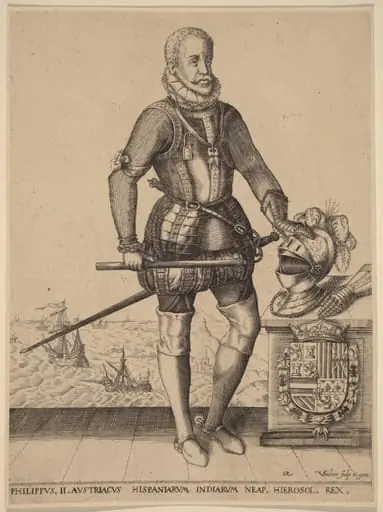
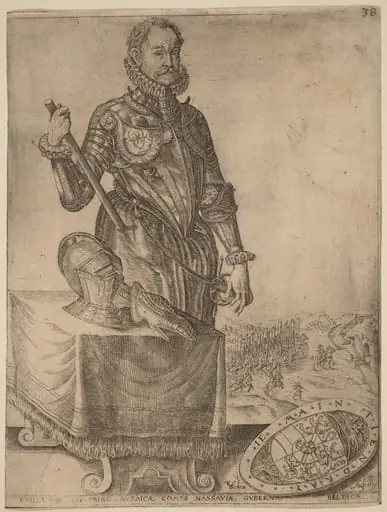
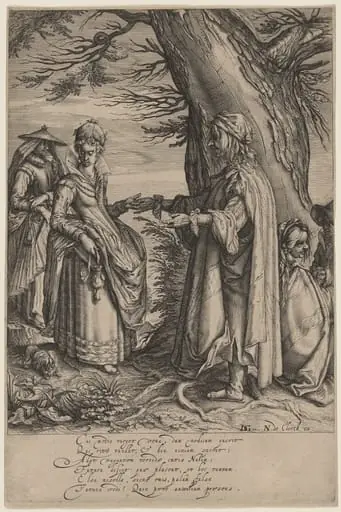
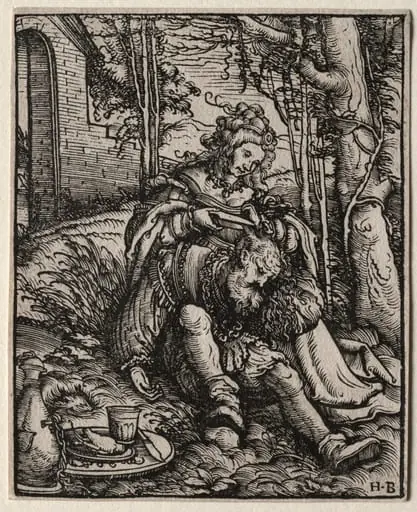
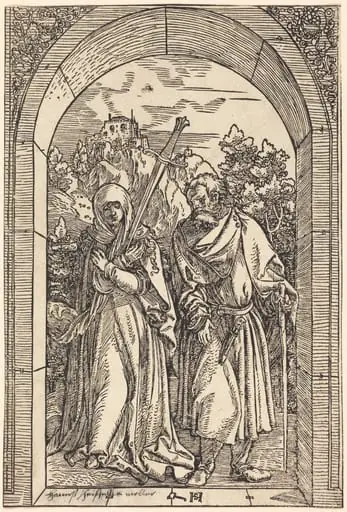
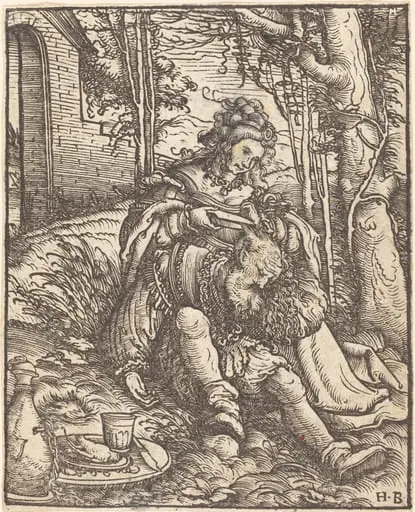
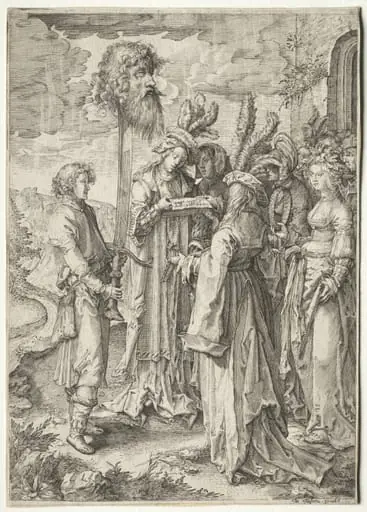
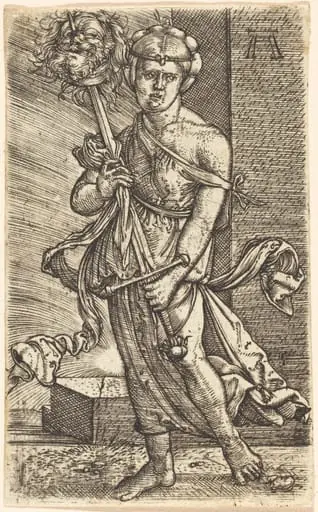
Judith with the Head of Holofernes is an ink print by the Renaissance artist Christoffel van Sichem I. It dates from 1588 and is held in the collection of the National Gallery of Art.
About this work
Overview
Created in 1588 by Christoffel van Sichem I, this woodcut depicts the biblical figure Judith holding the severed head of Holofernes. Printed on laid paper, the image belongs to a tradition of Northern European religious prints that illustrated Old Testament heroines. The composition centers on Judith’s poised stance, contrasting her calm resolve with the violent act she has just committed.
Subject & Meaning
The scene draws from the Book of Judith, in which the widow Judith saves her people by deceiving and beheading the Assyrian general Holofernes. Van Sichem emphasizes Judith’s agency and moral conviction, portraying her not as a victim but as a decisive agent of divine justice. Her expression and posture convey quiet authority, reinforcing the narrative’s theme of faith overcoming brute force.
Technique & Style
Executed as a woodcut, the image relies on bold, incised lines to define form and shadow. The artist uses contrast between solid black areas and delicate hatching to model Judith’s figure and the turbulent background. The stylized drapery and flattened spatial depth reflect conventions of late 16th-century Northern printmaking, prioritizing narrative clarity over naturalistic detail.
History & Provenance
The print was produced during a period of religious upheaval in the Netherlands, when biblical stories were frequently used to convey moral and political messages. Van Sichem, active in Utrecht, specialized in devotional prints for domestic use. This work likely circulated among Protestant audiences who valued Judith as a symbol of righteous resistance against tyranny.
Context
In the late 1500s, images of Judith were popular in Northern Europe, often linked to contemporary struggles against oppression. Van Sichem’s version aligns with a broader trend of depicting female biblical figures as moral exemplars. The woodcut format made such imagery accessible, allowing religious narratives to reach a wider, non-elite audience beyond painted altarpieces.
Legacy
Van Sichem’s print contributed to the enduring visual tradition of Judith as a symbol of courage and divine intervention. Though not widely known today, it reflects the role of print culture in shaping religious identity during the Reformation. Its straightforward composition and emotional clarity influenced later generations of printmakers working in similar devotional genres.
Artist & collection