Artwork
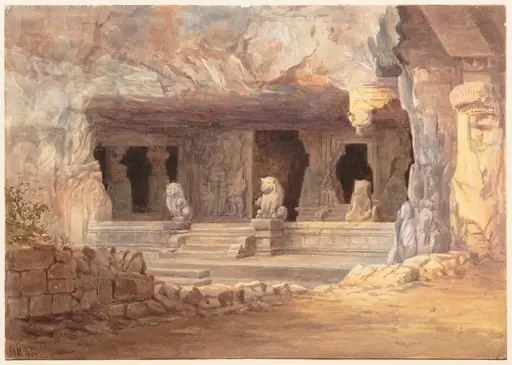
Buddha, Caves of Ellora
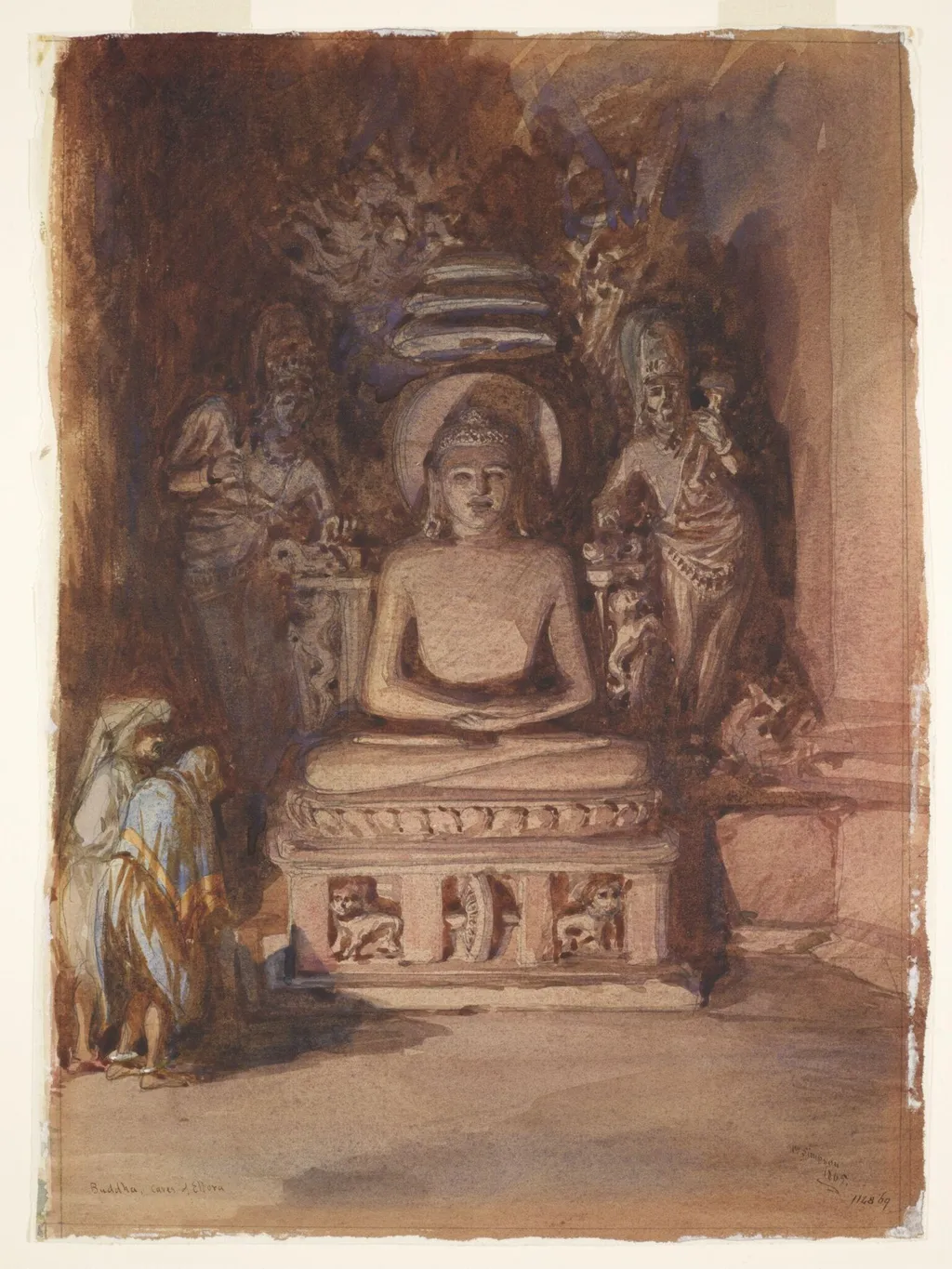
Buddha, Caves of Ellora is a paint painting by the Impressionist artist William Simpson. It dates from 1865 and is held in the collection of the Victoria and Albert Museum.
About this work
Overview
This watercolour painting, created by William Simpson, depicts a meditating figure from the Ellora cave complex in India. The artwork was completed in London after Simpson's travels to India.
Subject & Meaning
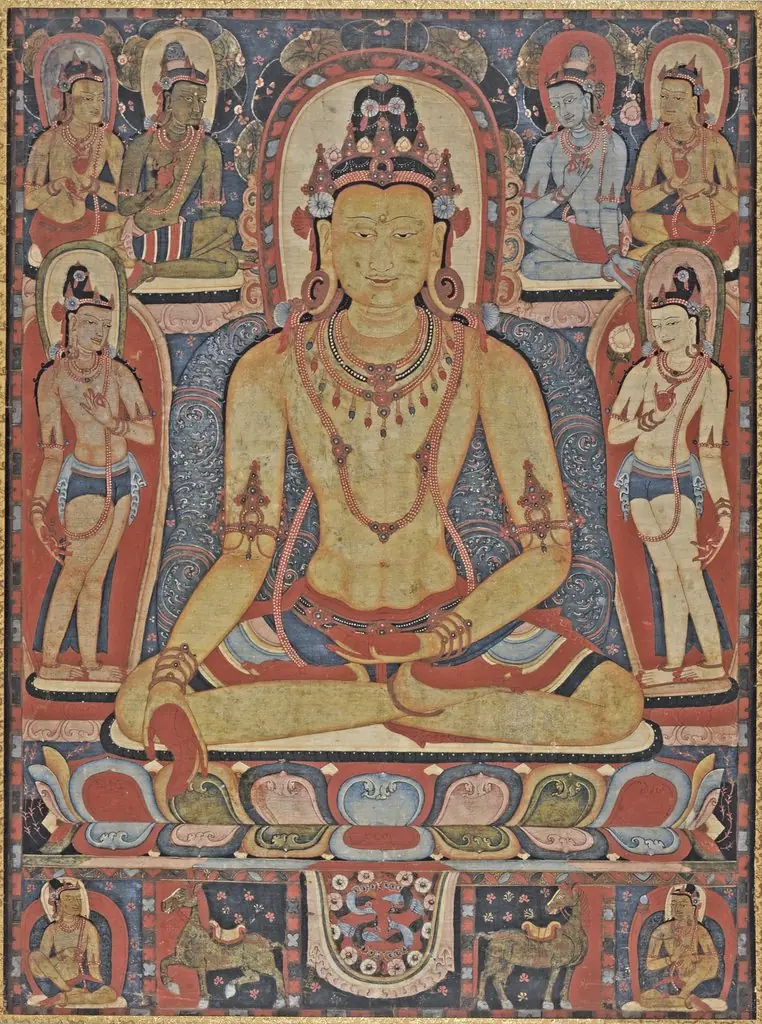
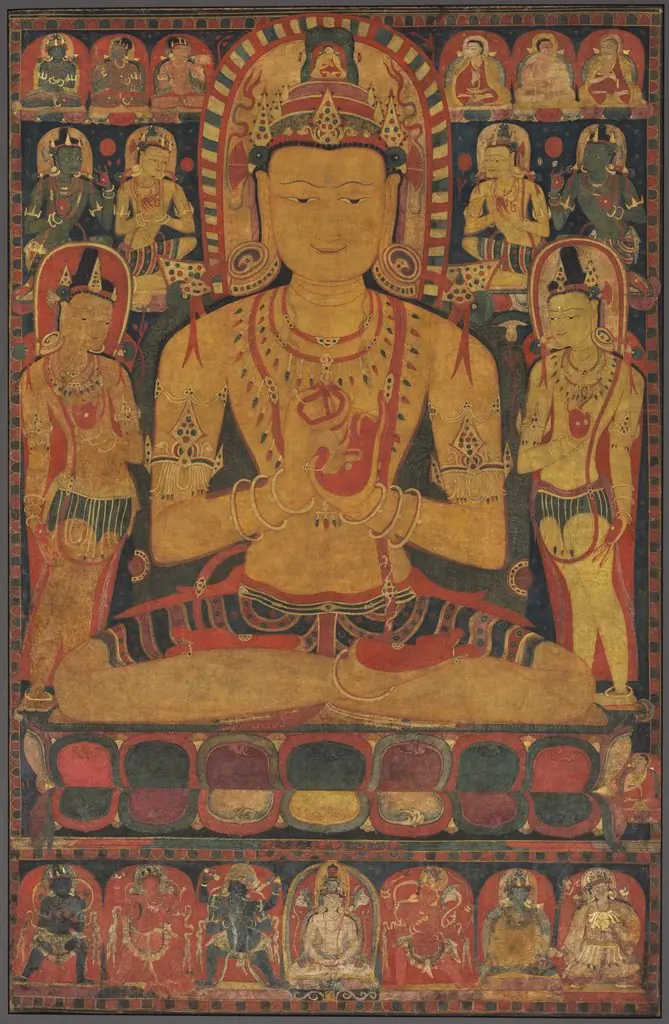
The painting shows a Jain Tirthankara seated on a lotus throne, flanked by chauri bearers. Although Simpson labelled it 'Buddha', the figure's nudity indicates it is a Jain deity, not Buddhist.
Technique & Style
Simpson's work is based on pencil sketches made at Ellora in 1862. The watercolour was finished in London, part of a larger project to document Indian sites through lithographed illustrations.
History & Provenance
Simpson travelled to India in 1859 to record sites related to the Indian Mutiny. Day and Sons commissioned his work, but the firm faced financial difficulties during his absence, eventually going into debt.
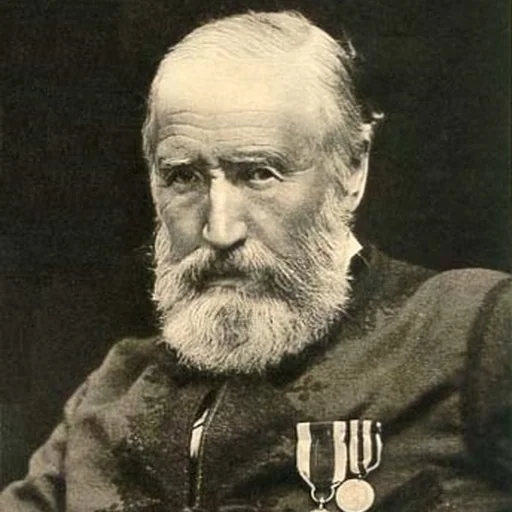
Artist & collection