Artwork
Picturesque Architecture in Paris, Ghent, Antwerp, Rouen: South Porch of Chartres Cathedral, Chartres, France
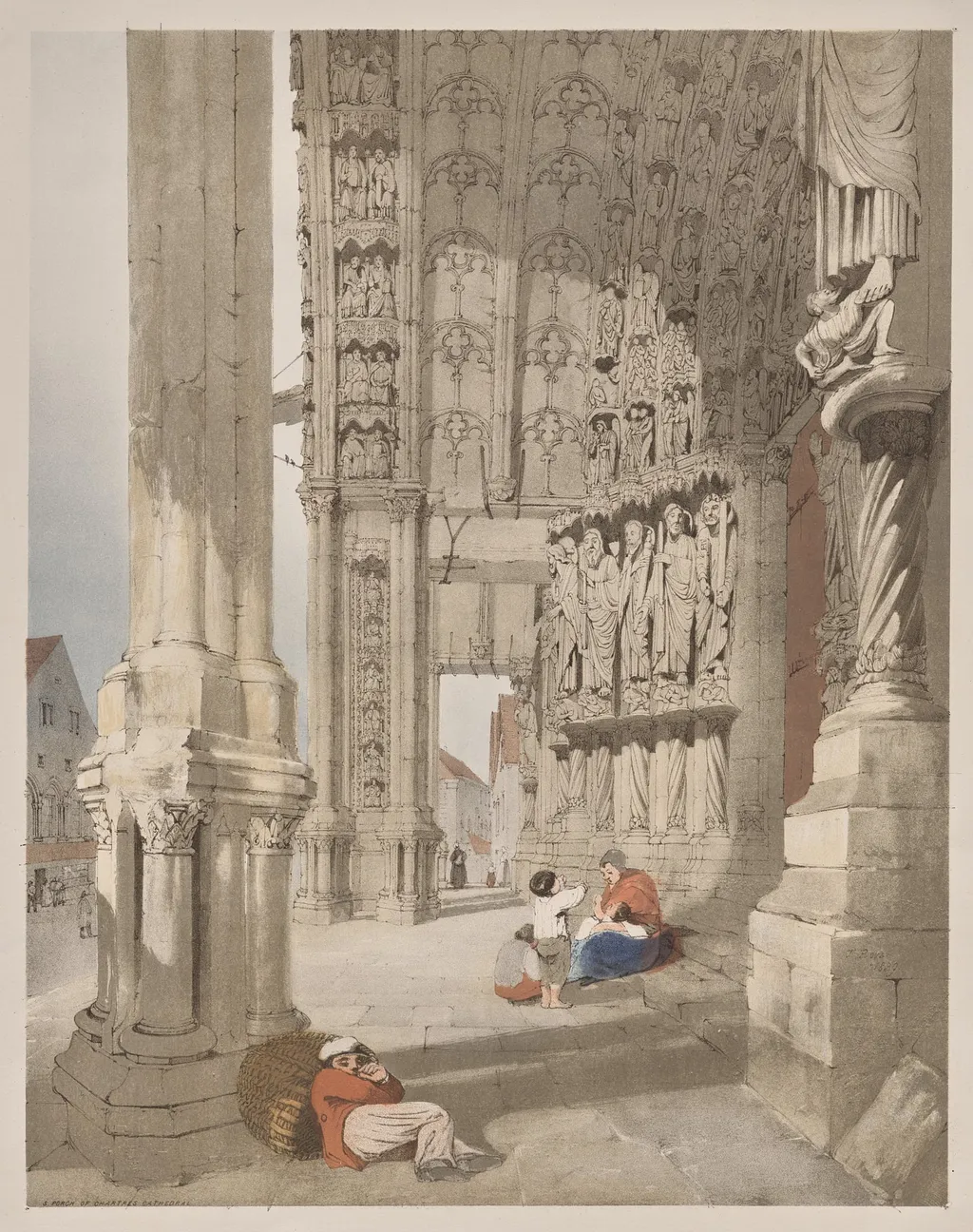
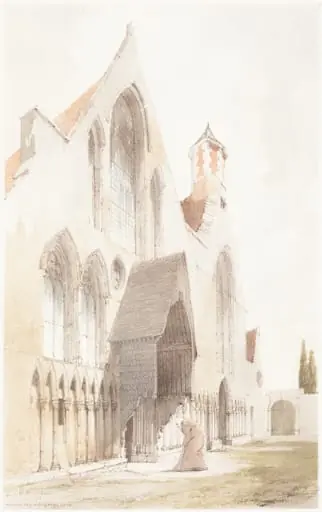
Picturesque Architecture in Paris, Ghent, Antwerp, Rouen: South Porch of Chartres Cathedral, Chartres, France is a work on paper by the Romanticist artist Thomas Shotter Boys. It dates from 1839 and is held in the collection of the Cleveland Museum of Art.
About this work
Overview
Thomas Shotter Boys produced this watercolour and lithograph as part of a broader series documenting European architectural landmarks.
Thomas Shotter Boys produced this watercolour and lithograph as part of a broader series documenting European architectural landmarks. Created in 1839, the work captures the south porch of Chartres Cathedral, emphasizing its Gothic structure through precise draftsmanship and layered print techniques. Boys, an English artist known for topographical accuracy, used this medium to disseminate detailed views of historic sites to a wider audience beyond direct observation.
Subject & Meaning
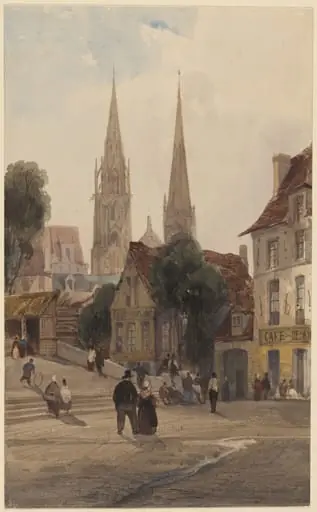
The composition centers on the cathedral’s elaborately carved southern entrance, with rows of sculpted figures in niches above the portal. Below, small human figures—likely pilgrims or locals—interact with the steps, grounding the monumental architecture in daily life. The juxtaposition suggests a quiet reverence for sacred space amid ordinary activity, reflecting a 19th-century interest in architecture as both cultural artifact and lived environment.
Technique & Style
Boys employed fine, controlled lines for the stonework, using textured strokes to mimic the roughness of medieval carving. In contrast, the human figures are rendered with softer, looser strokes, creating visual hierarchy and movement. The lithographic process allowed for tonal gradations that enhanced depth, while the watercolour washes added subtle atmospheric warmth, blending documentary precision with aesthetic sensitivity.
History & Provenance
The work originated from Boys’s 1839 publication series, which aimed to record significant ecclesiastical and civic buildings across northern France and the Low Countries. It was likely produced for private collectors and architectural enthusiasts interested in Gothic revival. The plate was printed and distributed in England, contributing to the period’s growing appetite for illustrated travel and historical preservation.
Context
During the 1830s, Romanticism influenced artists to value emotional resonance in historical subjects. Boys’s focus on weathered stone and human scale aligned with broader cultural movements that sought to revive medieval aesthetics and document heritage before industrialization altered the landscape. His work resonated with antiquarian circles and echoed the scholarly efforts of figures like Viollet-le-Duc.
Legacy
Boys’s series provided a visual archive of pre-industrial European architecture, preserving details now altered or lost. While not widely celebrated today, his prints served as reference materials for architects and historians in the 19th century. His method of integrating human presence within architectural settings influenced later topographical artists seeking to balance structure with social context.
Artist & collection
Artist
Thomas Shotter Boys (1803–1874) was an English watercolour painter and lithographer, mostly producing cityscapes and images of buildings, although he produced some rural landscapes and marine subjects.

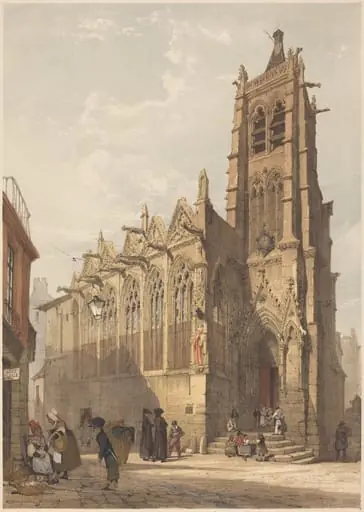
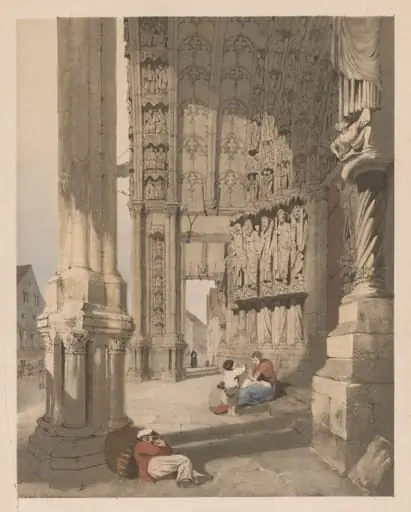 Picturesque Architecture in Paris, Ghent, Antwerp, Rouen, Etc.: South Porch of Chartres Cathedral,
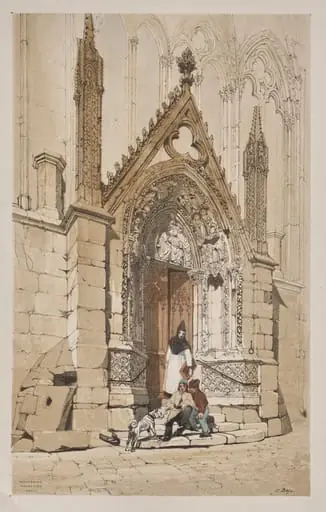 Picturesque Architecture in Paris, Ghent, Antwerp, Rouen: Porte Rouge, Nôtre Dame, Paris
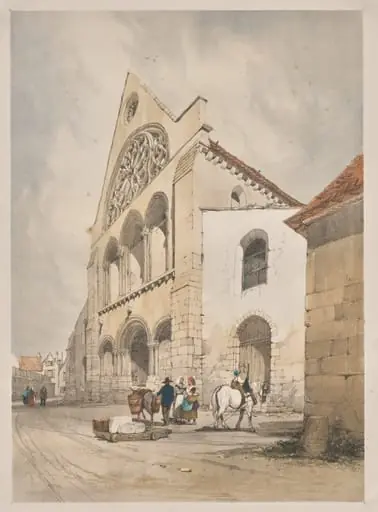 Picturesque Architecture in Paris, Ghent, Antwerp, Rouen: St. Andre, Chartres, France
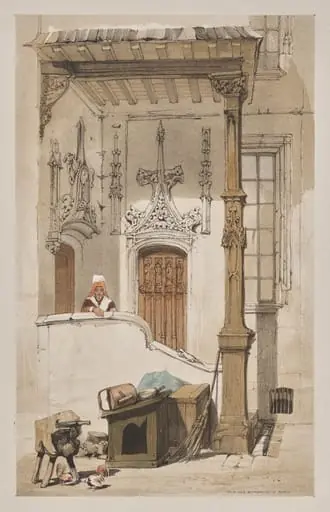 Picturesque Architecture in Paris, Ghent, Antwerp, Rouen: Rue des Marmousets, Paris
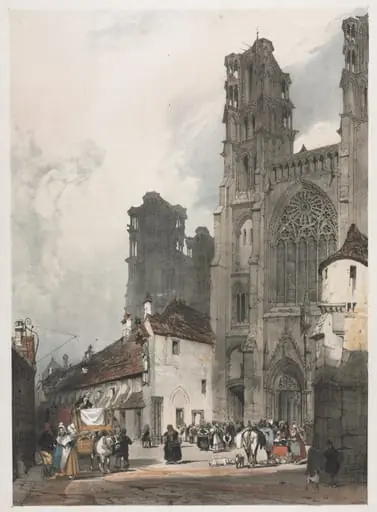 Picturesque Architecture in Paris, Ghent, Antwerp, Rouen: Laon, France
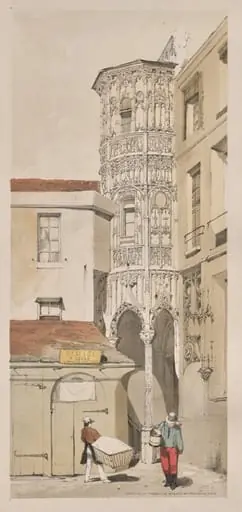 Picturesque Architecture in Paris, Ghent, Antwerp, Rouen: Hôtel de la Tremouille, Rue des Bourbonnois, Paris
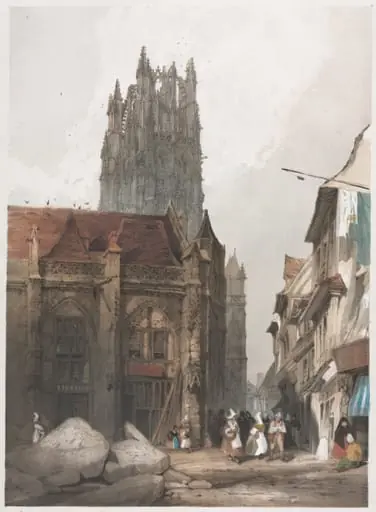 Picturesque Architecture in Paris, Ghent, Antwerp, Rouen: St. Laurent, Rouen, France
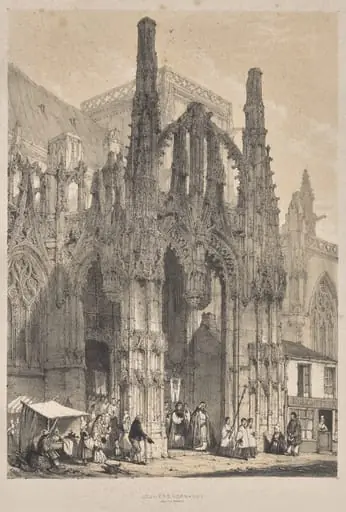 Architecture of the Middle Ages: Louviers, Normandy, South Porch
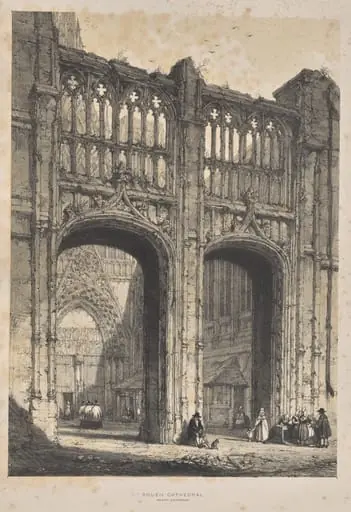 Architecture of the Middle Ages: Rouen Cathedral, North Entrance
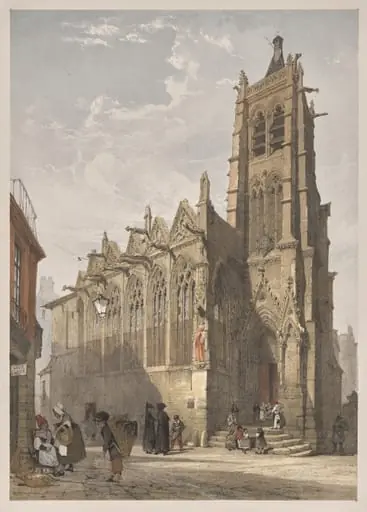 Picturesque Architecture in Paris, Ghent, Antwerp, Rouen: St. Severin, Paris
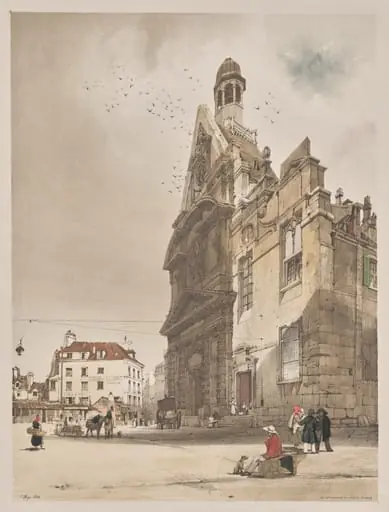 Picturesque Architecture in Paris, Ghent, Antwerp, Rouen: St. Etienne du Mont, Paris