Artwork
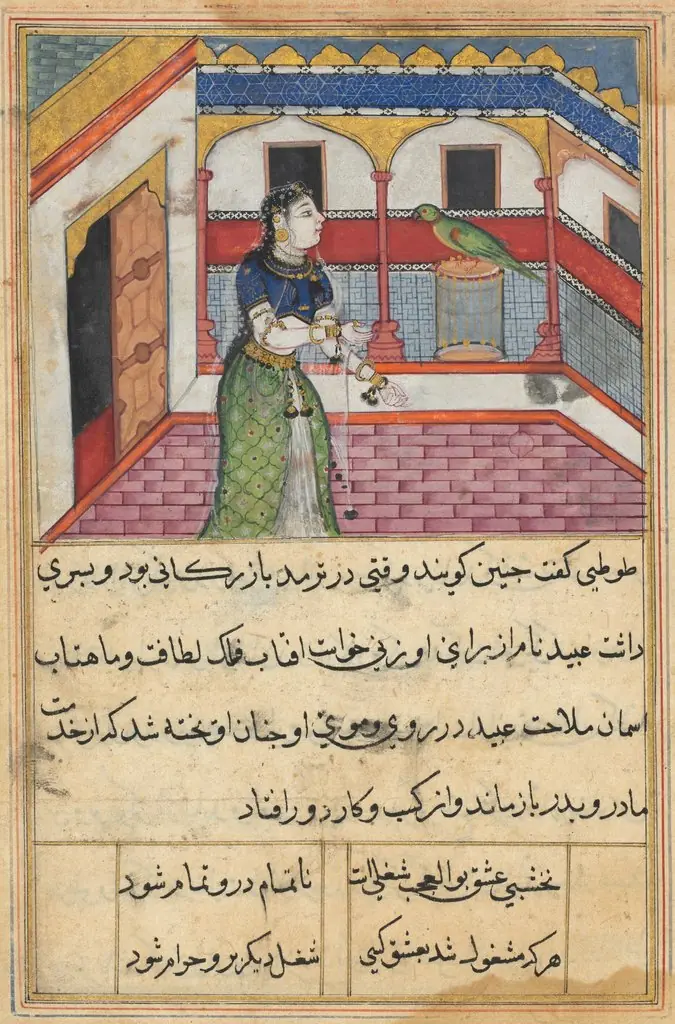
The parrot addresses Khujasta at the beginning of the forty-ninth night, from a Tuti-nama (Tales of a Parrot): Forty-Ninth Night
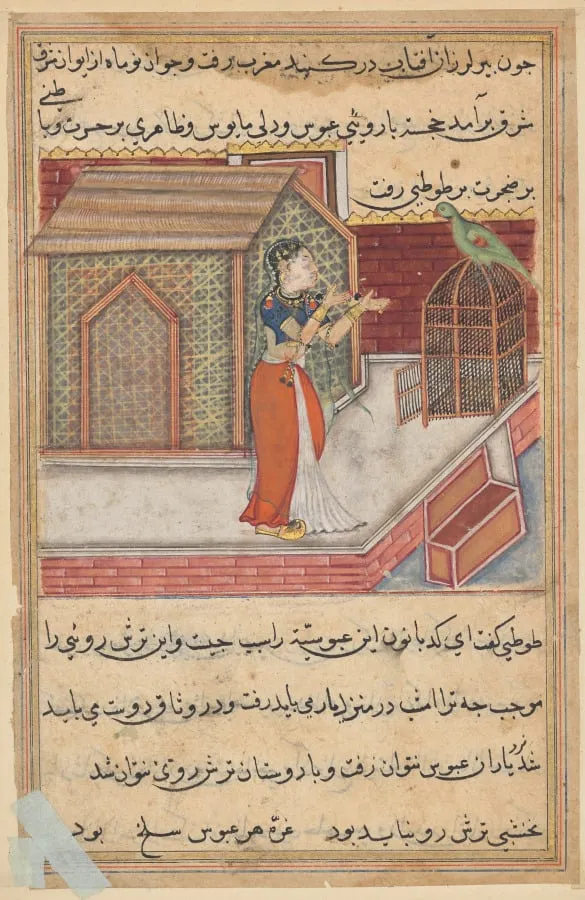
The parrot addresses Khujasta at the beginning of the forty-ninth night, from a Tuti-nama (Tales of a Parrot): Forty-Ninth Night is an unspecified painting by the Mughal Painting artist Unknown. It dates from 1560 and is held in the collection of the Cleveland Museum of Art.
About this work
The tiny details—embroidered flowers, the parrot’s curled claws—show how much care went into every page.
A woman in a green robe sits on a carpet, listening to a bright green parrot perched on a stand. Behind them, a servant holds a fan. The scene glows with gold and deep reds.
This painting comes from a book of parrot tales told over fifty-two nights. Each night, the parrot delays the woman’s secret meeting by spinning a new story. The tiny details—embroidered flowers, the parrot’s curled claws—show how much care went into every page.
To see more paintings like this, look up *Mughal India, court of Akbar (reigned 1556–1605)*.
Overview
The painting illustrates a scene from the forty‑ninth episode of a Mughal narrative series in which a talking parrot, Tuti, addresses a woman named Khujasta. She is seated on a carpet, clad in a green robe, while the bright‑green bird perches on a nearby stand, delivering a moral tale that occupies the night until dawn.
Subject & Meaning
In this episode the parrot recounts the story of three brothers—two who age rapidly and one who remains youthful—as a cautionary allegory. The tale serves to postpone Khujasta’s secret rendezvous with her lover, highlighting themes of delay, temptation, and the power of storytelling within courtly romance.
Technique & Style
Rendered in rich pigments, the composition is dominated by gold, deep reds, and vivid greens. Fine details such as embroidered floral motifs on the woman's robe and the parrot’s intricately curled claws demonstrate meticulous brushwork typical of Mughal court painting, emphasizing both luxury and narrative focus.
History & Provenance
The work belongs to a series of illustrations accompanying a Persian‑origin collection of parrot tales, each night presenting a new story that extends the heroine’s nightlong postponement. The series was produced under the patronage of the Mughal court during the reign of Emperor Akbar (1556–1605).
Context
Mughal artists frequently blended Persian literary themes with Indian visual conventions, creating courtly scenes that combined elaborate costume, architectural elements, and symbolic flora. This painting reflects that synthesis, situating a literary episode within a domestic interior that conveys the opulence of Akbar’s imperial milieu.
Legacy
The series exemplifies the Mughal court’s investment in illustrated manuscripts as vehicles for moral instruction and entertainment. Its detailed execution and narrative structure have informed later South Asian manuscript traditions and continue to be studied for insights into the cultural exchange between Persia and the Indian subcontinent.
Artist & collection

 Domestic Scene
 Giacomo and Cardinal Marco, investing Andrea, Abbot of San Zeno, with his Benefice
 The Nymph of Fontainebleau
 Portrait of a Woman
 Madonna and Child with Saints in the Enclosed Garden
 Venus and Minerva
 Family Group of Four on Sofa
 Wall painting from Room H of the Villa of P. Fannius Synistor at Boscoreale
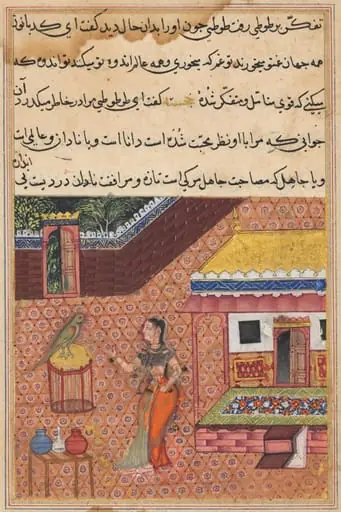 The parrot addresses Khujasta at the beginning of the thirty-fourth night, from a Tuti-nama (Tales of a Parrot)
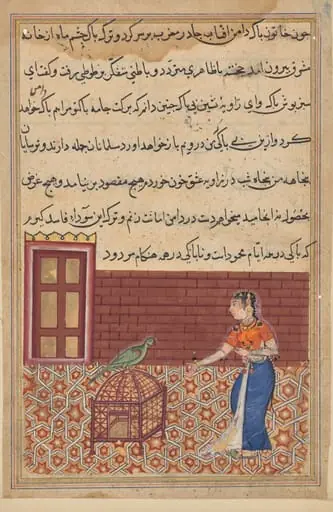 The parrot addresses Khujasta at the beginning of the fifty-first night, from a Tuti-nama (Tales of a Parrot): Fifty-first Night
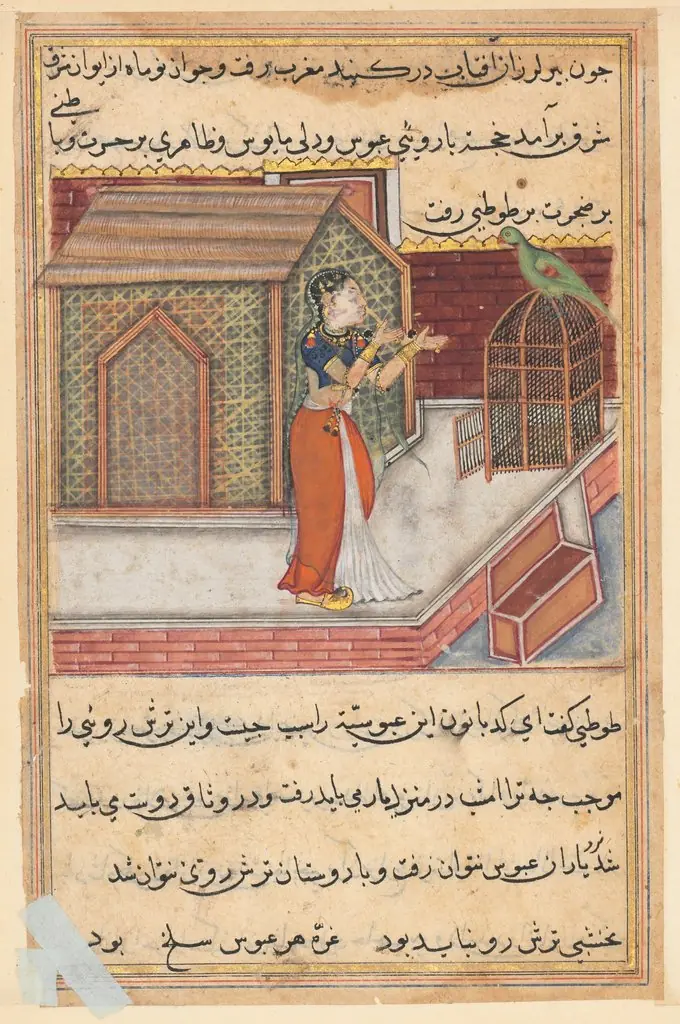 The parrot addresses Khujasta at the beginning of the forty-ninth night, from a Tuti-nama (Tales of a Parrot): Forty-Ninth Night
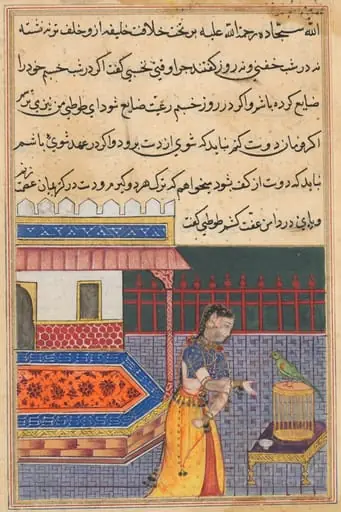 The parrot addresses Khujasta at the beginning of the forty-first night, from a Tuti-nama (Tales of a Parrot): Forty-first Night
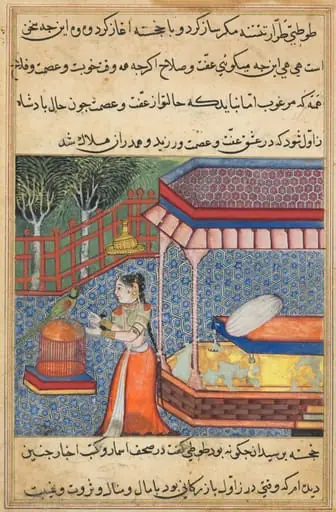 The parrot addresses Khujasta at the beginning of the thirty-sixth night, from a Tuti-nama (Tales of a Parrot)
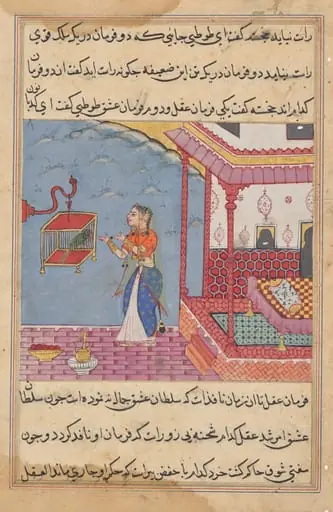 The Parrot Addresses Khujasta at the Beginning of the Twenty-Fourth Night, from a Tuti-nama (Tales of a Parrot)
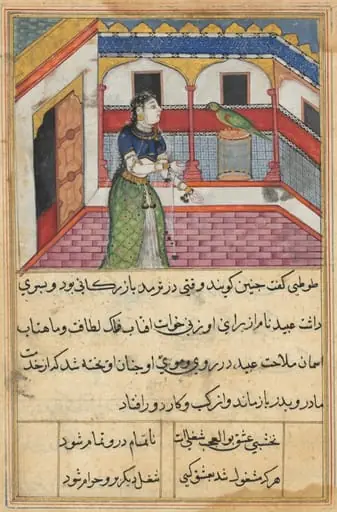 The parrot addresses Khujasta at the beginning of the forty-second night, from a Tuti-nama (Tales of a Parrot)
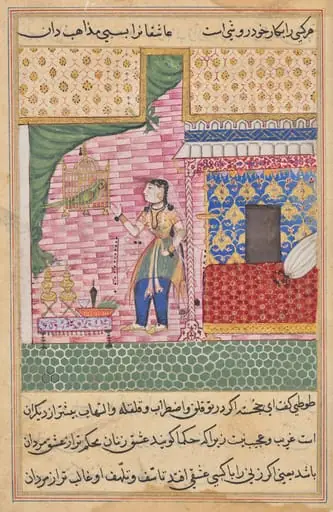 The Parrot Addresses Khujasta at the Beginning of the Seventeenth Night, from a Tuti-nama (Tales of a Parrot)
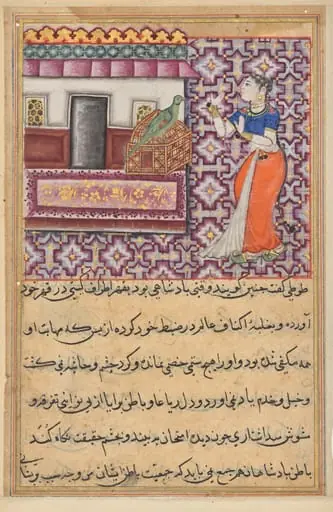 The parrot addresses Khujasta at the beginning of the fiftieth night, from a Tuti-nama (Tales of a Parrot): Fiftieth Night
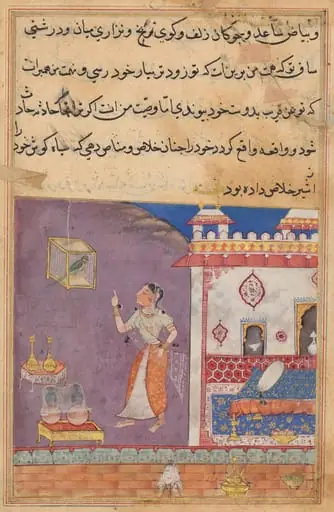 The Parrot Addresses Khujasta at the Beginning of the Twenty-ninth Night, from a Tuti-nama (Tales of a Parrot)
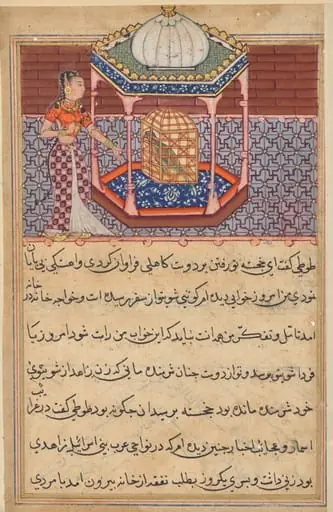 The parrot addresses Khujasta at the beginning of the fifty-second night, from a Tuti-nama (Tales of a Parrot): Fifty-second Night
 The parrot addresses Khujasta at the beginning of the forty-second night, from a Tuti-nama (Tales of a Parrot)