Artwork
The young man, who has magically taken on the appearance of Mansur the merchant, arrives at his home, from a Tuti-nama (Tales of a Parrot): Seventeenth Night
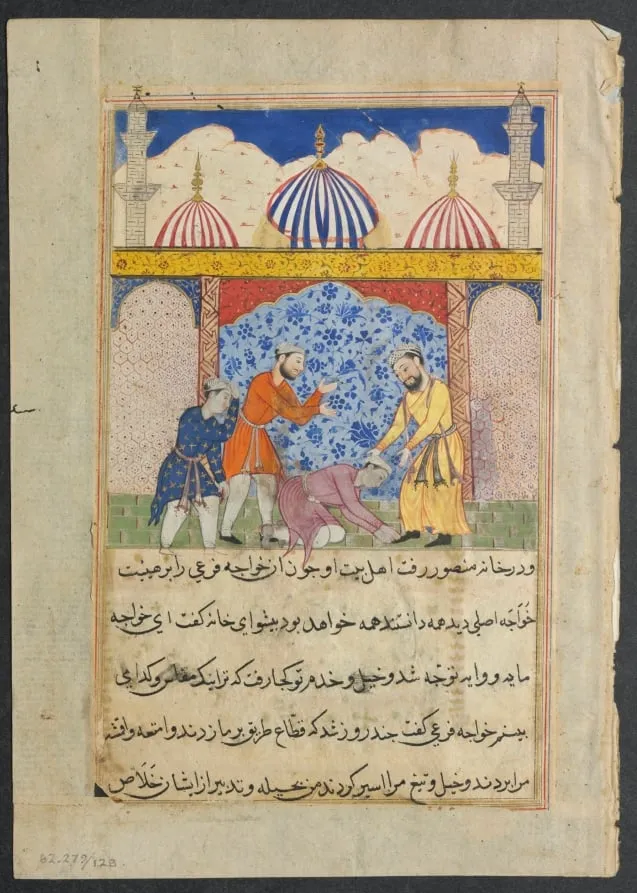
The young man, who has magically taken on the appearance of Mansur the merchant, arrives at his home, from a Tuti-nama (Tales of a Parrot): Seventeenth Night is an unspecified painting by the Mughal Painting artist Unknown. It dates from 1560 and is held in the collection of the Cleveland Museum of Art. The work illustrates a moment from the seventeenth‑night episode of the *Tuti‑nama*, a collection of parrot tales popular in Mughal India.
About this work
Look up *mughal india, court of akbar (reigned 1556–1605)* to see more of these vivid, story-filled paintings.
A man in yellow robes stands at a doorway while servants bow and look worried. He’s not who he seems—he’s using magic to trick the household.
This painting comes from a *Tuti-nama*, a book of parrot tales told in Mughal India. The story is wild: a young man turns into a merchant to sneak into another man’s home. The artist shows the moment right before the lie unravels—no horse, no luggage, just uneasy faces.
Look up *mughal india, court of akbar (reigned 1556–1605)* to see more of these vivid, story-filled paintings.
Overview
The work illustrates a moment from the seventeenth‑night episode of the *Tuti‑nama*, a collection of parrot tales popular in Mughal India. A young man, having assumed the guise of the merchant Mansur through a magical epithet, stands at a doorway in bright yellow robes while the household members receive him with a mixture of hospitality and unease.
Subject & Meaning
The scene captures the tension between deception and social ritual. The impostor’s arrival without his horse, attendants, or luggage signals the imminent collapse of his ruse, while the bowed servants convey both respect for the presumed master and their private apprehension about the irregularity of his entrance.
Technique & Style
Executed in the refined miniature tradition of the Akbar court, the painting employs delicate brushwork, vivid pigments, and intricate detailing of costume and interior space. The contrast between the luminous yellow garment and the muted tones of the surrounding figures emphasizes the central figure’s anomalous presence within the domestic setting.
Context
Produced under Emperor Akbar (r. 1556–1605), the piece reflects the court’s patronage of illustrated manuscripts that blended Persian literary models with Indian narrative imagination. The *Tuti‑nama* itself served both as entertainment and moral instruction, illustrating the perils of deceit through vivid visual storytelling.
Legacy
As an example of Mughal narrative painting, the work demonstrates the empire’s synthesis of artistic influences and its emphasis on courtly literature. Its preservation in manuscript form offers scholars insight into the visual conventions and cultural values that shaped storytelling in early modern South Asia.
Artist & collection

 Domestic Scene
 Giacomo and Cardinal Marco, investing Andrea, Abbot of San Zeno, with his Benefice
 The Nymph of Fontainebleau
 Portrait of a Woman
 Madonna and Child with Saints in the Enclosed Garden
 Venus and Minerva
 Family Group of Four on Sofa
 Wall painting from Room H of the Villa of P. Fannius Synistor at Boscoreale
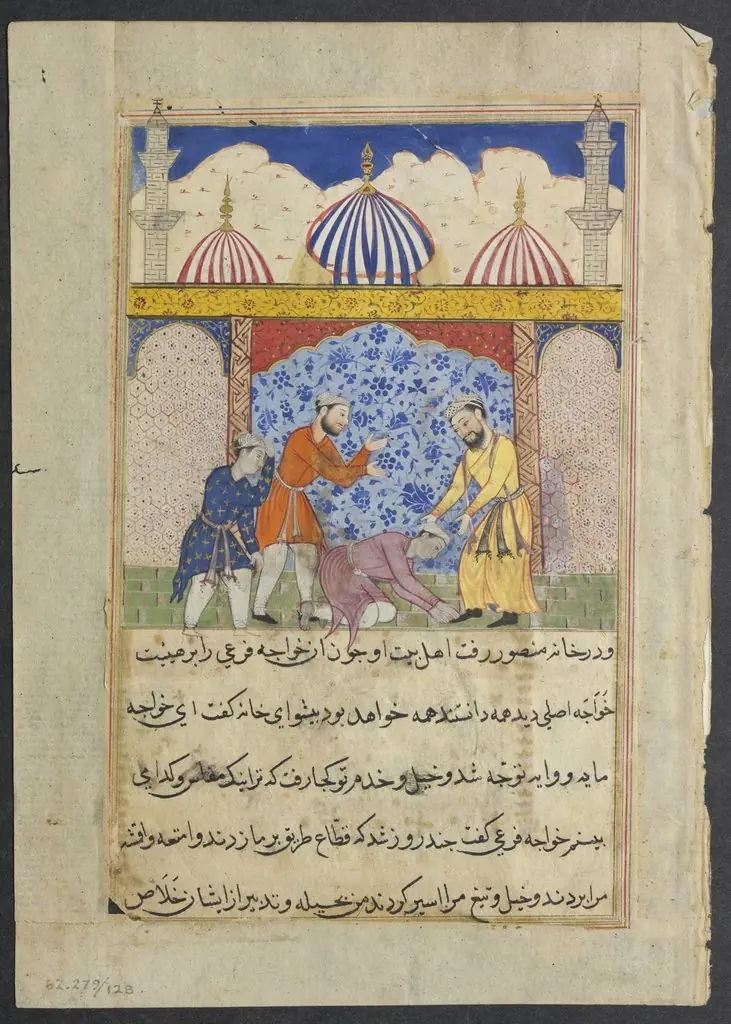 The young man, who has magically taken on the appearance of Mansur the merchant, arrives at his home, from a Tuti-nama (Tales of a Parrot): Seventeenth Night
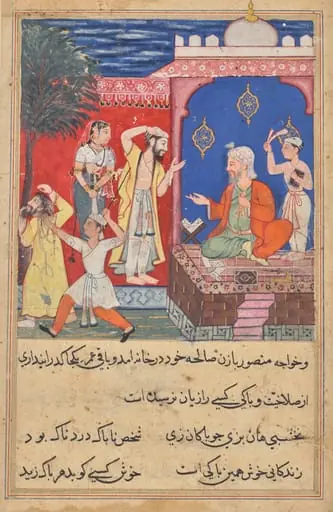 The false Mansur punished before the judge and expelled from the city, from a Tuti-nama (Tales of a Parrot): Seventeenth Night
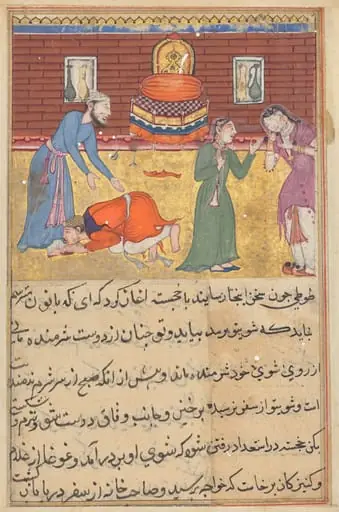 The pious man’s son, now a king, reveals himself to his father; his nurse upbraids his unfaithful mother, from a Tuti-nama (Tales of a Parrot): Fifty-second Night
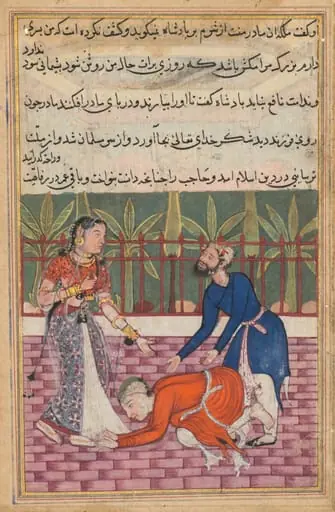 The guard restores the son who falls at his mother’s feet, from a Tuti-nama (Tales of a Parrot): Fiftieth Night
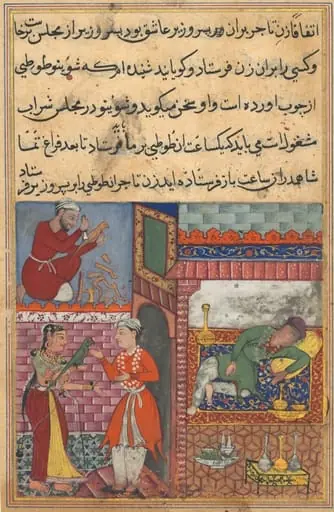 The vizier’s son receives the magic wooden parrot from the wife of the merchant, who is drunk, and has a replica made by a carpenter, from a Tuti-nama (Tales of a Parrot): Tenth Night
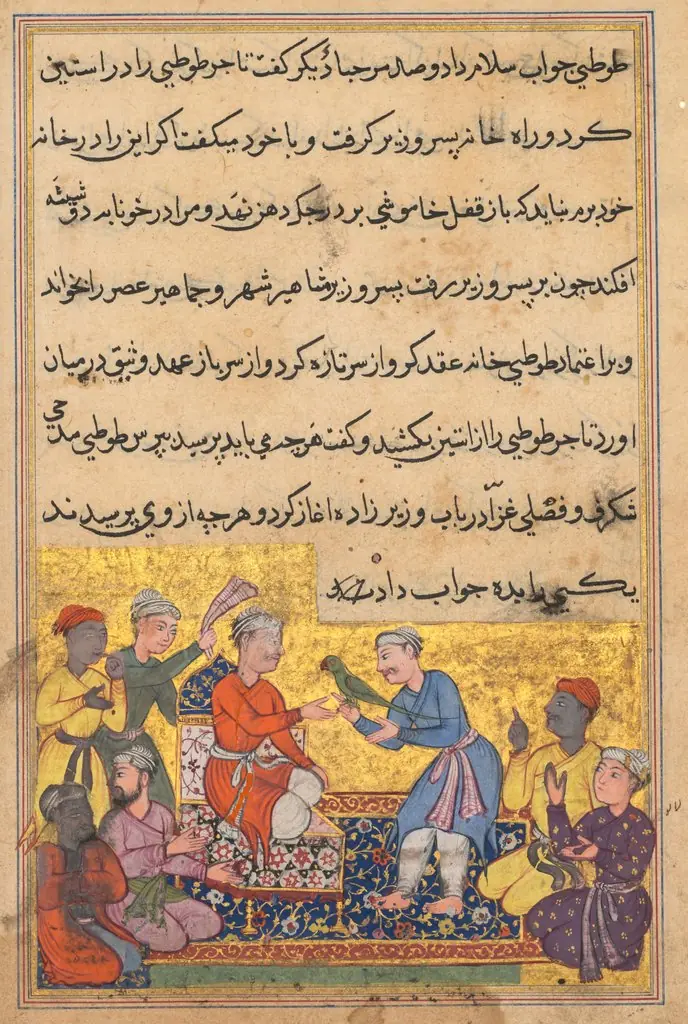 The magic parrot of the merchant talks to the vizier’s son, from a Tuti-nama (Tales of a Parrot): Tenth Night
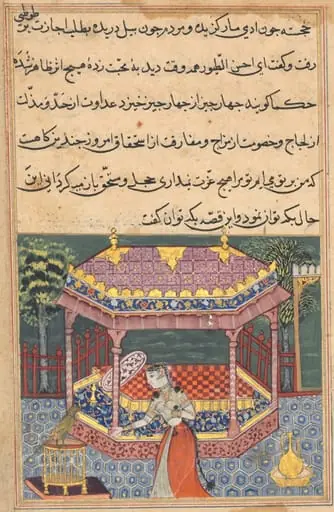 The parrot addresses Khujasta at the beginning of the thirty-seventh night, from a Tuti-nama (Tales of a Parrot)
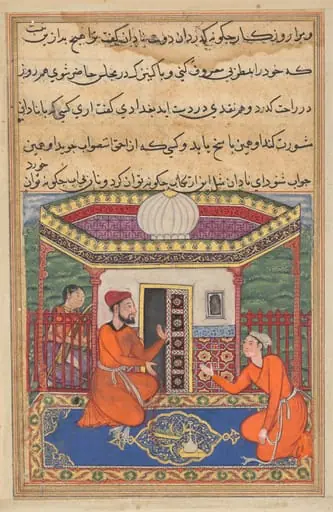 The young man of Baghdad solicits advice from a friend as his slave girl, who is adept at music, awaits, from a Tuti-nama (Tales of a Parrot): Forty-eighth Night
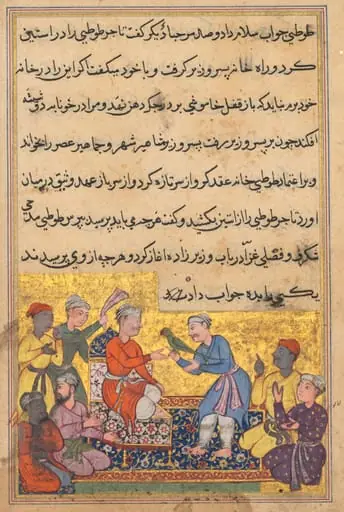 The magic parrot of the merchant talks to the vizier’s son, from a Tuti-nama (Tales of a Parrot): Tenth Night
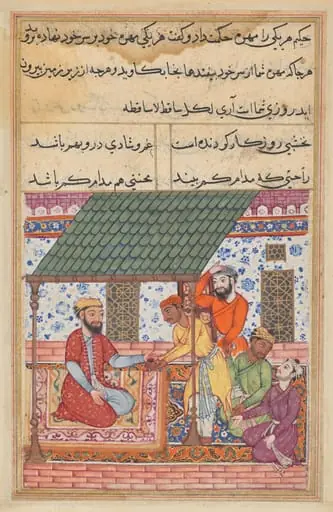 The four destitute friends go to a wise man who gives each one of them a magic shell to be placed on top of the turban, from a Tuti-nama (Tales of a Parrot): Forty-seventh Night
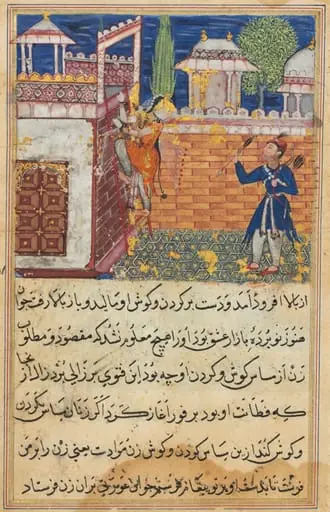 The deceitful wife returns to her terrace after caressing her lover, from a Tuti-nama (Tales of a Parrot): Eighth Night