Artwork
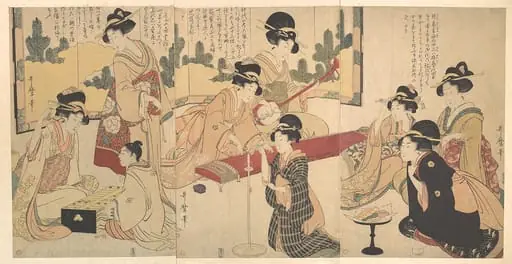
喜多川歌麿画 琴棋書画|The Four Accomplishments (Kinkishoga)
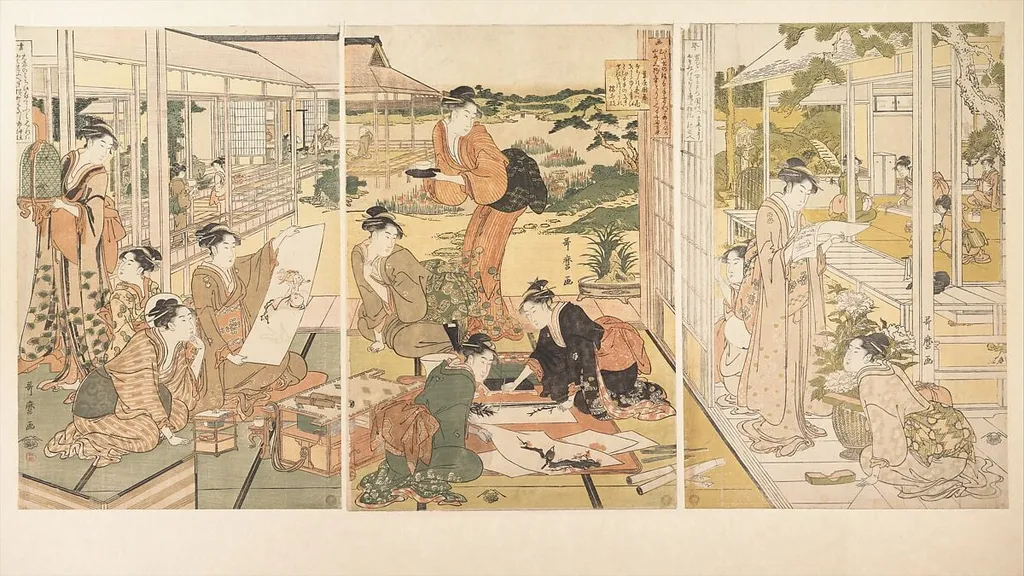
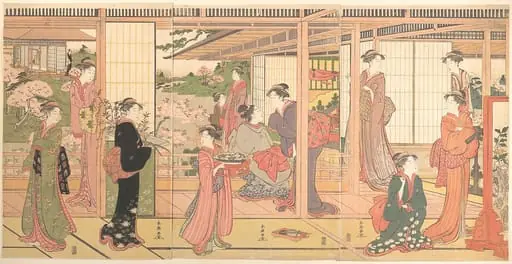
喜多川歌麿画 琴棋書画|The Four Accomplishments (Kinkishoga) is an ink print by the Romanticist artist Kitagawa Utamaro. It dates from 1789 and is held in the collection of the Metropolitan Museum of Art. The work, titled The Four Accomplishments (Kinkishoga), is a three‑panel woodblock print by Kitagawa Utamō, executed around 1789.
About this work
Overview
The work, titled The Four Accomplishments (Kinkishoga), is a three‑panel woodblock print by Kitagawa Utamō, executed around 1789. Produced with ink and color on paper, the triptych presents a quiet domestic scene rendered in the ukiyo‑e genre. The print is part of the collection of the Metropolitan Museum of Art in New York.
Subject & Meaning
The panels depict women engaged in everyday activities typical of the so‑called "four accomplishments" of cultured refinement: music, board games, calligraphy and painting. In the left panel, figures gather around a low table, some holding brushes or fans; the central panel shows a woman in a vivid orange garment standing outdoors while others work nearby; the right panel features a woman inside a room with a child playing on the floor and another figure glimpsed through a window.
Technique & Style
Utamō employed the traditional ukiyo‑e woodblock process, layering multiple color blocks to achieve soft, muted tones. Fine cross‑hatching of ink lines adds subtle shading to garments and interior spaces, creating a sense of depth without overt contrast. The overall palette is restrained, emphasizing the calm, orderly rhythm of the domestic tasks.
History & Provenance
Created in the late eighteenth century, the print reflects the popularity of genre scenes that idealized refined leisure among urban women. It entered the Metropolitan Museum of Art's collection through a 20th‑century acquisition, where it remains on display as an example of Utamō's later work and of the broader cultural interest in the "four accomplishments" during the Edo period.
Artist & collection


 Untitled
 Untitled
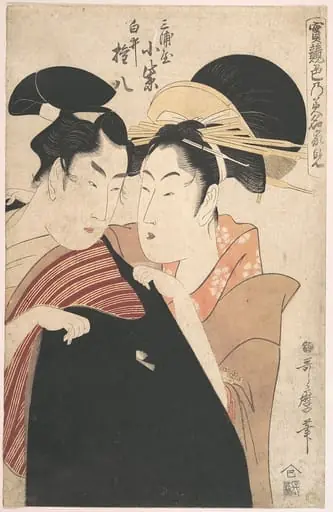 実競色乃美名家見 三浦屋小紫 白井権八|The Lovers Miura-ya Komurasaki and Shirai Gonpachi.
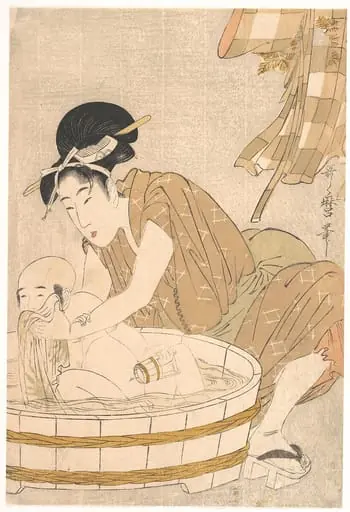 行水|Bathtime (Gyōzui)
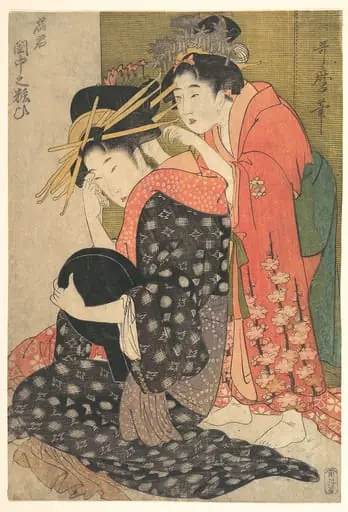 名君 閨中の粧ひ|The Oiran Yoso-oi Seated at Her Toilet
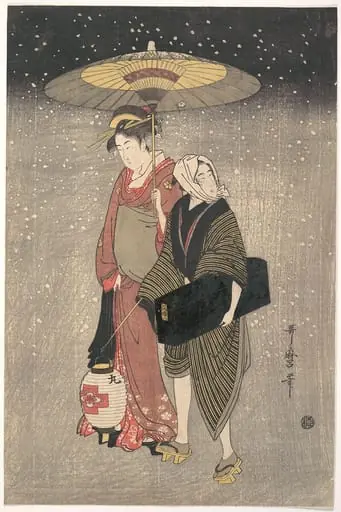 Untitled
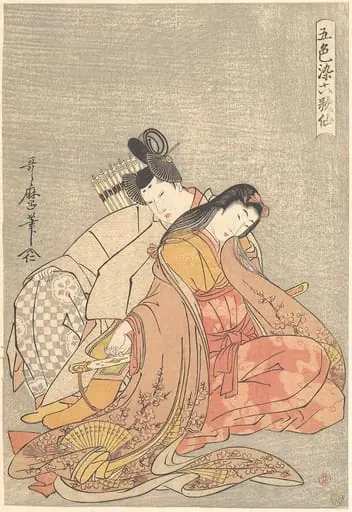 『五色染六歌仙』 在原業平と小野小町|“The Poet Ariwara no Narihira (825–880) and Ono no Komachi,” from the series Five Colors of Love for the Six Poetic Immortals (Goshiki-zome rokkasen)
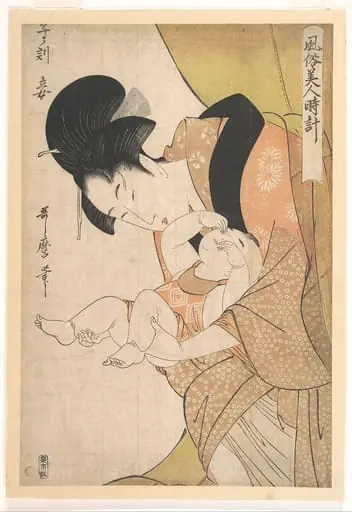 風俗美人時計 子ノ刻 妾|Midnight: Mother and Sleepy Child
 Untitled
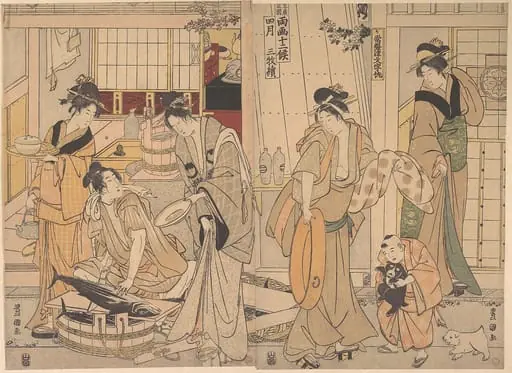 Untitled
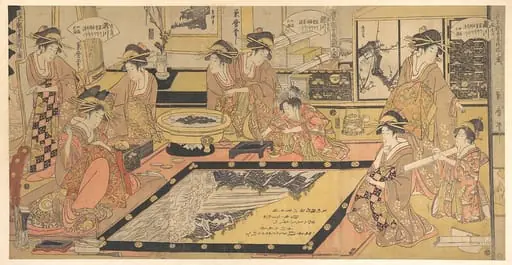 『浅草観音奉掛額之 図』 「扇屋内滝川 富川、粂川、玉川、津川、歌川、清川 め浪、お浪」|A Votive Picture to Be Donated to the Kannon of Asakusa (Asakusa Kannon hō kakegaku no zu), by Takigawa of the Ōgiya, Kamuro Menami and Onami, with Tomikawa, Kumegawa, Tamagawa, Tsugawa, Utagawa, and Kiyokawa
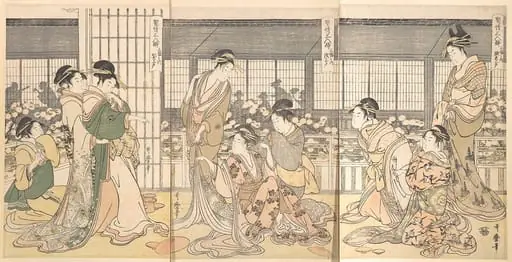 契情三人酔 三幅之内 腹立上戸 泣上戸 笑上戸|Three Intoxicated Courtesans
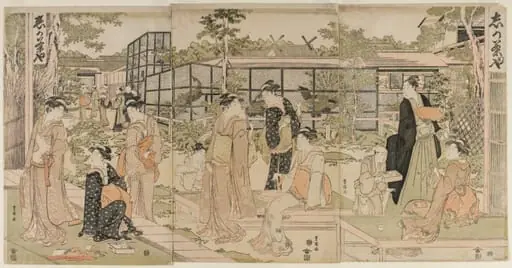 The Shika Teahouse
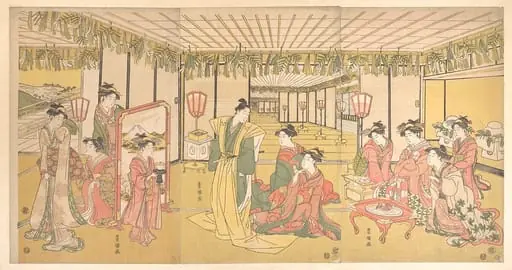 Untitled
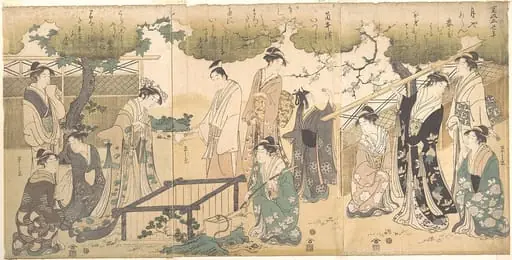 Untitled
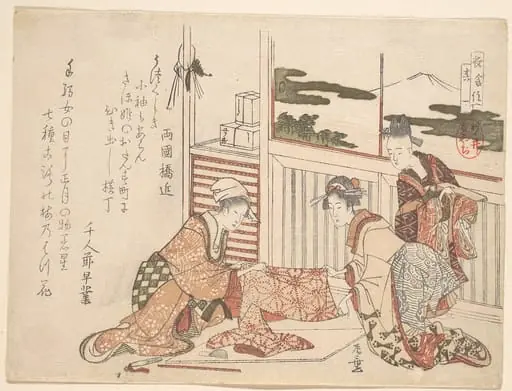 衣食住|Attire
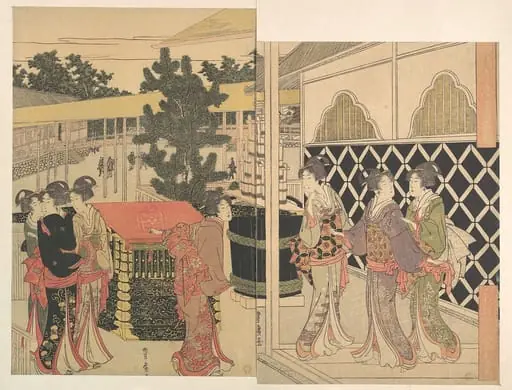 Horinouchi Myōhōji Eho Mairi no Zu|Pilgrimage to Myōhōji in Horinouchi, Edo
 Untitled