Artwork
The Seconda Macchina for the Chinea of 1770: The Fish Market Portico
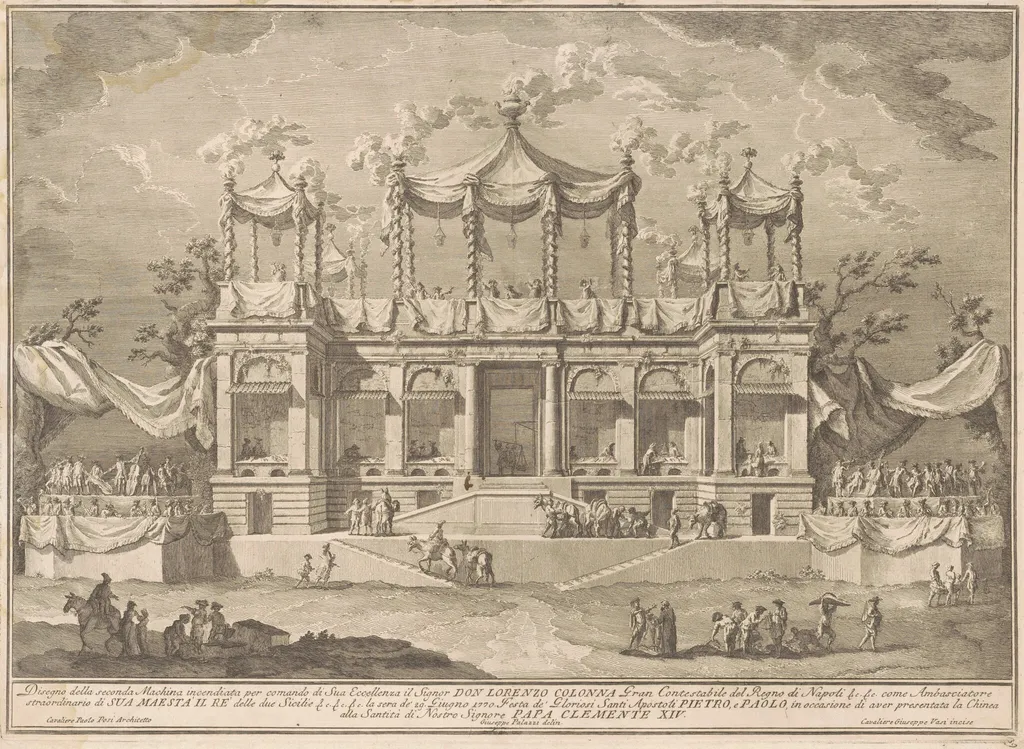
The Seconda Macchina for the Chinea of 1770: The Fish Market Portico is an ink print by the Romanticist artist Giuseppe Vasi. It dates from 1770 and is held in the collection of the National Gallery of Art.
About this work
The details, like the precise lines and shading, suggest it was made using a printing method that lets artists create fine, textured images.
This drawing shows a grand, temporary stage set up like a fancy building. It has three big arches, draped with heavy curtains and swags of fabric. People in old-fashioned clothes stand on the stage, while others walk around outside—some on horseback, others carrying poles with banners. The scene looks like a busy event, maybe a performance or a celebration, with a mix of crowds and decorations.
The text at the bottom hints this was built for a special occasion in 1770, tied to a royal visit. The details, like the precise lines and shading, suggest it was made using a printing method that lets artists create fine, textured images.
If you like this style, look up etching to see how artists like Giuseppe Vasi made such sharp, layered prints.
Overview
Created in 1770 by Giuseppe Vasi, this etching documents a temporary architectural structure erected in Rome for the annual Chinea ceremony. The work captures a ceremonial portico designed to resemble a grand facade, complete with three arched openings and elaborate drapery. Vasi rendered the scene with meticulous detail, emphasizing the interplay of structure, crowd, and ornamentation characteristic of public festivities in the late 18th century.
Subject & Meaning
The scene depicts a temporary stage built to honor a royal visit, likely tied to the Chinea, a tribute paid to the Pope by the Kingdom of Naples. The portico served as a ceremonial backdrop, flanked by figures in period dress, horsemen, and banner-bearers. The composition reflects the fusion of civic ritual and theatrical display, where architecture became a vehicle for political and religious symbolism during public spectacles.
Technique & Style
Vasi employed etching to achieve fine linear precision and nuanced tonal gradations. The delicate cross-hatching and controlled ink lines define architectural elements and fabric folds, while the density of figures suggests movement and scale. The technique allowed for intricate reproduction, enabling the image to circulate as a record of ephemeral events, preserving transient urban performances for wider audiences.
History & Provenance
The print was produced as part of Vasi’s series documenting Rome’s ceremonial architecture and public events. Created shortly after the 1770 Chinea, it likely served both as a documentary record and a commercial print for collectors interested in Roman pageantry. Its survival in museum and private collections attests to its value as a historical artifact of 18th-century Roman civic life.
Context
The Chinea was a longstanding papal tradition involving symbolic tribute from Naples, accompanied by elaborate processions and temporary constructions. Vasi’s etching reflects a broader cultural practice in which Rome’s urban space was transformed for ritual occasions. Such events reinforced papal authority and attracted international attention, with artists like Vasi playing a key role in visually codifying these moments.
Legacy
Vasi’s etchings of Roman ceremonies remain among the most detailed visual records of 18th-century papal festivities. This print, like others in his series, influenced later topographical artists and provided scholars with insight into the intersection of architecture, performance, and politics in early modern Rome. Its precision continues to inform studies of public spectacle and urban design in the period.
Artist & collection

 The Seconda Macchina for the Chinea of 1766: A Theater for Athletic Games
 The Prima Macchina for the Chinea of 1765: The Garden of the Hesperides
 The Prima Macchina for the Chinea of 1769: A "Deliziosa"
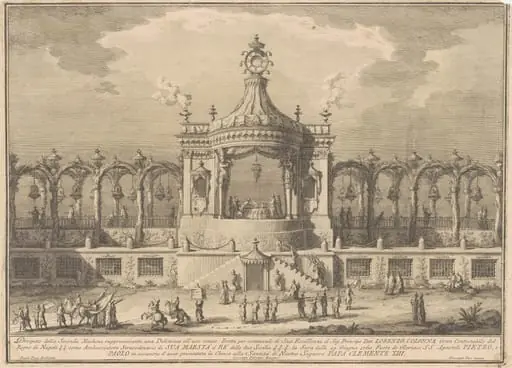 The Seconda Macchina for the Chinea of 1760: A Chinoiserie Pavilion
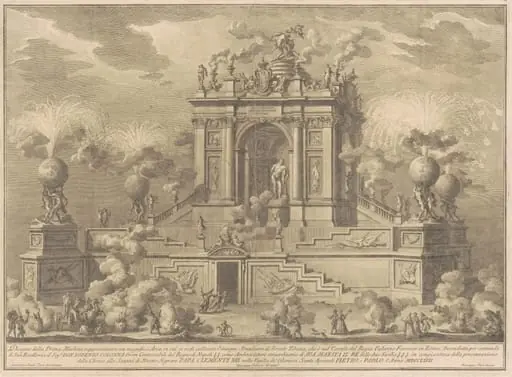 The Prima Macchina for the Chinea of 1767: A Triumphal Arch with the Farnese Hercules
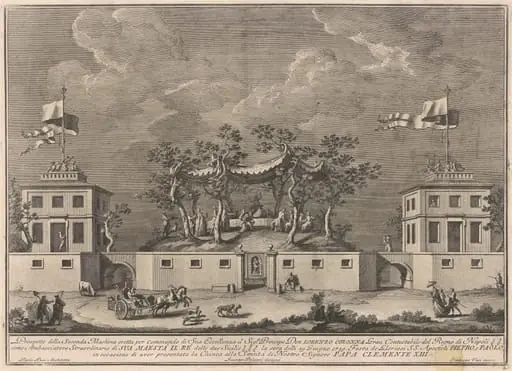 The Seconda Macchina for the Chinea of 1759: A "Deliziosa" with a Bacchanal
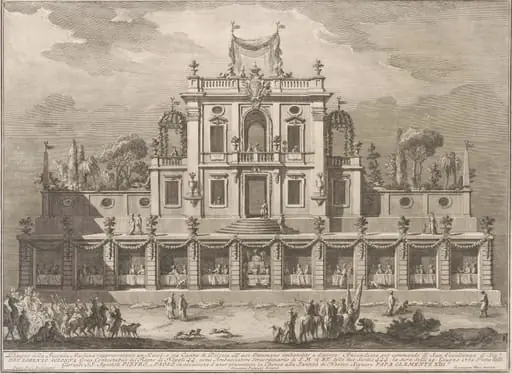 The Seconda Macchina for the Chinea of 1762: A Kiosk, or Pleasure-House in Ottoman Style
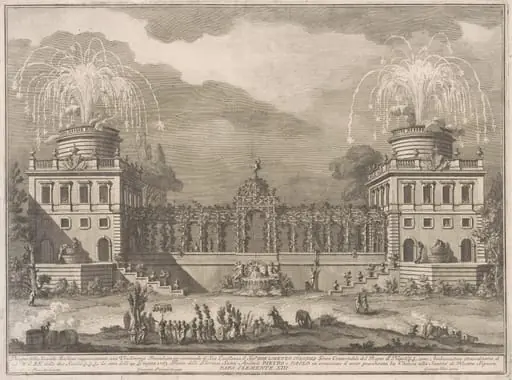 The Seconda Macchina for the Chinea of 1763: The Grape Harvest
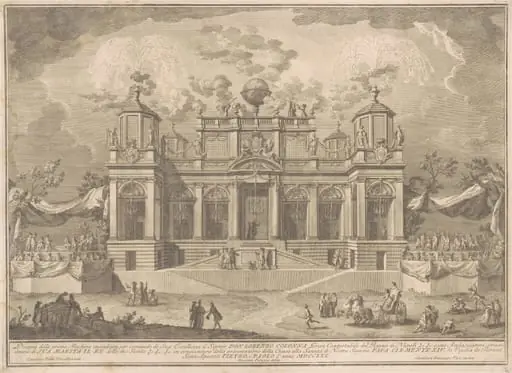 The Prima Macchina for the Chinea of 1770: An Roman Building for Commerce
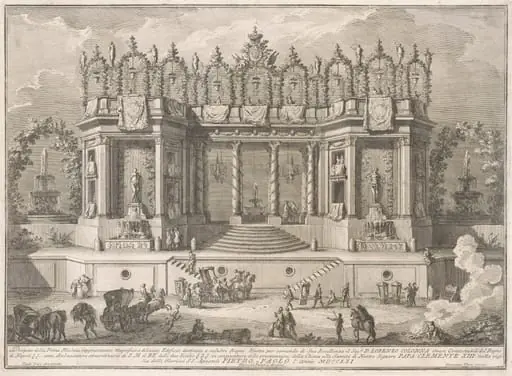 The Prima Macchina for the Chinea of 1761: The Salubrious Baths
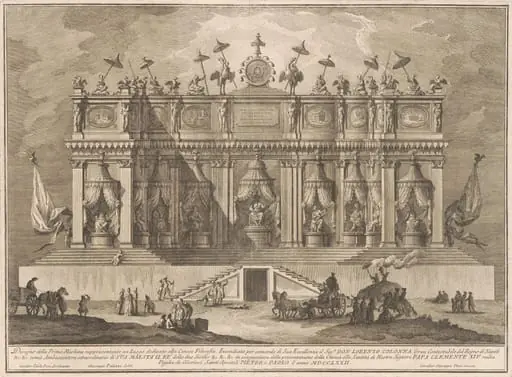 The Prima Macchina for the Chinea of 1772: A Building Dedicated to Chinese Philosophy
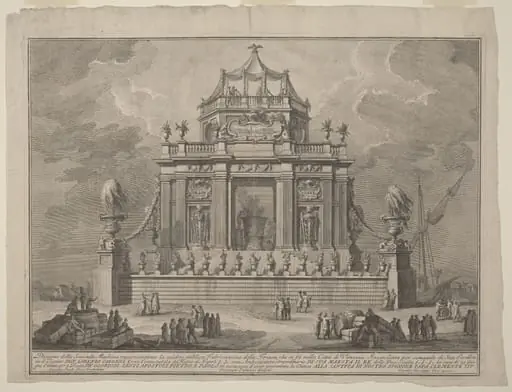 The Seconda Macchina for the Chinea of 1773: The Preparation of Theriac in Venice
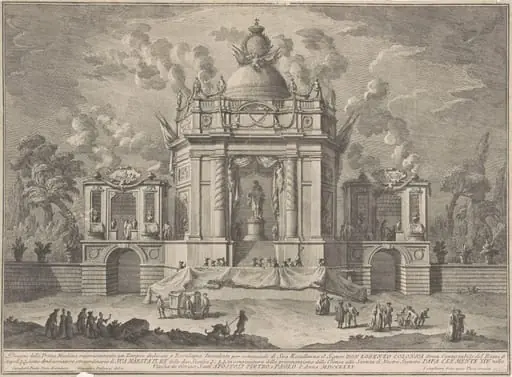 The Prima Macchina for the Chinea of 1771: The Temple of Asclepius
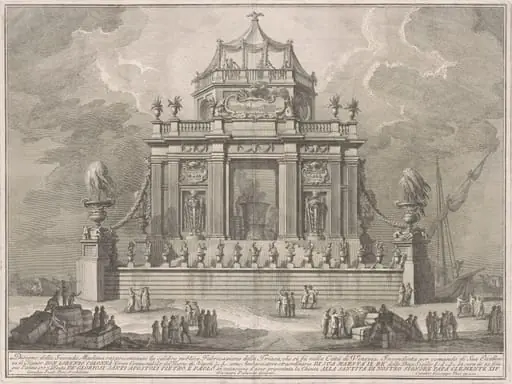 The Seconda Macchina for the Chinea of 1773: The Preparation of Theriac in Venice
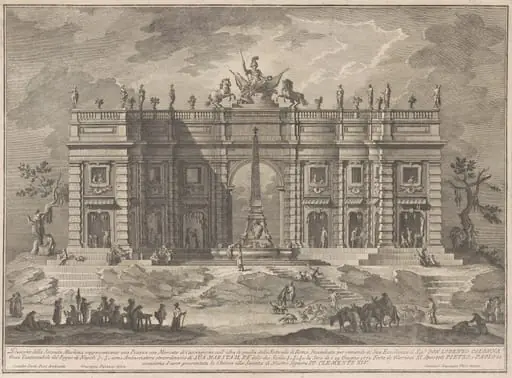 The Seconda Macchina for the Chinea of 1772: A Square with a Game Market and the Pantheon Fountain
 The Seconda Macchina for the Chinea of 1764: A Magnificent Gallery Illuminated at Night
 The Seconda Macchina for the Chinea of 1775: A Bull-fight
 The Seconda Macchina for the Chinea of 1771: A Pleasure Palace Dedicated to Bacchus