Artwork
Il Greco in Troia: Plate 2
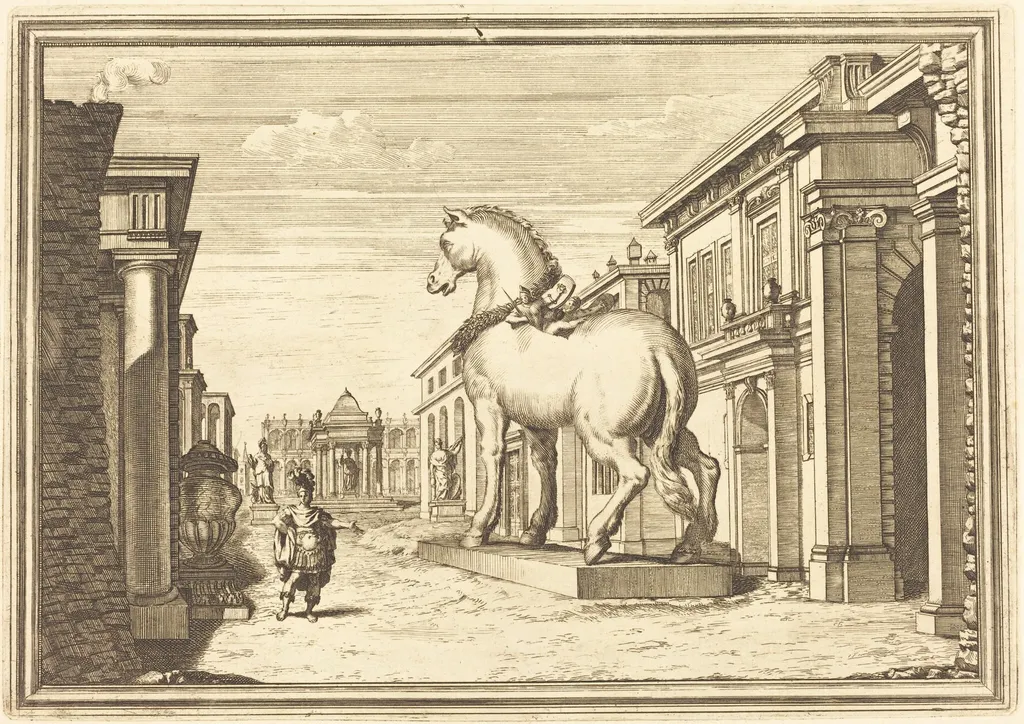
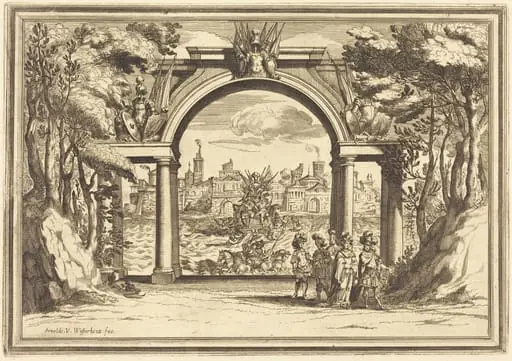
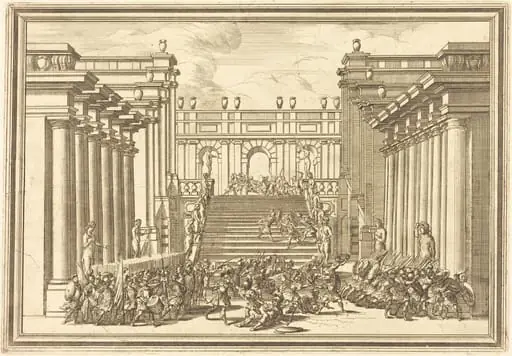
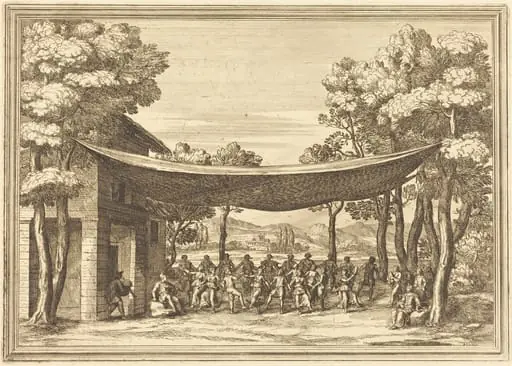
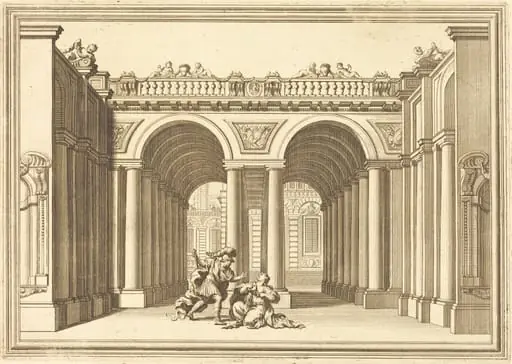
Il Greco in Troia: Plate 2 is an ink print by the Baroque artist Arnold von Westerhout. It dates from 1688 and is held in the collection of the National Gallery of Art.
About this work
Overview
The image captures a moment of quiet tension amid mythic grandeur, blending classical subject matter with contemporary print techniques.
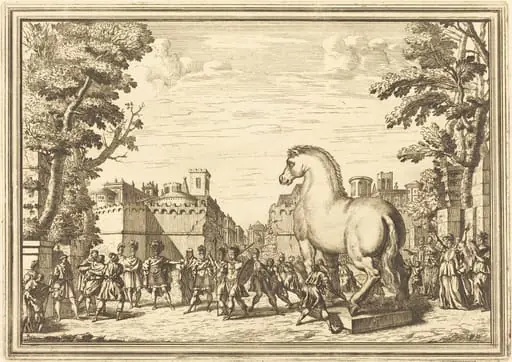
Il Greco in Troia: Plate 2 is a 1688 restrike of an etching and engraving by Arnold von Westerhout, produced on laid paper. It forms part of a series illustrating episodes from the Trojan War, rendered in the detailed, theatrical style typical of late 17th-century Northern European printmaking. The image captures a moment of quiet tension amid mythic grandeur, blending classical subject matter with contemporary print techniques.
Subject & Meaning
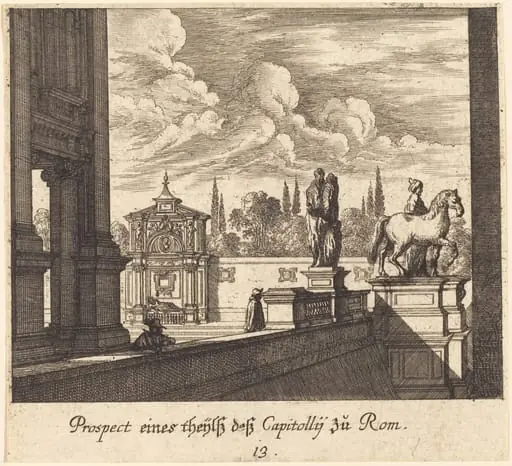
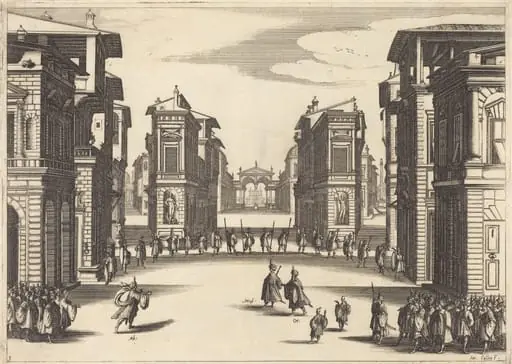
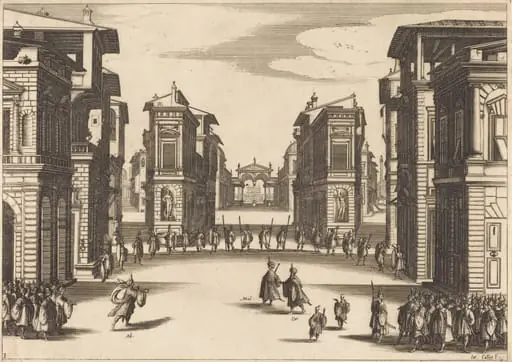
The scene depicts a lone figure approaching a massive wooden horse, a reference to the Trojan Horse from Virgil’s Aeneid. The horse, disproportionately large and dramatically lit, dominates the composition as a symbol of deception and impending doom. A secondary figure leads a smaller horse, suggesting preparation or observation. Distant figures near a temple-like structure imply a watching populace, heightening the sense of impending catastrophe.
Technique & Style
Westerhout employed fine etching and engraving lines to achieve intricate detail and tonal contrast. The horse’s form is rendered with dense hatching, while architectural elements are defined by crisp, linear precision. Dramatic chiaroscuro enhances the horse’s monumental presence, a Baroque device used to direct focus and evoke emotional weight. The paper’s laid texture subtly enhances the print’s tactile quality.
History & Provenance
Created in 1688, the original plate was later restriked, likely to meet continued demand for mythological prints among collectors. Westerhout, a Dutch artist active in Italy, drew inspiration from classical literature and Italian Renaissance architecture. The restrike preserves the original’s fine lines, indicating careful plate maintenance and continued artistic interest in the series throughout the 18th century.
Context
This print emerged during a period when European artists frequently revisited classical myths to explore themes of fate, hubris, and hidden danger. The architectural setting, though evoking ancient Troy, reflects Baroque interpretations of Roman ruins, blending historical imagination with contemporary aesthetics. Such prints were circulated among educated elites as both artistic objects and moral allegories.
Legacy
Westerhout’s series contributed to the enduring visual vocabulary of Trojan War narratives in print culture. Though not widely known today, his precise technique and narrative clarity influenced later illustrators of classical texts. The restrike’s survival underscores the value placed on such works as both artistic records and cultural artifacts of early modern Europe.
Artist & collection