Artwork
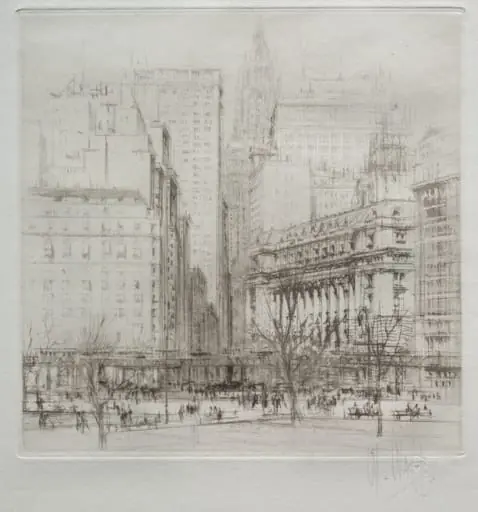
New York City: 42nd Street
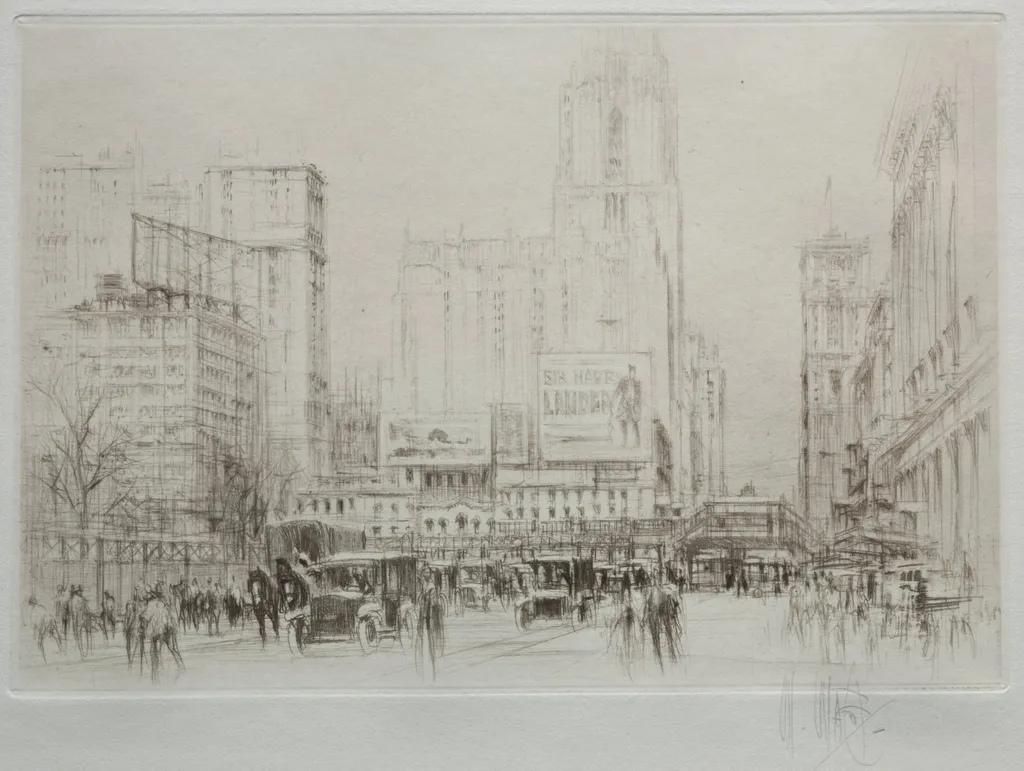
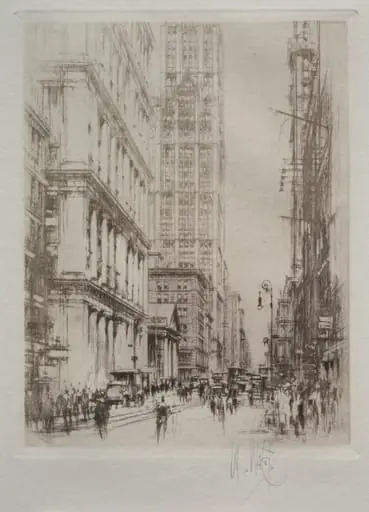
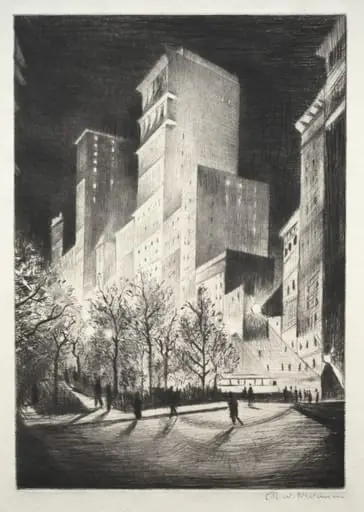
New York City: 42nd Street is a print by William Walcot. It dates from 1923 and is held in the collection of the Cleveland Museum of Art.
About this work
Overview
Rendered entirely in monochrome, the work captures the architectural density and pedestrian flow of early 20th-century New York.
Created in 1923 by William Walcot, this print depicts a midday scene on 42nd Street in Manhattan. Rendered entirely in monochrome, the work captures the architectural density and pedestrian flow of early 20th-century New York. The composition emphasizes verticality through closely spaced skyscrapers and horizontal movement from the crowd below. It is part of the permanent collection at The Cleveland Museum of Art.
Subject & Meaning
The scene portrays ordinary urban life: commuters, shoppers, and workers navigating the street beneath towering structures. A prominent billboard advertising 'SIR HERBERT TREE'S LAMBERT' anchors the visual narrative, reflecting the era’s commercial culture. The absence of color and the focus on routine activity suggest a quiet observation of modernity rather than a celebration of spectacle.
Technique & Style
Walcot employed etching and drypoint to achieve fine linear detail and tonal gradation. The grayscale palette enhances spatial depth, with darker shadows under building eaves and lighter areas suggesting sunlight on facades. Delicate hatching defines textures of brick, glass, and clothing, while the crowd is suggested through clustered, simplified figures rather than individualized forms.
History & Provenance
The print was produced during Walcot’s active period in New York, when he documented the city’s evolving skyline. It entered The Cleveland Museum of Art’s collection in the mid-20th century, likely through a donation or acquisition focused on American graphic art. Its preservation reflects early institutional interest in urban documentary prints from the interwar years.
Context
Made during a time of rapid urban expansion, the work aligns with a broader trend among artists and printmakers who turned their attention to the modern metropolis. Unlike romanticized city views, Walcot’s approach is observational, echoing the precision of architectural renderings and the documentary impulse of early photojournalism.
Legacy
Though not widely exhibited today, the print remains a representative example of early 20th-century American urban printmaking. It contributes to the historical record of how artists interpreted the rhythm and scale of New York before the rise of abstract and expressionist cityscapes. Its quiet realism offers a counterpoint to more dramatic portrayals of the era.
Artist & collection

Artist
William Walcot RE was a Russian-Scottish architect, graphic artist and etcher, notable as a architect of refined Art Nouveau in Moscow, Russia.

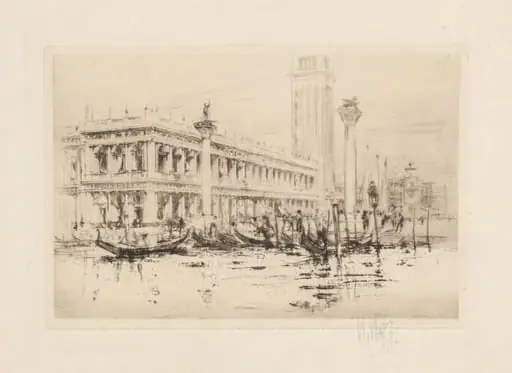 The Venice Set: The Library of St. Mark’s
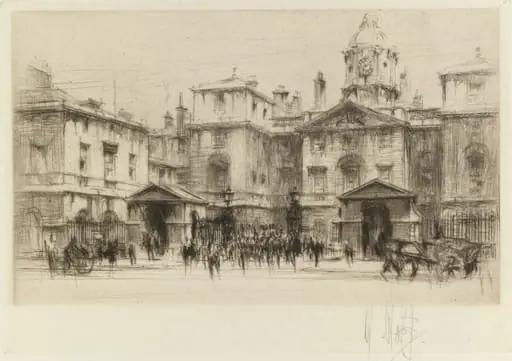 London Set: Horseguards
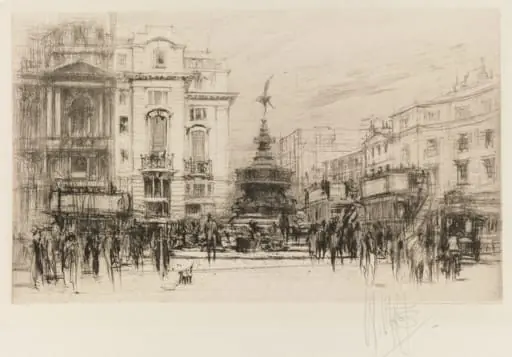 London Set: Piccadilly Circus (with Criterion Theatre)
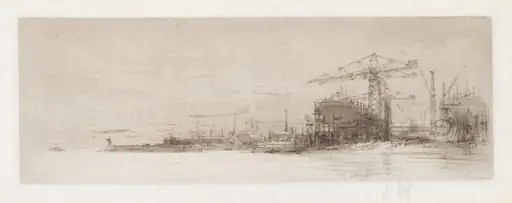 The Clyde from the series The Arteries of Great Britain
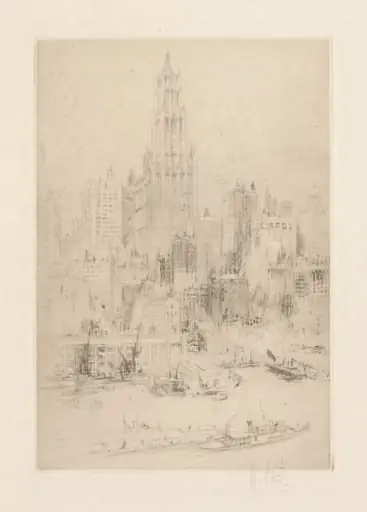 Downtown Manhattan from the East River, with the Woolworth Building
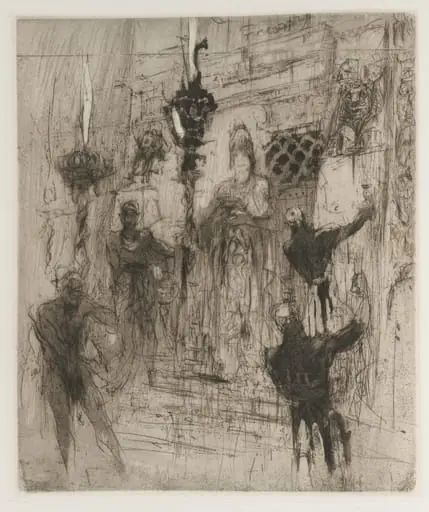 Herodias
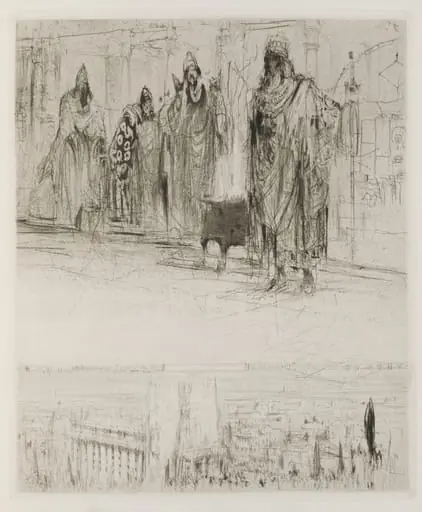 Herodias: Page 13, The tetrarch was awaited by several Galileans, the master of scribes, the chief of the land steward, the manager of the salt mines, and a Jew from Babylon commanding his troops on horse
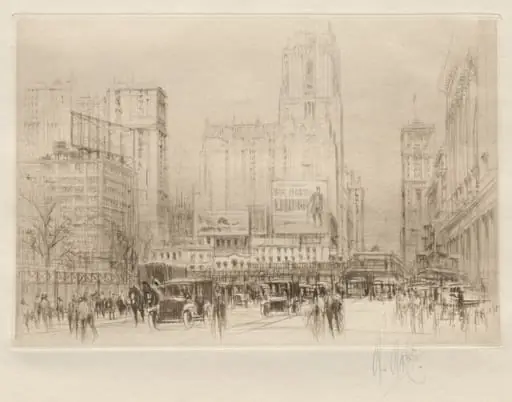 Forty-second Street NY