Artwork
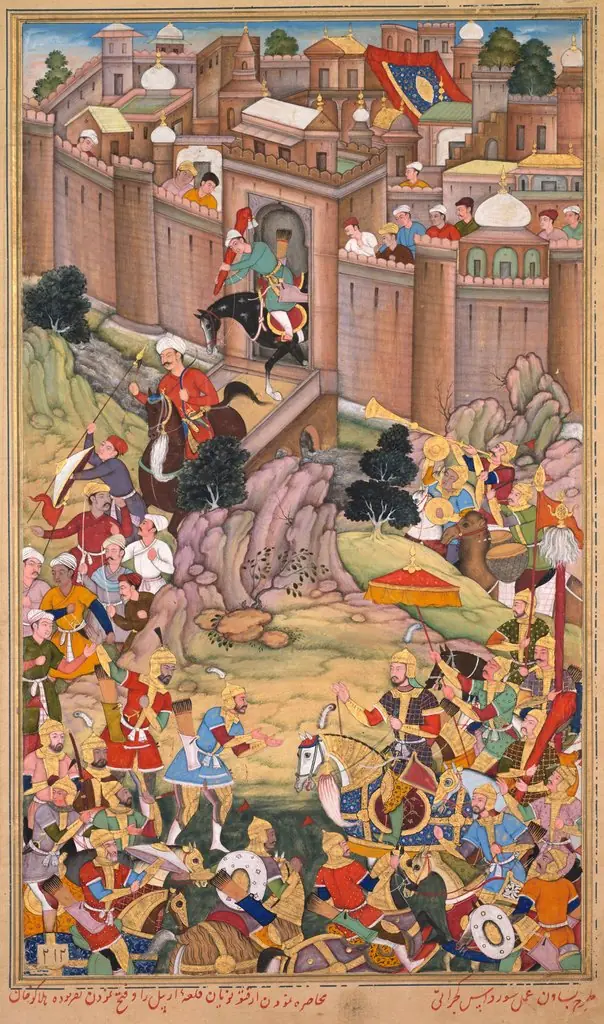
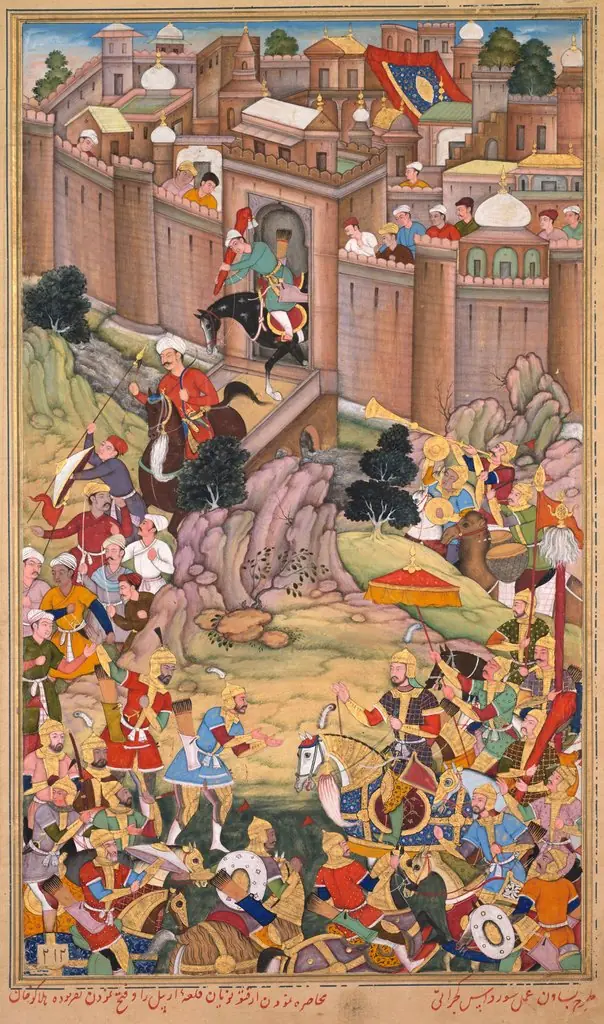
The siege of Arbela in the era of Hulagu Khan, from a Chingiz-nama (Book of Chingiz Khan) of the Jami al-tavarikh (Compendium of Chronicles) of Rashid al-Din (Persian, 1247–1318)
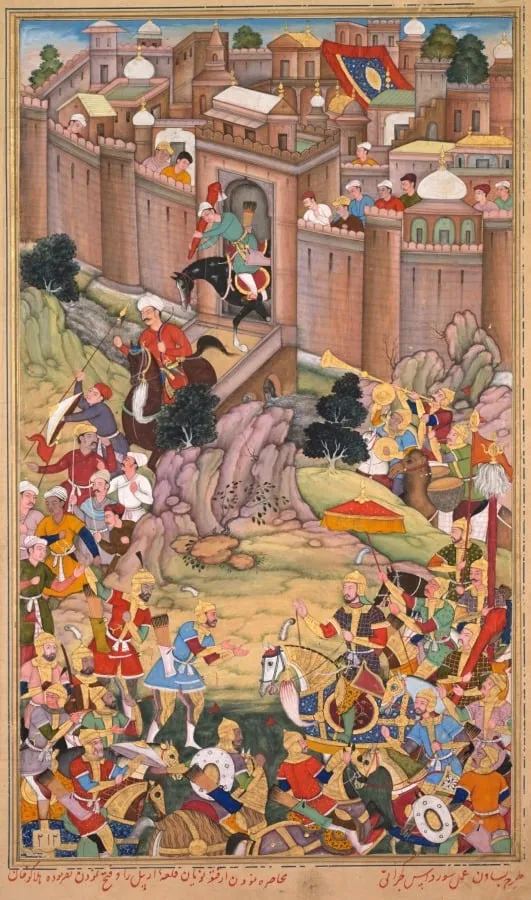
The siege of Arbela in the era of Hulagu Khan, from a Chingiz-nama (Book of Chingiz Khan) of the Jami al-tavarikh (Compendium of Chronicles) of Rashid al-Din (Persian, 1247–1318) is an unspecified painting by the Patna School of Painting artist Basawan. It dates from 1596 and is held in the collection of the Cleveland Museum of Art. The miniature illustrates the siege of Arbela, a battle recounted in the Chingiz-nama section of Rashid al‑Din’s Jami al‑tavarikh.
About this work
You see a crowded battle scene: a Mongol leader on a white horse stares down a defeated enemy, while soldiers and horses fill the space behind them.
You see a crowded battle scene: a Mongol leader on a white horse stares down a defeated enemy, while soldiers and horses fill the space behind them.
This painting was made 300 years after the actual battle, for a book about history. The artist packed the scene with tiny, lifelike figures—something new for Indian art at the time. The city in the background feels almost like a stage set.
Look up more paintings from the court of Akbar (reigned 1556–1605) to see how this style grew.
Overview
The miniature illustrates the siege of Arbela, a battle recounted in the Chingiz-nama section of Rashid al‑Din’s Jami al‑tavarikh. Though the historical event occurred in the 13th century, the painting was executed in the late 16th‑century Mughal workshop during Akbar’s reign, serving as an illustrated accompaniment to the Persian chronicle.
Subject & Meaning
At the centre, a Mongol commander astride a white horse fixes his gaze on a fallen West Asian adversary, embodying the triumph of the Mongol forces. Surrounding figures—soldiers, horses, and onlookers—populate the battlefield, emphasizing the scale of the conflict and the decisive nature of the victory.
Technique & Style
The composition is arranged along a strong diagonal that leads the eye from the foreground riders to a cityscape rendered at the top of the sheet. This spatial organization, combined with densely packed, naturalistic figures, reflects the late‑Akbar aesthetic that sought three‑dimensional depth and dynamic movement within a confined pictorial plane.
History & Provenance
Created roughly three centuries after the actual siege, the work was produced for a manuscript of the Chingiz‑nama, a historical text commissioned by the Mughal court. It exemplifies the period’s practice of illustrating Persian histories with elaborate miniatures for royal patrons.
Context
By the end of the 1500s Mughal artists increasingly integrated Persian narrative traditions with indigenous Indian visual conventions. The inclusion of numerous minute figures and a stage‑like urban backdrop marks a departure from earlier, more schematic Mughal miniatures, aligning the piece with the broader artistic developments of Akbar’s atelier.
Artist & collection
Artist
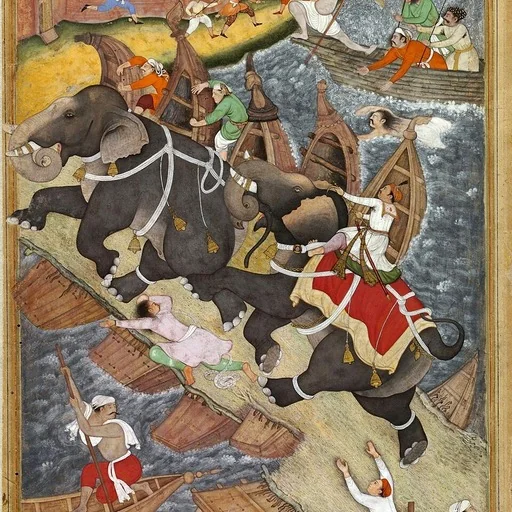
Basāwan, or Basāvan, was an Indian miniature painter in the Mughal style. He was known by his contemporaries as a skilled colorist and keen observer of human nature, and for his use of portraiture in the illustrations…

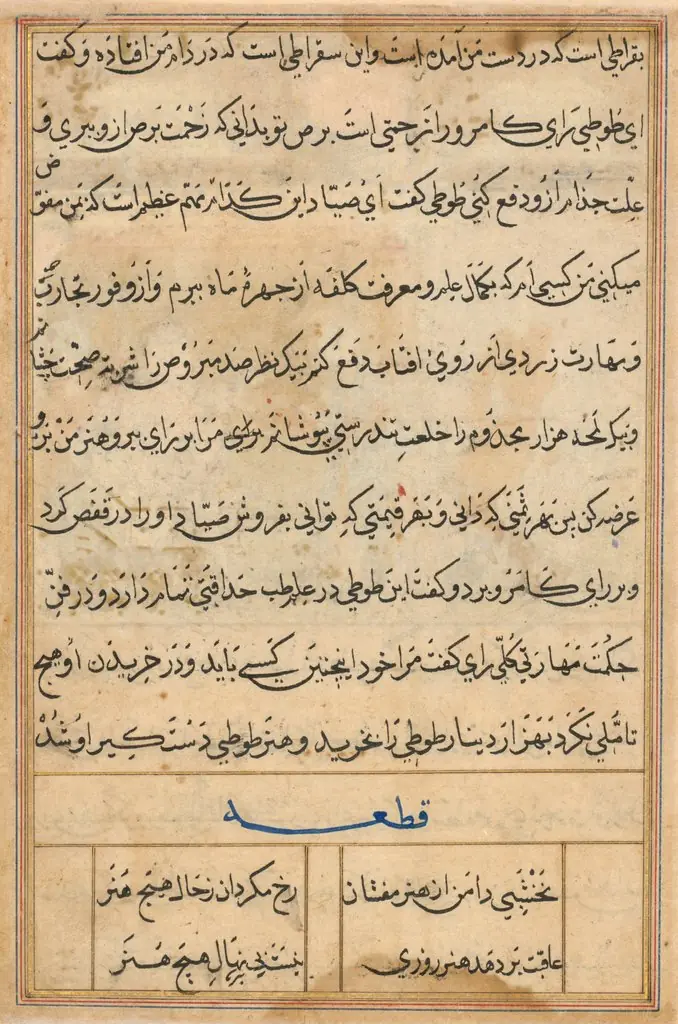 Page from Tales of a Parrot (Tuti-nama): text page
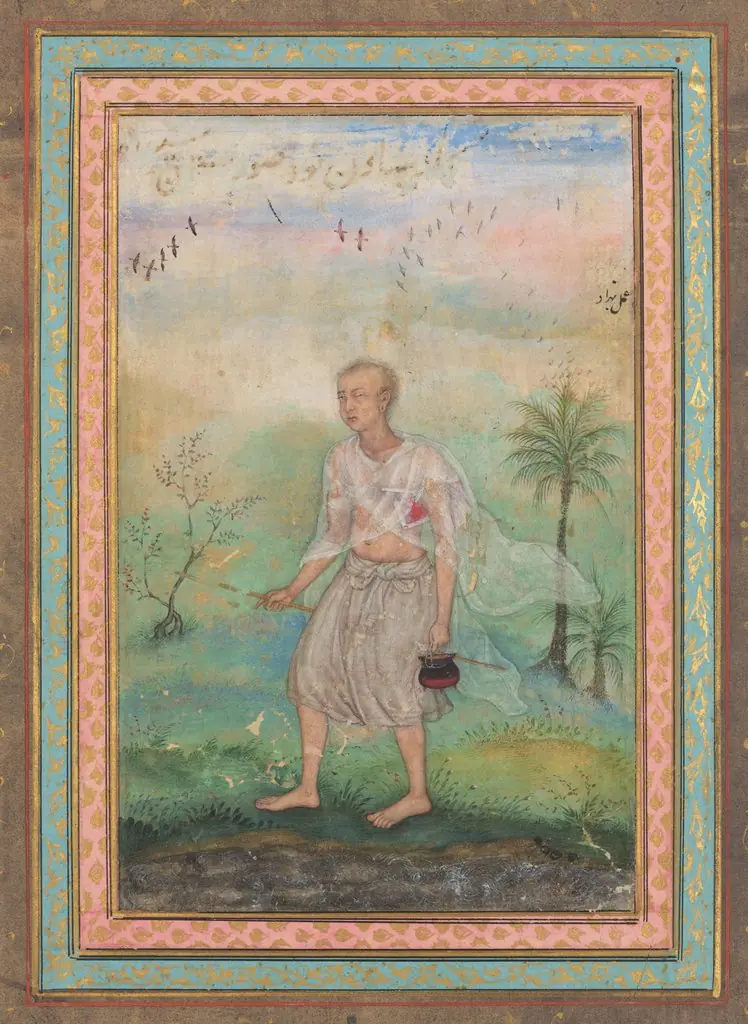 Jain Ascetic Walking Along a Riverbank
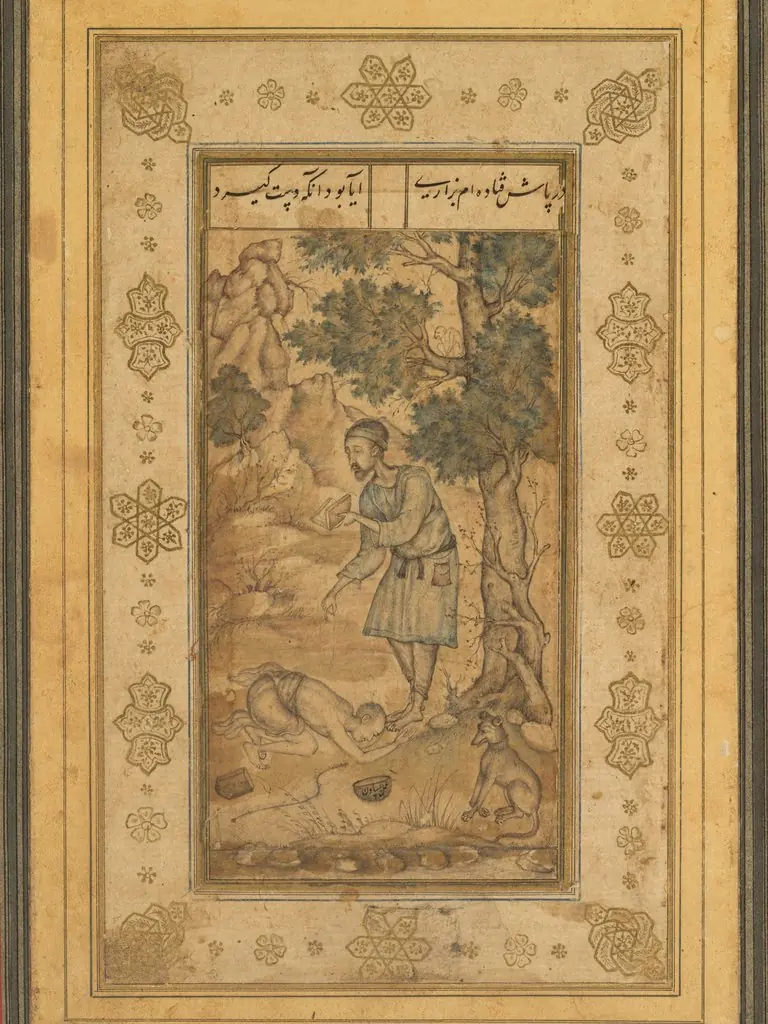 A mendicant bowing before a holy man, from the Prince Salim Album
 The siege of Arbela in the era of Hulagu Khan, from a Chingiz-nama (Book of Chingiz Khan) of the Jami al-tavarikh (Compendium of Chronicles) of Rashid al-Din (Persian, 1247–1318)
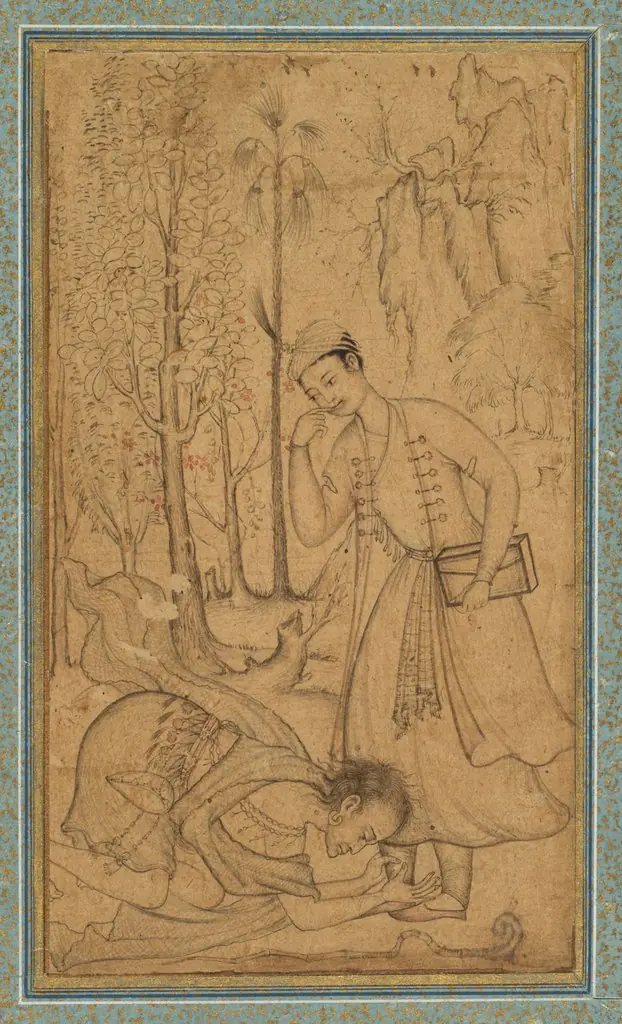 A holy man prostrating himself before a learned prince
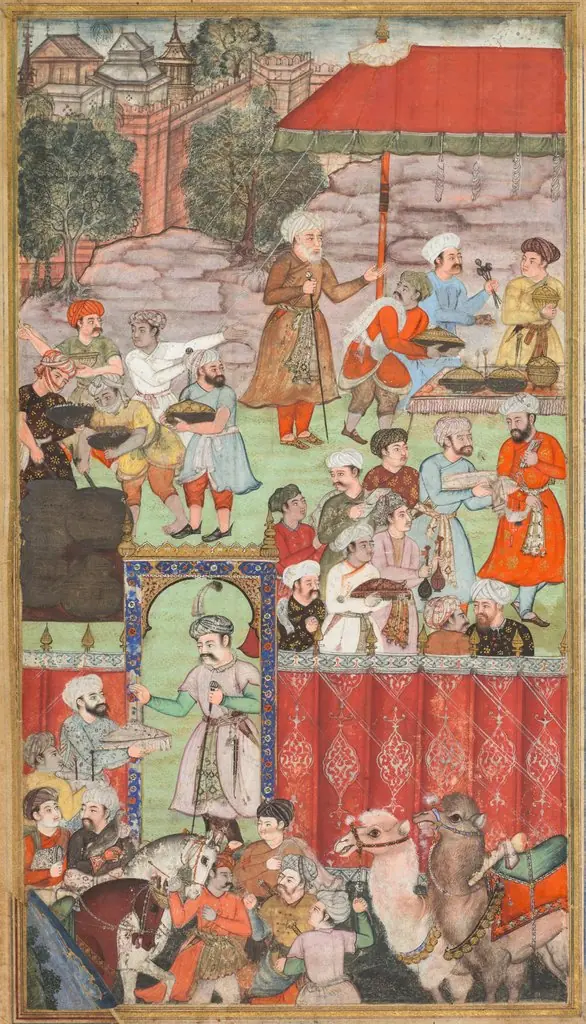 A feast for Babur hosted by his half-brother Jahangir Mirza in Ghazni in May 1505, from a Babur-nama (Memoirs of Babur)
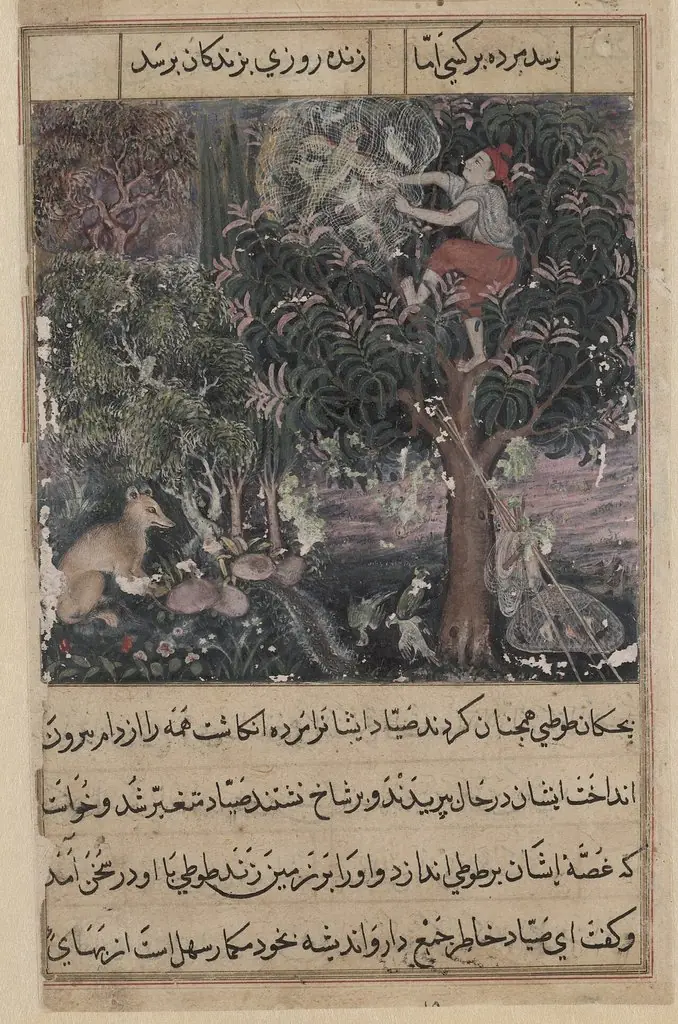 The hunter throws away the baby parrots, who pretend to be dead, and captures the mother, from a Tuti-nama (Tales of a Parrot): Fifth Night
 Page from Tales of a Parrot (Tuti-nama): text page
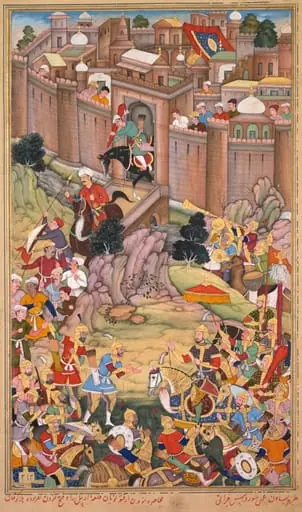 The siege of Arbela in the era of Hulagu Khan, page from a Chingiz-nama (Book of Chingiz Khan) of the Jami al-tavarikh (Compendium of Chronicles) of Rashid al-Din (Persian,1247–1318)
 The siege of Arbela in the era of Hulagu Khan, page from a Chingiz-nama (Book of Chingiz Khan) of the Jami al-tavarikh (Compendium of Chronicles) of Rashid al-Din (Persian,1247–1318)
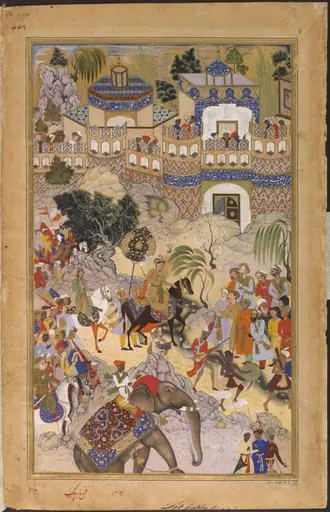 Akbar
Akbar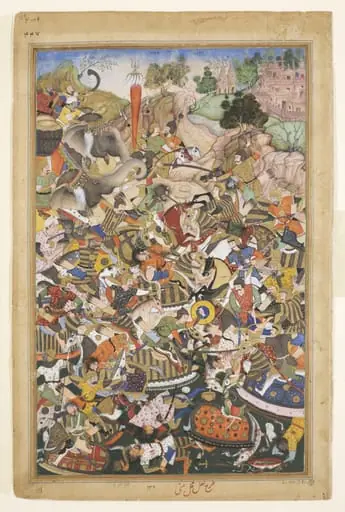 Qutb ad-Din Khan and Muhammad Husain Mirza
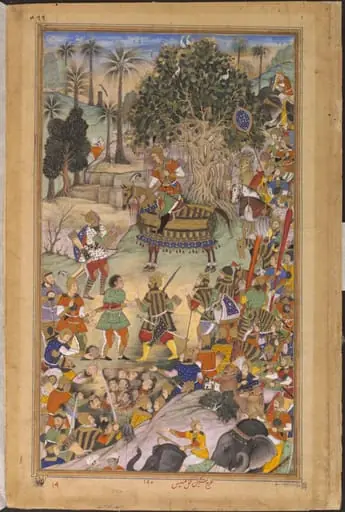 Muhammad Husain Mirza and Akbar
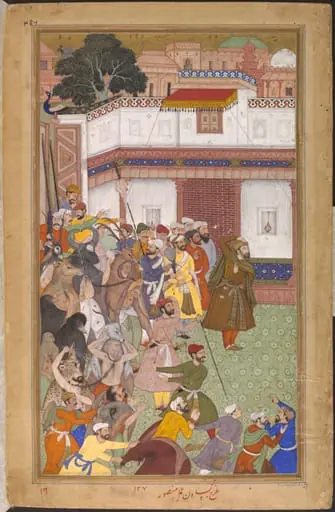 Husain Quli and Akbar
 Bairam Khan is Assassinated by an Afghan at Patan
 Ali Quli, Bahadur Khan and Akbar
 Untitled
 Untitled