Artwork
The Flagellation
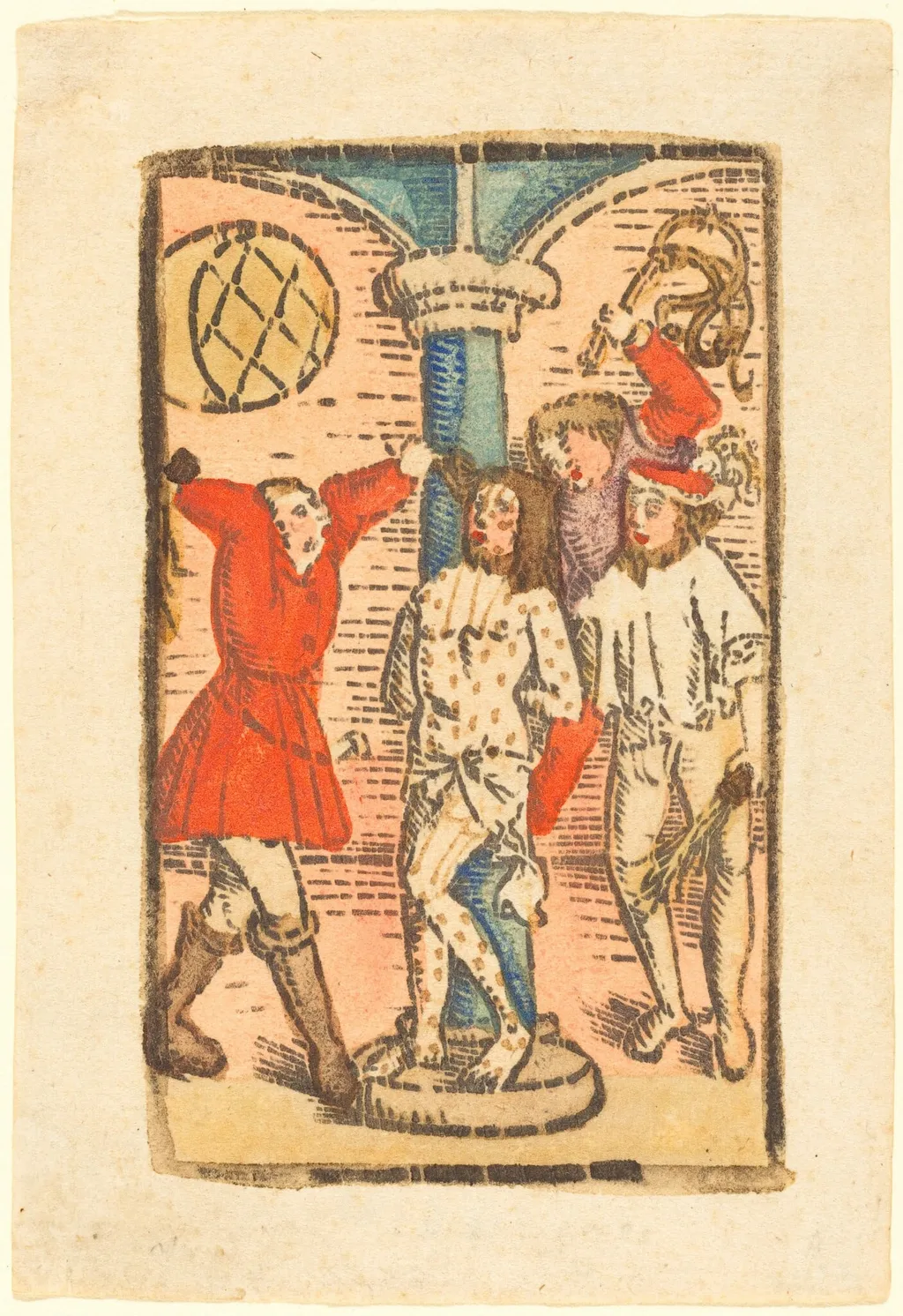
The Flagellation is an ink print by the Renaissance artist German 15th Century. It dates from 1490 and is held in the collection of the National Gallery of Art.
About this work
Overview
The work is a woodcut print executed in dark brown tones, later enhanced with hand‑applied colors of vermilion, gray‑blue, purple, peach, and tan. The composition centers on a figure being scourged, flanked by two attendants. The setting includes a peach‑hued wall and a blue‑tinted archway, framing the dramatic scene.
Subject & Meaning
The image portrays a flagellation, a motif common in religious and moralizing art of the period, showing a man in a white robe speckled with brown being whipped by two figures dressed in red and white. The stark contrast between the victim’s pale garment and the vivid hues of the tormentors underscores the tension between innocence and suffering.
Technique & Style
Created through woodcut, the artist incised the design into a block, printing it in a uniform dark brown before applying selective hand‑coloring. The limited palette of vermilion, gray‑blue, purple, peach, and tan adds dimensionality and highlights focal points, illustrating the Renaissance interest in combining printmaking precision with painterly coloration.
Context
Flagellation scenes were popular in Renaissance devotional prints, serving as visual meditations on penance and martyrdom. The use of vivid hand‑color on a woodcut reflects the period’s demand for affordable yet visually rich religious imagery, often circulated among private devotional contexts.
Artist & collection

Artist
This 15th-century German artist carved vivid religious scenes into metal and wood, then hand-painted them in bright, symbolic colors.

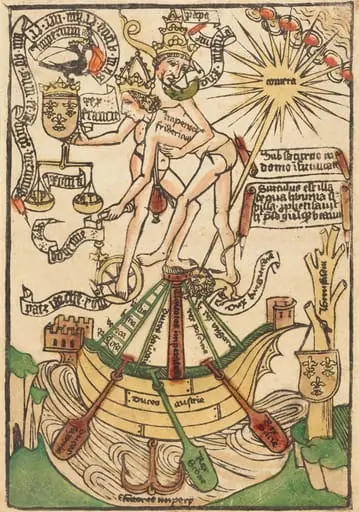 Allegory of the Meeting of Pope Paul II and Emperor Frederick III
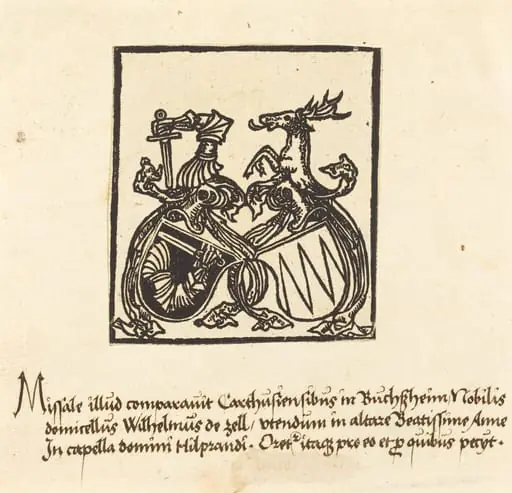 Bookplate of Wilhelm von Zell
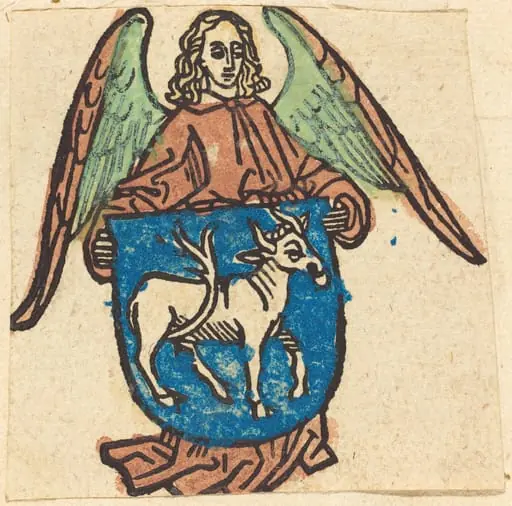 Bookplate of Hilprand Brandenburg of Bibrach
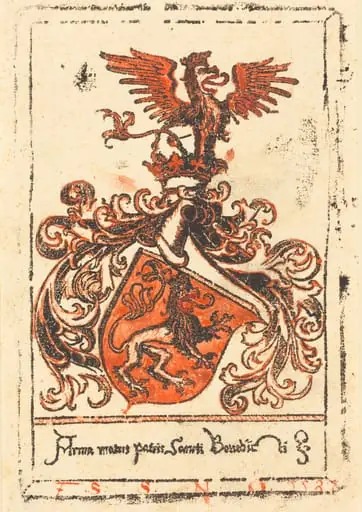 Bookplate of the Abbey of Ottobeuren
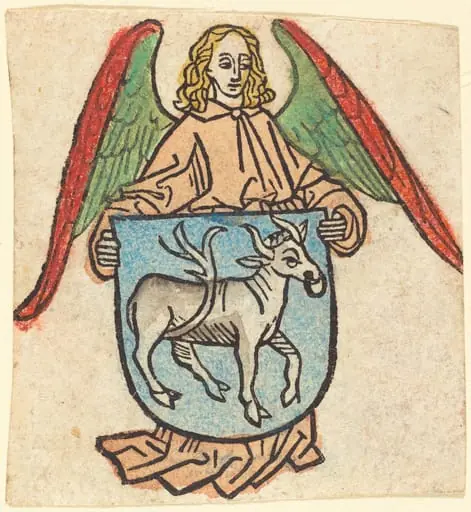 Bookplate of Hilprand Brandenburg of Bibrach
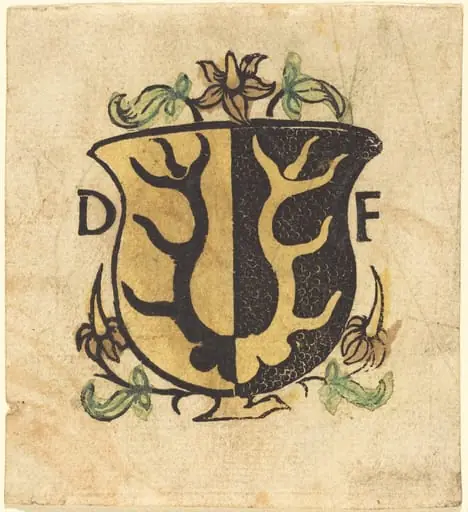 Bookplate of Dominicus Frauenfelder
![Studies for Six Figures (sheet from a model book) [recto], by German 15th Century](https://artifactworldgallery.com/img/german-15th-century--studies-for-six-figures-sheet-from-a-model-book-recto--4837429e0755bc3f-w320.webp) Studies for Six Figures (sheet from a model book) [recto]
Studies for Six Figures (sheet from a model book) [recto]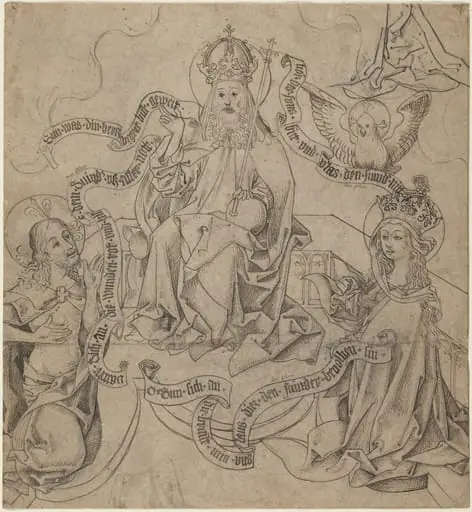 Christ and Mary Interceding with God the Father
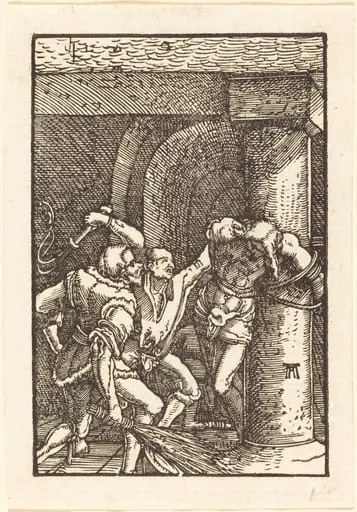 The Flagellation of Christ
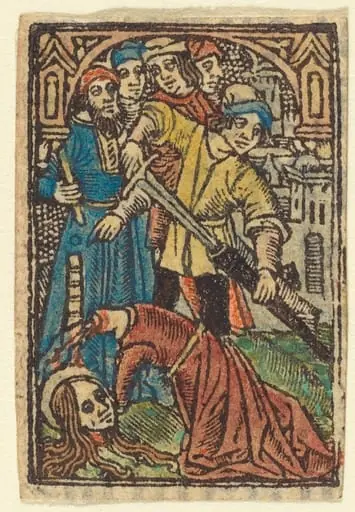 Beheading of Saint Catherine (?)
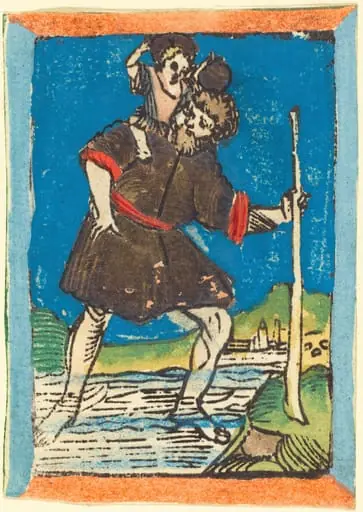 Saint Christopher
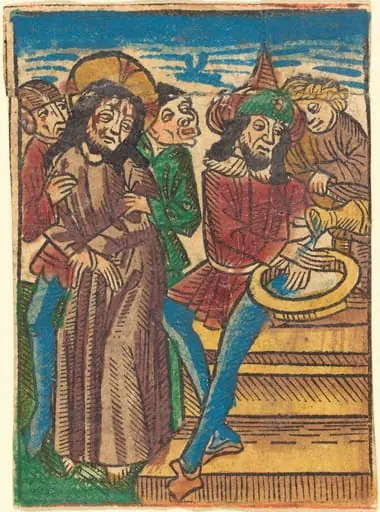 Pilate Washing His Hands
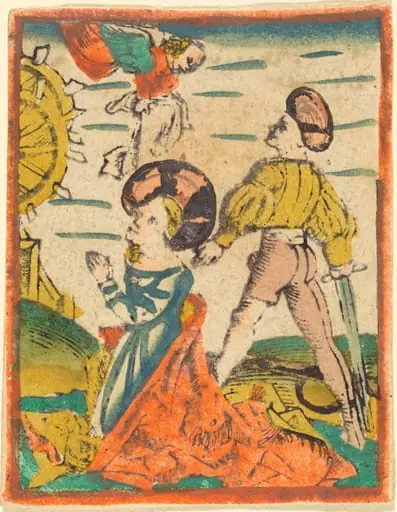 Beheading of Saint Catherine
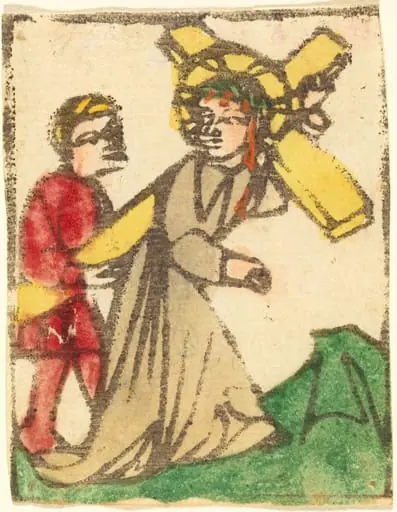 Christ Carrying the Cross
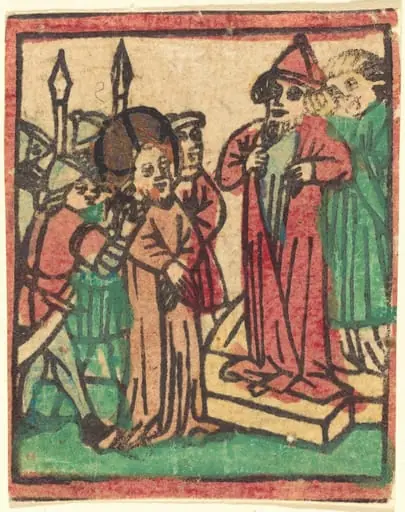 Caiaphas Tearing his Clothes
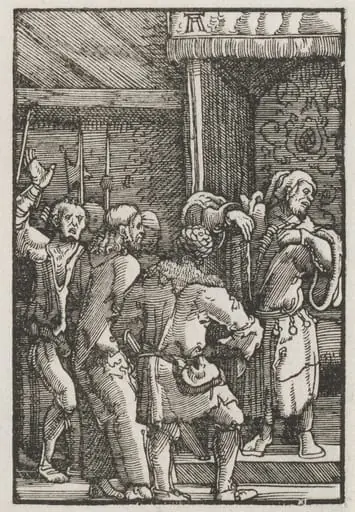 The Fall and Redemption of Man: Christ before Caiaphas
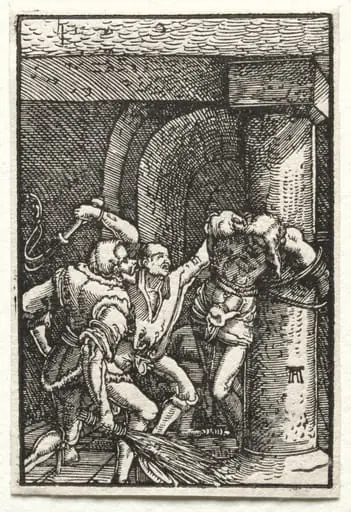 The Fall and Redemption of Man: Flagellation of Christ
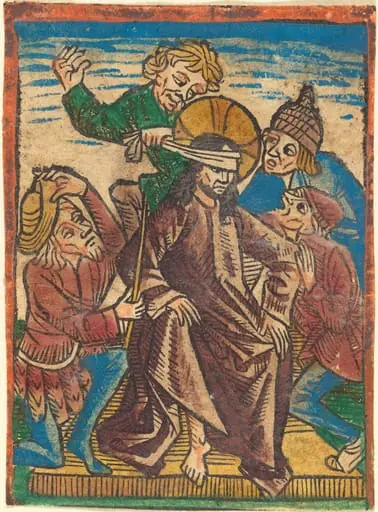 Mocking of Christ
 Diana Standing
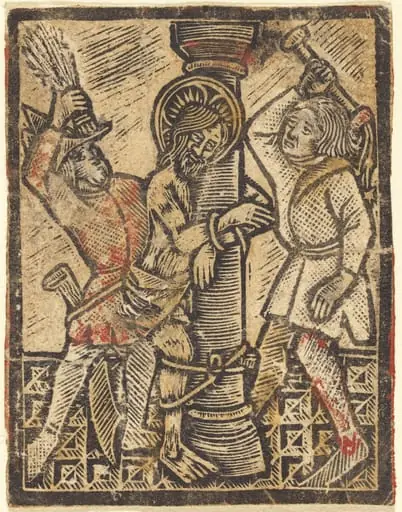 The Flagellation