Artwork
Burgomaster Gull
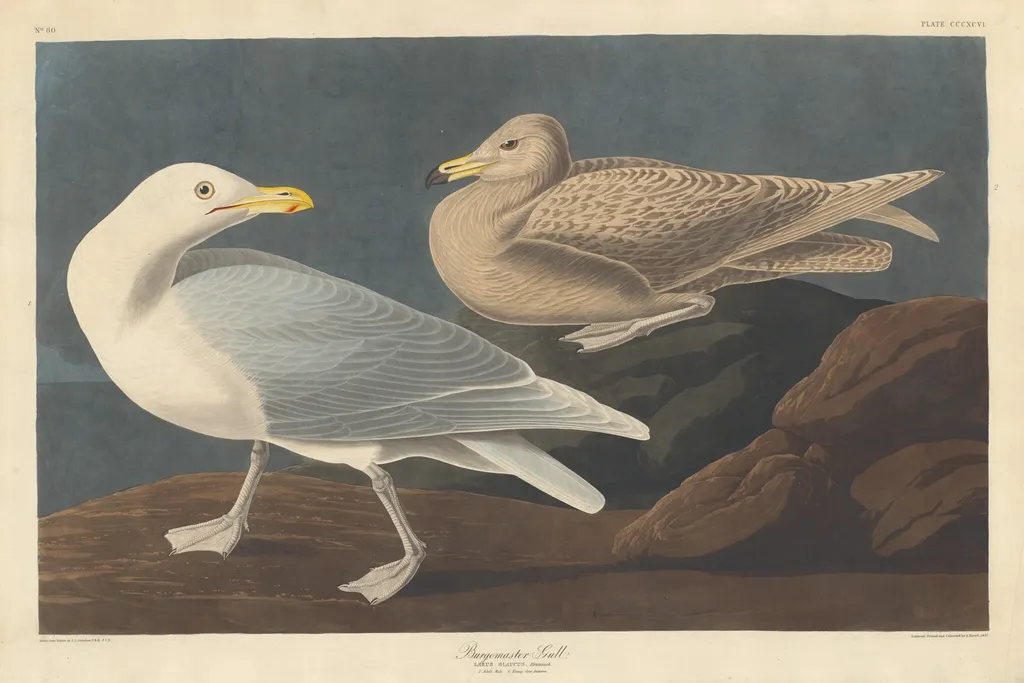
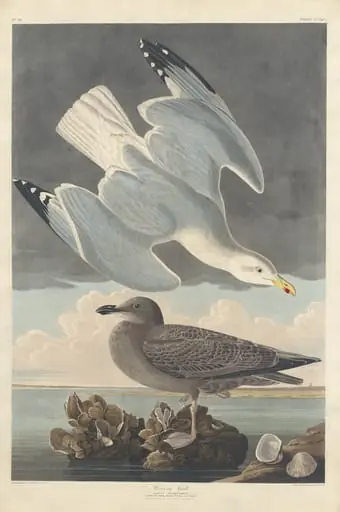
Burgomaster Gull is an ink print by the Romanticist artist Robert Havell Jr.. It dates from 1837 and is held in the collection of the National Gallery of Art.
About this work
Overview
produced this hand-colored engraving and aquatint in 1837 on Whatman wove paper, continuing a family tradition of printmaking rooted in Reading, Berkshire.
Robert Havell Jr. produced this hand-colored engraving and aquatint in 1837 on Whatman wove paper, continuing a family tradition of printmaking rooted in Reading, Berkshire. His work bridges natural history illustration and fine printmaking, reflecting both technical precision and an interest in observed natural forms. The piece belongs to a broader 19th-century practice where scientific accuracy and artistic craft converged in printed imagery.
Subject & Meaning
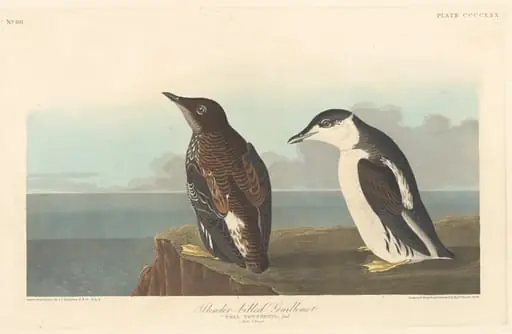
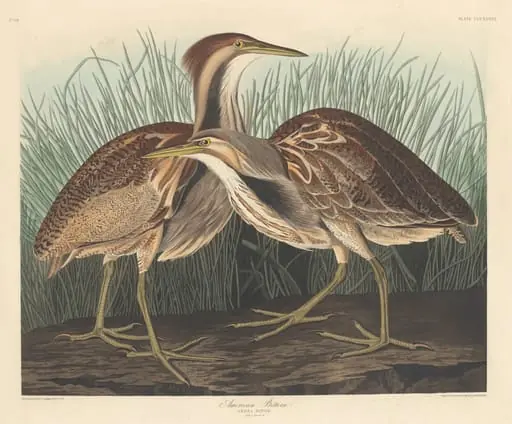
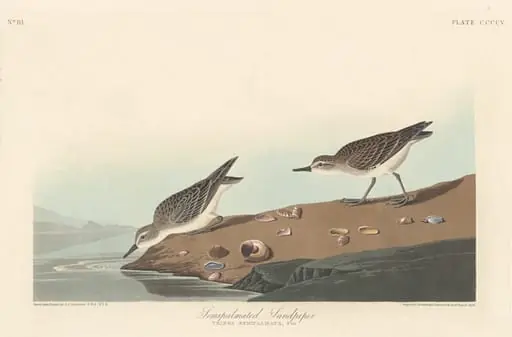
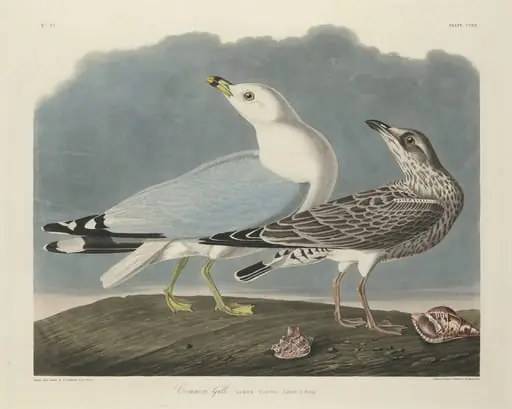
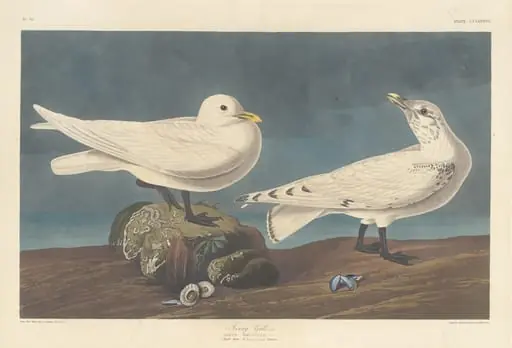
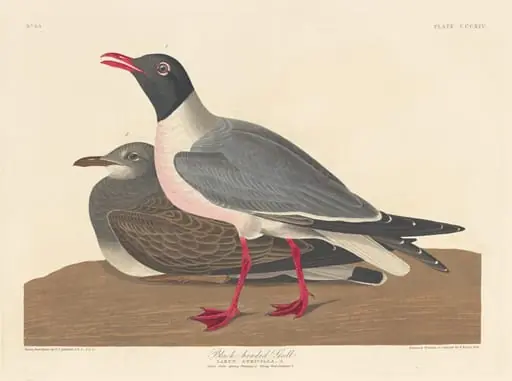
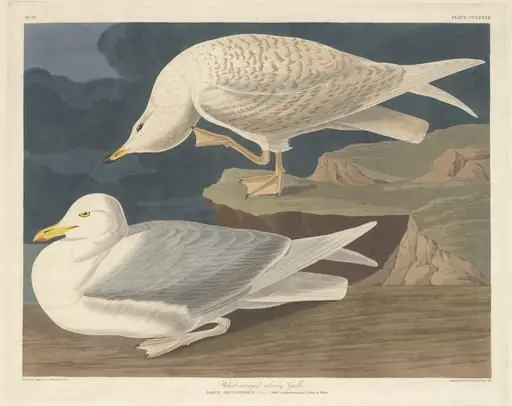
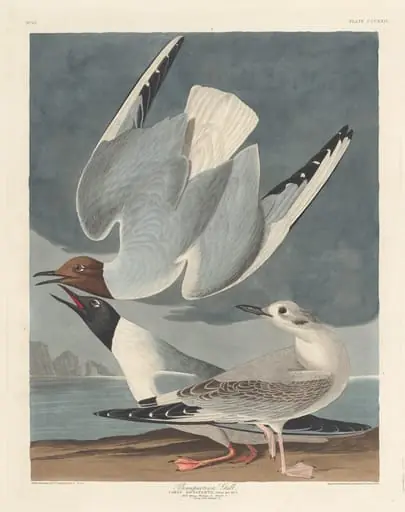
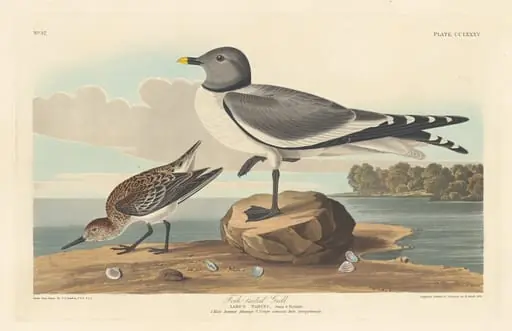
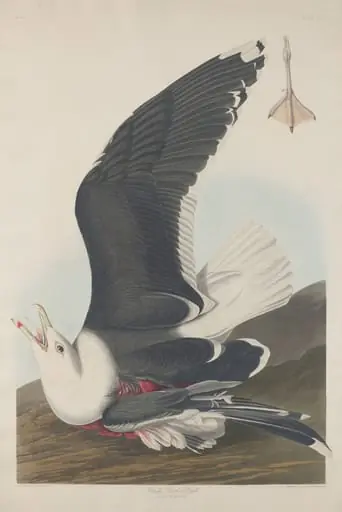
The print depicts two gulls perched on weathered wood and stone, rendered with close attention to plumage and posture. One stands alert, its white body and gray wings sharply defined; the other, more relaxed, displays brown-and-white feathers and a yellow beak. No symbolic or narrative context is implied—focus remains on the birds as biological subjects, aligning with the era’s emphasis on observational naturalism.
Technique & Style
Havell employed engraving for fine linear detail and aquatint to achieve subtle tonal gradations, particularly in feather textures and the rough surface of the log. Hand-coloring enhanced anatomical accuracy, a hallmark of scientific illustration at the time. The composition is tightly framed, eliminating background distraction to center the birds’ physical presence and materiality.
History & Provenance
As part of a multi-generational family of English printmakers, Havell Jr. inherited both technical skills and publishing networks. His work often intersected with natural history projects, though this specific image does not appear linked to a known published series. Its survival as a standalone print suggests private commission or collector interest in detailed ornithological imagery.
Context
In the 1830s, detailed bird illustrations were in demand among naturalists, collectors, and institutions documenting British wildlife. Engraving and aquatint allowed for reproducible, high-fidelity images that supported scientific study. Havell’s approach mirrors contemporaries like John James Audubon, though his scale and intent remained more intimate and less monumental.
Legacy
Though not widely exhibited or reproduced, the print exemplifies the quiet persistence of artisanal printmaking in the age of industrial reproduction. Havell’s commitment to hand-crafted detail preserved a mode of visual documentation that prioritized observation over spectacle, influencing later naturalist illustrators who valued precision over dramatic effect.
Artist & collection

Artist
The Havell family of Reading, Berkshire, England, included a number of notable engravers, etchers and painters, as well as writers, publishers, educators, and musicians.